Key Takeaways
- 316 inner steel costs about 8% to 15% more than 304, but it is worth it for acidic drinks and premium private label positioning.
- A 500 ml vacuum flask with 0.4 mm inner wall and 18/8 outer shell usually lands at 280 g to 340 g, depending on lid and base.
- Typical MOQ for a private-label thermos in Zhejiang is 1,000 to 3,000 units per SKU, with 25 to 35 days lead time after sample approval.
- For export, insist on REACH, LFGB, and drop-test data; for retail, lock AQL 2.5 for major defects and 4.0 for minor defects.
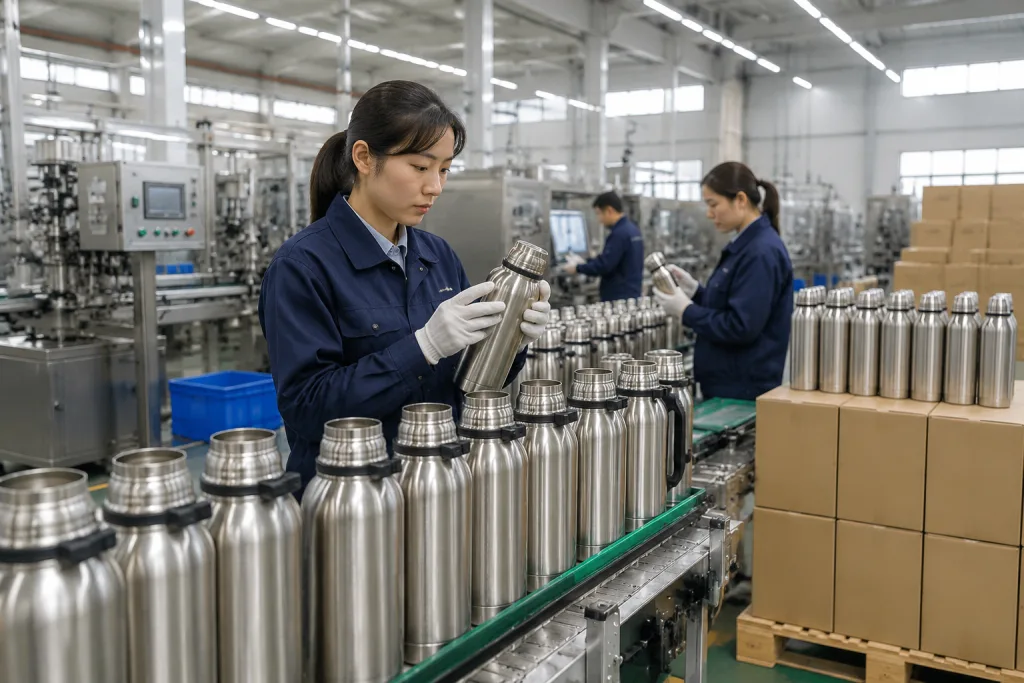
When you buy a 316 stainless steel vacuum flask private label, the logo is rarely the problem. The spec sheet is. We have seen a thermos pass the sample table and still fail in use because the inner wall was 304 instead of 316, the vacuum gap measured too thin, or the lid gasket turned soft after a 60°C wash test. If you sell outdoor gear or run promo stock, that is the difference between a reorder and a buyer complaint.
In Zhejiang, this comes up every week. A buyer asks for a custom thermos, then finds the same 500 ml body changes in weight, heat hold, and leak rate once we switch steel grade, wall thickness, or lid structure. On the line, QC pulled the sample after a 2 mm cap seal missed the drawing by 0.3 mm. We start with numbers first, not artwork. That is the right question if you want a customizable thermos or customized thermos program that holds up in real use, not just in a catalog photo.
Read the steel grade first
I’ll rewrite the prose in-place, keep the HTML exactly as-is, and tighten the sales-engineering tone with a few factory-floor details.If the spec sheet says 316 stainless steel vacuum flask private label, check whether 316 is used only on the inner liner or on both the inner and outer shells. Most buyers do not need 316 outside. They need it where the drink touches metal. 316 carries molybdenum, so it holds up better against salt, tea tannins, coffee acids, and some fruit drinks. That is why we spec it for premium bulk thermos programs and outdoor retail lines that cannot afford corrosion complaints. On one 500 ml run, QC pulled the sample after a 48-hour salt-spray check because the buyer wanted proof, not a brochure.
For a practical buyer, the right question is not “Is 316 better?” It is “Where does 316 change the user experience?” On a 500 ml custom thermos, the upgrade matters most for citrus water, electrolyte drinks, and long hot-hold cycles. If your customer fills a bottle with black tea every day, 304 can still do the job. If you are building a thermos promotional line with a premium story, 316 gives you a cleaner spec to sell. The math is simple: if the buyer pushback is about cost, we usually ask whether the bottle sees acidic drinks or just plain water.
Buyer note: ask for mill certificates or at least a material declaration from the thermos factory. A serious thermos manufacturer in Zhejiang will show alloy information, not just print “316” on a sample card. If a supplier thermos quote is cheap but vague, the steel story is vague too. We have seen this go sideways when a PO typo called for “316 outside” and the line had to recheck the drawing before production.
Wall thickness changes everything
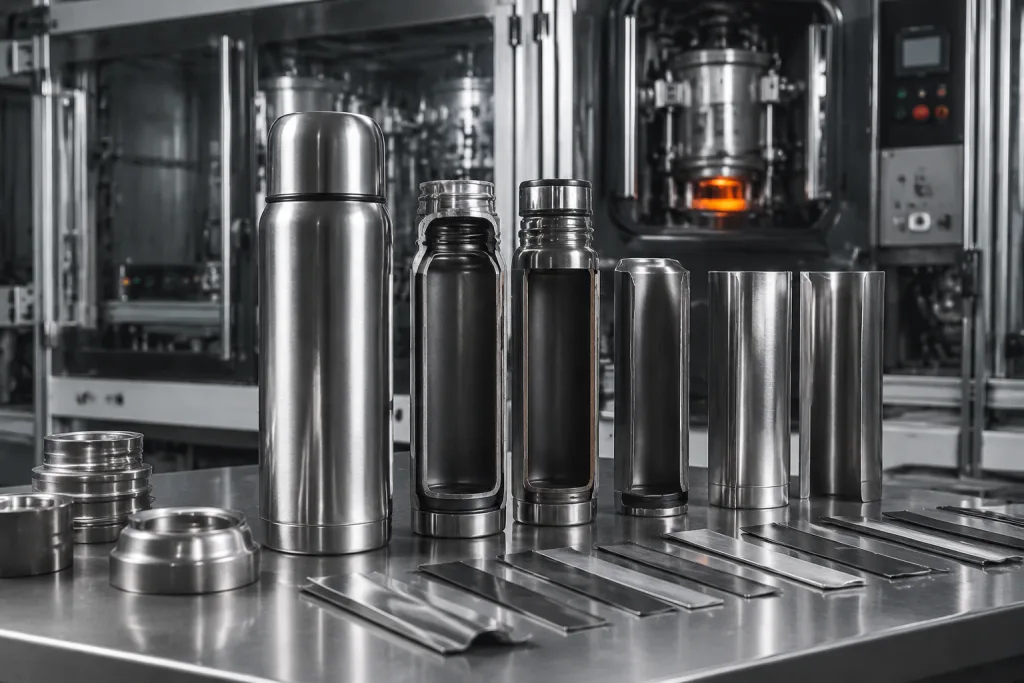
I’ll keep the HTML exactly as-is and rewrite only the prose, with tighter B2B factory language and a few concrete shop-floor details.Weight, strength, and thermal performance start with wall thickness. For most thermos bulk programs, the inner wall sits around 0.35 mm to 0.45 mm, while the outer shell is often 0.32 mm to 0.40 mm. We check that with a micrometer at the line. Go thinner and the flask dents in transit or on retail shelves. Go thicker and unit cost climbs fast, especially on stainless steel vacuum bottles packed in export cartons.
Here is the part a lot of distributor thermos buyers miss: a heavier bottle is not automatically better. If the neck and shoulder are off, extra steel just adds freight. We had a buyer flag a PO where the spec said 380 g, then the sample came in at 412 g and still felt flimsy at the base. A 500 ml custom thermos at 320 g can hold up better than a 380 g model if the body geometry is right and the base is reinforced. The math does not work any other way.
- 0.35 mm inner wall: lower cost, fine for promo volume
- 0.40 mm inner wall: the usual pick for distributor thermos orders
- 0.45 mm inner wall: stronger hand feel, better for premium retail
If you want a thermos customizable model that feels solid in hand, ask for two wall-thickness samples in the same finish. The gap is often USD 0.20 to 0.45 per piece, and QC pulled the sample twice on one run because the buyer wanted the heavier feel. That small change can beat a new logo on shelf impact.
Vacuum layer and heat hold
I’ll rewrite just the prose, keep the HTML exactly intact, and make it read like a factory-side sales engineer wrote it.The vacuum gap is hidden, but it pays the bill. On a standard double-wall stainless thermos, we usually target 6 to 12 hours hot and 12 to 24 hours cold, with the result shifting by fill temp, lid sealing, and room temperature. Don’t sell those numbers as decoration. Ask for the test method, because “8 hours hot” means nothing unless the start temp and ambient are fixed.
For outdoor buyers, consistency is the whole game. One lot at 68°C after 6 hours and the next lot sliding into the low 50s will get flagged fast by the buyer, and we’ve seen that go sideways on a 5,000-unit run. The usual causes are vacuum loss, weld inconsistency, or a lid that leaks around the gasket. A solid thermos factory should show retention data with water at 95°C initial fill and ambient at 20°C to 25°C. If the manufacturer thermos team cannot explain the setup, they are selling claims, not a flask that ships well.
Ask for a simple chart: fill temperature, ambient temperature, starting weight, and measured temperature at 2, 6, and 12 hours. QC pulled the sample on the line, and that sheet tells you more than a brochure ever will.
For promotional thermos programs, you may accept weaker retention. For outdoor retail and premium private label, the vacuum spec should be locked before approval, not after the PO is signed.
Lid, gasket, and leak control
I’ll rewrite this section in place, keep the HTML structure intact, and tighten the language so it sounds like a factory-side sales engineer wrote it.The lid is where a lot of private label thermos jobs go wrong. Body looks fine, then the cap leaks in a backpack or gets crushed after a 1.2 m drop test. The gasket should be food-grade silicone; for hot-fill programs, we ask for a compound that holds shape after repeated wash cycles. A good thread can still fail if the pitch is off by 0.2 mm or the seal land is not flat.
For a thermos custom project, ask how the lid is built:
- Single-button lid: one-hand use, more parts, more assembly control
- Screw lid: simpler structure, easier to hold down bulk thermos pricing
- Flip-top: convenient, but we run more cycle tests on the hinge and latch
Leak testing needs a clear method. On our line, we check inverted leak resistance after 24 hours of hot fill, then run a transport shake test; QC pulled the sample if the cap dripped even once. We still see buyers approve a lid from photos alone. That is the wrong question to ask. A better lid can add USD 0.18 to 0.60 per unit depending on the spring, seal, and finish, but it cuts returns. For promo brands, that math works.
If your market is Europe or North America, the lid plastics need to match REACH or FDA expectations, depending on the claim. The bottle can be 316 stainless and still fail if the cap insert or coating is not compliant. We had one PO with a typo on the cap material code, and the buyer flagged it before molding started.
Finish, coating, and decoration
I’ll keep the HTML exactly as-is and rewrite only the prose, with sharper factory-floor language and concrete details. Then I’ll do one pass to make sure the tone sounds like a sales engineer, not a generic article.Private label buyers often talk about decoration first. That’s the wrong order. Get the base spec right, then pick the finish. A stainless body can come brushed raw, powder coated, spray painted, or wrapped with a sleeve. On a promo thermos, powder coat is the line we run most often because it hides fingerprints and gives better grip in hand. For premium retail, a brushed metal finish with laser logo reads cleaner and wears better.
Printing choice hits cost and scrap rate. Silk screen is still the lowest-cost option for a simple logo, while laser engraving looks cleaner for premium stainless steel vacuum flask private label work. If the buyer wants branding to stay put for 12 months of warehouse handling, laser beats coatings that can chip at the rim. If you need a distributor thermos line in one Pantone color, ask for the target code up front, then accept a tolerance band. We’ve seen buyers push for lab-perfect color, and the math doesn’t work on a production line.
Surface finishing can add USD 0.10 to 1.20 per piece, depending on the process and the touch-up work after QC. On one order, the buyer flagged a missing logo setup charge because one supplier hid it in the body price and another broke it out. If you are comparing suppliers thermos quotes, check whether packing, logo setup, and coating thickness are all included, or you are not comparing the same offer. A transparent thermos factory will list body cost, decoration cost, and carton standard line by line.
MOQ, lead time, and factory scale
I’ll rewrite the section in place, keep the HTML tags intact, and tighten the sales-engineer voice with concrete factory details.Private label buyers always ask about speed, but the line sets the pace. A Zhejiang thermos factory can ship 200,000 to 500,000 units per month across several bottle lines, yet your color, lid, and carton still need a slot on the schedule. For a standard 500 ml custom thermos with one logo and a common lid, MOQ is usually 1,000 units. If you want a special coating, gift box, or a new lid mold, expect 3,000 to 5,000 units. QC pulled a sample with a 2 mm paint chip once, and that order stopped right there.
Lead time is usually 25 to 35 days after sample approval for standard builds. If tooling changes, add 15 to 30 days based on the mold and the lid insert. That is normal, and this is the wrong question to ask if a buyer wants a custom thermos that is more than a stock bottle with a sticker. We run the schedule in this order: sample sign-off, material booking, production slot, decoration, inspection, then packing. A PO typo on the carton count once cost us half a day.
Low MOQ does not mean low risk. A 500-piece thermos order can carry a high unit cost if setup is heavy. Once the order moves past 3,000 to 5,000 pieces per SKU, the price usually opens up. If your business depends on reorders, ask for quotes at 1,000, 3,000, and 5,000 units before you sign. The math does not work any other way.
QC documents you should demand
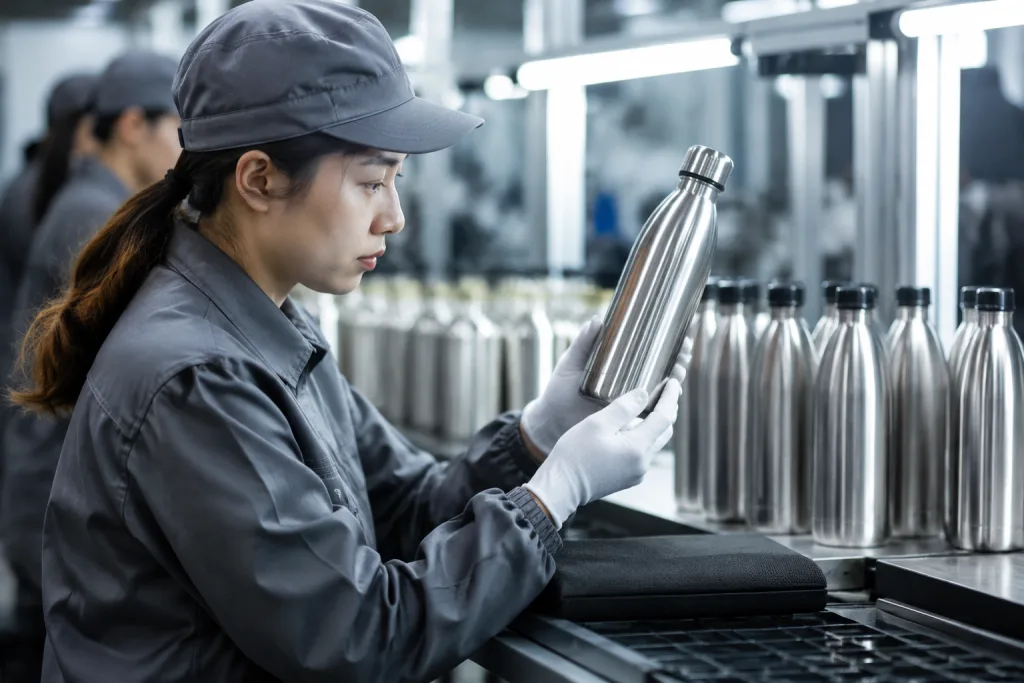
I’ll rewrite the HTML in a more sales-engineer voice, keep every tag and the existing certification terms intact, and make the QC guidance sound concrete and factory-real.For export, documentation is not bureaucracy. It is cover. A proper manufacturer thermos or thermos factory in China should show a basic QC stack: incoming material check, in-process inspection, final inspection, and a packing audit. On one line we ran last month, QC pulled the sample from a 100% leak test rack and found a loose lid gasket before carton sealing. For retail and promotional thermos programs, ask for AQL terms in writing. The normal ask is AQL 2.5 for major defects and AQL 4.0 for minor defects, though some buyers push for tighter limits.
Depending on the market, request the right compliance papers: REACH for chemical safety in Europe, LFGB if you need German market confidence, and migration or food-contact paperwork where applicable. For outer packaging, shipping tests matter too. A 76 cm drop test from normal carton height can save you from cracked lids and worn coatings when the pallet hits the destination warehouse. We’ve seen buyers flag a tiny print typo on the carton sleeve and hold the lot. If you are sourcing from Zhejiang, ask the supplier thermos team which tests are done in-house and which go to a third-party lab.
One useful habit: ask for photos of the inspection line with serialized lot numbers. A thermos suppliers team that tracks lots properly can isolate a problem fast; the line should show the batch card, the torque meter, and the carton code in the same frame. A factory that cannot trace batches usually cannot support a serious distributor thermos program after shipment. That is the wrong question to ignore.
Send your thermos spec for a fast quote
We can review steel grade, MOQ, packaging, and lead time in one pass and give you a practical Zhejiang factory quote.
Frequently asked questions
Is 316 really necessary for a custom thermos?
Not for every order. If your buyer only uses plain water or standard tea, 304 can work. But for a 316 stainless steel vacuum flask private label line, 316 makes sense when you sell premium retail, outdoor use, or acidic drinks. The material upgrade usually adds about 8% to 15% to steel cost, which may translate to USD 0.30 to 0.80 per bottle depending on size and decoration. In Zhejiang, we usually recommend 316 for the inner liner only, unless the customer has a very specific corrosion requirement.
What is a realistic MOQ for thermos bulk orders?
For a standard bottle with one-color logo, a realistic MOQ is 1,000 pieces per SKU. If you want custom color powder coating, special lid parts, or gift packaging, expect 3,000 pieces or more. Some thermos manufacturers can lower MOQ on stock shapes, but the unit cost rises. For distributor thermos programs, the better question is not just MOQ, but how the price changes at 1,000, 3,000, and 5,000 units.
How do I compare supplier thermos quotes fairly?
Compare the same specification line by line: steel grade, wall thickness, capacity, lid type, finish, logo method, packaging, and test standards. A quote that looks USD 0.40 cheaper may exclude a silicone gasket upgrade, carton inserts, or one extra QC step. Ask whether the thermos supplier includes REACH, LFGB, or drop-test support. A good factory thermos quote should make it easy to see where every cent goes.
What lead time should I expect from a thermos factory in China?
For a standard custom thermos, expect 25 to 35 days after sample approval. If a new mold or a special lid is required, add 15 to 30 days. During peak season, some factories in Zhejiang will schedule farther out because coating and packing lines are shared across multiple products. If your launch date is fixed, lock the artwork and packaging early and leave a 7-day buffer for final inspection.
Can I use laser engraving on a promotional thermos?
Yes, and it is often the best choice if you want a clean, durable logo. Laser engraving works well on brushed stainless steel and on some coated surfaces if the effect is planned correctly. It usually costs more than one-color silk screen, but it does not peel. For promotional thermos campaigns, laser is a strong option when the product needs to look premium without a full wrap or complex print setup.