Key Takeaways
- For 316 stainless steel, ask for material traceability and wall thickness confirmation at 0.4-0.5 mm on the inner wall.
- A usable RFQ should specify capacity, lid type, logo method, finish, packaging, and target AQL 2.5/4.0 before sampling.
- Typical custom thermos lead time is 12-18 days for samples and 25-35 days for bulk after PO and deposit.
- For outdoor and promo programs, 500-1,000 pcs MOQ is realistic from a Zhejiang thermos factory with in-house forming and coating.
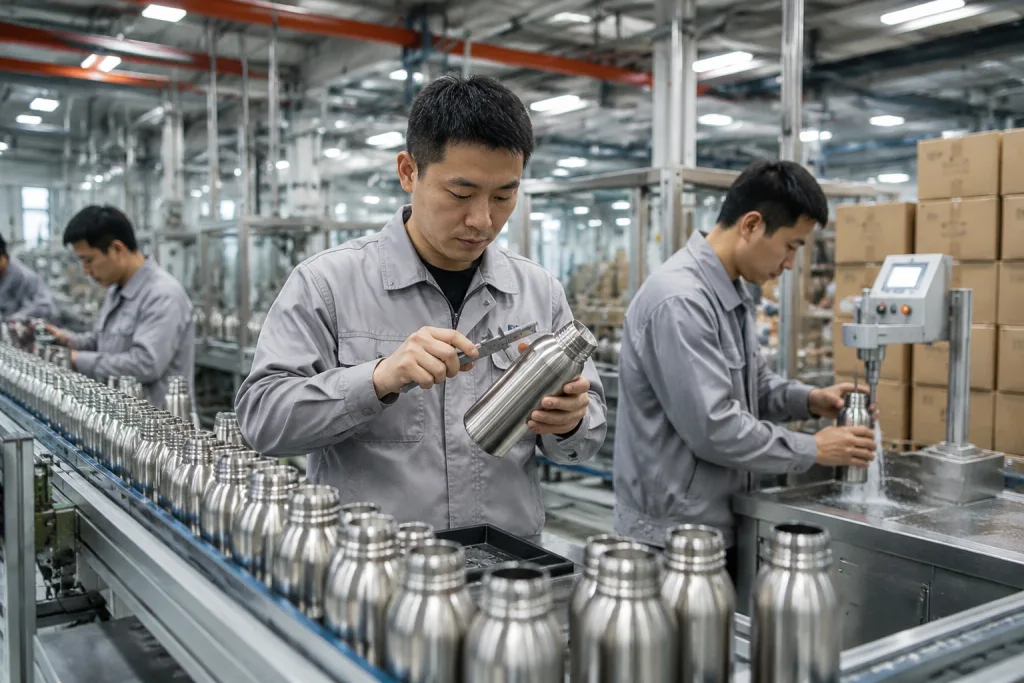
If you are buying a thermos for outdoor retail or a promotion program, the hard part is not finding a supplier. The hard part is separating a real 316 stainless steel vacuum flask manufacturer from a trading company that can quote in 2 hours and ship in 18 days, then miss the lid thread by 0.3 mm. In China, especially Zhejiang, the gap shows up in steel grade proof, lid fit, vacuum hold, and whether the line can repeat the same brushed finish on 3,000 pieces or 30,000 pieces without QC pulling half the sample cart.
You do not need a romantic sourcing process. You need a clean RFQ, a sample that matches the drawing, and a bulk PO that spells out every line item; otherwise the math does not work. At BottleForge Industrial in Hangzhou, Zhejiang, we run 1.2 million units per month across drinkware lines, with stainless thermos MOQ starting at 500 pcs for stock structures and 1,000 pcs for fully custom builds. That is the standard to ask for from any thermos manufacturer or thermos supplier in China, and we have seen the order go sideways when a buyer leaves out the gasket spec or sends a PO with one wrong color code.
Start With a Real RFQ
I’ll rewrite the prose to sound like a factory-side sales engineer, keep the HTML exactly as-is, and tighten the RFQ language with concrete sourcing details.Don’t send a vague note like “need thermos quote.” If you want a real reply from a 316 stainless steel vacuum flask manufacturer, send an RFQ that reads like a purchase spec. A clean RFQ gets you a straight answer fast: can we run it, at what price, and on what line. For an outdoor brand, the buyer usually pushes for a cleaner finish and steadier heat retention. For a promo order, the math changes, and unit cost matters more than fancy decoration.
Put the basics in the RFQ: capacity, target market, expected annual volume, logo method, lid style, body finish, and packaging format. Add exact trade terms such as FOB Ningbo or FOB Shanghai, your target price in USD, and whether you need REACH-compliant materials for Europe or food-contact compliance for North America. If you are comparing thermos suppliers, send the same spec sheet to all of them. Otherwise you are comparing guesses, and we’ve seen that go sideways.
- Capacity: 350 ml, 500 ml, 750 ml, or 1,000 ml
- Steel: 316 inner, 304 outer, or full 316 if needed
- Finish: powder coat, matte paint, mirror polish, or brushed
- Decoration: silkscreen, laser engraving, UV print, wrap print
- Packaging: white box, color box, or retail-ready carton
In Zhejiang, a solid factory quote should give more than a number. We run the line with sample cups, and QC pulled a 500 ml sample last week to check neck diameter and lid torque before we priced the job. A proper reply should also show tooling notes, sample lead time, and packaging assumptions. If the vendor cannot spell that out, you are probably talking to a trader, not a thermos manufacturer.
Lock Down the Material Spec
The word 316 only means something if the steel is actually 316. In a stainless thermos, 316 gives better corrosion resistance than 304, especially for salty air, sports drinks, tea acids, and coastal use. We see outdoor retail buyers ask for 316 on the inner liner on 8 out of 10 new projects. Promo buyers usually push back on price and stay with 304. If you print 316 on the artwork or gift box, this is the wrong place to guess. You need proof on paper.
Ask for the material grade on the spec sheet, the mill certificate when available, and a written statement that the inner wall is 316 and the outer wall is 304 or 201 as agreed. Lock the wall thickness too. A workable custom thermos build usually runs at 0.4-0.5 mm inner wall and 0.35-0.45 mm outer wall, depending on capacity and target price. QC pulled a sample last month at 0.32 mm on the liner from a substitute coil, and the buyer flagged denting after a 1-meter drop. Too thin dents fast. Too thick adds cost and dead weight, and the math does not work.
Vacuum performance comes from the full body structure, not the steel grade alone. A proper thermos factory should state vacuum level control, leak testing, and temperature retention targets. For a 500 ml vacuum flask, “keeps hot for 12 hours” is not enough. Ask the supplier thermos team for the test method, starting water temperature, ambient temperature, and cap configuration. We run this test with a digital thermometer and a timed record sheet, because 88°C start water and 95°C start water give different results. Without that detail, the claim is marketing copy, not engineering.
Request one sample cut section if you are ordering a high-volume customized thermos program. You can check weld quality, lining thickness, and whether the vacuum gap stays consistent. On the line, a simple caliper check will tell you fast if one side is drifting.
Get the Sample Right First
I’ll rewrite the section in-place, keeping the HTML and list structure intact, and tighten the language so it sounds like a factory-side sales engineer.The sample stage is where buyers lose a week for no gain. They ask for three versions, pick the cheapest-looking one, then the lid starts weeping in transit. Wrong move. Treat sampling as an approval gate. If you are buying a distributor thermos line, the sample has to prove the line can repeat it. If you are buying a promotional thermos, the sample has to prove print accuracy and carton fit. Different job, same discipline.
For a custom thermos or customizable thermos order, ask for one pre-production sample with the actual logo, finish, lid, and box. Put the sample PO in black and white: sample fee, freight, logo setup, and whether the fee comes off bulk. We usually see 7-12 days for existing tooling and 15-20 days when a new cap or box insert is needed. QC pulled a sample last month with a typo on the carton spec, and the buyer flagged it before we ran the line. That saved a headache. Faster is possible, but only if the thermos supplier already has compatible tooling.
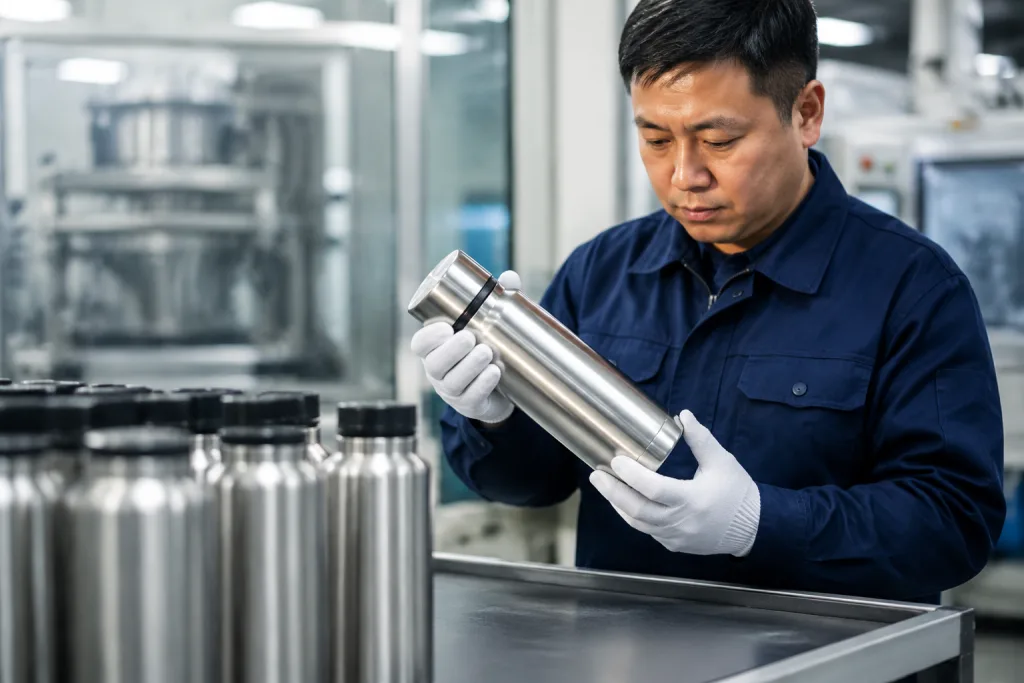
When checking the sample, do not just pour hot water and touch the shell. Test cap torque, gasket fit, thread smoothness, and odor after a boiling-water soak. If the bottle is for outdoor retail, drop test it from 1 meter onto a hard surface. If it is a thermos promotional item, check whether the print survives alcohol rub and carton compression. A sample that looks fine at arm’s length but fails in use is not approved. It is a claim waiting to happen.
- Confirm logo position within ±1.5 mm
- Check leak-free inversion for 30 minutes
- Verify lid opening torque is consistent across 5 units
- Record thermal test conditions in writing
Write the Purchase Order Properly
I’ll rewrite the section in-place, keep the HTML structure intact, and make the wording sound like a real sales engineer wrote it. Next I’m tightening the PO language with more concrete factory details and removing the AI-ish filler.Once the sample is signed off, the PO should read like a shop-floor instruction sheet, not a buying note. We’ve seen buyers lose the whole margin here. A tight PO keeps control whether you buy from a thermos manufacturer in Hangzhou, a thermos supplier in Ningbo, or a vendor in another province. It also saves headaches when one order ships in 2 cartons first and the rest goes out 12 days later.
Your PO needs the exact model code, capacity, steel grade, finish, logo method, packaging, carton count, and destination terms. Add the inspection standard too; AQL 2.5 for major defects and 4.0 for minor defects is the usual line, unless your brand runs tighter checks. Put the lead time in days, the deposit percentage, and the balance payment timing in black and white. For bulk thermos orders, Zhejiang factories often run 30% deposit and 70% before shipment, though some long-term distributor accounts push different terms. The math does not work if that part stays vague.
Here is the kind of structure that keeps the line moving:
- Item: 500 ml 316 inner / 304 outer vacuum flask
- Quantity: 5,000 pcs
- Unit price: USD 3.20 FOB Ningbo
- Logo: laser engraving, 1 position
- Packaging: 1 pc/color box, 50 pcs/carton
- Lead time: 30 days after deposit and sample sign-off
If the supplier thermos quote is lower but skips carton marks, outer box drop test, or barcode labeling, that discount is dead on arrival. QC pulled the sample on one job because the PO said “export box” and nothing else, and we had to rework 800 sets. You pay for that later in repacking, claims, or a launch that slips by a week.
Control Bulk Production Early
I’ll keep the HTML intact and rewrite the prose to sound like a sales engineer on the factory floor, with tighter wording and a few concrete production details.Bulk production is where a good factory thermos partner earns the margin. A reliable 316 stainless steel vacuum flask manufacturer will confirm raw material arrival, first-piece approval, in-process inspection, and final packing before shipment. We run that flow on the line, and we do not skip the sheet gauge check: 0.6 mm versus 0.8 mm changes dent rates fast. If you sell to outdoor retailers, finish consistency matters because buyers spot scratches and shade drift at once. If you sell to promo brands, the math is simple: one bad logo plate on 5,000 units turns into a claim.
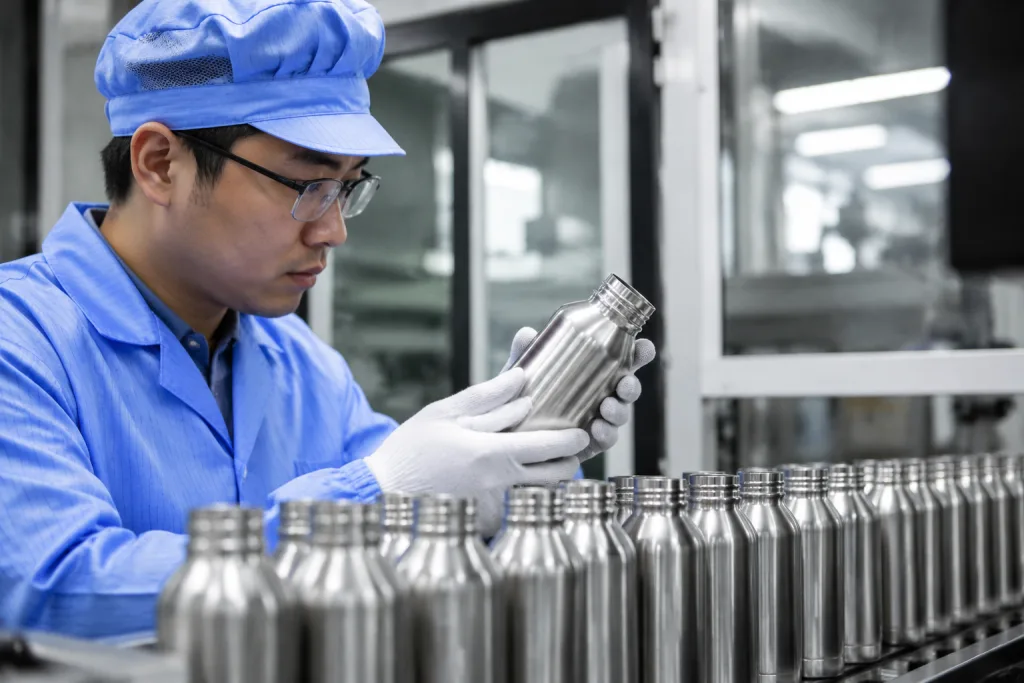
Ask for production checkpoints in writing. At minimum, the factory should check body thickness, vacuum leak rate, logo position, lid fit, and carton compression. QC pulled a sample on one 8,000-piece order and found a 1.2 mm logo shift; the buyer flagged it before packing, which saved a reprint. For stainless thermos lines, 100% leak test plus AQL sampling for appearance and assembly is the right split. If the order is large, bring in third-party inspection before shipment. That is standard in China, and it costs less than handling returns after goods land in Europe or North America.
Good thermos manufacturers and thermos suppliers also know how to separate production from packing. That matters when you need multiple SKUs in one order. A thermos bulk order often includes different capacities, colors, and lids in one shipping plan. If the factory cannot label cartons by SKU and batch, your warehouse will hate you. Ask for barcode labels, inner carton marks, and outer carton count by SKU before the first run starts; we have seen a PO typo turn 3,000 black lids into the wrong box code.
For recurring programs, a stable Zhejiang thermos factory can usually repeat the same model with a reorder lead time 20-30% shorter than the first run because tooling, packaging, and QC documents are already in place. On a 12-day repeat order, we have shipped the same flask in 9 days because the vacuum tester, carton die line, and pack spec were already locked.
Match Price to Channel Use
I’ll rewrite the prose only, keep the HTML intact, and tune the tone to sound like a real sales engineer from the line.Not every custom thermos should be priced like a premium retail bottle. Outdoor retail, corporate gifting, and promo runs all carry different numbers. If the bottle goes on a branded shelf, we run upgraded powder coating, a better lid feel, and tighter appearance control; if it is for a trade show, a clean logo and leak protection matter more than a luxury finish. That is how experienced buyers use the same thermos factory in different ways.
For reference, a basic bulk thermos in China can sit around USD 2.10-2.80 FOB for simpler structures, while a 316 stainless steel vacuum flask with a better lid, more precise coating, and retail packaging may land closer to USD 3.00-4.80 depending on capacity and order size. On our line, a color coating can add USD 0.15-0.35, laser logo can add USD 0.05-0.12, and a custom color box can add USD 0.18-0.40. QC pulled the sample once and found a 0.4 mm paint thin spot on the shoulder; the buyer flagged it, and that extra inspection saved a return later. If someone offers a fully customized thermos at a suspiciously low price, they are usually cutting steel thickness, decoration quality, or carton grade.
Ask one question before you approve the order: what hurts more, price or returns? If you are a distributor thermos buyer serving retail chains, returns eat margin fast. If you are running a promo launch, a missed ship date beats a few cents per unit every time. We’ve seen this go sideways when a PO typo turned “matte black” into “metal black” and the buyer had to rework the artwork after samples were already packed.
That is why the best thermos custom programs are not the cheapest. They are the most repeatable.
Send your thermos RFQ and get a factory quote
We handle custom thermos, bulk thermos, and retail-ready stainless flask programs from Zhejiang with clear specs, samples, and PO control.
Frequently asked questions
What MOQ should I expect from a 316 stainless steel vacuum flask manufacturer?
For stock-style structures, MOQ can start around 500 pcs per color or lid combo. For fully custom thermos projects with new coating, box, or cap parts, 1,000 pcs is more realistic. In Zhejiang, a factory with 1.2 million units per month can often support mixed orders if the SKU count stays controlled. If you need several colors, ask whether MOQ applies per color or total order. That single detail changes your landed cost quickly.
How long does sample and bulk lead time usually take?
For an existing mold and standard finish, sample lead time is usually 7-12 days. If the order needs a new cap, custom color, or special carton, expect 15-20 days. Bulk lead time is commonly 25-35 days after deposit and sample approval. If the thermos supplier says 10 days for everything, check whether they are already holding finished goods or just quoting optimistically.
Do I need full 316 steel for the whole bottle?
Usually no. Many buyers specify 316 for the inner liner and 304 for the outer wall to balance corrosion resistance and cost. Full 316 is useful for harsher conditions, coastal retail, or premium positioning, but it raises price. The key is to write the grade by part on the PO. A clear split prevents misunderstanding when the thermos manufacturer sources steel and starts production.
What documents should I request before paying the deposit?
Ask for a formal quotation, sample confirmation, product spec sheet, artwork proof, and if needed material declarations for REACH or food-contact compliance. For Europe and North America, ask how the factory handles testing references such as ASTM or ISO-based methods, and whether they can support BSCI if your retailer requires it. A real thermos supplier should answer those questions without drama.
How do I avoid quality problems in a bulk promotional thermos order?
Lock the sample, then write the PO around that approved sample. Use AQL 2.5 for major defects, 4.0 for minor defects, and require 100% leak testing. Add carton count, barcode labels, and logo tolerance to the order. For large promotional thermos campaigns, hire third-party inspection before shipment. That adds cost, but it is much cheaper than reprinting cartons or replacing leaked bottles later.