Key Takeaways
- 316 inner steel is worth the premium when your custom thermos will hold acidic drinks or face long resale cycles; expect about 8% to 15% higher material cost than 304.
- A practical MOQ for a decorated factory thermos is often 3,000 to 5,000 pcs; plain stock models can start lower, but custom packaging usually raises the floor.
- For export orders, ask for REACH, LFGB where relevant, and AQL 2.5/4.0 inspection terms before you approve the first production run.
- A Zhejiang supplier with 50,000+ units/month and 35- to 45-day lead time is useful only if it can hold vacuum leak rate, coating adhesion, and lid torque consistently.
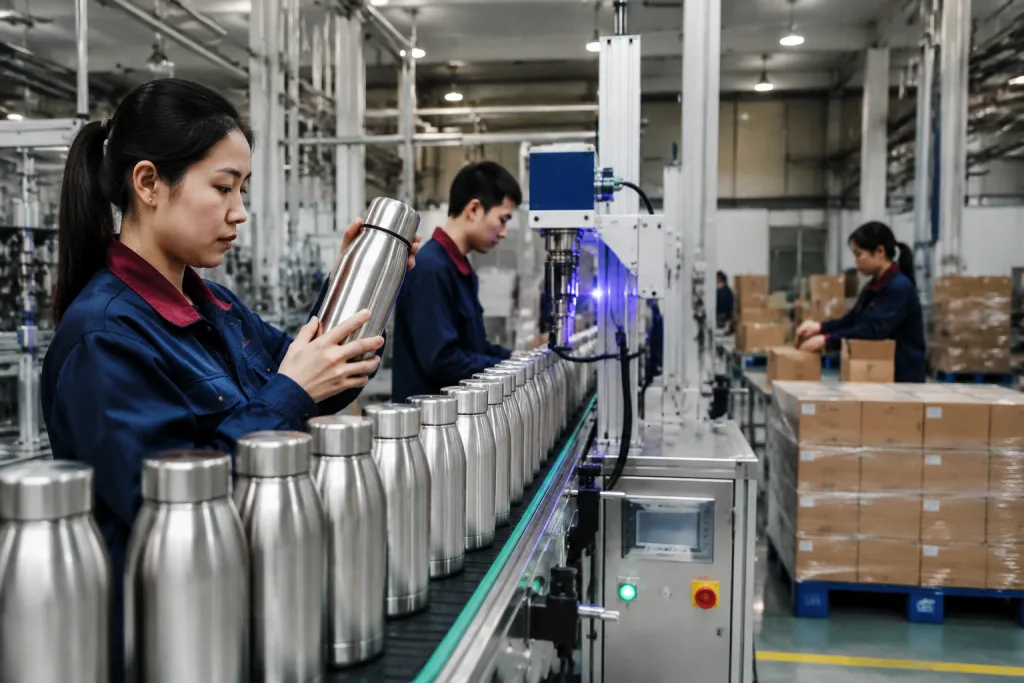
If you are buying for outdoor retail or a promo program, the hard part is not finding a stainless thermos. The hard part is picking the spec that survives a 3,000-unit MOQ, a logo change, and a fixed ship date. A 316 stainless steel vacuum flask factory in Zhejiang gives you better corrosion resistance, but that does not make it the right build for every bulk thermos order.
The real job is matching material, capacity, finish, and packing to the channel math. We run 50,000 units a month in Zhejiang, and the line still misses the target if the buyer skips the details. A good custom thermos order starts with the use case, then checks wall structure, test standards, and lead time; we’ve seen that sequence save a PO when QC pulled a sample with a 1.2 mm liner and the buyer flagged the print size.
Start With The Use Case
Before you compare samples, lock the use case. A 316 stainless steel vacuum flask factory makes sense when the thermos will hold sports drinks, citrus tea, black coffee, or sit on a humid shelf for 6 to 12 months. If the buyer only needs a promo thermos for a 30-day campaign, 304 often does the job. We’ve seen this go sideways when a customer chased 316 for a giveaway run and then the margin got crushed.
The first call is simple: temperature retention, corrosion resistance, or price point. For a 500 ml custom thermos, 316 in the inner wall adds cost, but it cuts pitting risk and gives you a cleaner pitch at retail. QC pulled a sample from the salt-spray rack at 48 hours once, and the buyer flagged light spotting on the 304 cup first. That is the wrong question to ask if your channel can’t absorb the extra cost.
- Outdoor retail: push impact resistance, 0.5 mm to 0.6 mm inner wall thickness, and a lid that survives drops.
- Promotional programs: push decoration area, logo turnaround, and a stable MOQ.
- Premium retail: push 316 steel, matte powder coat, and box presentation that looks clean on shelf.
Judge The Steel, Not The Marketing
I’ll rewrite this section to sound like a factory-side sales engineer, keep the HTML structure intact, and strip the AI-ish phrasing while adding a few concrete shop-floor details.Buyers see “316” and think the whole flask gets upgraded. That is not how thermos production runs on the line. You have to pin down which parts are 316 and which parts are still 304. In most builds, the inner liner is 316 stainless steel, while the outer shell stays 304. Lids, straws, silicone seals, and handles are separate parts, and they need to be called out in the drawing or PO.
For a B2B buyer, the real question is not “Is it 316?” but “Where is the 316, and what does it do for this order?” Ask the thermos supplier for the material certificate, not a sales pitch. On export jobs, we usually check the coil or sheet lot traceability, especially for EU accounts or a US retailer that asks for vendor files. QC pulled the sample on a 0.2 mm wall spec last week; the steel grade was fine, but the weld bead was the weak point. A proper thermos factory should show the grade, weld consistency, and passivation record if the build includes it.
“316 makes sense when your customers care about durability and hygiene, not just the lowest landed cost.”
Watch the hidden cost. We have seen a cheaper custom thermos use thinner steel, sloppy welds, or a lid that fails after 500 openings instead of 2,000. That math does not work for a distributor line that needs to repeat next season. One buyer even sent a PO with “316 lid” typed in by mistake; the lid never had 316 in the first place.
Match Structure To Channel
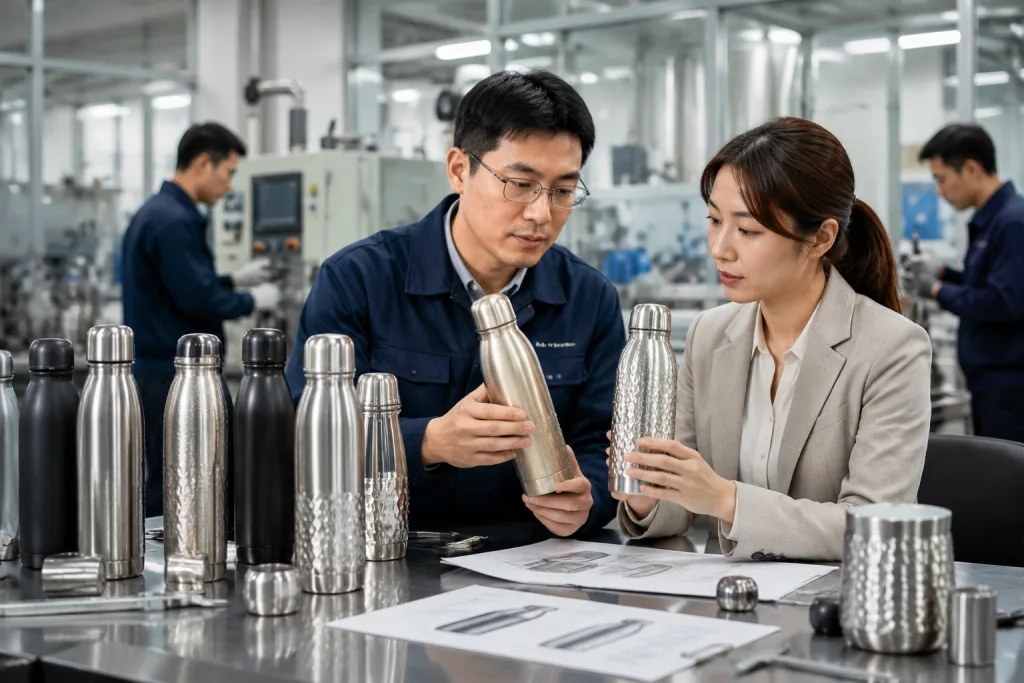
I’ll rewrite the section in-place, keep the HTML exactly as-is, and make the copy sound like a factory-side sales engineer wrote it.The body shape, lid style, and capacity need to match the channel. Outdoor retailers want a flask that feels solid in hand, slides into a backpack side pocket, and still looks clean after 20 trips through the line. Promo buyers look at print area, artwork sign-off, and carton count first. That is why one thermos custom program runs 500 ml with a matte powder coat, while another runs 750 ml with a plain gloss finish and a one-color logo. We’ve had a buyer flag a 2 mm cap overhang on the sample, and that tiny detail killed the retail shelf look.
For thermos bulk purchasing, the structure changes freight and sell-through. A 350 ml bottle fits gift sets, but a 500 ml or 750 ml bottle usually carries better shelf value in retail. A double-wall vacuum flask with a screw lid is the steady choice. A push-button lid looks convenient, but it adds failure points and more parts for QC to check. That is the wrong question to ask if someone says “make it fancier” — the math works better on fewer parts, lower MOQ stress, and less rework at the packing table.
- 350 ml: good for office gifts and compact travel sets.
- 500 ml: the safest all-around SKU for outdoor retail and premium promo.
- 750 ml: stronger for hiking, gym, and value-led channels.
Ask the factory to quote the same design in two capacities. The price gap is often only USD 0.25 to USD 0.60, but the channel story changes a lot. We run this comparison all the time on the packing line, and a smart thermos supplier will test the channel logic instead of pushing the biggest bottle by default.
Check Factory Realities
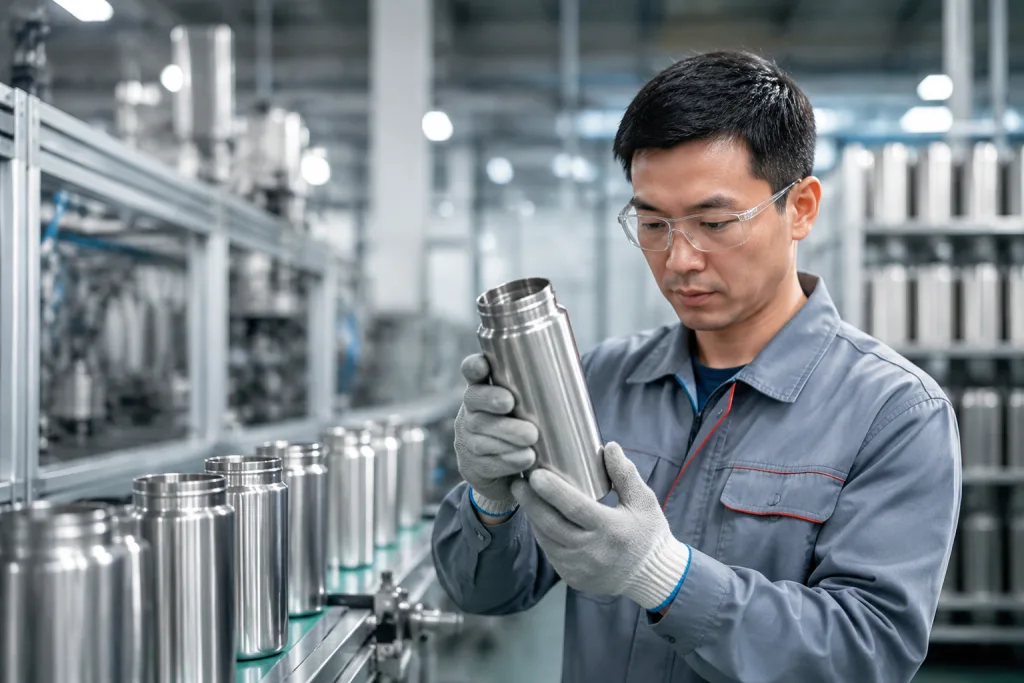
I’ll keep the HTML intact and rewrite the prose with a sharper factory-floor voice, real numbers, and fewer generic phrases.The factory question is simple: can they run the same thermos at scale without quality drifting? In Zhejiang, and across China, you’ll meet real makers and trading desks that call themselves a factory. Ask for monthly output, the in-house process list, and the test gear before you send artwork. A real 316 stainless steel vacuum flask factory can talk through welding, vacuuming, powder coating, and inspection without hunting for a brochure. QC pulled the sample on the line at 11:20, not after lunch.
We ask five straight questions: What is your monthly capacity? What is the MOQ for this shape? Do you own polishing and coating lines? Can you handle custom color, laser logo, and gift box work? What is the lead time after sample approval? If a supplier says yes to all five but cannot give a number like 35 to 45 days, the math does not work. You’re probably talking to a reseller, not a manufacturer.
For a mid-size order, a solid factory in Zhejiang may run 50,000 to 80,000 units per month, with a 3,000 pcs MOQ on a decorated SKU and a 15-day sample lead time. That is normal. If your thermos distributor program needs 100,000 units in two months, ask about tooling, shift count, and the packing line now. We’ve seen that go sideways when the buyer waited until the PO was signed. A typo on the PO, like `316L` instead of `316`, can burn a week fast.
Decoration Changes The Economics
I’ll rewrite the three paragraphs in place, keeping every HTML tag and the exact structure intact, while making the prose sound like a factory-side sales engineer wrote it.The logo method is not a side note. It drives unit price, line speed, and rejection risk. A plain silk screen logo on a customized thermos usually stays cheapest, often adding only USD 0.05 to USD 0.18 per piece, depending on color count and print area. Laser engraving costs more on setup, but the finish stays clean and the wear test looks better. UV printing works for multi-color branding, though it needs tighter surface control and gets tricky on curved bodies; we had QC pull a sample once because the curvature made the edge look fuzzy at 200 mm away.
If you sell promotional thermos products, you need batch thinking, not brochure thinking. One campaign may need 5,000 pieces for a trade show, another 20,000 for dealer gifts. The right decoration is the one that survives handling, carton drop tests, and consumer washing. A thermos customizable program should lock Pantone targets, logo placement tolerance, and whether the artwork sits on the outer shell or on a sleeve. We’ve seen this go sideways before: the bottle passes, then the buyer flags it because the logo is 3 mm too low or reads too small after packing.
Keep an eye on accessory choices. A gift box with insert tray can add USD 0.30 to USD 0.90, and a color paper sleeve adds another cost layer. For a supplier thermos quote, ask for base bottle, print, inner carton, master carton, and palletization as separate lines. That gives you a cleaner landed-cost model and fewer freight surprises; on one PO, a missing carton spec turned a neat quote into a 12% gap overnight.
Protect Margin With Testing
I’ll keep the HTML unchanged and rewrite only the prose, with tighter factory-floor language and specific QC detail.Testing is where a real thermos factory pulls away from a showroom trader. For export runs, we check vacuum retention, lid leak test, thermal performance, coating adhesion, and carton drop test. On one 48,000-piece order, QC pulled the sample at 20:00 and the cap seeped at the hinge after a 1.2 m drop; that sort of finding saves a claim later. If your buyer is in North America or Europe, get REACH and the food-contact papers on file before packing starts, not after the PO is confirmed. Some buyers also call out ASTM methods, so pin down the test scope in writing.
Write the quality standard in numbers, not feelings. A clean spec looks like this: no visible leakage after 24 hours at room temperature; temperature drop within the agreed target after 6 hours; appearance acceptance at AQL 2.5 for major defects and AQL 4.0 for minor defects. We had a buyer flag one batch because the lid print was shifted 1.5 mm, and the math was simple—the PO did not allow it. That level of detail makes supplier quotes comparable, and it stops a factory from waving off a scratch as “normal” when your retail standard says no.
For high-volume bulk thermos orders, run pre-production samples first, then lock a golden sample with both signatures. Keep one signed set in your office and one in the factory file. It is cheap insurance. We ship this way on export programs because a 12-day sample signoff can save an 18-day fight over color, thread pitch, or logo placement. In Zhejiang, the better plants already do this on the line; the bad mistake is assuming the desk sample and the mass run will match without a written record.
Request a quote from a Zhejiang thermos factory
Send your capacity, finish, and packaging targets. We’ll quote the right 316 stainless steel vacuum flask factory build for your channel and MOQ.
Frequently asked questions
Is 316 steel really necessary for a custom thermos order?
Not always. If your product will hold plain water or dry-use beverages, 304 is usually enough. Choose 316 when the bottle is exposed to acidic drinks, humid storage, or premium retail expectations. For a 500 ml flask, 316 usually adds about USD 0.18 to USD 0.45 in material and process cost, depending on wall thickness and finish. If your target channel is outdoor retail or long-life corporate gifting, that premium is often easier to defend. If the order is a short-run promotional thermos, the extra cost may not return enough margin.
What MOQ should I expect from a thermos factory in China?
For a decorated stainless thermos, a practical MOQ is often 3,000 to 5,000 pcs per SKU. Stock colors can be lower, sometimes 500 to 1,000 pcs, but once you add custom logo, custom box, or special lid parts, the minimum rises. A Zhejiang factory with real production lines may quote 15 days for samples and 35 to 45 days for mass production after approval. If someone offers 300 pcs with full customization, check whether they are a trader or if they are charging heavy setup fees.
How do I compare a supplier thermos quote fairly?
Break it into base bottle, decoration, packaging, and freight. A quote that looks USD 0.20 cheaper may hide a thinner inner wall, weaker lid, or no carton insert. For export, ask for the material grade, wall thickness, vacuum test standard, and inspection terms such as AQL 2.5/4.0. Also confirm whether the price is FOB China, because FOB terms make it easier to compare different China suppliers on the same basis. A clean quote from a thermos supplier should let you calculate landed cost without guessing.
What decoration method lasts longest on a customized thermos?
Laser engraving usually lasts the longest because it removes material rather than sitting on top of the coating. It is a strong choice for premium retail and outdoor use. Silk screen is cheaper and works well for simple one-color logos, but it can wear faster if the bottle is rubbed hard or washed often. UV printing gives more color flexibility, though the surface prep needs to be tighter. For a 5,000-unit promo order, many buyers choose silk screen because the cost stays low, while retail brands often move to laser or multi-layer print.
How should I inspect a bulk thermos order before shipment?
Start with a pre-shipment inspection using AQL 2.5 for major defects and 4.0 for minor defects, unless your buyer standard is stricter. Check leakage, lid fit, vacuum performance, logo position, coating scratches, and carton drop resistance. For export orders, verify the carton count, barcode or FNSKU if needed, and the golden sample. If the order is going to Amazon or a similar channel, confirm pack-insert rules and label placement before palletizing. A good factory in Zhejiang will normally support that inspection flow if you ask early.