Key Takeaways
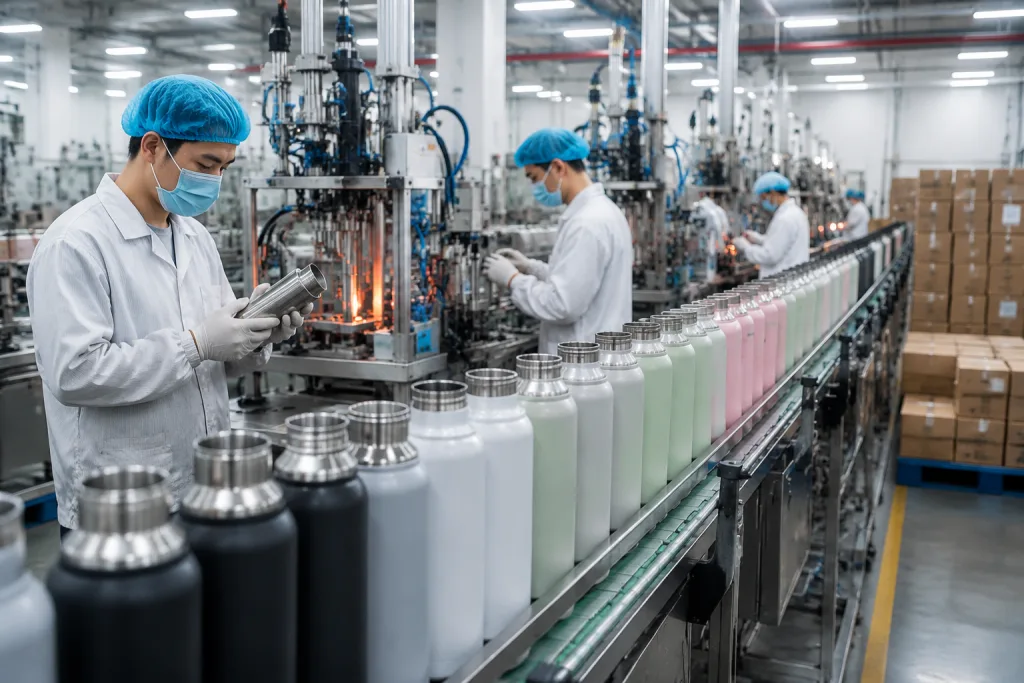
- 316 stainless steel vacuum flask bulk usually starts at 500 pcs MOQ and 35-45 days lead time
- 316 inner liners are better for acidic drinks and marine use than 304, but cost about 8-15% more
- 18/8 outer shells with 0.4-0.5 mm walls are common for a durable factory thermos
- A well-built vacuum flask should hold 60°C+ after 12 hours in lab conditions, depending on capacity and lid
If you are placing a 316 stainless steel vacuum flask bulk order, the real question is not “is 316 better?” The math is whether the extra corrosion resistance pays for itself in your channel, your price band, and your lead time. For outdoor retailers, it usually makes sense when customers carry salty water, sports drinks, or acidic drinks. For promo programs, it depends on whether the flask has to survive real field use or just hold a logo for a 90-day campaign.
We run thermos programs in Zhejiang, China, and the same thing keeps happening: buyers who only check capacity miss the specs that drive returns, margin, and repeat orders. QC pulled a sample last week with a 0.3 mm wall difference, and that kind of gap changes vacuum life fast. Lid type, surface finish, packing method, and the typo the buyer flagged on the PO matter more than the line on the product page. If you want a bulk thermos that sells cleanly and ships without drama, compare it like a sourcing engineer, not like a catalog shopper.
316 Versus 304, Side by Side
Buyers ask for 316 because it gets sold as the “premium stainless steel.” That is only half the story. For a 316 stainless steel vacuum flask bulk order, the upgrade pays off on the inner liner, where the drink sits against the metal. 316 adds molybdenum, which gives better resistance to chlorides and acid attack. We have seen the buyer flag a salty sports drink spec after QC pulled the sample with light pitting at the weld seam on a 304 liner. That is where 316 earns its keep.
Here is the split we run on the Zhejiang line:
- 304 inner liner: fine for water, tea, coffee, and normal office or promo use.
- 316 inner liner: better choice for salty drinks, acidic mixes, and high-mineral water.
- Price delta: usually 8-15% higher material cost, based on current steel price and MOQ.
- Use case: 304 for mass giveaway runs; 316 for outdoor retail SKUs and lower-return programs.
Do not spend on 316 for a logo flask going to office desks. The math does not work. Use it when the distributor wants fewer corrosion claims and a longer service life, and the spec sheet has to survive a few rough seasons in the field.
Spec Table That Actually Matters
I’m rewriting this section to sound like a factory sales engineer, while keeping the HTML exactly intact. Next I’m tightening the claims, adding one floor-level detail per paragraph, and removing the AI-style filler.Most custom thermos sourcing goes wrong because the buyer checks color and capacity, then signs off the sample before looking at the real cost drivers. We run into this all the time. A side-by-side spec table shows where the margin sits, and where the first complaint will come from. This is the table we use when a thermos manufacturer quotes a new program.
| Spec | Entry Bulk Thermos | Retail-Grade 316 Flask | Why It Matters |
|---|---|---|---|
| Inner steel | 304 | 316 | Corrosion resistance, drink compatibility |
| Wall thickness | 0.35 mm | 0.4-0.5 mm | Dent resistance, perceived quality |
| Vacuum retention | 18-20 hours | 20-24 hours | Performance claims and customer trust |
| Lid gasket | Silicone, standard | Silicone, food-grade, tighter fit | Leak control and odor resistance |
| MOQ | 300-500 pcs | 500-1000 pcs | Tooling, color, and decoration planning |
| FOB price | USD 3.20-4.80 | USD 4.60-7.20 | Channel pricing and margin model |
A decent manufacturer thermos quote should also state the test basis, not just “keeps hot long time.” Ask for heat retention measured from a 95°C fill temperature and the cooling curve from the lab meter. QC pulled the sample with a 2 mm lid gap once, and the buyer flagged the leak on day 3. If the supplier thermos team cannot explain the setup, the number is noise.
Choose By Use Case, Not Hype
I’ll keep the tags and heading structure, then rewrite the prose to sound like a factory-side sales note with tighter specifics and fewer generic phrases.The right customized thermos depends on where it moves. Outdoor retail wants fewer SKUs, stronger cartons, and fewer warranty calls. Promo buyers want fast artwork sign-off, low piece cost, and logo placement that stays clean on the line. Those are different buys.
Retail outdoor fit
If you sell through outdoor shops, camping chains, or sporting goods distributors, go with a heavier body, powder-coated finish, and threaded lid with a wide seal. We run drop checks from 1.2 m, and the buyer flagged a thin shell after the first carton test. A 500 ml flask with 0.45 mm walls, 316 inner liner, and leak-proof stopper is safer than a light bottle that dents in transit.
Promotional fit
If the order is for events, wellness campaigns, or trade gifts, keep the build simple. One-color silk screen or laser logo, matte paint, and a standard gift box usually win. QC pulled the sample on a 2 mm logo offset once, and the PO had a typo on the box color code. For a giveaway run, that kind of miss burns time. A premium lid is the wrong question to ask when the item will be handed out in bulk and used casually.
The expensive mistake is forcing one design to do both jobs. A thermos distributor selling into outdoor retail and a thermos supplier serving corporate gifting should not share the same spec sheet unless the MOQ, target price, and carton plan line up.
Branding Options That Hold Up
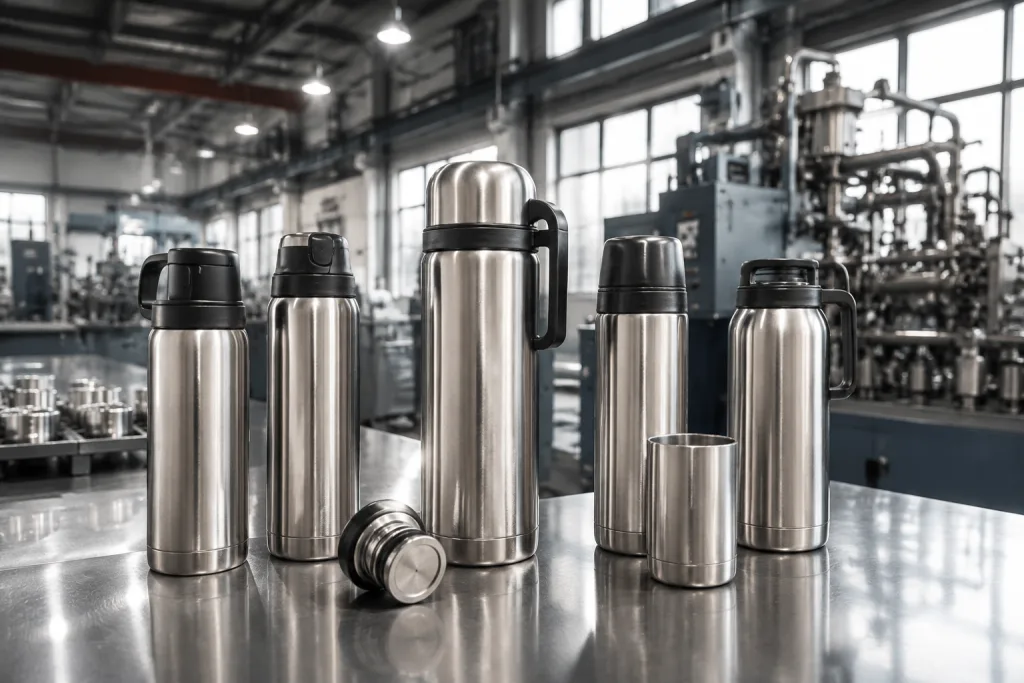
I’ll rewrite just the prose inside the existing HTML, keep the tags intact, and make it sound like a factory-side sales engineer. Then I’ll give you the cleaned HTML only.Custom branding decides whether a factory thermos looks like a sales sample or a retail item. A clean logo helps; a bad print looks cheap fast. For 316 stainless steel, we usually quote laser engraving, silk screen, UV print, and wrap label. Pick the method based on finish, run size, and where the flask will be sold.
- Laser engraving: best for brushed steel or powder coat when the buyer wants a mark that survives shipping and daily wash cycles.
- Silk screen: the low-cost choice for a 1-color or 2-color logo, and we run it a lot on MOQ 1,000 pcs.
- UV print: good for full-color artwork, but QC pulled the sample after a 48-hour rub test if the ink sat too soft.
- Wrap label: fine for a 3-month promo, but the buyer flagged it on a retail order because edge lift showed after carton friction.
For a thermos custom run, ask for a placement mockup and a first article sample before we release the line. If you want a customizable thermos program in three colors, check whether each color adds a separate MOQ or just a pigment surcharge; the math changes fast. One PO typo we see all the time is logo size written as 25 mm when the buyer meant 2.5 mm, and that is the kind of mistake that burns a week in Zhejiang.
Quality Checks Before You Approve
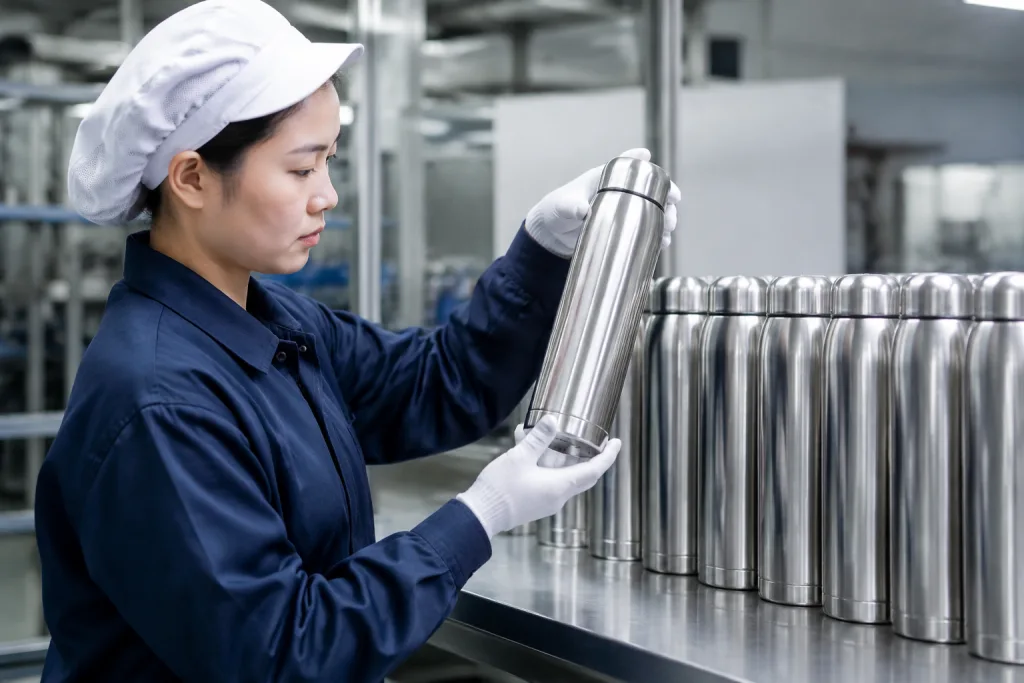
I’ll rewrite the prose in-place, keep the HTML structure untouched, and tighten it to sound like a real factory-side sales engineer.Quality is where a bulk order stays profitable or turns into a headache. For a thermos factory or thermos manufacturer in China, the baseline should cover AQL inspection, drop testing, leak testing, and heat-retention reports. If you ship into North America or Europe, ask for REACH compliance on coatings plus food-contact declarations for the steel and lid parts. We’ve seen a buyer skip that paperwork, then the shipment sat for 18 days at port.
We normally see serious buyers ask for these checks:
- AQL 2.5 for appearance defects, or tighter for a premium line.
- Leak test in inverted position for 24 hours.
- Thermal test on filled samples before mass packing.
- Carton test for a 1.2 m drop and compression, especially for e-commerce.
One practical note: a thermos custom order with deep embossing or complex paint can pass the sample and still fail in production if the curing window is rushed. That is the wrong question to ask if you only look at the signed sample. A manufacturer thermos quote should show line speed, curing method, and inspection frequency. On our line, QC pulled the sample every 2 hours, and we still caught a lid-ring issue before palletizing. A good Zhejiang factory does not guess. It runs 300,000 units a month and keeps the checks boring, because bulk buyers need repeatability, not luck.
What To Ask Your Supplier
I’ll keep the HTML structure intact and rewrite only the prose to sound like a factory-side sales engineer. I’m preserving the list structure and making the questions sharper, with a few concrete factory details woven in.Before you send a PO, make the supplier thermos team answer the questions that change landed cost and sell-through. We ask for numbers, not sales talk. If they cannot quote a figure, they are not ready for export work.
Use this checklist:
- What is the exact MOQ by color and by logo method?
- What is the FOB price at 500, 1,000, and 5,000 pcs?
- Is the inner liner 316 all the way through, or only on the contact parts?
- What is the lid material and gasket grade?
- What is the standard lead time from sample approval?
- Can you support carton marks, FNSKU, and export master cartons?
A good thermos supplier should also say whether mixed SKUs can share the same tooling. We have seen buyers flag this late, and the math does not work if you need two lids and three colors after deposit. On our line, that usually means checking the lid mold, the silk screen jig, and the packing count before we confirm. Factories in Zhejiang and the nearby metal belt can still hold 35-45 day repeat orders when the coating shop, stamping line, and carton plant are 20 minutes apart.
Request a 316 thermos quote today
Send your target capacity, logo method, and order size. We’ll map the right spec, MOQ, and lead time for your channel.
Frequently asked questions
Is 316 stainless steel worth it for a bulk thermos order?
Yes, if the flask will hold acidic drinks, sports mixes, or see coastal use. 316 costs about 8-15% more than 304, but it reduces corrosion risk and can lower complaint rates. For a 500 ml promotional thermos sold into general office gifting, 304 is usually enough. For outdoor retail, 316 is the safer choice when durability matters more than hitting the lowest FOB price.
What MOQ should I expect for a customized thermos in China?
For a standard customization, expect 500 pcs MOQ per color or finish, sometimes 1,000 pcs if you want multiple decoration methods. A simple silk-screen logo may stay at 500 pcs, while special powder coat or packaging often pushes the MOQ higher. A serious thermos factory in Zhejiang should tell you the MOQ by component, not hide it in one lump number.
How much should a 316 stainless steel vacuum flask bulk price cost FOB?
For a normal 500-750 ml flask, FOB pricing commonly sits around USD 4.60-7.20 depending on body thickness, lid design, and decoration. Powder coating, laser engraving, or custom gift boxes add cost. If a quote is far below that range, check the steel grade, wall thickness, and vacuum performance before you approve samples.
What tests should I request before shipping?
Ask for leak testing, heat retention testing, and appearance inspection under AQL 2.5. For export to Europe or North America, also request REACH-related material declarations and food-contact documentation. If you sell through distributors, ask for carton drop and compression tests too. A bulk thermos order can look fine in photos and still fail in transit if packaging is weak.
Can I use the same thermos for retail and promotional campaigns?
You can, but only if the spec is balanced. A retail-grade body with 0.4-0.5 mm walls and a clean powder coat works for both channels, but the packaging and logo method may need to change. For promotions, simplify the artwork and box. For retail, keep the finish and lid quality high so the product feels like a real shelf item, not a giveaway.