Key Takeaways
- 316 is worth paying for when you need better pitting resistance than 304; expect roughly 8-18% higher material cost.
- A 0.4-0.5 mm inner wall and full circumference laser weld are safer than chasing the lowest FOB price.
- For wholesale orders, push for AQL 2.5 for major defects and vacuum-retention testing on at least 5% of cartons.
- A 3,000-piece MOQ and 25-35 day lead time are realistic for a custom thermos program from a Zhejiang manufacturer.
You can buy a stainless thermos off a photo and a unit price, then lose money on the first 5,000 pieces. The problems usually show up late: weld burn marks, weak vacuum retention, tea-stain corrosion, lid leaks after a cold-chain test, or a coating peeling in transit. We’ve seen a buyer flag a tiny lid-gap typo on the PO, and that one line turned into a 2,000-piece rework. If you are buying 316 stainless steel vacuum bottle wholesale, the job is not picking a trendy shape. It is stopping defects before they roll out of the Zhejiang line.
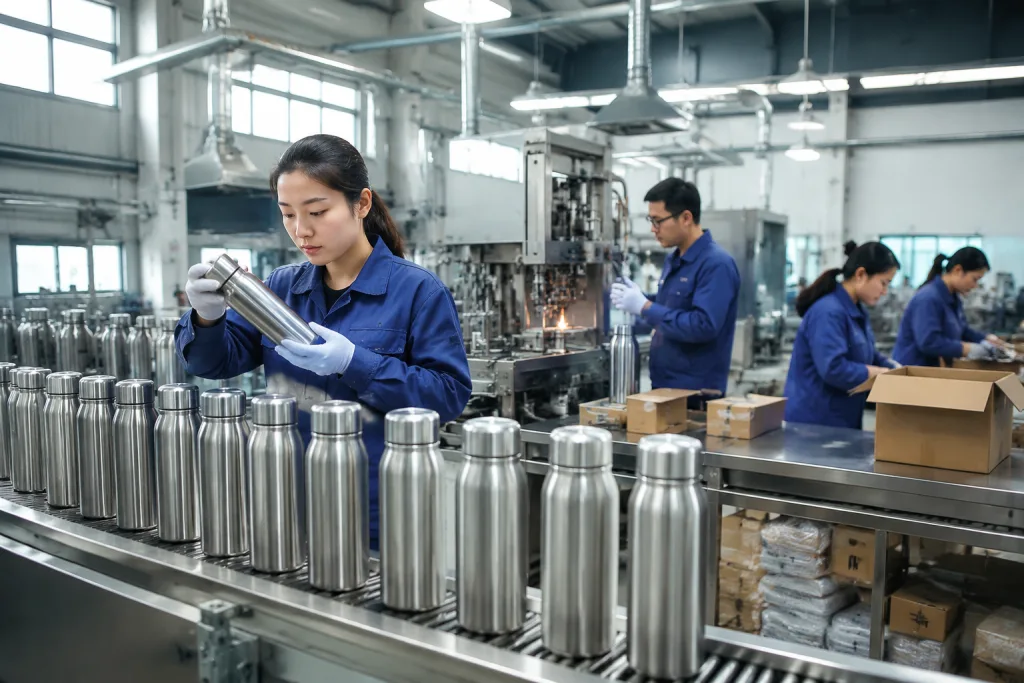
For outdoor retailers and promo brands, the spec has to survive freight, shelf time, and rough end use. That means knowing where 316 earns its keep, where it is just extra cost, and which details protect margin. BottleForge Industrial in Hangzhou runs 180,000 units per month, with a 3,000-piece MOQ on most custom thermos programs and a 25-35 day lead time after artwork approval. QC pulled the sample at 0.3 mm seam variation last week; the math does not work if the spec is loose.
Where thermos projects fail first
I’ll rewrite the prose in place, keep the HTML exactly as-is, and make it sound like a real factory-side sales engineer.The first break usually isn’t the steel grade. It’s the small misses stacked together: the lid seal is too soft, the neck finish is off by 0.3 mm, the powder coat cures unevenly, or the buyer approved a glossy sample that hid weld marks. On a promotional thermos program, that gets expensive fast. We are not selling one cup; we are shipping thousands of the same promise.
Start with the use case. If your customers are hikers, guides, or field teams, the bottle will take condensation, grit, repeated drops, and hot-cold cycling. If the order is for a brand manager running a thermos promotional batch, the pressure shifts: the logo has to stay sharp, the lid has to survive transit, and the carton needs to hold up in FBA or distributor handling. We run the line around measurable controls, not “good quality.” That phrase does not hold a PO.
- Leak risk: specify 360-degree inverted leak testing for every batch.
- Vacuum risk: require a minimum 6-hour hot retention and 12-hour cold retention test before mass shipment.
- Decor risk: test logo adhesion with 100-cycle tape rub and abrasion checks.
If a supplier thermos quote comes in 12% lower, ask what got cut. The math usually shows up in the lid, the carton, or the inspection standard. We have seen that go sideways more than once, and the buyer flagged it only after the first carton drop test.
Why 316 changes the corrosion story
I’ll rewrite the prose only, keep the HTML exactly intact, and make it sound like a factory-side sales engineer wrote it.316 stainless steel is not a marketing label; it is a corrosion choice. The molybdenum in the alloy gives better resistance to chlorides, acidic drinks, sports drinks, and salty outdoor use. For a wholesale thermos line sold into coastal markets, winter road-salt regions, or busy gyms, that matters. For a desk bottle, 304 usually does the job and keeps the price cleaner.
The wrong move is treating 316 like a cure-all. It will not save poor welding, thin walls, or weak passivation. It only gives more room before pitting, staining, and surface dulling show up. If your promo bottle will hold coffee, tea, electrolyte mix, or citrus water, 316 lowers the chance of buyer complaints over a 12-month to 18-month retail cycle. If the bottle is a cheap giveaway, the math does not work and you are spending where it adds no value.
Ask your thermos manufacturer for material traceability, not just a verbal claim. A proper factory thermos program should show coil grade records, wall thickness targets, and finished-goods inspection data.
One simple rule: if the bottle will live in wet, salty, acidic, or outdoor conditions, the extra material cost is easier to defend. If not, put that money into a better lid, a stronger coating, or packaging that ships clean. We run this calculation at the line all the time. That is how solid thermos suppliers protect your margin.
Welds and vacuum loss
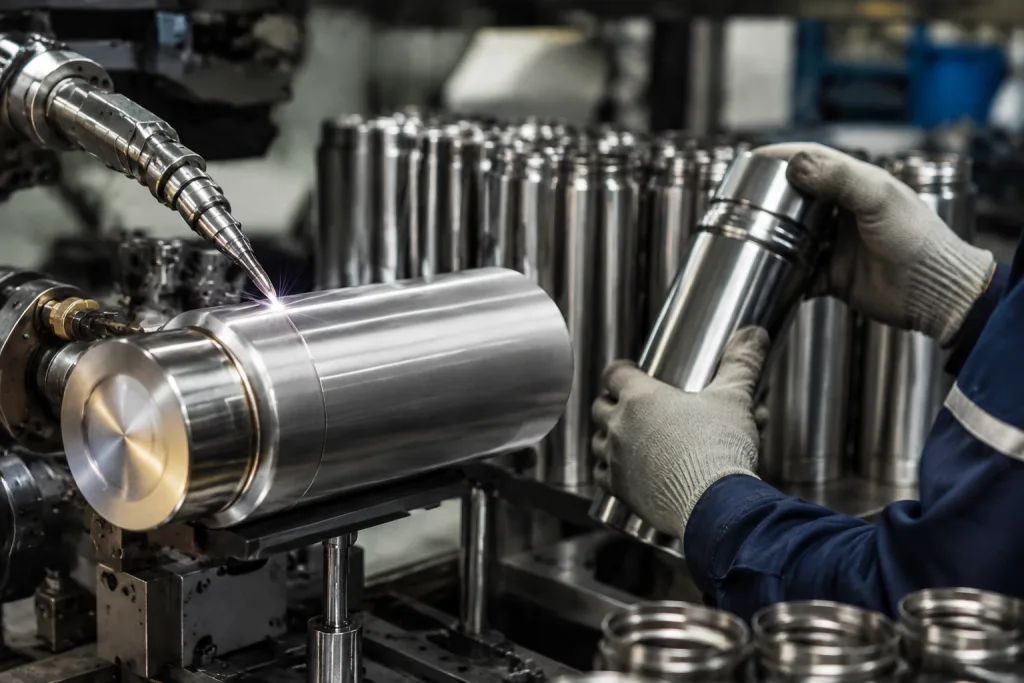
I’ll rewrite this section in-place, keeping the exact HTML structure and tightening the sales-engineer tone. Next I’m checking for any repo-local instructions, then I’ll patch the prose only.Plan set: inspect instructions, then rewrite the HTML with stronger factory-floor detail and cleaner buyer language.Vacuum loss is the quiet failure mode. A bottle can pass visual inspection and still come back dead because the weld seam ran too hot, the evacuation port was not sealed cleanly, or the collar warped during forming. Once the vacuum drops, insulation numbers fall fast. Then the buyer flags the whole custom thermos program, not the real root cause.
Spell out the build in plain words. For a premium stainless thermos, a full laser weld is cleaner than a rough spot-weld seam, especially when the inner and outer shells need to stay concentric. We normally ask for 0.4 mm inner wall and 0.5 mm outer wall on standard retail bottles; for 1,000 ml sizes, 0.45 mm inner wall is the safer call. If the factory tries to cut gauge to save cost, ask for a retention test with filled bottles, not dry samples from the sample room.
- Vacuum retention: 24-hour chamber check on sampling lots.
- Temperature retention: verify against a documented fill protocol, not a lab-only demo.
- Drop testing: 1.0 m on concrete for packed units, especially for thermos bulk shipments.
We see this all the time. A factory can form the bottle shape, but keeping vacuum integrity steady across a 5,000-piece run is a different job. QC pulled the sample once and found a 2 mm collar warp at the neck; that is the gap between a real thermos factory and a shell maker.
Lids leak when tolerances slip
I’ve got the target section. I’m rewriting the prose in place, keeping every tag and the heading structure intact, and I’ll sharpen the factory-floor detail so it reads like a buyer-facing sales engineer note.The lid is where bulk thermos programs slip first. We see it on the line: one sample seals fine, then mass production starts leaking because the gasket Shore A changes, the thread pitch walks, or the press-fit liner shrinks after curing. That is a tolerance stack problem, not a mystery. It shows up a lot on customized thermos projects with two or three cap styles.
For a distributor thermos line, lock the closure spec first. If you want a one-handed push button, a screw cap, and a tea infuser lid, you are running three products, and the math does not work for most budgets. We separate the base bottle cost from the lid cost in the quote, because the lid often takes 18-30% of the total FOB price on a premium build. QC pulled the sample, and the buyer flagged the cap as the part that would eat margin later.
Ask for silicone gasket hardness at 50-60 Shore A, cap torque range, and a 10,000-cycle open-close test on moving parts. If the lid has a carry loop, check the pin joint after vibration testing; that joint is where cheap hardware loosens first. For thermos customizable projects, a plain cap usually brings fewer warranty calls than a fancy one. Function wins when the bottle goes to outdoor retail shelves or a promo mailer.
Decoration that survives real use
I’ll rewrite the section in-place, keeping the HTML tags and structure unchanged while making the copy sound like a field-tested sales engineer wrote it.A custom thermos is only custom if the marking still looks right after handling. We see the same failure points every time: soft-touch coatings go glossy on the carton corners, pad print lifts at the edge, laser marks look faint on curved bodies, and full-wrap graphics split near the shoulder. One buyer signed off under showroom lights, then the first export carton came back with scuffed sleeves and a weak-looking logo. QC pulled the sample from the line; the finish had already been rubbed down in transit.
Pick the decoration by the market, not by habit. For corporate gifts, screen print or laser engraving is enough in most cases. For outdoor retail, powder coat with a laser logo holds up better. For promo thermos runs, keep it simple and repeatable. The math does not work when you stack on extra colors, because registration drift shows up fast and AQL 2.5 starts catching it. A proper thermos custom spec should spell out the logo position, the size in mm, Pantone targets, and the print pass count; we had one PO typo change a 25 mm mark to 2.5 mm, and the buyer flagged it before production.
- Laser engraving: durable, clean, and a better fit for metallic finishes.
- Silkscreen: lower cost, but check adhesion and edge sharpness on the first 20 pcs.
- Powder coat: ask for 60-80 microns dry film thickness when abrasion is the concern.
For promotional thermos orders, the best spec is plain: one logo, one position, one process, one proof standard. We ship that way because it cuts rework at the sample stage and keeps the line moving.
How to spec a buy that holds up
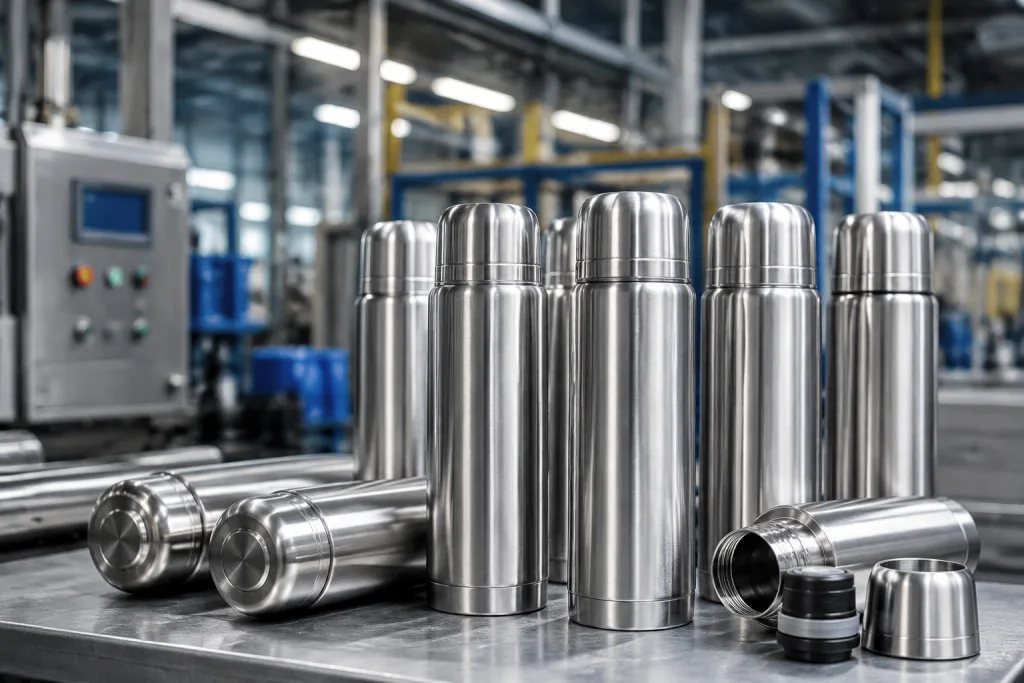
I’ll rewrite the three paragraphs in place, keeping the HTML tags and the heading exactly as-is, and tighten the language so it sounds like a real factory-side sales engineer wrote it.If you want a wholesale program that survives the line, write the purchase spec like a failure-control sheet. State 316 stainless or 304 stainless, wall thickness in mm, lid type, insulation target, surface finish, decoration method, packaging format, and acceptance criteria. Do not leave “as per sample” as the main control. Samples help, but the mass run has to live inside numbers.
Ask for batch inspection under AQL 2.5 for major defects and AQL 4.0 for minor defects, with separate checks for leak, finish, and logo. Require REACH-compliant coatings and food-contact declarations where applicable. On one order, the buyer flagged a barcode typo on the PO and we caught it before carton printing; that saved a mess. If you sell into North America, plan carton markings, barcode placement, and FNSKU space before production starts. In Europe, ask for food-contact and coating paperwork up front. A real thermos supplier will show the file if the plant is organized.
Commercial terms matter too. Ex-works pricing can look sharp, but if the shipping cartons fail a 7 kg drop test, the freight damage eats the savings fast. FOB from Zhejiang is usually the cleaner comparison for a bulk thermos program because you can separate product cost from freight handling. We have seen this go sideways when a buyer chased the lowest unit price and ignored carton strength. The math does not work.
Spec your next thermos order before production
Send your target capacity, finish, and lid type. We’ll turn it into a factory-ready 316 stainless steel vacuum bottle wholesale spec with fewer QC risks.
Frequently asked questions
Is 316 stainless steel always better for wholesale thermos orders?
No. 316 is better when corrosion resistance matters: salty air, acidic drinks, outdoor use, or long retail life. If you are buying a desk bottle or a giveaway item, 304 may be enough and usually costs less. Expect 316 material to add about 8-18% versus a comparable 304 build, depending on gauge and market pricing. For a 500 ml vacuum bottle, that may only shift the FOB by USD 0.25-0.60, but the real gain is fewer staining and pitting complaints over time.
What MOQ should I expect for a custom thermos from Zhejiang?
For a standard custom thermos program, 3,000 pieces per SKU is a realistic MOQ in Zhejiang. If you want multiple colors, lids, or logo positions, expect each variant to need its own quantity commitment. A factory with 180,000 units per month can usually handle a 25-35 day lead time after sample approval, but only if your artwork, carton design, and packaging spec are locked. Smaller orders are possible, but the unit price rises quickly because setup and inspection costs spread across fewer pieces.
How do I check if vacuum performance is real?
Ask for a documented hot and cold retention protocol, not a vague claim. A serious thermos manufacturer should test filled units at a controlled starting temperature and report retention after 6 hours hot and 12 hours cold, or whatever target you specify. Also request vacuum leakage checks on sampled cartons and a post-drop test. If a supplier cannot explain whether the result came from a lab sample or a mass-production batch, treat the number as marketing, not QC.
What decoration method lasts longest on a promotional thermos?
Laser engraving is usually the most durable because it removes material instead of sitting on top of it. On powder-coated bottles, a laser logo or debossed mark holds up better than soft ink for outdoor retail use. Silkscreen is fine for short-run promotional thermos orders, but it needs adhesion testing and abrasion checks. For a branded giveaway, keep the logo area small and the color count low; that reduces print failure and keeps the unit price under control.
What documents should thermos suppliers provide before shipment?
At minimum, ask for inspection records, material declarations, carton quantity confirmation, and any relevant food-contact or REACH paperwork. For Amazon or distributor programs, you may also need barcode placement, carton labeling, and FNSKU-ready packaging. If you work with a true thermos factory or thermos distributor, they should also provide AQL results and sample photos of packed goods. In China, the cleaner the paperwork, the fewer freight and customs problems you usually get.