Key Takeaways
- 316 liner upgrades often add USD 0.25-0.80 per unit versus 304, depending on size and lid spec
- Typical MOQ for a customized thermos starts at 3,000-5,000 pcs per SKU in Zhejiang factories
- A serious thermos factory should quote 35-45 days for standard bulk thermos runs after sample approval
- Ask for REACH, LFGB, and AQL 2.5/4.0 inspection, plus vacuum retention data after 24 hours
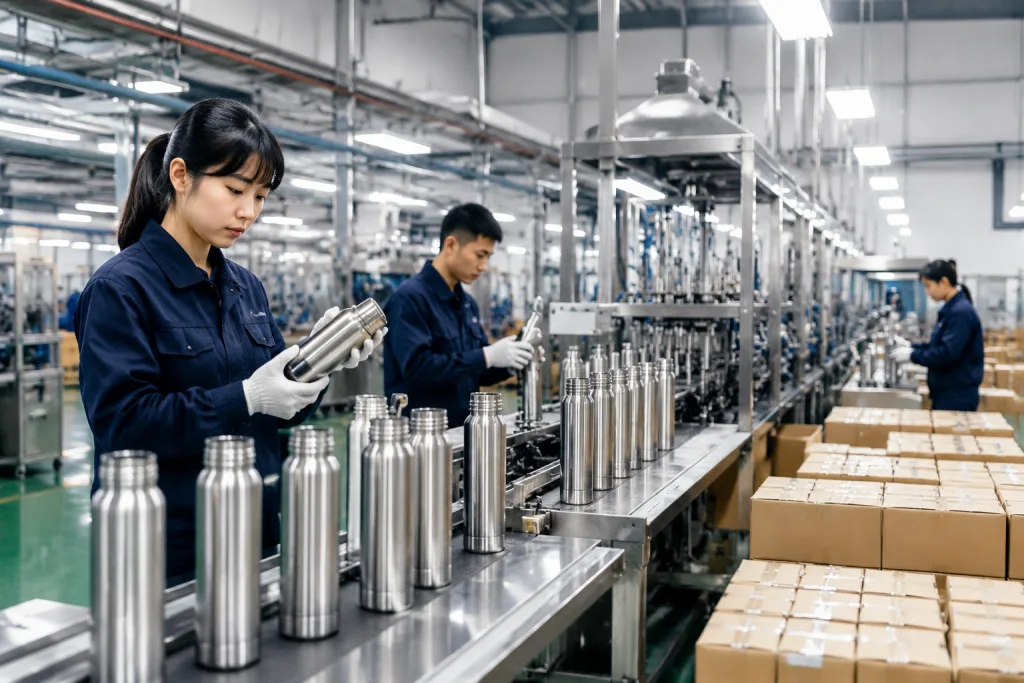
If you are buying for outdoor retail or a promotion, a weak thermos shows up fast: poor vacuum retention, thin walls, paint that chips, and a lid that leaks after two weeks. A real 316 stainless steel vacuum bottle supplier gives you a cleaner material story, better corrosion resistance, and process control that keeps the bulk thermos order consistent across cartons, not just on the sample table. We run shell thickness at 0.2 mm, and QC pulled one leaking lid at the 24-hour water test before it ever reached packing.
In Zhejiang and across China, plenty of factories say they can do custom thermos work. The question is whether they can hold ±0.2 mm on the shell, keep 18/8 or 316 inner liners traceable, and ship on a 35- to 45-day lead time without shifting the target. If you buy for a brand or a distributor thermos program, you need a supplier thermos partner that talks AQL, FOB, and failure rates, not slogans. We’ve seen a PO typo turn 3,000 pcs into the wrong lid color, so the math has to be checked at the line.
What 316 really changes
I’ll rewrite the section in-place, keep the HTML exactly as-is, and make the copy sound like a factory sales engineer wrote it.Buyers ask for 316 because they want a cleaner corrosion story for salty air, gym use, or a premium promo run. The straight answer: 316 stainless steel is not magic, but it does buy you more margin against pitting than 304 when the bottle sees harsher use or the end customer is paying for a stronger spec. On a double-wall vacuum bottle, the inner liner is where 316 matters most. The outer shell can stay 304 if the target price is tight, but then the spec sheet needs to say it plainly.
As a 316 stainless steel vacuum bottle supplier, we usually put the trade-off in numbers. The liner material can move FOB by about USD 0.25-0.80 per piece, depending on capacity, finish, and whether you add a laser logo, powder coat, or tea filter. For a 500 ml custom thermos, a normal China factory order usually lands around USD 3.20-5.80 ex-works, before freight and duty. If someone quotes far below that and still promises 316, the math does not work; ask for mill certs and check wall thickness. We’ve seen one PO with “316/304” typed in the wrong line, and QC pulled the sample before the line ran 8,000 pcs.
What to check on the spec sheet:
- Inner liner material: 316 or 304, stated separately
- Wall thickness: usually 0.35-0.5 mm for the shell, depending on size
- Vacuum gap and retention target: 12-24 hours, by test method
- Lid material and gasket: PP, Tritan, silicone, or stainless cap
Ask these supplier questions
I’ll rewrite just the prose inside the existing HTML, keep every tag and list item structure intact, and tighten the supplier language so it reads like a factory-side sales engineer wrote it.If you want a quote you can use, don’t ask only for price. Put the same questions to the thermos factory that your retail buyer or promo client will ask later. That saves 2 or 3 revision rounds and keeps a weak product out of the line. Good distributor programs run on a short checklist, not a mood board.
Use this checklist before you approve any custom thermos sample:
- What is the inner liner grade: 316, 304, or a mixed build?
- What is the MOQ by color, logo, and lid type?
- What is the unit price at 3,000 pcs, 5,000 pcs, and 10,000 pcs?
- What testing can you provide: REACH, LFGB, BPA-free claims, and drop test data?
- What is the lead time from artwork approval to shipment?
A factory thermos partner in China should answer these fast. If they stall, you are probably talking to a trading layer, not the maker. That is not always a problem, but you need to know who controls stainless steel sourcing, vacuum sealing, and leak testing. We’ve seen this go sideways: a buyer approved one sample, then production came from a different plant and the lid thread missed by 0.3 mm.
One practical rule: if the supplier cannot show a batch code, material certificate, and inspection record, treat the quote as marketing, not manufacturing.
MOQ, pricing, and lead time
I’ll keep the HTML intact and rewrite only the prose, with tighter sales-engineer phrasing and a few concrete factory details. Then I’ll sanity-check the tone against your no-AI-tells list.For outdoor retailers and promo brands, the unit math comes first. A stainless thermos supplier in Zhejiang usually sets MOQ by decoration method and packing. Plain brushed bottles can start at 3,000 pcs per SKU. A custom thermos with one-color silkscreen, matte powder coat, and a standard PP lid usually needs 5,000 pcs. Ask for gradient paint, laser logo, and a special gift box, and the MOQ moves to 8,000-10,000 pcs because the spray booth needs a full setup change and the carton insert scraps add up fast.
Lead time shifts with the build. A clean stainless body with one logo and stock lid often ships in 35-40 days after sample approval. Add color matching or a new mold lid and you are closer to 45-60 days. We run about 200,000 units a month across the Zhejiang drinkware line, and one late lid carton can hold a full 40HQ. QC pulled a sample last week and found a 0.3 mm cap gap on a new lid, so the buyer flagged it before we booked the next run.
Typical FOB cost bands for a 500 ml 316 bottle:
- Basic brushed finish: USD 3.20-3.80
- Powder coat + one-color logo: USD 3.60-4.60
- Premium lid + gift box: USD 4.80-5.80
Those numbers move with stainless steel prices, packaging, and port congestion. If you compare thermos bulk quotes, line up the same carton count, test standard, and logo area first. We’ve seen buyers chase an 8% lower price, then find the inner box and leak test were left out. The math doesn’t work, and that is how a PO turns into a claim.
Custom details that affect sales
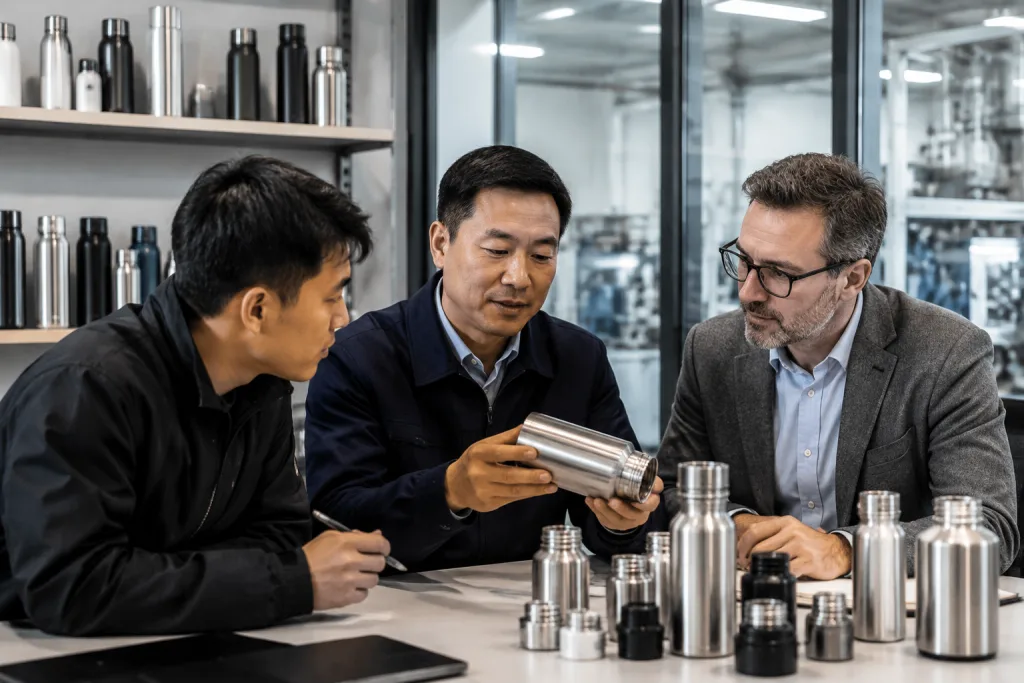
I’ll rewrite the section in-place, keep the HTML exactly as-is, and tune the prose to sound like a factory-side sales engineer with concrete production details.Promotional brands spend too much time on logo size and miss the parts that drive repeat orders. Outdoor buyers look at grip, lid feel, cleaning, and condensation first. A thermos customizable program should start from the use case. Hiking bottle, commuter bottle, corporate gift, and gym bottle each needs a different lid geometry and finish, and we see that on the line every week.
When you brief a thermos manufacturer, keep the changes purposeful. Laser logo holds up better for premium lines; we run it on the fiber laser after the 24-hour salt spray check. Silkscreen costs less, but on curved powder-coated bottles it can rub off if the ink cure is off by even 10 minutes. If the buyer wants seasonal colorways, ask for Pantone tolerance under ΔE 2.0, not “close enough.” For a thermos customized with a tea infuser, specify the stainless mesh gauge and the cleaning note; tea residue turns into warranty complaints fast, and QC pulled that sample twice before sign-off.
Best-value custom options for bulk thermos orders:
- Laser logo for premium outdoor retail
- One-color silk print for promotional thermos campaigns
- Powder-coated body for scratch resistance
- Switchable lid: screw top, flip top, or tea cap
If your customer base is distributors thermos channels, packaging matters almost as much as the bottle. Inner carton layout, barcode position, and the 1.2 m master carton drop test are not optional. Ask for FNSKU-ready labels if you sell into Amazon programs, and confirm whether your factory thermos partner can pack to the retailer carton spec. The buyer flagged it on a PO once because the SKU code had one extra zero, and the pallet still went out wrong.
Quality checks that save claims
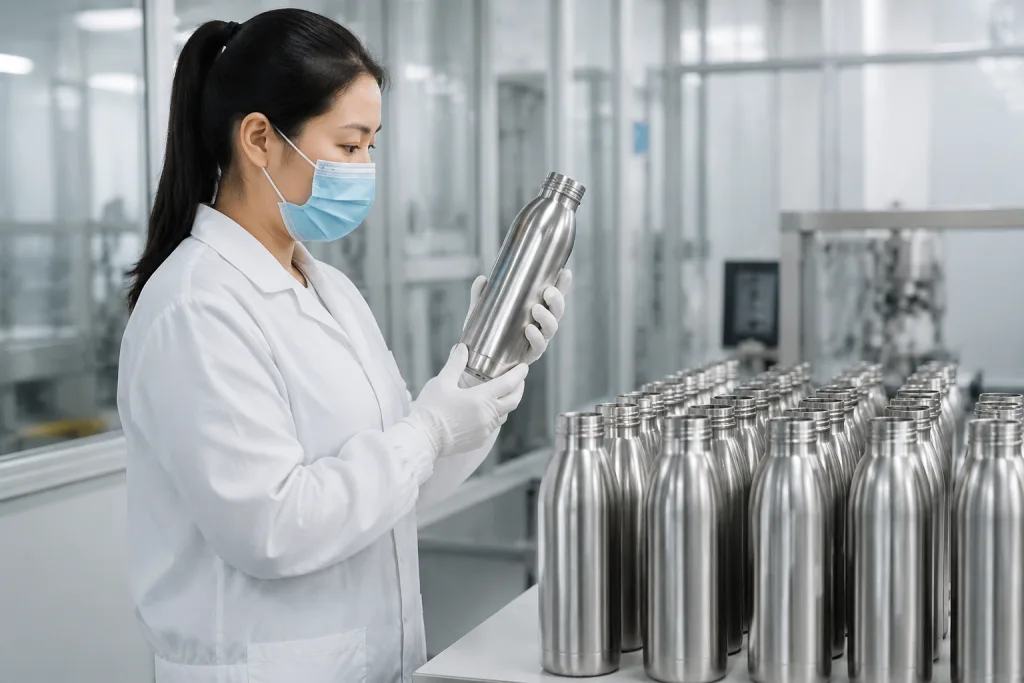
I’ll rewrite the section in-place, keep the HTML structure intact, and strip the AI-ish phrasing while adding a few concrete factory details.You do not need lab talk on every order, but you do need a clean QC routine. The line starts with incoming steel checks, then vacuum sealing, then leak testing, then a final appearance check. For mass production, AQL 2.5 for critical defects and 4.0 for major defects is the normal baseline. That is a written standard, not a guess.
For a 316 stainless steel vacuum bottle supplier, the checks are simple and non-negotiable. Confirm the liner grade with mill certificates or traceability records. Run a 24-hour hot-water retention test and log the temperature drop in ℃. Check the lid upside down and give it a shake; if it seeps, the buyer will flag it. If the bottle has paint, do a tape adhesion test and a 48-hour salt spray check on premium lines. We run these on the factory floor, not after the cartons are taped shut.
Minimum quality pack for export buyers:
- Material certificate for stainless steel
- REACH and LFGB compliance where needed
- Vacuum retention report
- Drop test and leak test records
- Final random inspection under AQL
Odor control matters too. A new lid or silicone ring can smell if curing is rushed. That sounds small, but it drives first-week returns. A good thermos supplier will air out parts for 12 to 24 hours, not just push them through the line. If they cannot explain the curing and aging step, the math does not work.
How to brief the factory
I’ll rewrite the section in place, keeping every tag and list structure intact, and tighten the sales-engineer voice with more concrete factory detail.Most bad orders start with a weak brief. Your thermos supplier is not reading minds, and a one-page PDF with a logo dropped on top is not a real custom program. Give the factory a clean brief and you get a sharper quote, fewer sample rounds, and faster sign-off from your buyer or distributor.
Use this briefing checklist:
- Capacity: 350 ml, 500 ml, 750 ml, or 1,000 ml
- Steel spec: 316 inner liner, outer shell grade, finish
- Decoration: laser, screen print, heat transfer, or full wrap
- Packaging: kraft box, window box, gift box, or retail-ready carton
- Compliance: REACH, LFGB, FDA-style migration requirements if applicable
- Commercial terms: FOB Ningbo, FOB Shanghai, or EXW Zhejiang
State the buyer type up front. A promo thermos in a campaign pack needs a different wall thickness and price target than a retail bottle sold at USD 24.99. We run the line differently when the channel changes. A thermos manufacturer can only tune the spec when it knows the job: if you are a distributor, say how often you reorder; if you are a brand owner, say whether you need color exclusivity or a private lid mold. QC pulled the sample on a 0.5 mm dent at the base last week, and that came down to a vague brief. The math does not work any other way—one clear brief, one fixed spec, one repeatable run.
Ask where the factory sits. Zhejiang matters because the chain is tight here: stainless coil, lid tooling, printing, and cartons are within a short truck run. We fixed a lid typo on a PO in 20 minutes because the mold shop was two streets over, not two provinces away. That cuts rework from weeks to days when the buyer flags a change.
When to switch suppliers
I’ll rewrite the prose in place, keep the HTML exactly as-is, and make it read like a factory-side sales engineer wrote it.Sometimes the right move is not to push your current supplier harder. It is to replace them. If the supplier misses two sample dates, changes the liner grade without notice, or refuses to share inspection data, you are not saving money by staying. You are paying for the next complaint. We’ve seen that go sideways fast on the line.
Switch when the numbers stop matching the promise. If your approved custom thermos sample holds heat for 12 hours but production drops to 8 hours, the vacuum draw or lid seal has changed. If a bulk thermos order lands with 2% visible finish defects and 1% leakage, the problem is process control, not a nicer email. Ask the new thermos supplier for a pilot run of 500-1,000 pcs before you move the full program. For seasonal distributor orders, that is the cleaner test. QC pulled the sample on a Tuesday, and the math still has to work.
A capable thermos manufacturer will not fight those checks. They will show you the factory flow, keep the records clean, and give you a quote that matches the spec. In China, especially in Zhejiang, the better factories know premium buyers stay for consistency, not sales talk. If a supplier cannot support that, they are not the right long-term partner for your brand. One wrong PO typo can cost a week.
Request your 316 thermos quote today
Send your capacity, logo, and target price. We’ll quote a realistic factory thermos spec, MOQ, and lead time from Zhejiang.
Frequently asked questions
What is the MOQ for a 316 stainless steel vacuum bottle order?
For a standard export run, MOQ is usually 3,000 pcs per SKU for plain brushed bottles and 5,000 pcs when you add powder coat, logo work, or a special lid. A fully customized thermos with new packaging can move to 8,000 pcs or more. In Zhejiang, some factories will quote lower for sampling or mixed SKUs, but the real production economics start at these bands. If you need multiple colors, ask whether the MOQ applies per color or total across the order.
How much more does 316 cost than 304?
On most thermos bulk orders, 316 liner material adds about USD 0.25-0.80 per piece versus 304, depending on size, wall thickness, finish, and whether the lid is standard or upgraded. For a 500 ml bottle, a realistic FOB range is often USD 3.20-5.80. The premium is worth it when your target channel is outdoor retail, coastal use, or a higher-end promotional thermos program where corrosion resistance matters more.
How long does production usually take?
For a standard thermos manufacturer run after sample approval, expect 35-45 days. If you need new tooling, special packaging, or a matched Pantone color, 45-60 days is more realistic. A factory in China should be able to quote that clearly and stick to it. If the supplier gives you only one vague number and no schedule for artwork approval, mold work, and pre-production sample, push back.
What quality documents should I request?
At minimum, ask for stainless steel material certificates, REACH and LFGB compliance where applicable, vacuum retention testing, leak test records, and AQL inspection reports. For export to North America, also confirm any packaging or labeling requirements your retailer needs. If the thermos supplier can show batch codes and traceability on the liner, that is a strong sign they are a real factory thermos source, not just a quote handler.
Can I order promotional thermos styles with my logo?
Yes. Most promotional thermos projects use one-color screen print, laser engraving, or a simple wrap label to control cost. For a practical promotional run, many buyers choose 3,000-10,000 pcs, depending on the lid and packaging. If you need a more premium custom thermos, ask for laser logo, matte powder coat, and a gift box. That typically costs more but sells better in outdoor and corporate channels.