Key Takeaways
- 316 stainless steel vacuum bottle bulk orders usually start at 1,000–3,000 pcs, with FOB China pricing often around USD 4.20–8.90 depending on capacity and lid
- A proper thermos bulk QC plan should include vacuum retention, drop tests, lid leak checks, and AQL 2.5 sampling before shipment
- For branding, laser engraving is durable on custom thermos orders, while silk screen is cheaper for promotional thermos runs above 3,000 pcs
- A Zhejiang factory thermos supplier should state monthly output, for example 180,000 units/month, plus lead time of 25–35 days after sample approval
You are not buying a mug. You are buying supply-chain risk that has to survive shipping, branding, filling, retail handling, and customer abuse. For a 316 stainless steel vacuum bottle bulk order, the real question is not whether the sample looks good in a photo. It is whether 5,000 or 20,000 units still hold the same wall thickness, vacuum retention, finish adhesion, and leak performance when the cartons land in Rotterdam or Long Beach. We once had a buyer flag a 0.2 mm wall shift on a 500 ml spec sheet, and that tiny typo would have turned into a real headache on the line.
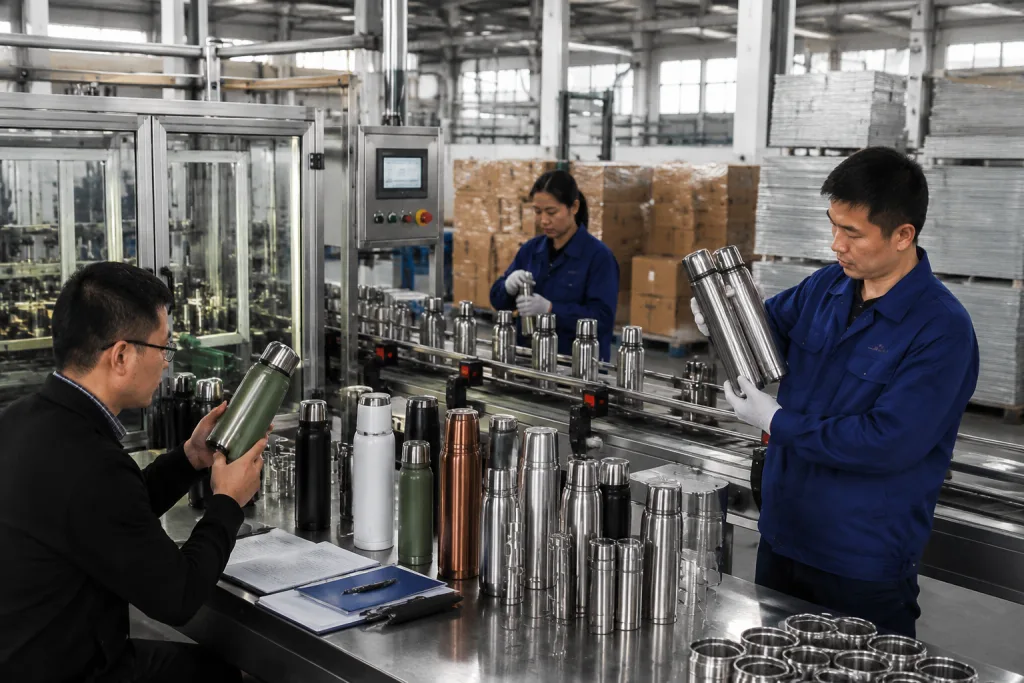
At our Zhejiang factory, we run thermos orders like a controlled production lot: steel grade confirmation, shell thickness checks with a caliper, lid torque testing, then AQL inspection before carton-out. If you are an outdoor retailer or a promo brand, that is the gap between a clean bulk thermos program and a return pile. The right buyers do not ask for “better quality” in loose terms. They pin down the bottle, the print file, the test method, and the acceptable failure rate before the PO goes to our desk.
Start With the Retail Use Case
I’ll keep the HTML tags exactly as-is and rewrite only the prose, tightening the sales-engineer tone with concrete factory details and fewer generic phrases.Before you ask for a quote, write the use case like you are briefing your own sales team. A 316 stainless steel vacuum bottle bulk order for hiking retail is not the same as a promotional thermos for a winter campaign. One needs better dent resistance, deeper vacuum performance, and a finish that survives repeated hand washing. The other needs a lower unit cost, clean print output, and packaging that moves through distribution without delays.
For outdoor retail, we usually see 500 ml or 750 ml, double-wall vacuum, a 0.5 mm inner liner, a 0.6 mm outer shell, and a powder-coated body with a 304 or 316 lid insert. If the bottle goes into food-contact, acidic drink use, 316 earns its keep because molybdenum helps against chlorides and salty condensation. That matters when the buyer fills it with sports drinks, coffee, or tea on long trips. For a thermos custom program, pick the main risk first: corrosion, temperature loss, or branding wear. You cannot push all three to the top without lifting the price. On our line, the factory will ask this before tooling starts, because changing steel grade after the mold is cut burns 12 days and a pile of cash.
Keep the SKU count tight. We’ve seen a buyer launch 6 colorways, 3 lid types, and 2 capacities on the first PO, then get stuck with slow-moving stock. The better first run is one body size, one lid system, and one decoration method, then expand after sell-through data comes back. That is how a distributor thermos program stays alive instead of turning into dead stock. QC pulled a sample with a scratched logo plate last month, and the buyer flagged it in 10 minutes; that kind of mess is easier to avoid when the line only runs one setup.
Lock the Steel Grade and Wall Spec
I’ll rewrite the section in-place, keep the HTML exactly as-is, and tune the tone to sound like a factory-side sales engineer with concrete spec details.“316” sounds simple, but the factory has to prove it. Ask for mill material certificates, not a verbal promise. We run incoming coil checks in Hangzhou with heat numbers and traceability, then confirm whether the liner is SUS316, the shell is SUS304, or both sides are 316. For most bulk thermos jobs, full 316 on both walls is overkill and adds 15%–30% to cost. The math does not work for a normal retail bottle. Most buyers only need 316 on the inner contact surface and 304 on the outer shell.
Wall thickness is where price and performance split. A promo bottle can run at 0.35 mm, but a retail-grade liner should sit around 0.45–0.60 mm. If the PO says “manufacturer thermos” and leaves thickness blank, the buyer flagged it for a reason. Ask for the exact gauge, then check it with calipers on the pre-production sample. On large thermos bulk orders, QC pulled the sample, checked body thickness, neck size, and bottom weld consistency before we started insulation testing.
Buyer rule: if the vendor cannot state steel grade, gauge, and vacuum standard in one sheet, the quote is not ready for a PO.
Surface finish matters too. Brushed steel hides handling marks better than mirror polish. Powder coat adds USD 0.30–0.80 per unit, depending on coverage and part count, but that spend pays back on outdoor retail. We’ve seen this go sideways when a buyer wanted “soft touch” and forgot the spec; the line finished at the wrong gloss. If your brand wants matte powder, call out 60–80 microns and ask for adhesion testing after 24 hours curing.
Sample the Lid Before Anything Else
I’ll keep the HTML structure intact and rewrite the prose to sound like a factory-side sales engineer, with one concrete shop-floor detail per paragraph and no AI filler.Most leaks start at the lid, not the bottle body. If you are ordering customizable thermos products for retail, treat the lid as its own engineering item. A flip-top with a silicone gasket behaves differently from a screw cap with a steel insert. We have seen a bamboo lid look premium on the sample table and fail once QC pulled the production sample at 0.3 mm sealing variation. Low lid price is the wrong question to ask. The complaints come later.
Ask for a lid torque test, inverted leak test, and hot-fill test. We normally tighten lids to a defined torque window, fill the bottle with 95°C water for 8 hours, then invert it for 30 minutes. A good lid should not drip, sweat, or warp. For travel use, pressure changes matter too; a buyer once flagged a cap that passed bench testing but started weeping after an air freight run. This is why a thermos supplier should not treat the cap as an accessory. It is the failure point.
- Silicone gasket hardness: usually 50–70 Shore A
- Leak test target: 0 visible seepage after inversion
- Thread engagement: smooth closure within 1.5–2.5 turns for screw caps
- Hot-hold test: minimum 6 hours at 65°C or better, based on your claim
If you are comparing thermos distributors or thermos vendors, ask whether the lid is in-house or outsourced. A factory thermos supplier with molding capability can change gasket geometry faster and keep batch-to-batch consistency tighter. We run this check on every new lid tool, because a 1 mm rib change can save a whole production run. That matters when the buyer wants a second order with a small design revision.
Branding Should Fit the Steel
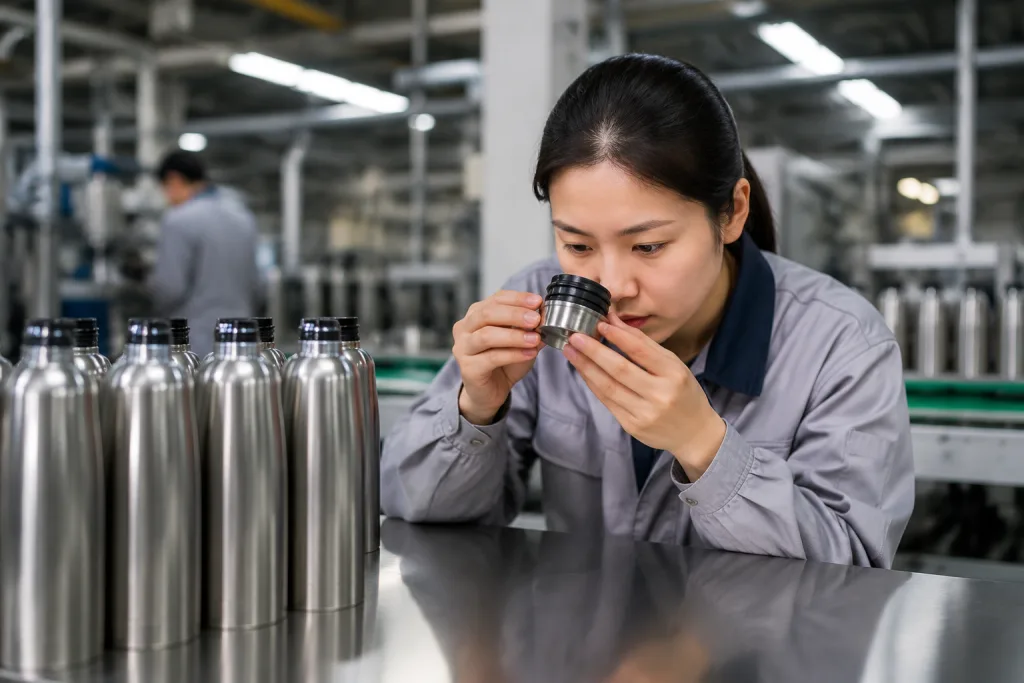
I’ll rewrite the section in-place, keep the HTML exactly as-is, and strip out the AI-ish phrasing while adding a few concrete factory details.Branding is where a custom logo looks cheap or premium. Pick the wrong decoration method and the bottle reads like a giveaway item. On a 316 stainless steel vacuum bottle bulk job, laser engraving is the safest call when you want the mark to stay put. It does not peel, and it holds up on brushed steel and powder-coated steel. We ran one sample through a steel wool rub test at the line; the UV print lifted first. Silk screen costs less and works for flat artwork, but daily handling can beat it up fast.
For a thermos customized for outdoor retail, we usually split the decision in two steps: first, ask if the bottle will be washed, scratched, and reused for years; then choose the method. If yes, laser or deep embossing wins. If it is a promo run with a 6–12 month campaign life, screen print can make more sense on the math. QC pulled the sample on a 500 ml matte bottle and the buyer flagged the edge wear, so we changed the call before mass production.
Decoration pricing comes down to color count, print position, and setup. A single-color silk print may add USD 0.15–0.35 per unit at 1,000 pcs. Laser marking is often USD 0.20–0.60. Full-color wrap print can go higher, especially when the logo needs tight placement on a curved body. Ask for a print fixture sample before you release the PO. We’ve seen a 2 mm logo shift turn into a customer complaint on every carton, and that is the wrong place to save a few cents.
Do not skip packaging. Retail boxes, inserts, barcode labels, and FNSKU labels need to be locked before the line starts. A custom thermos order for Amazon or big-box distribution needs carton dimensions, drop-test tolerance, and master carton pack-out that match the freight plan. One PO typo on a carton size can push the pallet height past the warehouse limit, and then everyone pays for it.
Run QC Like a Factory Buyer
I’ll keep the HTML intact and rewrite only the prose with a more field-tested sales-engineer tone. First I’m checking for any repo instructions, then I’ll patch the section directly.I’ve got the target section. Now I’m rewriting it to sound like a buyer-side QC note, with tighter language, one factory-floor detail per paragraph, and no AI filler.If you want fewer surprises, put QC in writing before the line starts. For a thermos order, we usually inspect to AQL 2.5 for major defects and 4.0 for minor defects unless your brand calls for tighter limits. We check appearance, dimensions, function, leakage, and packaging. On a 10,000-unit order, the sample size has to be big enough to catch drift, but the math does not work if you try to inspect every carton.
At our Hangzhou, Zhejiang facility, we ship around 180,000 units a month across stainless models, and that only works when the process stays locked down. We run a three-step QC flow: incoming material check, in-line production check, and pre-shipment inspection. The caliper on the incoming table catches steel thickness, and the durometer checks gasket hardness. On the line, QC watches body welding, vacuum sealing, and coating cure. Before shipment, we look at finish, drop marks, carton strength, and label accuracy.
Useful tests for a thermos supplier to provide:
- Vacuum retention test after 24 hours at room temperature
- Thermal retention test at 95°C fill and timed temperature drop
- Leak test for lid and mouth thread
- Drop test from 80 cm to 100 cm onto hard surface, based on your spec
- Carton compression and transit vibration simulation for export lanes
If you are sourcing from China, do not assume every factory runs the same standard. A good thermos partner sends the actual report, not a one-line “passed.” Ask for photos of defect categories; we’ve seen buyer claims go sideways on print misalignment, scratch marks, and gasket deformation. One PO typo on label artwork can turn into a 3,000-piece rework, so check the proof before we release the cartons.
Negotiate the Order Terms That Matter
I’ll rewrite the section in a more grounded factory-sales voice, keep the HTML intact, and fold in the concrete shop-floor details without changing the structure.Price only matters after the terms are pinned down. For a 316 stainless steel vacuum bottle bulk order, the quote needs to split out unit cost, logo work, packaging, testing, and freight terms. We run FOB China on most export deals because it keeps the handoff clear at the port. If the buyer asks for DDP, the supplier has to know the duty rate, VAT, and last-mile risk in the destination market, or the math does not work.
MOQ usually starts around 1,000 pcs for a standard body and moves closer to 3,000 pcs once you add new tooling, special lid parts, or three colorways. Lead time is usually 25–35 days after sample approval and deposit, but a first run with custom cartons can slip to 40–45 days. We had a buyer flag a PO that said “7 days” for a new stainless vacuum bottle with branding. That was stock, not custom. Different job.
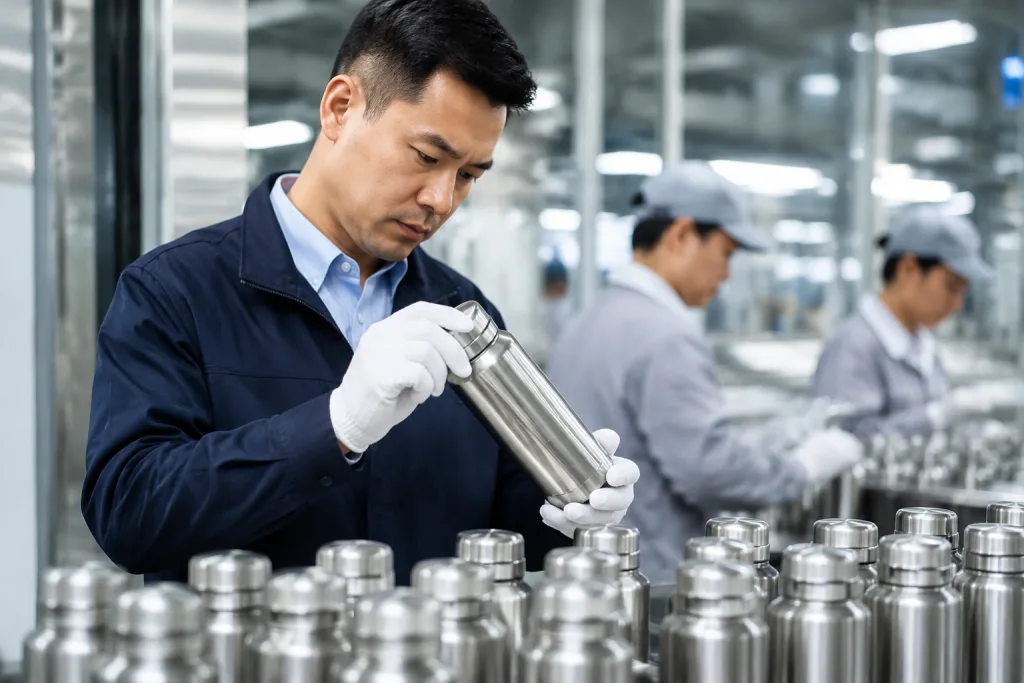
Payment usually starts at 30% deposit and 70% before shipment. For bigger repeat orders, some thermos manufacturers will talk about a split tied to inspection points. Do not skip the sample approval line. QC pulled the sample, checked the lid torque at 12 N·m, and that approved piece should set the standard for color, logo placement, lid action, and insulation results. Without that, every defect turns into an argument. Decide early whether the brand wants spare lids, gift boxes, or replacement seals in the same shipment. A 200-piece seal order is cheap in the line. Later, sourced alone, it gets ugly.
For outdoor retail and promo brands, the best order is the one where factory, spec sheet, and QC all agree before cash moves. That sounds plain. It is. Boring orders are the ones that ship clean.
Send your spec and get a factory quote
We’ll confirm steel grade, MOQ, lead time, and QC points for your thermos custom order from Zhejiang.
Frequently asked questions
What is a realistic MOQ for 316 stainless steel vacuum bottle bulk orders?
For a standard body and lid, MOQ usually starts at 1,000 pcs in China. If you need a new mold, a special cap, or multiple finishes, expect 3,000 pcs or more. On simple custom logo work, some factories can accept 500 pcs, but unit cost rises fast. For a stable thermos bulk order, ask the supplier to quote both MOQ price and 3,000+ price so you can see where the economics improve. A good Zhejiang factory will also tell you monthly capacity, often 100,000–180,000 pcs depending on model mix.
Is 316 really necessary, or is 304 enough for a custom thermos?
316 is worth it when the bottle will see salty air, sports drinks, acidic beverages, or premium retail positioning. The molybdenum in 316 improves corrosion resistance, especially on the inner liner. For dry tea, coffee, and general gifting, 304 is usually acceptable and cheaper. The cost difference can be USD 0.30–1.20 per unit depending on capacity and steel market conditions. If your brand wants to justify a premium price, 316 makes more sense than simply printing a nicer logo on a 304 bottle.
How do I check that the factory is actually using 316 steel?
Ask for the material certificate and incoming material traceability, then verify sample thickness and finish. Do not rely on a sales sheet alone. A serious thermos manufacturer should provide mill certificates, internal QC records, and photos of incoming coil or sheet marking. If possible, request random third-party testing for composition on the liner. For a large order, check at least 3–5 samples from different cartons. If the seller cannot explain which parts are 316 and which are 304, the offer is not ready for production.
What decoration method holds up best on a promotional thermos?
Laser engraving is the most durable for daily use because it does not peel or fade easily. Silk screen is cheaper, but it is better for short-life promotional thermos programs or low-abrasion use. UV print is good for color graphics, but it depends heavily on surface prep and curing. On a powder-coated body, we often recommend laser for premium retail and silk screen for high-volume giveaways. At 1,000 pcs, silk print may add USD 0.15–0.35 per unit, while laser is often USD 0.20–0.60 depending on complexity.
What QC tests should I require before shipment?
At minimum, require leakage testing, vacuum retention testing, appearance inspection, and carton drop checks. For bulk thermos orders, AQL 2.5 is a common standard for major defects, with functional tests on sampled units. A good pre-shipment report should show seal performance, lid torque behavior, print alignment, and packaging integrity. If your bottles are for export retail, add barcode and label verification, especially if you need FNSKU or local compliance labels. Ask for photos of rejected samples too; that tells you more than a clean summary sheet.