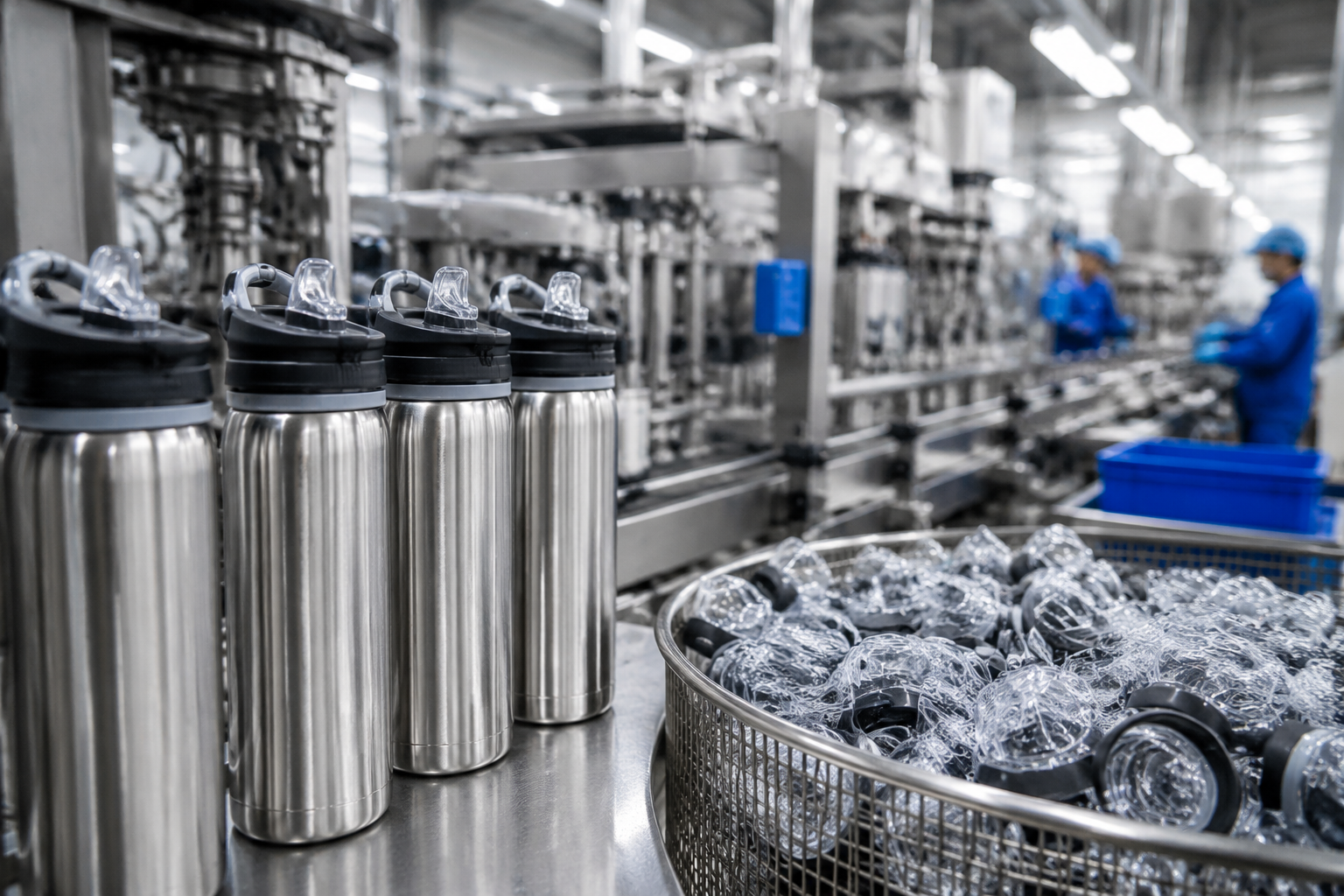
Key Takeaways
- A serious 316 stainless steel tritan water bottle factory should quote by 5,000-10,000 pcs MOQ, not vague ranges.
- Typical sample lead time is 7-10 days; bulk production is often 25-35 days after approval in Zhejiang.
- Ask for wall thickness, steel grade, lid material, and test standards in the RFQ, not after sampling.
- For export programs, insist on REACH, food-contact declarations, and AQL 2.5/4.0 inspection terms before PO release.
If you are buying custom drinkware for a brand, distributor, or retail program, the hard part is not finding a bottle. It is finding a factory that can run a 316 stainless steel tritan water bottle program without turning your RFQ into guesswork. The gap between a fair quote and a usable one usually sits in the small stuff: steel grade, wall thickness, Tritan resin source, lid tooling, and how the line handles samples before bulk. We have seen a buyer flag a 0.5 mm wall on the first sample and save a lot of trouble later. That is the kind of detail that matters.
In Zhejiang and across China, you will see plenty of canteen supplier claims, but not every canteen manufacturer is set up for repeatable export work. If you need a canteen custom program, a custom growler, or customizable drinkware for North America or Europe, the sourcing process has to force clear answers from email one. This is the wrong question to ask after the PO is issued. We run the line tighter when the buyer sends a drawing, confirms MOQ, and checks sample photos before bulk, because the math does not work any other way. The goal is simple: cut rework, lock the PO line items, and ship what was quoted.
Start with the RFQ, not the sample
A lot of buyers jump straight to samples, then wonder why the quotes swing all over the place. That is backwards. If you want a real quote from a 316 stainless steel tritan water bottle factory, the RFQ has to read like a purchasing spec, not a mood board. Put the bottle size, target capacity, whether the inner liner is 316 or only the food-contact parts, Tritan wall thickness, lid style, and decoration method in black and white. For export jobs, add the target market, carton spec, and whether you need FNSKU or retail-ready packaging. We’ve seen a PO typo on capacity turn a 500 ml order into a 550 ml sample run, and the line had to stop.
Good RFQs save money because they cut out guesswork. If you are comparing canteen manufacturers, make every factory quote the same base model: 750 ml, 18/10 exterior or 316 inner, Tritan outer shell at 2.0-2.5 mm, PP lid with silicone gasket, and a single-color logo. The math does not work any other way. A real canteen factory will also give the MOQ, usually 3,000 to 5,000 pcs for a standard body and 5,000 to 10,000 pcs if the lid needs custom tooling. If a canteen supplier will not break out tooling, decoration, and packaging separately, QC pulled the sample and the quote was dead on arrival.
- Ask for unit price at 1,000 / 3,000 / 5,000 pcs.
- Request steel grade, Tritan grade, and gasket material in writing.
- Include packaging targets: bulk pack, color box, or mailer.
- Specify compliance needs: REACH, LFGB, FDA, or ASTM methods where relevant.
Read the quote like an engineer
I’ll rewrite the prose in place, keep the HTML tags untouched, and tighten the quote-reading advice so it sounds like a factory-side sales engineer.Once the quotations land, compare the build, not just the number. We have seen a Zhejiang quote at USD 2.85 and another at USD 3.40; the cheaper one was using 304 steel, a thinner outer shell, and a stock lid that failed the leak test on the line. For custom drinkware, the low price is often the wrong question to ask. Ask for a line-by-line split: body, lid, silicone ring, logo method, packaging, and freight terms. If the seller is really a trading outfit in canteen clothes, the details stay vague. A solid canteen manufacturer can name the machine, the process, and the scrap rate without blinking.
Check the specs that touch production. On a 316 stainless steel tritan water bottle factory program, wall thickness drives rigidity, heat hold, and whether the lid still seats cleanly after molding. For vacuum styles, we run 0.4-0.5 mm on the stainless layers; for non-vacuum Tritan bodies, 2.0 mm is the floor if you want decent impact resistance. QC pulled the sample once and found a 0.3 mm miss at the shoulder, which is enough to create a wobble. Ask for photo approval before mass production if the logo is laser engraved, silk screened, or UV printed. If you are building a canteen customized line for a distributor, push for price breaks at 3,000 pcs and 10,000 pcs, because that is where the math starts to work.
Do not approve a quote until you know what changes at 1,000, 3,000, and 5,000 pieces. The buyer flagged a PO typo once, and that one missing zero cost us a week.
Sample before you argue about price
I’ll rewrite the section in-place, keeping the HTML tags and list structure intact while stripping the AI-ish phrasing and adding sharper factory-floor detail.Sampling is where a strong canteen supplier shows its hand. A factory that runs custom canteen work every day sends pre-production samples built with the same line process, not a hand-polished one-off. Ask for the exact color, logo size, cap type, and carton spec you plan to buy. For a customizable canteen or customizable growler, we ship one sample for function testing and one for shelf display. If you sell distributor drinkware in Europe, keep the compliance sample and the display sample separate; QC pulled the wrong one before, and the buyer flagged it fast.
Sample lead time is usually 7-10 days for a standard body and 12-18 days if the lid needs tooling or a new silicone seal. Sample charges commonly run USD 30-80 per SKU, and DHL or FedEx freight can cost more than the sample itself. That part is normal. The real question is whether the factory can hold the same tolerance in bulk. Ask for the sample checklist: leak test, drop test, dishwasher resistance, print adhesion, odor check, and carton compression. For custom growler programs, insist on closure torque and seal validation. We’ve seen this go sideways when a buyer approved a nice-looking sample with no sign-off sheet.
- Approve color against Pantone if branding matters.
- Test lid torque and leak resistance at 1 meter drop height.
- Check odor after 24 hours with hot water at 90°C.
- Confirm logo alignment before mold or print release.
Put compliance on the PO
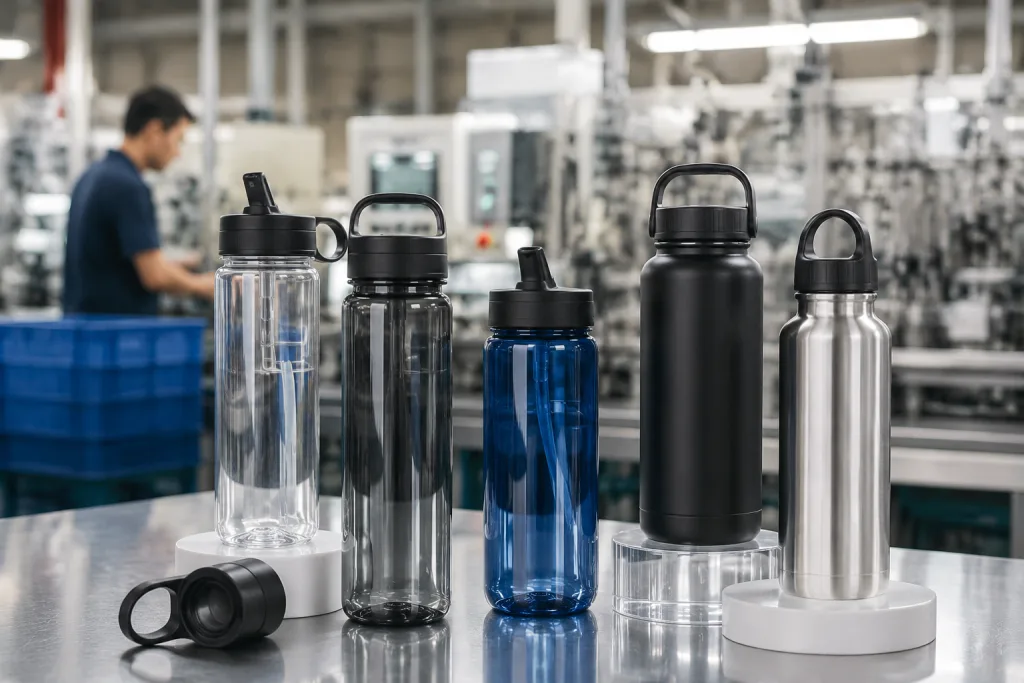
I’ll rewrite the three paragraphs in-place, keep the HTML unchanged, and tighten the language so it sounds like a factory-side sales engineer who has shipped these orders before.Export buyers lose days when compliance gets pushed to after the order. Put the requirements on the purchase order and the proforma invoice. If you need REACH for Europe, state it. If you need FDA food-contact declarations, ask before deposit. If the product is a canteen promotional item for a U.S. retailer, call out carton labelling, country of origin marking, and Amazon prep if the buyer asked for it. For custom drinkware going into chain retail, we run AQL 2.5 for critical and major defects, and AQL 4.0 for minor defects unless your program says otherwise.
Factories in Zhejiang handle this well when the scope is clean. A steady canteen manufacturer will issue a BOM, packing list, and QC plan showing where the checks happen: incoming steel, in-process forming, logo station, final leak test, and carton check. On one 12,000-piece order, QC pulled the sample because the gasket groove was 0.3 mm off spec, and the buyer flagged it before the line ran. If your program includes canteen customized gift sets, define the defect callouts. A scuffed lid can be minor on a distributor canteen order; a loose gasket is critical. Put that in the PO line items so nobody argues after production starts. That is how you keep chargebacks off the table.
Useful PO line items include product name, SKU, body material, lid material, decoration method, unit price, MOQ, packaging, carton qty, testing standard, spare parts allowance, and delivery term such as FOB Ningbo or FOB Shanghai. We still see buyers write “FOB China” and then ask why the booking slipped by 4 days. The math does not work. Name the incoterm clearly, spell the port, and tie it to the freight timing you want.
Treat bulk production as a control process
I’ll rewrite the three paragraphs in-place, keep the HTML unchanged, and make it read like an export-sales engineer on the factory floor.Bulk production is not the time to reopen the spec. It is the time to hold it. Once the sample is signed off, we run to a production schedule with checkpoints. A solid 316 stainless steel tritan water bottle factory in Zhejiang can push 50,000 to 100,000 units a month across mixed drinkware lines, but that only works if the order is released cleanly. For standard orders, 25-35 days after deposit and sample approval is the normal window. If the mold needs a change, add 10-15 days. We have seen buyers lose a week because the PO said “same as sample” and the packing list said something else. The math does not work.
Before the line starts, check materials again. Tritan resin needs to match the approved sample, not a last-minute substitute the buyer flagged after QC pulled the sample. The same goes for caps, seals, and printed cartons. For canteen distributor programs, ask for pre-production photos and first-article inspection. If you are buying multiple SKUs, use a tight labeling system so the canteen suppliers do not mix artwork variants. An export-ready canteen vendor should also spell out overage rules, spare gaskets, and the replacement policy for broken lids. We usually see trouble at the 2,000-piece mark if carton art or lid color is not locked.
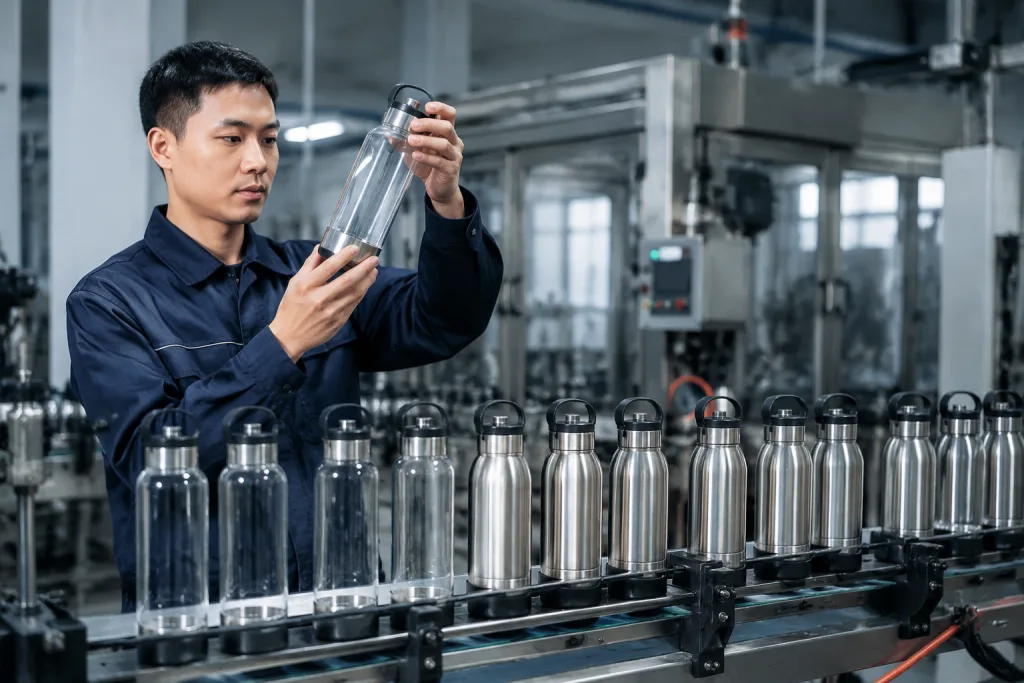
During production, ask for one midline inspection and one final inspection using AQL. If possible, you or your inspection agent should check logo placement, cap fit, and leak performance before shipment. For customized drinkware, a 1% defect rate looks harmless on paper, but on a 10,000-piece order that is 100 problem units. That is a bad hit for a distributor growler or a promo launch. Control the process early and the freight damage rate stays lower. We run a torque wrench on cap samples for this reason, because a loose lid shows up fast in transit.
Build your margin into the model
I’ll keep the HTML untouched and rewrite only the prose with tighter, more factory-floor language and concrete numbers. Next I’m patching the section directly, then I’ll return the cleaned HTML only.Buyers who sell as canteen distributors or distributor drinkware suppliers need to look past factory price. The margin sits in the cost moves. A custom canteen with a stock lid may land at USD 2.60-3.20 FOB, while a customized growler with new cap tooling can add USD 1,500-3,000 in mold amortization before the first unit ships. We have seen buyers miss that on the first quote. If you are sourcing canteen promotional products for a campaign, the logo method can matter more than the body cost. Silk screen is cheap, but laser engraving or UV printing usually fits premium positioning better.
Ask the factory to quote three tiers: stock, semi-custom, and fully custom. That tells you fast whether you need a canteen custom program or just a color and logo change. It also gives you a clean way to compare canteen suppliers. On our line, the gap between standard and semi-custom is often 8-15 percent, and the PO typo that causes trouble is usually one missing print color. The math does work if your target is Europe or North America, because that value gap can support retail pricing without adding freight weight.
Do not ignore packaging economics. Color boxes, inserts, hangtags, and barcode stickers can add USD 0.20-0.75 per unit. For Amazon or retail prep, that is money. Ask the factory to quote inner pack and master carton separately, and make them show carton size in mm and gross weight in kg. We had a buyer flag a 1.5 cm carton height change because it pushed the master case over the shelf limit. Then you can compare landed cost instead of fighting over unit price alone.
Send your RFQ with full specs today
We can review your MOQ, materials, packaging, and compliance before sampling, so your custom drinkware order moves faster and cleaner from China.
Frequently asked questions
What MOQ should I expect from a 316 stainless steel tritan water bottle factory?
For a standard body and stock lid, many factories in Zhejiang quote 3,000 to 5,000 pcs MOQ. If you need a new lid mold, expect 5,000 to 10,000 pcs to make the tooling make sense. A canteen factory that does export work should state MOQ by SKU, not by product family. If a quote only says “low MOQ,” ask for the actual number and whether that includes logo, box, and spare parts. Small batches are possible, but your unit price usually rises 15-30 percent.
How long do samples and bulk production usually take?
A standard sample usually takes 7-10 days. If the lid needs tooling, printing plates, or a new silicone seal, allow 12-18 days. Bulk production is commonly 25-35 days after deposit and sample approval. For canteen customized projects with new packaging or multiple SKUs, add another 5-7 days for pre-production and carton confirmation. If you are buying from a Zhejiang factory in peak season, book earlier because line capacity fills fast.
What should be on the PO for custom drinkware?
Your PO should list SKU, capacity, body material, lid material, decoration method, packaging style, unit price, MOQ, carton quantity, testing standard, delivery term, and defect limits. Add REACH, FDA, or other compliance references if needed. For a distributor drinkware program, also include barcode format, FNSKU if required, and spare gasket quantity. A PO without these details invites disputes after production starts.
How do I compare canteen suppliers without getting lost in price?
Compare the same build spec across every quote: same steel grade, same Tritan thickness, same lid, same decoration, same packaging, same incoterm. Then ask each canteen supplier for sample lead time, bulk lead time, and AQL inspection terms. A quote that is USD 0.30 cheaper but uses thinner material or a weaker lid is not a real saving. Ask for photos, BOM, and compliance paperwork before you judge the price.
Can I source a custom growler or promotional canteen from the same factory?
Yes, if the factory is set up as a broad drinkware supplier rather than a narrow single-SKU shop. Many Zhejiang factories run both canteen promotional lines and custom growler programs. The key is to confirm whether they can handle multiple decoration methods, carton formats, and lid types in one production window. If you need distributor canteen and retail SKUs together, make sure the factory can separate artwork, packing, and QC checks by order.