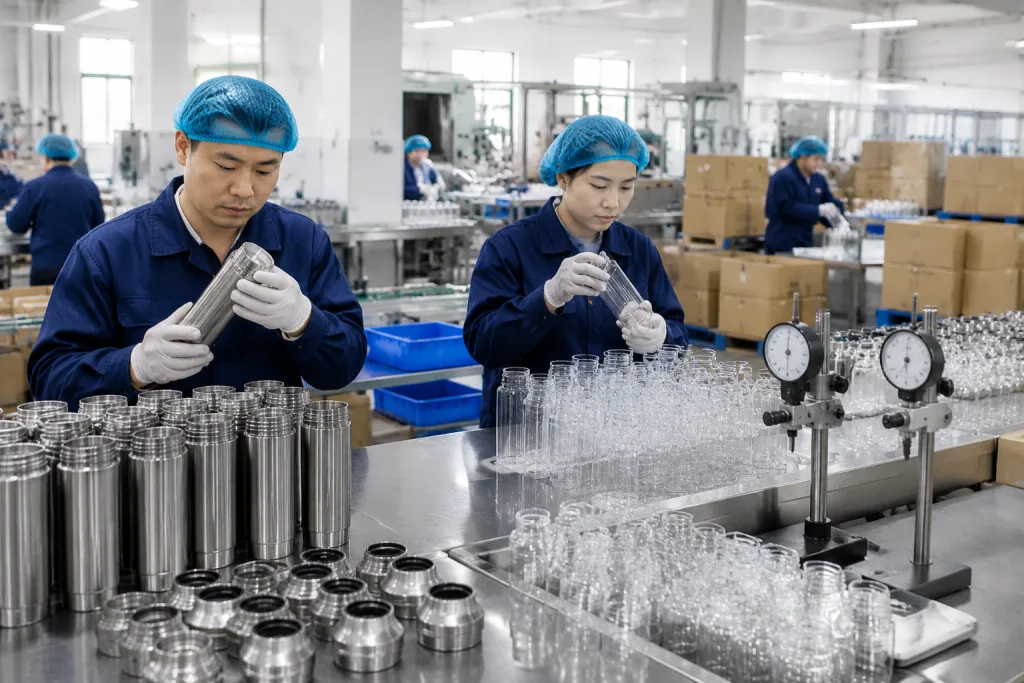
Key Takeaways
- 316 inner walls usually add USD 0.35-0.80 per unit versus 304, depending on capacity and finish
- A sensible MOQ for a custom canteen is often 1,000-3,000 units, with 25-35 days lead time after sample approval
- Ask for AQL 2.5 inspection, REACH paperwork, and lid cycle-test data before bulk PO release
- Separate RFQ, sample, and bulk PO line items so you can compare canteen suppliers on apples-to-apples terms
If you are buying a 316 stainless steel tritan water bottle custom program for retail, corporate gifting, or marketplace sales, the hard part is not finding a factory. The hard part is writing a clean RFQ so you do not get three quotes for three different bottles. We see this every week in Zhejiang: the buyer asks for “premium, leakproof, BPA-free,” then the factory sends a loose 500 mL spec that does not match the other canteen manufacturers.
You need a sourcing path that works on the line: define the build, lock the decoration method, ask for sample and bulk unit pricing, then turn the approved sample into a purchase order without drama. BottleForge Industrial in Hangzhou runs 120,000 units per month across custom drinkware lines, so we care about what gets shipped, not what looks good in a brochure. We had one buyer flag a PO typo on lid color last month, and QC pulled the sample before mass production started. That is how you buy a canteen custom program with fewer defects and a better landed cost.
Start with the use case
Before you ask for price, lock the use case. A 316 stainless steel tritan water bottle custom run for hiking, gym retail, or premium gifting does not use the same spec sheet. If the bottle will hold citrus drinks, tea, or a slightly acidic sports mix, 316 inner steel earns its keep. If it is plain water in a price-sensitive channel, you are paying for an upgrade the margin will not give back. That is the first sourcing call, and it beats decoration every time.
Put the use case in the RFQ in plain words. Add capacity, target retail price, and the sales channel. We have seen a PO typo turn `600 mL` into `6000 mL`; the buyer caught it only after QC pulled the sample against the drawing. A clean example is: `600 mL`, outdoor retail, target FOB under `USD 4.20` at `3,000 pcs`. Then ask the canteen supplier for the matching build: `316` inner liner, `Tritan` outer shell or `Tritan` lid part, `0.4-0.5 mm` stainless wall where needed, silicone gasket, and a leakproof closure. If you need a canteen promotional item, say so. If you need a premium distributor drinkware line, say that too. The factory in China should not guess your market for you.
Good sourcing starts with one sentence: what problem does the bottle solve, and who pays for it?
Build the RFQ like a buyer
I’ll rewrite just this section, keep the HTML structure intact, and tune the wording to sound like a buyer-side RFQ note with a few factory-floor specifics.Your RFQ should read like a technical brief, not an email thread. For a 316 stainless steel tritan water bottle custom project, put the capacity, body diameter, overall height, target weight, steel grade, lid material, finish, artwork, and packaging in black and white. “High quality” tells us nothing. QC pulled the sample and the caliper showed 72.4 mm on one run and 74.1 mm on another; that is the level of detail the line needs before we quote.
Use a PO-style structure even at the RFQ stage:
- Product: 316 stainless steel tritan water bottle custom, 600 mL
- Construction: 316 inner, Tritan outer/lid, single-wall or vacuum as required
- Decoration: laser engraving, 1 color silkscreen, or 4C wrap label
- Packaging: 1 pc/white box, 50 pcs/carton, master carton test
- Compliance: REACH, food contact declaration, carton drop-test
Ask for unit price at 500, 1,000, and 3,000 pcs. That is where buyers catch the MOQ curve. A Zhejiang factory can tell you if the mold is already on hand, if the lid needs a new tool, and if the bottle body sits in stock; if the answer stays vague, the math does not work. We’ve seen a PO typo turn “Tritan lid” into “Titan lid” and waste a day on sampling, so spell every line out.
Check material claims carefully
I’ll rewrite the section in place, keep the HTML tags intact, and tighten the buyer-facing language so it sounds like a factory-side sales engineer.316 stainless steel is not a print-on-the-box claim. It is a real material call, and it is different from generic “stainless steel.” Ask the canteen manufacturer for the steel grade statement, especially for the inner liner that touches liquid. We see this all the time: 304 is fine for a lot of custom drinkware orders, but if the buyer wants harsher use or a higher shelf price, 316 is the safer upgrade. The piece price gap is usually small. The margin math is not.
Tritan needs the same discipline. Buyers use “Tritan” for any clear copolyester, and that is the wrong question to ask. Ask for the resin declaration and the food-contact documents. If the bottle has a clear outer shell or a transparent lid section, QC pulled the sample and checked impact resistance plus dishwasher performance at the intended temperature range. A canteen vendor should state the limit in writing, often around 90-100°C for some Tritan parts depending on the design, but do not assume every component carries the same rating.
For a premium canteen customized line, ask for hard numbers: wall thickness, lid gasket durometer if available, and net weight. On the line, we measure this with calipers and a scale, not by eye. If the factory cannot tell you whether the inner wall is 0.4 mm or 0.5 mm, you are buying a story, not a bottle. We have seen that go sideways fast. China has enough capable canteen suppliers; the real job is finding the one that documents what it makes.
Sample before you commit
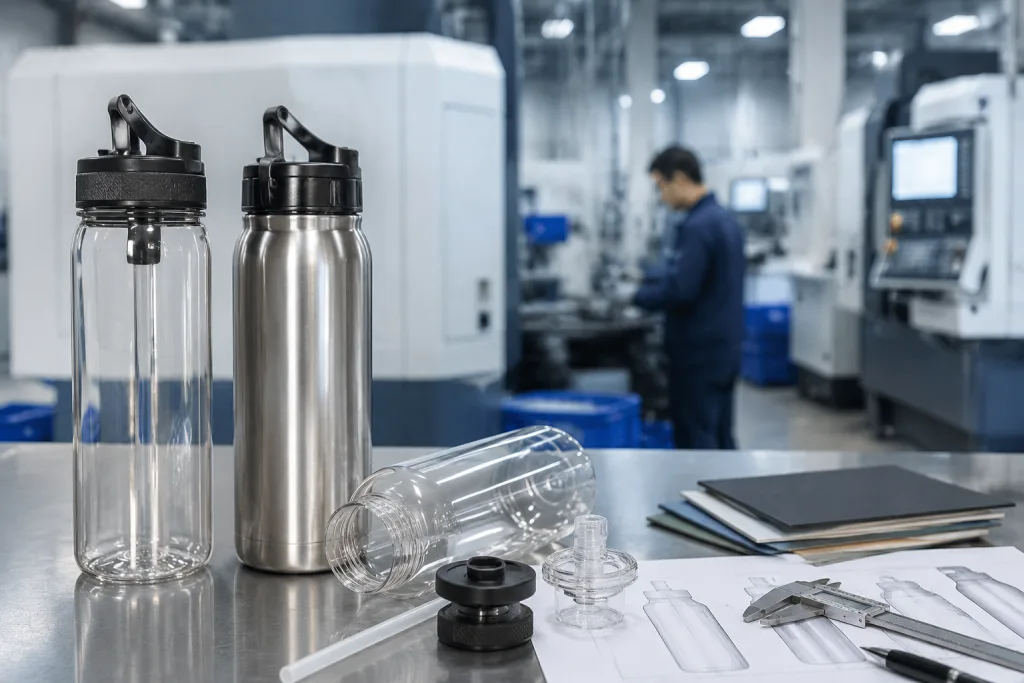
I’ll rewrite just this section, keep the HTML structure intact, and make the copy read like a factory-side sales engineer wrote it.The sample stage saves projects, or kills them fast. Do not approve a sample because it looks good on a desk. Run it the way the buyer will use it. Fill it, shake it, put it in a bag, leave it in a car, then check the lid creep and whether the seal picks up smell. For a custom canteen or customizable growler, leak performance is the whole game. We’ve seen a “perfect” sample fail after one 30-minute shake test on the line. That sample was a warning, not a win.
Your sample PO should split the cost so the factory cannot hide anything:
- Sample unit cost: 1-3 pcs at USD 20-45 each, depending on tooling and finish
- Sample freight: DHL/FedEx express, billed separately
- Artwork proof: digital rendering and Pantone confirmation
- Sample revisions: hinge, gasket, logo position, carton insert
Ask for two samples if the lid is complex or the color is new. Keep one untouched as the master, then abuse the other one. QC pulled a lid with a 0.8 mm gasket gap once, and the buyer flagged it before it became a return. Skip that step and you pay later in chargebacks. If you are building a distributor canteen line, include carton drop test, barcode readability, and shelf look in the approval. That is the difference between a prototype and a SKU you can ship.
Practical rule: do not move to bulk until the sample matches the RFQ line by line, including finish code, logo size, carton count, and accessory list.
Turn approval into a clean PO
I’ll rewrite the section in-place, keep the HTML exactly as-is, and make the wording sound like a field-tested sales engineer wrote it.Once the sample gets signed off, turn it into a purchase order the line can actually run. This is where a lot of B2B drinkware jobs go off track. The PO should do more than list quantity and price. It needs to match the final sample and spell out what can and cannot change. If you leave that out, QC may catch a gasket color swap, a carton spec change, or a lid finish tweak after the goods are already moving.
Use PO line items like these:
- Product name: 316 stainless steel tritan water bottle custom
- Approved sample reference: sample date, photo, and version number
- Quantity: 3,000 pcs, plus 2% overrun/shortage tolerance if agreed
- Unit price: FOB Ningbo or FOB Shanghai, clearly stated
- Artwork: one-location laser logo, one Pantone color, no change without approval
- Packaging: individual box, master carton, carton marks, FNSKU if Amazon-bound
- Inspection: AQL 2.5 major, 4.0 minor, pre-shipment photos required
If your buyer team sells through a distributor drinkware business or Amazon, lock the label rules in now. We’ve seen a 2,000-piece order pass sample approval and still miss the sale because the carton marks were off by one typo. That math does not work. A solid Zhejiang supplier will take a structured PO and run with it. The ones asking to “confirm later” are pushing risk back onto you.
Control cost and lead time
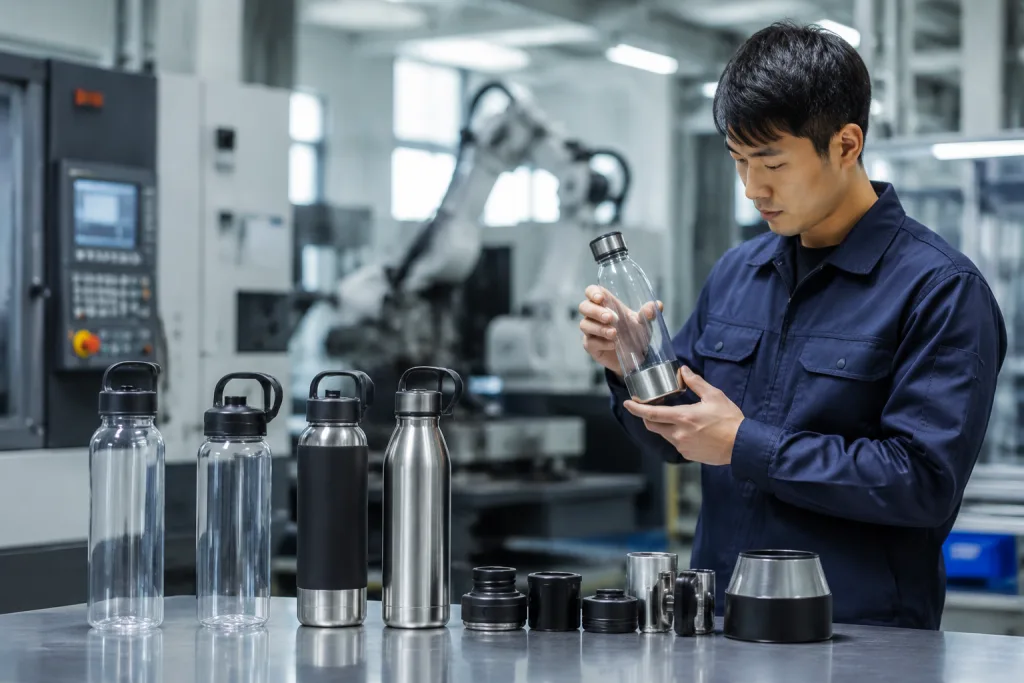
I’ll rewrite the section in-place, keep the HTML tags and list structure intact, and make the copy sound like a real factory sales engineer wrote it.For a normal custom canteen order out of China, the cost math is clear once the spec is locked. A 500-600 mL bottle with 316 inner steel and Tritan parts usually sits at USD 3.20-5.80 FOB at 1,000-3,000 units, depending on lid build, vacuum wall, and decoration method. We have seen the buyer ask for one price and no breakdown; that is the wrong question. Add USD 0.15-0.40 for print or laser work, and another USD 0.10-0.30 for upgraded packaging. On the line, the tooling choice changes the quote faster than people expect.
Lead time is usually 25-35 days after sample approval for existing molds and standard colors. New color matching, new tooling, or a lid with extra parts can push it to 40-50 days. In Hangzhou and the Zhejiang cluster, we keep core parts in stock, but stock does not fix planning. You still need a forecast, a deposit, and a final artwork sign-off date. QC pulled one sample last week because the lid torque was off by 0.6 mm, and that kind of miss burns time.
If you are comparing canteen suppliers, compare these items directly:
- MOQ: 1,000 pcs is common; 3,000 pcs often gets a better unit price
- Sampling cycle: 5-12 days depending on logo and lid changes
- Bulk lead time: 25-35 days after approval
- Inspection standard: AQL 2.5 for major defects
- Payment terms: 30% deposit, 70% before shipment is still common in China
Protect margin after shipment
I’ll rewrite the section in place, keeping the HTML tags and structure intact while tightening the prose and adding a few concrete factory-floor details.Your job is not done when the cartons leave the canteen factory. Post-shipment is where margin gets saved or burned. We’ve seen one missed lid torque call turn into a chargeback. If you sell to retail, pull random cartons and check logo placement, lid torque, and scratch marks under a 500-lux lamp. If you ship to corporate buyers, keep the approved sample, carton count, and accessory set on file. Then claims talk stays short if the buyer flags a problem later.
Ask the supplier for final QC photos, carton dimensions, gross weight, and a packing list before you book freight. QC pulled the sample on one 24-bottle lot and found a 3 mm logo shift, which would have caused a headache at delivery. For export to Europe or North America, check whether your buyer needs REACH paperwork, food-contact declarations, or state-specific compliance files. A canteen supplier that handles this cleanly saves days of email traffic. If you are building a product line, keep the same family logic across custom growler, customized growler, and customizable drinkware SKUs so the distributor canteen program still looks like one program on the shelf.
Be realistic: a good China supplier is not there to write your brand strategy. They are there to make your spec repeatable. We run into PO typos on carton marks all the time, and the math does not work when the label says 500 pcs but the packing list says 480. Keep the RFQ, sample, and PO tight, and you cut defects, rework, and second-guessing on the next order. That is how a canteen promotional item turns into a stable program instead of a one-off headache.
Send your RFQ for a clean factory quote
We turn your spec into a workable canteen custom plan, with sample control, bulk pricing, and export-ready documentation from Zhejiang.
Frequently asked questions
Is 316 steel really necessary for my bottle order?
Not always. For plain water and price-sensitive retail, 304 is usually enough. Choose 316 when the customer uses acidic drinks, tea, or a premium positioning that can support roughly USD 0.35-0.80 more per unit. For a 1,000-piece custom canteen order, that upgrade is worth it only if your margin or market will pay for it. Ask the canteen manufacturer to state exactly where the 316 is used: inner liner, contact parts, or full contact components.
What MOQ should I expect for custom drinkware?
For a standard 316 stainless steel tritan water bottle custom project, MOQ is commonly 1,000-3,000 pcs. Some canteen suppliers will quote 500 pcs, but the unit price is usually much higher and artwork options may be limited. If you need special colors, printed cartons, or a new lid, the MOQ may rise. In Zhejiang, factories with stable assembly lines can often hold 25-35 day lead times once the sample is approved.
How do I compare canteen suppliers fairly?
Use the same RFQ and ask every canteen supplier to quote the same line items: unit price, sampling cost, mold cost if any, lead time, packaging, and inspection standard. Do not accept one-line prices. Ask for AQL 2.5 major defect control, REACH paperwork, and sample photos. If one canteen vendor quotes FOB Ningbo and another quotes EXW Hangzhou, normalize the freight before comparing. That is the only fair comparison.
Can I get custom logo work on Tritan parts?
Yes, but the method matters. Laser engraving works well on metal parts, while screen printing or pad printing is more common on Tritan and other clear polymer parts. For a canteen customizable project, ask the factory to confirm ink adhesion, scratch resistance, and dishwasher exposure. Expect a small added cost, often USD 0.15-0.40 per piece depending on logo size and number of colors. Always approve a printed sample before bulk.
What documents should I request before shipping?
At minimum, request the final packing list, commercial invoice, carton dimensions, gross and net weight, and QC photos. For Europe and North America, also ask for food-contact declaration, REACH-related confirmation, and if needed, test reports tied to the exact SKU. If the order is for distributor drinkware or Amazon, include FNSKU labels and carton marks in the PO. A serious canteen factory in China will prepare these without drama.