Key Takeaways
- Use 316 liner specs only where chloride or acidic exposure justifies the extra cost; 316 typically adds USD 0.25-0.60 per unit over 304 in bulk.
- Insist on leak tests at 3 kPa for 30 seconds, 1,000-cycle cap-open testing, and AQL 2.5/4.0 inspection on critical defects.
- For Tritan bodies, require dishwasher and hot-fill validation; untested clear copolyester often fails by stress cracking after 60-90 cycles.
- Expect MOQ 1,000 units, sample lead time 7-10 days, and bulk production in 25-35 days from a Zhejiang factory with export QC.
- Spec all-contact materials for REACH and LFGB where needed, plus FDA food-contact declarations for North America.
When buyers ask for 316 stainless steel tritan water bottle bulk, the bottle idea is rarely the issue. The gap is between the spec sheet and what survives mass production in Zhejiang. A cap that looks fine on hand sample review can still leak after 3,000 cycles. A “316” liner can show up as 304 if a supplier is shaving cost. Tritan may look clear on day one and craze after repeated hot-fill or dishwasher runs.
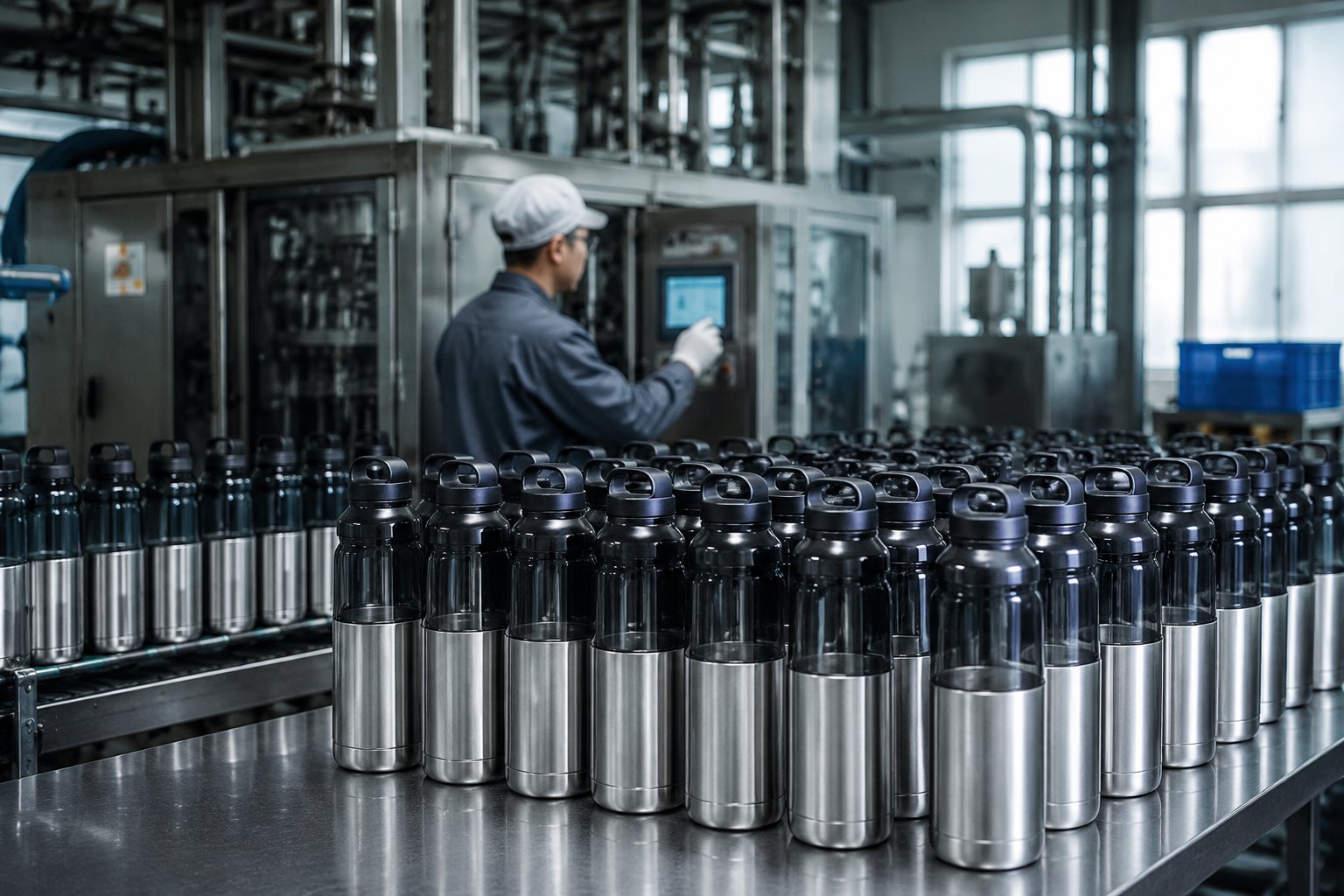
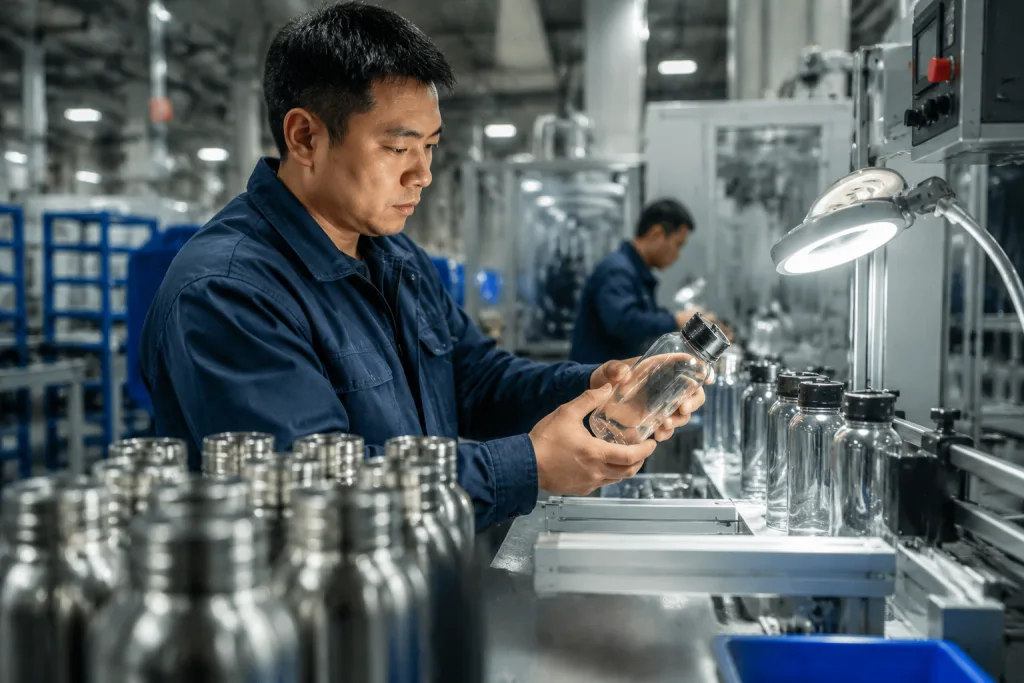
If you source for procurement or a private label launch, think in failure modes, not product names. We run this way on the line because that is where things break: weld seams, gasket compression, logo adhesion, oxidation, and carton crush. At BottleForge Industrial in Hangzhou, our normal MOQ starts at 1,000 units and standard lead time is 25-35 days after sample approval, with monthly output around 300,000 units across drinkware lines. QC pulled the sample, and that is the real test—if your spec leaves holes, mass production will find them fast.
Where 316 usually fails first
I’ll rewrite the section in-place, keep the HTML tags and list structure intact, and tighten the language so it sounds like factory-side sourcing advice.Most sourcing headaches start with the word “316.” Buyers see the spec and assume the bottle is safe by default. The first break point we run into is the weld seam where the stainless liner meets the shoulder assembly. If the seam runs too hot, stays too thin, or gets a lazy polish, QC pulls pinholes, color shift, or a micro-leak after 2 or 3 hot-cold cycles. The next problem is mix-and-match materials. We’ve had buyers flag a PO that said 316 stainless steel tritan water bottle bulk, then the cap insert and internal thread turned out to be 304.
The fix is plain: ask for a material breakdown by part, not a one-line declaration. If the bottle has a 316 inner wall, ask for the stainless certificate tied to the heat number, not a copy-paste statement. For high-chloride markets or sports use, 316 earns its keep. For normal cold-water retail, 304 is usually enough and saves 8%-15%. That’s the wrong question to ask if you only chase the higher grade. On our line, the honest factories will tell you where 316 matters and where it is just expensive decoration.
- Require heat-number traceability for the liner.
- Confirm cap, gasket, and straw materials separately.
- Reject mixed-alloy claims without documents.
- Check polish level around welds and neck threads.
Tritan cracks are usually spec errors
I’m rewriting this section directly in HTML, keeping the tags and list structure intact while tightening the sales-engineer tone and adding a few concrete factory details.Tritan complaints are often pinned on the factory, but the real issue is a vague spec. Tritan is a copolyester, so it behaves differently from cheap PET or SAN. On a tall bottle, once the wall drops under 1.6 mm, we start seeing warp or craze after hot-fill, dishwasher runs, or a cap torqued too hard on the line. Go much thicker and the bottle gets heavy, the mold cycle slows, and freight starts eating margin. For most retail bottles, 1.8-2.4 mm is the working range, but the shape decides the number.
Define the use case first. If your customer expects boiling water, Tritan is the wrong call unless the full assembly has passed that load. If it is cold water only, say that in the PO and on the artwork. QC pulled the sample and checked the shoulder, because that is where stress cracks show up first, not under showroom light. We ask for a 60-cycle dishwasher test, 1.2-meter drop testing, and a hot-fill report at the target temperature. If the supplier cannot show those numbers, the “best wholesale drink bottle” is just a nice-looking sample.
- Specify wall thickness by section, not only total capacity.
- Write hot-fill, dishwasher, and drop-test limits into the spec.
- Ask for stress-crack photos after cycle testing.
- Reject vague “BPA-free” claims without test reports.
Lids leak when tolerances drift
I’ll rewrite the section in-place, keeping the HTML structure and tightening the sales-engineering tone. Then I’ll sanity-check that I didn’t change tags, headings, or the list structure.Leakage is the fastest way to turn a bulk drinkware launch into a refund pile. On canteen wholesale and drinkware wholesale jobs, the lid usually gives way before the body. The failure points are plain enough: thread pitch drift, gasket compression inconsistency, and a bad match between the Tritan neck and stainless collar. A lid can feel fine on a hand sample and still leak in carton-packed production because molding variance moves by 0.2 mm and that is enough to change the seal.
So the spec has to lock down tolerance control. Ask for thread gauges, gasket hardness, and closure torque range. For a lot of consumer bottles, 0.8-1.5 N·m is a workable torque window, but the lid design sets the final number. If the bottle uses a straw top, flip lid, or spout, test it upright, upside down, and after pressure change. QC pulled a sample on one run and the buyer flagged it only after air freight, which is why the math does not work if you rely on a dry-cap photo. Serious beer tumbler bulk and growler wholesale buyers want real leak testing, not a nice-looking carton.
“If the lid spec is loose, the whole program becomes a returns program.”
- Set torque and thread tolerance limits.
- Test with cold water, hot water, and inverted shipping orientation.
- Use the same gasket grade across all lots.
- Require 100% leak checks on pilot runs.
Decorations fail under real use
I’ll rewrite the section in place, keep the HTML exactly as-is, and tighten the prose so it reads like a factory-side sales engineer wrote it.Decoration is where a lot of private label programs lose margin. We’ve seen screen print pass on carton one and start scuffing after 7 days in a gym bag. Laser engraving on stainless can look clean, then a hot beam bites too deep and leaves a brown haze or a sharp edge at the rim. On Tritan, labels lift fast if the surface prep is off or the bottle goes through repeated dishwasher cycles. If you are buying custom bulk drinkware for retail, decoration is a wear item, not a box to tick.
Set the finish before you ask for pricing. Matte powder coat, mirror polish, satin, and translucent Tritan do not take ink the same way. We run rub tests with alcohol and a tape pull after 24 hours of cure, because that is where weak decoration shows up. For laser or silkscreen, lock the placement tolerance, not just the artwork file; one PO typo we caught last month moved a logo 6 mm off-center, and the buyer flagged it before mass production. If your SKUs include alcohol flask bulk or alcohol flask wholesale bulk alongside bottles, do not expect one logo method to work across every substrate. Stainless, Tritan, and coated parts each need their own window.
- Match the decoration method to the substrate and wash cycle.
- Approve artwork on the actual base color and finish.
- Ask for abrasion and alcohol-rub validation.
- Lock logo placement with dimensional drawings.
Packaging breaks in transit, not in the plant
I’ll rewrite the section in-place, keeping the HTML structure and the existing numbers/codes intact, while stripping the AI-ish filler and adding a more field-tested sales-engineer voice.First-time importers usually spend their energy on the bottle and leave the carton as an afterthought. That is where the damage starts. We have seen a clean 316 stainless steel tritan water bottle leave Hangzhou in perfect shape, then arrive with rubbed shoulders and a scuffed cap because the inner tray was loose by 2 mm. Taller SKUs like bulk canteen and canteen bulk formats get hit harder, and beer growler bulk programs are unforgiving because the finish is part of the margin. Packaging failure is rarely a mystery. It is a spec problem.
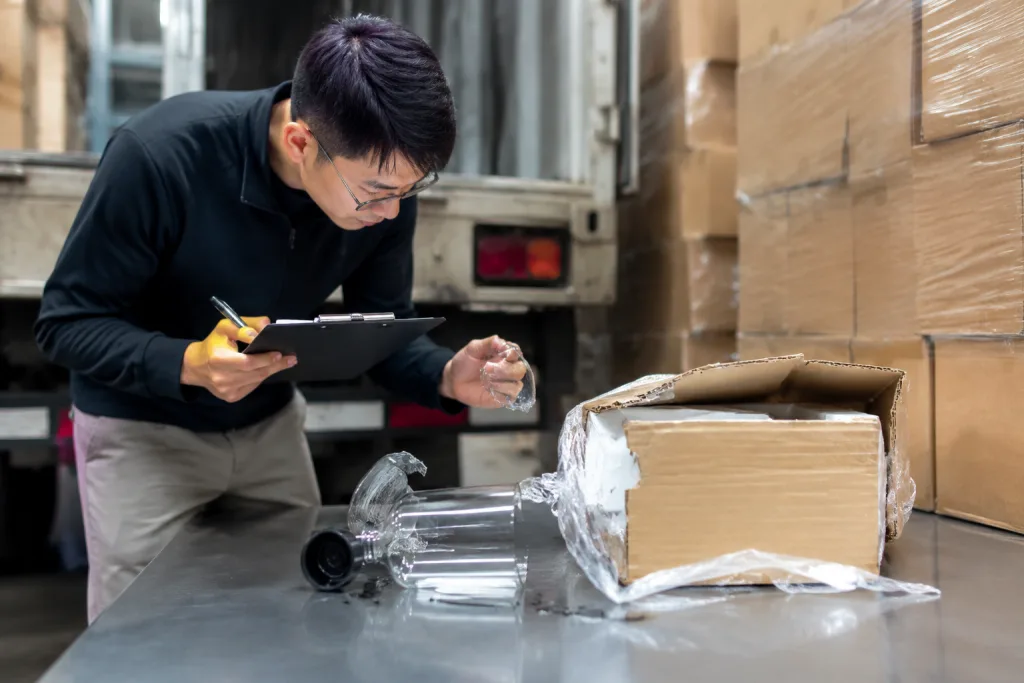
Ask your supplier for drop-test logic tied to the export lane, not the warehouse aisle. A carton that passes local trucking in Zhejiang can still fail the 60-90 cm drops that happen in ocean handling. For Amazon FBA, lock down FNSKU labeling, carton dimension limits, and case pack counts before the line starts. The buyer flagged a 2 cm overrun on one PO we shipped last quarter, and the storage fee math did not work. If the pack includes paper inserts or foam sleeves, add moisture protection from day one. Packaging sits inside product cost, and depending on the build it can add USD 0.12-0.45 per unit.
- Set inner tray fit and carton burst strength.
- Test carton drops from 60-90 cm.
- Match case pack to FBA and route needs.
- Protect humidity-sensitive inserts and labels.
How to write a useful spec sheet
I’ll rewrite the HTML in place, keeping the tag structure and tightening the prose so it reads like a factory-side sales engineer wrote it.A spec sheet should cut off arguments before they turn into chargebacks. For 316 stainless steel tritan water bottle bulk orders, capacity and color are not enough. Spell out the bottle build, alloy grade, wall thickness, lid type, gasket material, decoration method, packaging, and test standard. If you buy wholesale canteen or wholesale growler styles, split the spec by SKU; a 500 ml commuter bottle and a 64 oz growler fail in different places. Same story for beer growler wholesale or beer tumbler wholesale bulk programs. Shape changes how the cap, seam, and coating behave, and we have seen the wrong cap spec blow up a run on the line after 1,200 units.
Use a QC plan the factory can actually run. AQL 2.5 for major defects and AQL 4.0 for minor defects is normal, but leaks stay at zero. Ask for incoming material checks, in-process inspection, and final random inspection. For a 316 stainless steel build, require wall thickness in mm and confirm it with a caliper, not a guess. For export to the EU, ask for REACH-compliant materials and LFGB declarations where needed. For North America, ask for FDA food-contact support and, if there is a thermal claim, ask for the test method and the result sheet. The buyer flagged a quote typo once, and the math did not work until we matched the PO to the sample tag. In Zhejiang, the good factories show the test stack and tell you what is excluded.
- List each part by material code and function.
- Set zero tolerance for leaks, odor, and contamination.
- Put AQL numbers and test methods in the PO.
- Collect compliance papers before deposit, not after.
What the bulk pricing really means
I’ll rewrite the section in-place, keep the HTML structure intact, and tighten the pricing language so it sounds like a factory-side sales engineer wrote it.Bulk pricing here is rarely a clean unit price. The number moves with 316 alloy, Tritan wall thickness, mold complexity, lid parts, and carton setup. For a plain bottle, FOB China often lands around USD 3.20-6.80 depending on capacity and finish; once you add real 316 stainless, a custom lid, and gift-box packing, the quote climbs fast. If a supplier comes in far under market, check the cut sheet. We have seen 316 used in the sales line while the bottle body or inner parts were switched to cheaper plastic. For beer tumbler in bulk or growler bulk orders, a 0.8 mm wall and a two-piece cap usually change the math more than laser engraving does.
Ask for tooling and samples as separate lines. A new mold can add USD 2,000-8,000, and sample lead time is usually 7-10 days if the tool is already there or 15-25 days if we need to cut steel. One buyer once sent a PO with the lid code typed as "LID-03O" instead of "LID-030"; QC pulled the sample, and the mismatch saved a bigger headache. At BottleForge Industrial in Hangzhou, Zhejiang, we run about 300,000 units a month, but that number only matters when the design is frozen and the inspection plan is clear. Cheap is the wrong question to ask. The real question is whether the first 500 pcs pass before the line fills a container.
- Separate product cost, tooling, and packaging.
- Price 316 by component, not by headline claim.
- Watch for hidden substitutions in caps and inserts.
- Confirm FOB terms and inspection scope before approval.
Send your spec, we’ll pressure-test it
We can review your drawings, quote MOQ, and flag leak, alloy, and packaging risks before you place a 316 stainless steel tritan water bottle bulk order.
Frequently asked questions
Is 316 stainless worth it for a Tritan bottle?
It depends on use. For acidic drinks, salty environments, or hard daily use, 316 can be worth the premium. In bulk, expect about USD 0.25-0.60 more per unit than 304, depending on wall thickness and finish. If the bottle is mainly for plain water, 304 may be enough and gives you a lower landed cost. Ask for material certification by component so you are not paying for a 316 headline while the cap or insert is downgraded.
What MOQ should I expect for custom bulk drinkware?
A practical MOQ for custom 316 stainless steel tritan water bottle bulk is usually 1,000 units per color or design. Some factories in China can offer 500 units if they already have the mold and lid, but the unit price will be higher. For mixed SKUs like canteen wholesale or growler wholesale, MOQ often rises because of packaging and assembly complexity. Always separate MOQ for bottle, lid, logo, and carton.
How do I test if the bottle will leak in transit?
Use an inverted leak test, a torque check on the lid, and carton-drop simulation. A solid process is to fill 10 samples, close them to the specified torque, store them upside down for 30 minutes, then drop the packed cartons from 60-90 cm on multiple faces. For export, ask the factory to run a pressure/temperature cycle too, because air freight and winter shipping can expose weak gaskets. Zero critical leaks is the correct target.
What compliance documents should I ask for?
For Europe, ask for REACH support and LFGB declarations if the market requires them. For North America, request FDA food-contact support or a supplier declaration tied to the exact material set. If the bottle includes coatings or inks, ask for the relevant migration or heavy metal test reports. For stainless components, ask for material composition certificates. If the supplier cannot tie documents to your SKU, treat the paperwork as generic marketing, not compliance.
Can I use the same spec for beer growler and water bottle programs?
Not safely. Beer growler bulk and beer tumbler bulk programs usually need thicker walls, different cap seals, and more attention to odor retention or carbonation pressure. A water bottle spec focused on light weight may fail on a growler wholesale or wholesale growler line. If you are launching both, split the drawings and QC limits. Same factory is fine, but do not use the same technical assumptions.