Key Takeaways
- 316 stainless usually adds about USD 0.35-0.90 per unit over 304 on a 500-1,000 unit order
- A practical MOQ for private label starts at 500-1,000 units per color for a custom thermos
- Most factory thermos lead times run 25-35 days after sample approval in Zhejiang, China
- For retail and promo programs, ask for AQL 2.5 major / 4.0 minor and REACH documentation
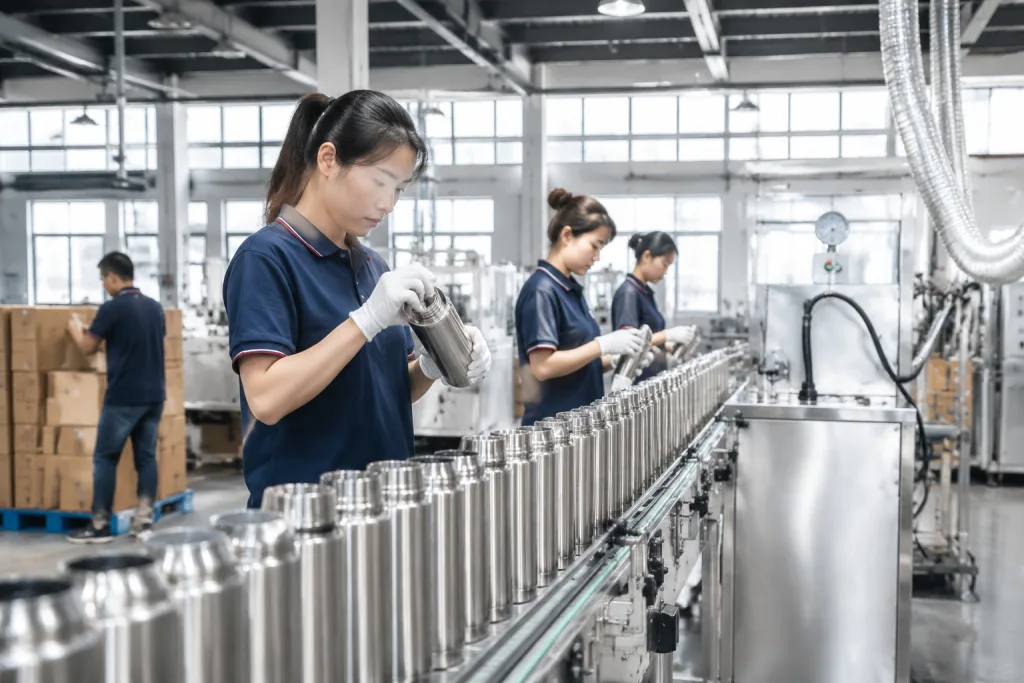
If you are buying a 316 stainless steel thermos flask private label line for outdoor retail or a promotional campaign, the hard part is not finding a bottle. The hard part is getting the right steel grade, lid system, surface finish, and price without ending up with a heavy SKU that sits in stock. In Zhejiang and across China, plenty of factories can make a stainless thermos; fewer keep wall thickness at 0.4 mm, vacuum retention, and decoration stable across 3,000 to 30,000 units. We run that check on the line with calipers and a leak test, because that is where bad batches show up.
Smart buyers treat the first sample like a procurement test, not a marketing sample. You want clean answers on MOQ, FOB China pricing, AQL, REACH, and whether the product is a true factory thermos or just a generic body with your logo slapped on. If you are sourcing for the US or Europe, one decimal point can change the deal: 0.4 mm versus 0.5 mm steel, 12 hours versus 24 hours heat retention, or a 500-unit MOQ versus 3,000 units. The buyer flagged a PO typo on one run—wrong lid code—and QC pulled the sample before we shipped.
Why 316 steel changes the buy
I’ll rewrite the section in a more field-tested sales style, keep the HTML intact, and preserve the heading/tag structure while tightening the buy logic.If you sell to hikers, coastal retailers, or corporate gift buyers, 316 stainless is not a cosmetic upgrade. It handles salty air, acidic drinks, and sweat better than 304. That is the whole point. We’ve seen 304 pass a showroom sample and then come back with tea stains after 3 months in a gym bag. A buyer in Europe will ask about corrosion first, not your customizable thermos copy.
Here’s the math. On a 500 ml double-wall vacuum thermos, a 316 inner usually adds about USD 0.35-0.90 FOB, depending on finish, cap style, and MOQ. If your target is under USD 3.20 FOB, 304 is the sane call. If you are building a USD 24-34 retail bottle, 316 is easy to defend. The buyer flagged a quote once because the PO said “316 steel” but the spec sheet had no grade line. That kind of typo burns time.
- Use 316 for salty air, acidic drinks, and premium outdoor retail.
- Keep 304 for mass-market thermos bulk runs where the margin gap matters more than extra corrosion resistance.
- Confirm the certificate; do not accept “316-like” wording from a supplier thermos quote.
In Zhejiang, the serious factories tell you the steel grade before they talk about color. QC pulled the sample, checked the mill cert, and that was the end of it.
Checklist before you quote
I’ll keep the HTML structure intact and rewrite the prose to sound like a factory sales engineer: sharper, more concrete, and less generic.Do not ask for a price before you lock the build. A thermos can look the same from the shelf and still change in insulation time, cap thread count, coating thickness, and inner steel gauge. We have seen buyers get burned on a 0.40 mm liner that should have been 0.45 mm. Keep the checklist tight.
Ask these five questions first
- Is the inner liner 316 or 304, and can you show material traceability?
- What is the wall thickness on the inner and outer shells? Common ranges are 0.35-0.50 mm.
- What is the vacuum retention spec: 12 hours, 18 hours, or 24 hours at one fixed test condition?
- What is the lid material: PP, Tritan, stainless, or a mixed assembly?
- What is the exact MOQ per color and per logo method?
For a real manufacturer thermos quote, the answer should list the print method, packaging spec, carton count, and inspection standard. On our line, QC pulled the sample and checked the lid torque with a 3N·m gauge before we released the batch. A Zhejiang factory with its house in order will also give you monthly output, often 50,000-120,000 units on a standard thermos line. If the vendor cannot answer those basics, the math does not work; you are buying guesswork, not a thermos factory.
A practical buying sheet should include target capacity, Pantone color, logo area, test standard, and sales channel. One PO we saw had the logo position typed 25 mm off center, and the buyer flagged it before we cut the silk-screen plate. Outdoor retailers usually ask for a matte powder coat with laser logo. Promotional brands often choose silk-screen because the order is bigger and the margin is thinner. That is a different product, not just a different logo.
Private label options that actually sell
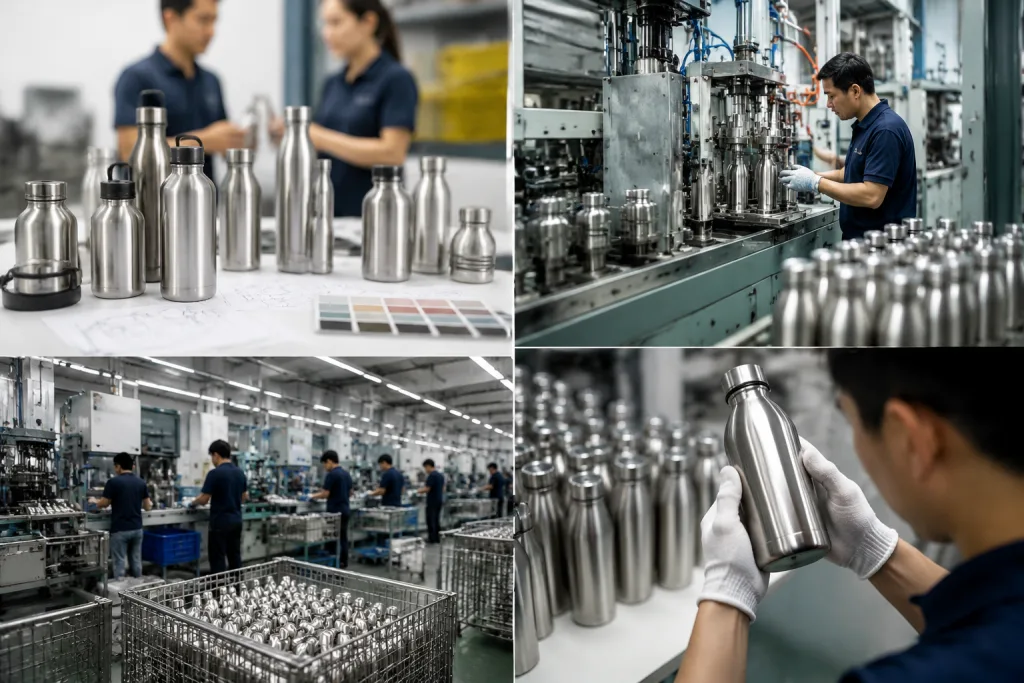
I’ll rewrite just the prose, keep the HTML tags and list structure intact, and make it read like a factory-side sales note with tighter, more specific language.A solid thermos customized program is not about changing every part. We usually change 3 or 4 details buyers can see on the shelf or in an Amazon listing, then keep the rest on standard tooling so lead time stays sane.
Common private label picks are matte powder coating, glossy lacquer, rubberized grip paint, laser-engraved logo, screen print, embossed packaging, and lid swaps. For outdoor retail, 500 ml or 750 ml with a narrow body sits better in backpack side pockets and on hook displays. For promo orders, a 1,000 ml bottle gives more print space and feels like a better gift. The math works.
- Logo methods: laser engraving for a premium look, silk screen for budget runs, UV print for full-color branding.
- Color strategy: 1-2 stock colors cut MOQ and get the custom thermos out faster.
- Packaging: brown box, color box, or mailer; each one changes carton cost and breakage rate.
If you are comparing thermos custom options, the lid is usually the real selling point. A leakproof screw cap with a folding handle works for outdoor retail, while a press-button lid fits office gifting better. We had a buyer flag a PO because the cap code did not match the body code, and QC pulled the sample before it went to packing. One body can still cover more than one channel if you lock the cap system early. That is how a distributor thermos program stays profitable with two buyer types, not one.
Pricing, MOQ, and lead time
I’ll rewrite the section in-place, keeping the HTML tags and structure intact while tightening the sales tone and adding a few concrete factory details.Buyers ask for price first, but that answer needs three numbers on the table: MOQ, lead time, and destination terms. For a 316 stainless double-wall thermos we ship from China, private label pricing usually lands at USD 4.20-8.50 FOB per unit, depending on capacity, finish, and the accessory set. A plain bulk thermos with a one-color logo sits near the low end; a matte body with laser logo, gift box, and custom lid moves up fast. We run the quote off a 304/316 material split and a 0.35 mm wall check, because the math breaks if that part is fuzzy.
Typical MOQ in Zhejiang is 500 units for a stock body with a logo, 1,000 units for a new color, and 3,000 units if you want a unique lid or a new box structure. Lead time after sample approval is usually 25-35 days for standard orders and 40-55 days if you need new coating or packaging. If a thermos supplier claims 10 days on a custom program, ask which step got cut. QC pulled the sample on a 2 m drop test last week, and that alone took time.
- 500 units: good for a retail test or a small distributor thermos launch.
- 1,000-3,000 units: the range we see for a proper custom thermos program.
- 10,000+ units: where carton loading and freight savings start to beat unit-price talk.
For importers in North America, FOB China is usually the cleanest starting point. If you need door delivery, ask for landed cost with carton dimensions, gross weight, and pallet count. The buyer flagged it before on a PO typo for pallet height, and the freight quote had to be redone. For a thermos distributor, that 20-cent bottle saving can disappear in the truck line.
Quality checks that save claims
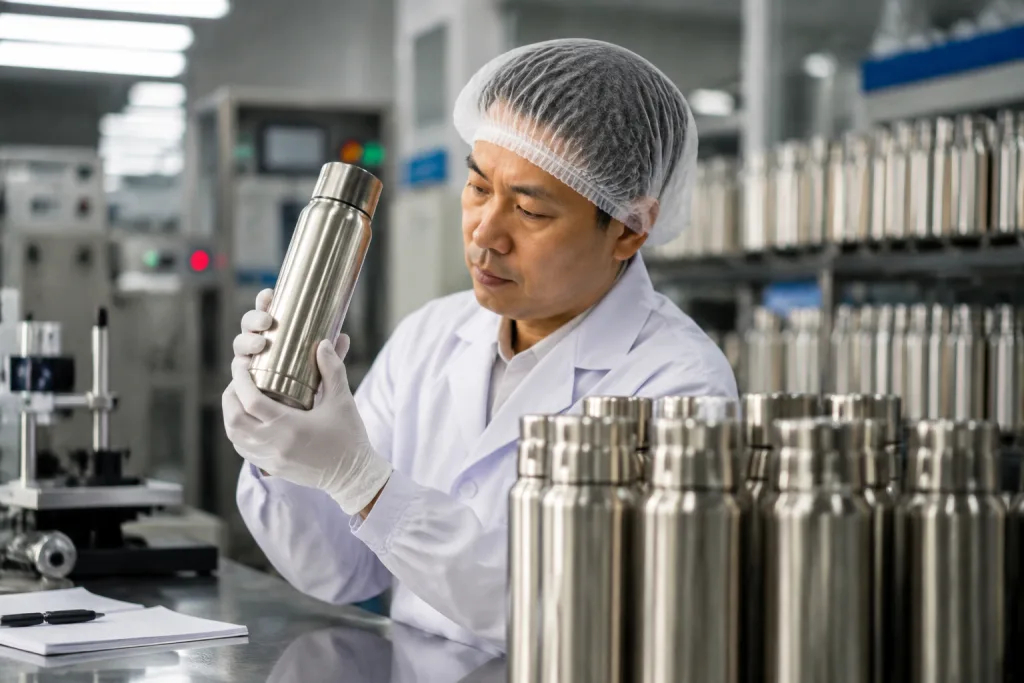
I’ll rewrite the prose in place, keep the HTML structure intact, and tighten the language so it sounds like a factory-side sales engineer wrote it.Quality failures on a stainless thermos usually start small. A cap leaks 3 ml in a hot-water tilt test, a shoulder gets a 2 mm dent in transit, a powder coat chips after 2 weeks, or the vacuum drops and the bottle loses heat. We catch that with QC on the line, not with hope.
For a production run, ask for incoming material check, in-process vacuum leak testing, and final inspection against AQL 2.5 major / 4.0 minor. On a premium thermos customizable line, we run 100% hot-water leak testing for the cap assembly and a 24-hour vacuum retention sample audit. If the bottle ships to Amazon FBA, check carton drop resistance and barcode placement before the PO leaves the desk. The math does not work if you skip those two.
What a good QC pack includes
- Material spec sheet for 316 inner liner and outer shell.
- Food-contact declaration and REACH compliance for Europe.
- Temperature test method and results, ideally at 95°C fill and ambient room conditions.
- Finished goods photos, carton labels, and pallet counts.
One point buyers miss: check the coating after logo decoration, not before. We have seen a laser-engraved body pass first inspection and then fail when the powder coat is only 40-50 μm and the engraving cuts too deep. A good thermos manufacturer in Zhejiang will flag that before mass production; the line knows decoration changes the finish, and the buyer flagged it late on one PO because the artwork typo hid the real issue.
How to source in Zhejiang
I’ll rewrite the section in-place, keep the HTML structure intact, and tighten the copy so it sounds like a Zhejiang factory-side sales engineer.Zhejiang stays one of China’s strongest drinkware sourcing bases because the supply chain sits on top of each other. Steel forming, vacuum welding, coating, printing, packaging, and carton supply are all within the same industrial belt, so we run samples faster and cut dead time between steps. If you are chasing a custom thermos for a retail launch, that distance matters. On one job, QC pulled the sample in 6 days because the cap shop was 3 kilometers away.
When you work with a China-based manufacturer, ask for monthly shipment volume, mold change handling, and whether they can consolidate 3 or 4 SKUs in one booking. A solid Zhejiang factory may ship 80,000-150,000 thermos units per month across several lines, but the number is not the real test. The spec is. We’ve seen buyers focus on price and then miss a 0.3 mm lid gap that blows the fit. For private label work, a clean sample timeline is usually 5-10 days for a logo sample and 12-18 days for a pre-production sample with packaging.
Do not treat “China sourcing” as “cheap sourcing.” In Zhejiang, the stronger factories sell process control, not just metal.
If you are comparing thermos suppliers, use a simple scorecard: material proof, MOQ, lead time, compliance files, decoration options, and after-sales response. That is the right filter. A distributor thermos business lives or dies on repeatability, and one bad batch of lids can wipe out the savings from a low quote. We had a buyer flag a PO typo once — “316” was printed as “306” — and the line had to stop while we rechecked the artwork and packing list.
Request a 316 thermos quote now
Send your capacity, MOQ, logo method, and target market. We will return a clear FOB China quote from our Zhejiang thermos factory.
Frequently asked questions
Is 316 stainless steel worth it for a thermos flask private label order?
Yes, if you sell premium outdoor retail, coastal-use products, or higher-margin corporate gifts. 316 usually costs about USD 0.35-0.90 more per unit than 304 on a 500-1,000 unit order, but you get better corrosion resistance and a stronger premium story. If your target retail price is under USD 20, the upgrade may be too expensive. For a USD 24-34 retail line, it is easier to justify. Ask the factory for material traceability, not just a verbal claim. A serious thermos manufacturer in China or Zhejiang should provide it without delay.
What MOQ should I expect for a customized thermos?
For a standard stock body with your logo, expect 500-1,000 units. If you want a new color or unique packaging, 1,000-3,000 units is more realistic. Fully new lids or structural changes often start at 3,000 units because tooling and setup time increase. For promotional thermos programs, some suppliers quote lower MOQs, but they usually limit color choices or charge a higher unit price. If you need mixed SKUs, ask whether the factory can consolidate cartons by model to reduce freight waste. A good thermos supplier will explain the tradeoff clearly.
How long does production take in China?
For a normal private label thermos order, expect 25-35 days after sample approval. If you need a new coating, special packaging, or a unique lid component, lead time can stretch to 40-55 days. Sample lead time is usually 5-10 days for a logo sample and 12-18 days for a full pre-production sample. If a thermos factory promises very fast turnaround on a fully customized order, check whether they are using stock inventory. In Zhejiang, the best manufacturers are transparent about what is in stock and what requires new scheduling.
What compliance documents should I ask for?
For Europe, ask for REACH-related material declarations and food-contact compliance. For the US, ask for food-contact safety documents and any applicable test reports. If you are shipping to Amazon FBA, also ask for carton details, FNSKU labeling support, and outer carton labeling. Quality control should reference AQL 2.5 major and 4.0 minor at minimum. If the thermos is promotional or gift-oriented, still request the same documents; cheap packaging does not remove compliance risk. A professional thermos supplier should provide a tidy document pack with the quotation.
What is a fair FOB price for a 316 stainless thermos?
For a 500 ml or 750 ml double-wall bottle, a fair FOB China range is often USD 4.20-8.50 per unit, depending on capacity, finish, logo method, and packaging. A simple bulk thermos with one-color print sits lower; a premium laser-engraved custom thermos with gift box sits higher. Freight, duties, and destination handling are extra. When comparing quotes, check whether the price includes inner 316 steel, a tested leakproof lid, and retail packaging. Many low quotes hide those costs. In China, the difference between supplier thermos quotes is often in the details, not the headline number.