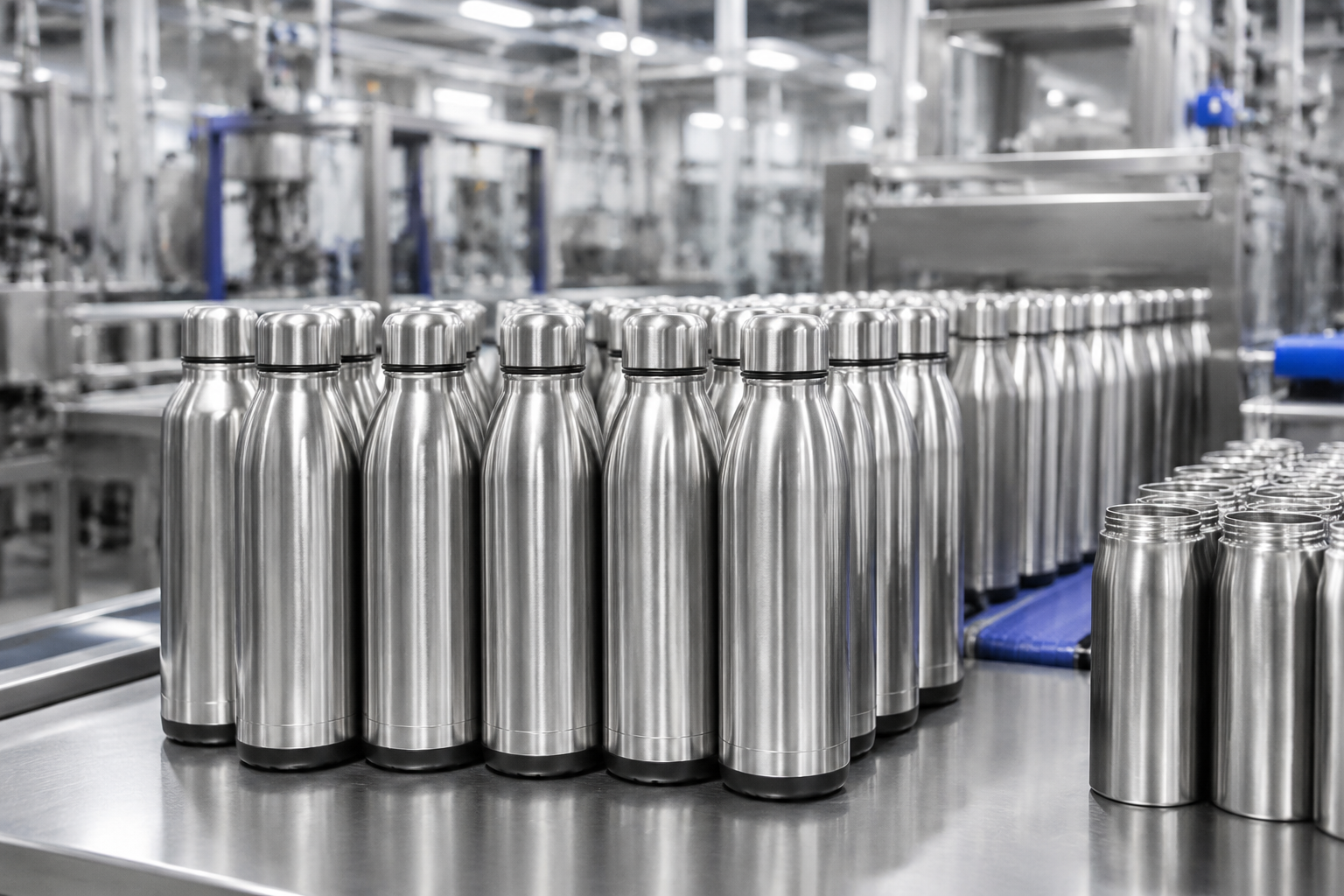
Key Takeaways
- 316 stainless steel thermos flask bulk orders usually need a 500-unit MOQ and 25-35 day lead time after sample approval
- Specify 304 vs 316 on the inner liner and ask for material traceability, not just “food grade stainless steel”
- For outdoor use, require vacuum leakage, lid leak, and 1.2 m drop tests on every customized thermos pilot run
- A reliable thermos factory in Zhejiang should quote FOB China clearly and support AQL 2.5 or tighter for major defects
If you buy 316 stainless steel thermos flask bulk for outdoor retail or promotions, the real risk is not the quote. It is what shows up after 5,000 units land: flavor carryover, weak vacuum retention, lids that leak after two weeks, and decoration that scuffs off before the season ends. We’ve seen a buyer flag a 1 mm lid gap on day one, then the whole lot comes back. Those failures usually come from vague specs, not bad luck.
We build thermos in Zhejiang, China, and the same pattern repeats across bulk thermos programs: if you do not lock down steel grade, wall structure, lid torque, drop test targets, and print method, the factory will fill in the blanks for you. QC pulled the sample on a torque wrench and found the cap loose at 0.8 N·m; that kind of miss turns into leakage fast. A serious manufacturer thermos partner should tell you where failures start, how they test, and what they change before mass production. That is the level you need if you want a custom thermos that holds up after retail complaints and promo reorders.
Where bulk thermos projects fail first
I’ll rewrite the prose only, keep the HTML structure intact, and tune the tone to sound like a factory-side sales engineer.The first failure is spec drift. A buyer asks for a 316 stainless steel thermos flask bulk order, then the PI says “stainless steel inner” and the factory sneaks 304 into part of the build. That looks harmless until you run acidic drinks, salty water, or coffee overnight. For camping, hunting, or premium gifting, this is the wrong question to ask. We’ve seen 18/8 and 316 get mixed in the paperwork, then QC pulled the sample and the buyer flagged the finish after a 24-hour hold test. 316 is not magic, but it gives you a better margin against pitting and keeps the surface looking cleaner longer.
The second failure is the lid system. Most leak complaints start at the threads, gaskets, and vent valve, not the body. A custom thermos can pass a fill test on the line and still fail in real use because the cap was overtightened, the gasket compound is too soft, or mold shrinkage moved the seal line by 0.3 mm. When we quote factory thermos projects in Zhejiang, we ask for a lid endurance spec on day one: 3,000 open-close cycles, no visible cracking, and no drip after a 1-meter shake test. If the buyer skips that, the math doesn’t work.
For distributors thermos and promotional thermos buyers, the usual mistake is chasing print area and color first. That does not drive returns. Returns come from condensation on the cup wall, weak thermal retention after 12 hours, and coatings that chip when cartons rub in transit. We ship enough of these to see the pattern. If you want a thermos customizable program that repeats, lock the failure points first, then wrap the decoration around them.
316 steel and the liner spec
I’ll rewrite the prose to sound like a factory-side sales engineer, keep the HTML exactly intact, and strip the AI-ish phrasing while adding a few concrete shop-floor details.Do not let anyone sell you vague steel language. Your purchase order should spell out the inner liner as SUS316 or AISI 316, the outer shell as 304 or 201 only if you accept that trade-off, and the full material stack for every visible part. On the line, we ask for the coil cert first; if the supplier cannot show batch traceability, that is a problem, not a detail. For stainless thermos products, steel grade is only one line on the spec sheet, but it is the line buyers get burned on most often.
For bulk thermos projects, wall structure matters as much as the grade. A typical premium build is 0.4-0.5 mm inner liner, 0.4 mm outer shell, and a vacuum gap set to keep the bottle light without giving up heat retention. We have seen this go sideways when the wall is too thin: dents show up, the vacuum seam shifts, and QC pulls the sample. Too thick, and freight goes up fast. For a 500 ml thermos bulk SKU, a finished weight around 260-320 g is normal, depending on lid design and body coating.
What to specify:
- Inner liner: SUS316, with lot traceability
- Outer shell: SUS304 or per your cost target
- Wall thickness: 0.4-0.5 mm target
- Vacuum level: factory retention test required
- Food-contact compliance: REACH, LFGB, and FDA-aligned declaration where needed
A serious thermos manufacturer in Zhejiang will not push back on these points; they will ask which test standard you want and which AQL you want on the carton check. That is the difference between a thermos supplier who runs the line and a thermos vendor who just takes the PO and hopes for the best.
Vacuum loss and heat retention drift
I’ll rewrite the section in a more sales-engineer voice, keep the HTML exactly as-is, and tighten the language around real factory checks and drift points.Thermal performance is where a clean sample turns into a weak mass order. A 12-hour hot-hold claim on the sample card means little if the line changes welding current or the vacuum pump cycle gets cut from 18 seconds to 12. For a custom thermos, put the retention claim in the spec sheet with the test method: start temperature, fill volume, ambient temperature, lid position, and the allowed drop after 6, 12, and 24 hours.
We see two failure modes on the floor. First, the vacuum seam is thin, so units lose heat after shipping vibration or a light drop; QC pulled one sample and it failed after a 1.2 m drop test. Second, the lid insulation is poor, so the neck becomes the leak point. If you are sourcing a promotional thermos for winter campaigns, this is the line between a drinkable giveaway and scrap. Ask for thermal testing on random production pieces, not only pre-production samples.
Practical spec points that cut drift:
- Require a 6-hour and 12-hour retention benchmark on the signed sample
- Ask for at least 3 random units per 1,000 from production
- Set an acceptance window, such as ±5°C on the claimed result
- Confirm lid assembly torque and gasket material before the mass run
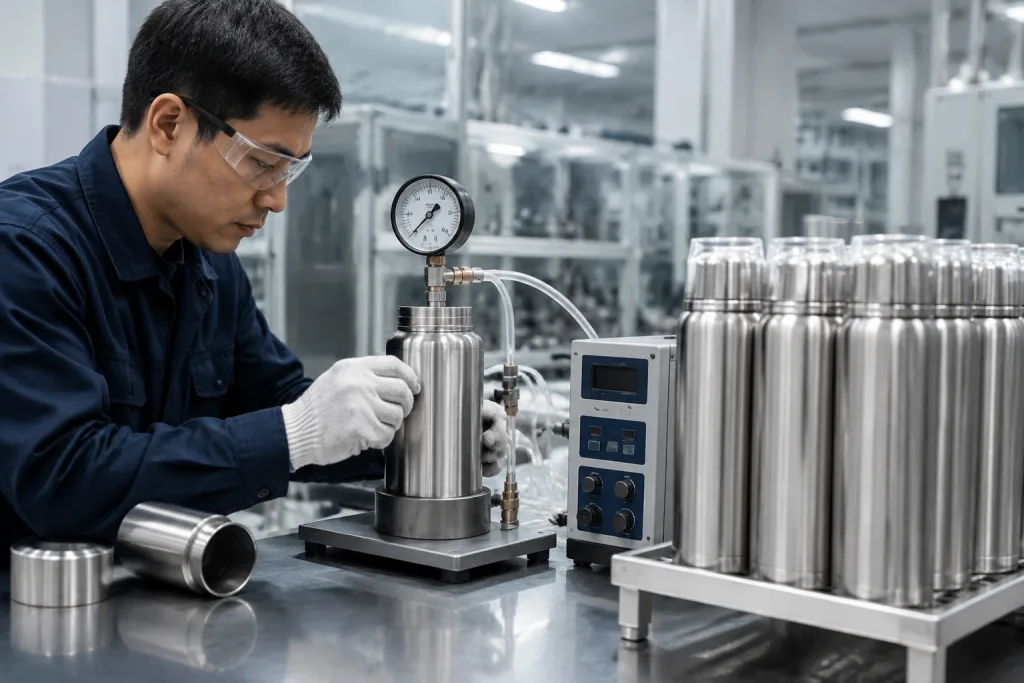
Good thermos programs in China usually include a quick vacuum check before packing, but ask how it is measured. A factory can say “inspected” and still skip the gauge. We run a vacuum tester on the line, and that number matters more than a checkbox.
Lid, gasket, and leak problems
I’ll rewrite the section in-place, keeping the HTML structure and tightening the prose to sound like a factory-side sales engineer. Then I’ll return only the updated HTML.If you remember one thing from a custom thermos program, make it this: the lid is the product. The bottle body gets the photos; the cap gets the complaints. The usual leak spots are the silicone seal groove, the flip-top hinge, and the straw channel on a sports cap. We’ve seen a 0.2 mm shift on the mold turn a clean sample into a transit problem.
For outdoor retailers, a leaking lid hurts faster than a shorter hot-hold claim. It ends up in backpacks, car seats, and the buyer’s inbox. Your factory thermos spec should name the gasket material, usually food-grade silicone, plus the hardness range. It should also state the inverted leak test, the pressure shake test, and the hot-fill deformation test. “Tight fit” is the wrong question to ask.
Ask for lid samples from the same cavity number you will mass produce. If the cap is multi-cavity, one good cavity can hide three bad ones.
For a thermos customized with a logo or Pantone body color, the lid finish can change torque feel. Matte paint on the cap looks premium, but if the coating adds thickness on the thread, the buyer flags it as over-tightened or defective. QC pulled one sample last month at 18 N·cm, and the next cavity came in at 24 N·cm. Small stuff. That is where bulk returns start.
Decoration that survives handling
I’ll rewrite this section in a more shop-floor, sales-engineer voice while keeping the HTML structure intact and preserving the technical specifics.Decoration fails because buyers judge promotional thermos orders with their eyes first. On the line, we’ve seen silk print look perfect on day one, then scuff off after a carton rub test in 30 minutes. Laser engraving holds up better, but it changes the premium look and can expose a rough shell on cheaper blanks. If your buyers want a thermos promotional item for hiking clubs, trade shows, or corporate gifts, pick the decoration for handling, not for the render.
For a customizable thermos, lock the spec before we run samples: one-color silk screen, 360° UV print, pad print on the cap, or laser on the body. Then set the rub target in black and white: 50 cycles, 100 cycles, or more. We also ask for adhesive tape pull testing after curing. QC pulled the sample twice on one job because the buyer flagged a weak edge at the logo border. A supplier thermos factory should know these checks without a second call. The better Zhejiang plants do.
Use this rule: if the bottle ships in retail cartons and gets handled every day, the decoration has to survive abrasion and mild detergent. If the order is for premium corporate gifting, the logo should still look clean after 20 hand washes. If your thermos customized program cannot pass those checks, the artwork is too fragile for the market. That’s the wrong question to ask—pretty is not enough.
How to spec a safer order
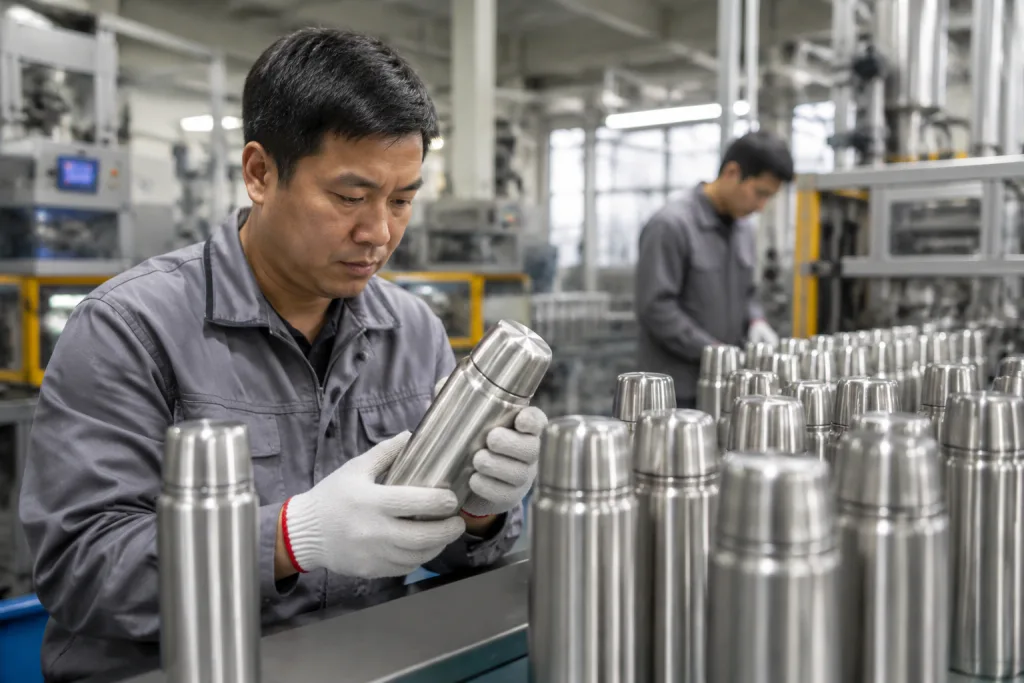
I’ll rewrite the section in place, keep the HTML structure intact, and tune the prose to sound like a factory-side sales engineer.Buyers usually ask for a clean unit price, but the safer move is to spec the order in layers. Start with function, then compliance, then appearance, then packaging. That order cuts noise and keeps the manufacturer thermos discussion straight. A solid factory in China will ask for a tech pack; a weak one only wants logo files and quantity. We run into that on the line all the time.
For a 316 stainless steel thermos flask bulk program, the minimum file set should include:
- Capacity: 350 ml, 500 ml, 750 ml, or your exact target
- Steel grade: SUS316 inner liner, confirmed by batch
- Test targets: leak, drop, and heat retention
- Finish: powder coat, spray paint, polished, or matte
- Packaging: individual box, master carton, and barcode label format
Typical factory terms from a Zhejiang supplier thermos partner are 500 MOQ, 25-35 days for standard production after sample approval, and FOB China pricing that starts around USD 3.20-6.80 depending on size, finish, and lid structure. Custom tooling or special lids can add USD 300-1,200 in mold or setup cost. QC pulled the sample at 72°C, and the buyer flagged a barcode typo on the PO; that kind of mistake burns days. If you need Amazon-ready packing, FNSKU labeling, drop-test cartons, and polybags, say it before PO. A thermos distributor who leaves packaging late pays twice: once in rework, once in delay.
When you compare suppliers thermos quotes, do not compare unit price alone. Compare what is included: testing, compliance docs, carton strength, spare gaskets, and lead time control. The math does not work any other way.
QC checkpoints before you reorder
I’ll rewrite just the prose inside the existing HTML, keep the tags and list structure intact, and make it sound like a factory-side sales engineer.Before you reorder, compare the repeat run against the signed sample, not the sales PDF. The better thermos manufacturers show drift data from the line, not a polished inspection sheet. Ask for AQL results on major and minor defects, and ask what changed when a batch missed spec. We have seen a cap mold get polished, a welding current reset, and a gasket compound swapped after a leak at 60°C. If they cannot say that clearly, your next bulk thermos order will carry the same fault back in.
For outdoor retail programs, we keep the checks plain: leak after hot fill, cap torque, carton compression, and logo rub resistance. For a promotional thermos, add color match across 500 units and box presentation. You do not need 20 pages of paperwork. You need the 4 or 5 checks that predict a buyer complaint at the door. QC pulled the sample at 08:30, and the carton test told the story before the truck left. A good thermos supplier in China builds those points into the production checklist, then ships the result without drama.
Ask for these records every run:
- Incoming stainless certs and gasket material declaration
- Pre-shipment AQL report, ideally AQL 2.5 or tighter on critical items
- Random thermal retention sampling
- Carton drop and compression results
- Final photo report with lot numbers and packing count
That is how you turn a one-time thermos custom order into a stable program. The cheapest quote is not the cheapest outcome; the math does not work that way. A PO typo on carton count can still sink a good run, so we check it twice before release. If the same spec ships the same way twice, you have a program worth reordering.
Request a 316 thermos quote with specs
Send your capacity, lid type, logo method, and target MOQ. We’ll quote a controlled bulk thermos run from Zhejiang with clear testing and packaging terms.
Frequently asked questions
What MOQ should I expect for 316 stainless steel thermos flask bulk orders?
For most custom thermos projects, expect a 500-unit MOQ for standard shapes and 1,000 units if you want special lids or deep color matching. Some thermos factory lines in Zhejiang can support 300 pieces for sample-style runs, but the unit price usually jumps 15-25%. If you need mixed colors, ask whether the MOQ is per color or per total order. That detail changes planning fast.
How much does a custom 316 thermos usually cost FOB China?
For a standard 500 ml model, FOB China pricing often lands around USD 3.20-6.80 per unit, depending on whether you choose powder coat, laser engraving, printed graphics, or a premium cap. A thermos customized with a special lid or gift box can move higher. Tooling or setup fees may add USD 300-1,200. Always ask what is included before comparing supplier thermos quotes.
What lead time is normal for bulk thermos production?
For a confirmed sample and no new tooling, 25-35 days is a realistic lead time for many bulk thermos orders. If you add a new lid, new mold, or a large carton pack requirement, plan for 40-50 days. In China, the best Zhejiang factories will give you a split timeline: 7-10 days for pre-production confirmation and 18-25 days for mass production. That is more useful than a single vague date.
How do I know the thermos is really 316 stainless steel?
Ask for the material declaration by batch, then confirm whether the inner liner is SUS316 and not just the shell. For serious manufacturer thermos sourcing, request coil certificates or a third-party verification method if the order value justifies it. You can also specify spot checks on incoming material and keep the written requirement in the PO. Do not rely on marketing language like “premium steel.”
What QC tests matter most for promotional thermos orders?
The most important tests are leak testing, drop testing, thermal retention, and decoration abrasion. For a thermos promotional run, ask for inverted leak tests, 1.2 m drop tests, and a rub check after 50-100 cycles. If the bottle will be used outdoors, add a hot-fill test and carton compression test. Those checks catch more problems than a glossy photo sample ever will.