Key Takeaways
- 316 inner liners usually add about USD 0.35-1.10 per unit versus 304, depending on size and finish
- A practical MOQ for custom stainless thermos orders is often 1,000-3,000 pcs per SKU
- Typical factory lead time is 25-35 days after sample approval and deposit
- For export programs, ask for REACH, LFGB, FDA, and AQL 2.5/4.0 inspection terms upfront
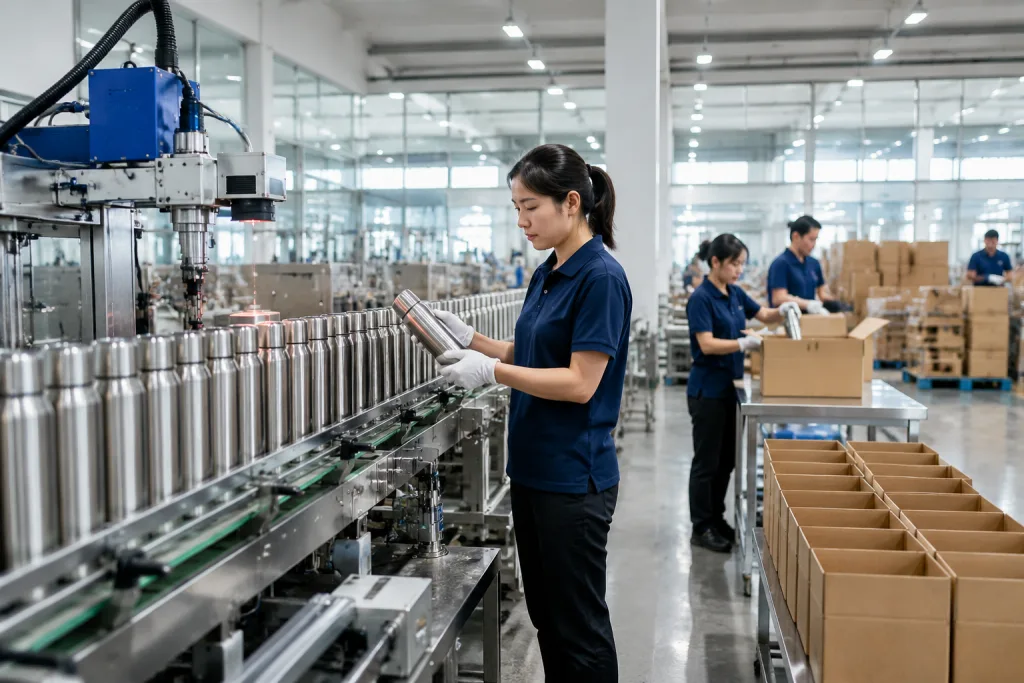
If you are buying for outdoor retail or a promo run, the wrong thermos spec turns into returns, thin margin, and dealer complaints fast. This is the wrong question to ask: “stainless steel or not.” We run into the real issue on the line all the time — does the bottle need 316 on the inside, what wall structure fits the use case, and how much print risk can your run take without a scrap pile.
A good 316 stainless steel thermos factory in Zhejiang should walk you through heat hold, salt spray resistance, cap fit, and branding method before you send the PO. QC pulled a sample last week with a 0.3 mm wall mismatch, and the buyer flagged it before packing. For export work, the better factories quote structure first, then finish, then carton config; that keeps bulk thermos pricing clean and stops a custom thermos order from blowing up on the wrong cost item.
Start with the use case
I’ll rewrite the section in place, keep the HTML structure untouched, and make the wording sound like a factory-side sales engineer.Your first call is the job, not the logo. A 500 ml promotional thermos for a winter giveaway has a different spec than a 750 ml outdoor bottle sold through specialty retail. If the bottle will hold acidic drinks, sit near salty coastal air, or stay packed for months before first use, 316 inner steel is worth the discussion. If it is an office gift, 304 usually does the job at lower cost.
For a manufacturer thermos program, ask the factory to quote three build options side by side:
- 304 inner + 201 outer for lowest cost
- 304 inner + 304 outer for mainstream retail
- 316 inner + 304 outer for premium corrosion resistance
That comparison shows the math fast. We had a buyer in Ningbo approve a sample on WeChat, then the PO said "316L" once and the line built 304; QC pulled the sample on a 0.01 mm wall check and the order had to be reworked. In Zhejiang, a lot of factories will default to the cheapest stack unless the liner grade is written on the PO. Put it in black and white. It saves a second sampling round and keeps the final thermos bulk price steady. If you are selling to outdoor users, ask for condensation testing, lid drop testing, and a vacuum leak check on every lot.
Choose the right steel grade
I’ll keep the HTML structure intact and rewrite the prose with a more grounded factory-sales tone, adding a few concrete shop-floor details while removing the AI-sounding phrasing.Most buyers know 316 costs more, but the real question is where that extra spend pays off. 316 stainless contains molybdenum, so it holds up better against chlorides and harsh liquids. That matters for beach use, sports drinks, and bottles left in a humid van. On a desk, the math usually does not work.
A serious 316 stainless steel thermos factory should talk in numbers, not just say “food grade stainless.” For a 500 ml double-wall vacuum bottle, ask for the inner liner thickness, outer shell thickness, and the steel gauge on the line. We often run 0.35-0.45 mm on the inner wall, depending on the drawing and the mold. If the factory cannot answer that cleanly, QC pulled the sample and found a problem before the buyer did.
Practical rule: if the premium on 316 is under 8% of your landed cost, it is usually easier to sell than to deal with corrosion claims later.
For thermos manufacturers selling to outdoor retailers, 316 can be a strong sales point, but only with paperwork behind it. Ask for material certificates, and if your market needs it, request test support to ASTM or FDA-style contact requirements. We’ve seen buyers flag a PO typo on the grade code and the whole order stalled for 12 days. Zhejiang export factories that ship this product every week usually have the certificates ready; if they don’t, move on.
Decide on capacity and structure
Capacity drives price, heat retention, carton count, and freight math. The usual picks are 350 ml, 500 ml, 750 ml, and 1,000 ml. We run 500 ml on a lot of gift orders because it fits retail boxes cleanly. A 350 ml bottle ships easier; a 1,000 ml bottle loads slower and burns carton space fast.
Structure matters just as much. A straight body is easier to make and print. A tapered body or wide-mouth mouthpiece improves drinking, but QC pulled the sample and found the shoulder polish line needed one extra pass, which slows the line. If you are comparing a customizable thermos with a standard mold, the mold choice can move unit cost by USD 0.20-0.60 and add 10-15 days when tooling needs adjustment; the buyer flagged a PO typo once and we lost two days just fixing the drawing.
- 350-500 ml: best for gifts, travel kits, and compact retail
- 750 ml: good middle size for commuters and outdoor buyers
- 1,000 ml: better for camping and field work, but freight goes up fast
A good thermos factory in Hangzhou or nearby Zhejiang industrial zones should give you net weight, packed weight, and case pack before sampling. If they only quote FOB unit price, that is the wrong question to ask. We ask for carton size, pallet count, and outer box drop-test results too. A thermos vendor with export experience will have those numbers ready before the buyer asks twice.
Branding without ruining the finish
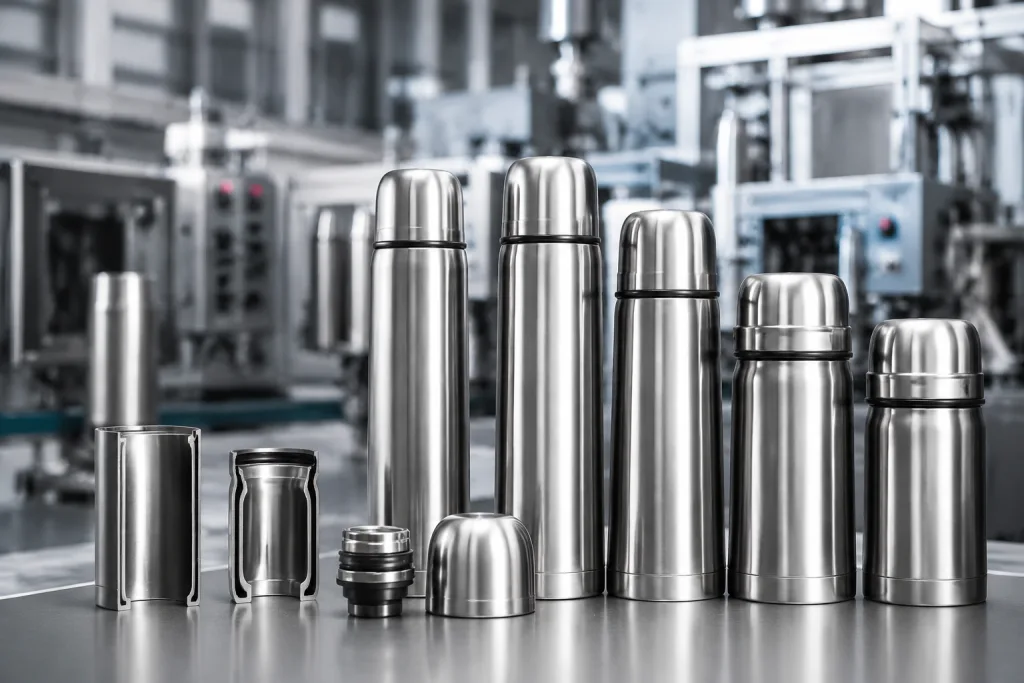
I’ll rewrite the section in place, keep every tag and heading structure intact, and tighten the copy so it sounds like a factory-side sales engineer.Logo placement is where a lot of first-time buyers make the wrong call. A decorated bottle that looks cheap in photos will hurt a retail line faster than a unit price that is 0.20 higher. The finish decides the method: powder coat, spray paint, mirror polish, and brushed stainless all behave differently under print or engraving. We’ve seen a 60 mm logo wrap fail on a curved body because the buyer copied a flat mockup.
For thermos custom work, the main options are silk screen, laser engraving, UV print, and heat transfer. Laser engraving is clean and durable, but it cuts through the top layer and leaves bare metal, which can look too technical for a gift set. Silk screen is cheaper on runs over 5,000 pcs, often USD 0.08-0.25 per color, but QC will flag it if the ink rubs after a 24-hour tape test. If you are building a thermos promotional campaign, pick the decoration method after you confirm the retail channel, not before.
Outdoor brands usually want the logo quiet, on the cap or low on the body. Promo buyers ask for a big mark, and on a curved stainless bottle that is where the math stops working. This is the wrong question to ask if you want a clean shelf look. A practical thermos manufacturer should push back, because a good factory does not just run the art; we tell you where it will fail. On our line, a 15 mm shift can save a print from distortion.
If you are planning a mixed program of custom thermos and standard inventory, ask whether the factory can keep the same body shape and change only the logo and cap color. That is the cleanest way to build a thermos customizable line without new tooling every season. We ship this setup often, and the buyer flag usually comes from a PO typo on cap color code, not from the bottle itself.
Check factory capability, not promises
I’ll rewrite just the prose, keep the HTML structure intact, and make it sound like a factory-side sales engineer wrote it.Buyers often ask for a thermos supplier. The real job is finding a factory that can hold vacuum yield, keep decoration consistent, and clear export documents without hand-holding. Ask for monthly output, line count, and in-process checks. A proper export plant in Zhejiang usually runs 200,000 to 500,000 units a month across several bottle lines, with one vacuum line and a separate decoration room. We’ve seen the buyer flag a PO typo on carton size before the goods left the line; that is the kind of detail that saves you money.
For a 316 stainless steel thermos factory, capability should include:
- vacuum leak testing on every batch
- salt spray or corrosion checks for coated parts
- drop test on master cartons and retail packs
- AQL sampling plan, usually 2.5 for critical and 4.0 for major defects
Ask about BSCI or similar social compliance if your retailers require it. If you sell to chains, request REACH paperwork for coatings and LFGB or FDA support where needed. A capable thermos distributor or thermos manufacturers partner knows the market before you repeat yourself. QC pulled the sample with a 0.3 mm scratch on the powder coat once; that part never would have passed a chain buyer's check.
Lead time is where weak factories start bluffing. For new custom orders, 25-35 days after sample approval is normal. If someone promises 12 days for a full custom stainless thermos run, the math does not work unless they are quoting stock or skipping the decoration queue. We run into this all the time on a 5,000 pcs MOQ: the line can move, but ink curing and packing still take their hours.
Price the whole landed order
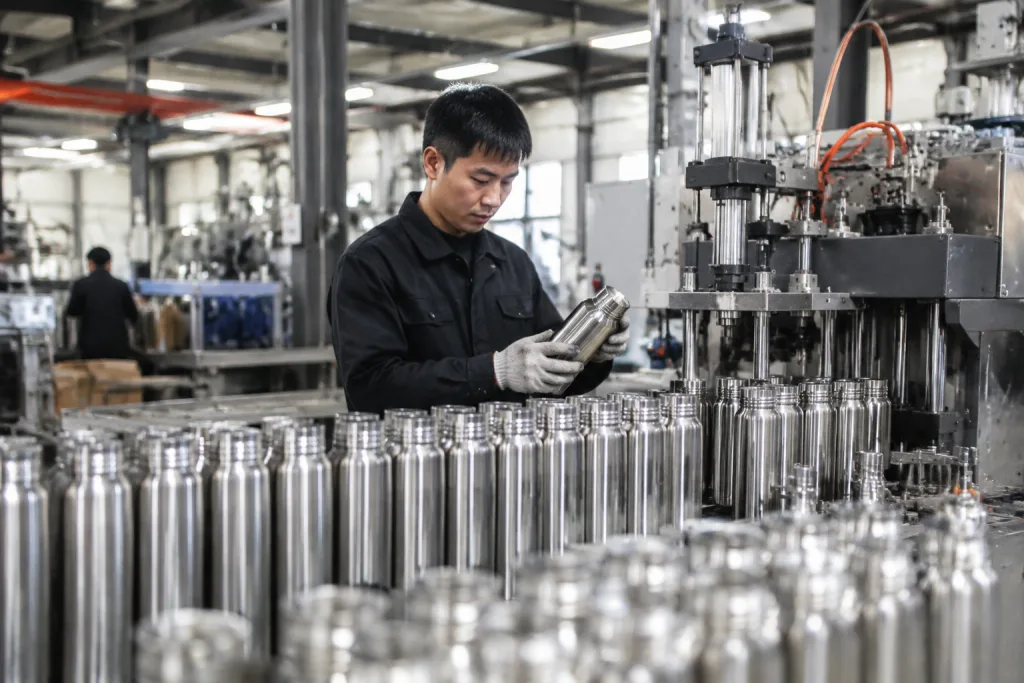
I’ll rewrite the prose only, keep the HTML structure and the existing terms/numbers intact, and make it sound like a factory-side sales engineer wrote it.Unit price by itself fools buyers. We’ve seen a bottle at USD 3.10 FOB Ningbo turn into USD 4.40 landed once the buyer asked for heavier cartons, logo work, inner trays, and a pricier freight lane. Ask every thermos manufacturer to quote the same sheet: bottle price, decoration cost, inner packaging, master carton, and port terms. Otherwise the math doesn’t work.
For a standard 500 ml export model, a realistic FOB range looks like this from our line:
- 304/304 body: USD 2.30-3.20
- 316 inner version: USD 2.75-4.10
- Engraving or one-color print: add USD 0.08-0.35
- Color box: add USD 0.15-0.45
If you are buying as a thermos distributor or distributors thermos program owner, ask for tiered pricing at 1,000 / 3,000 / 5,000 pcs. We run Zhejiang quotes every week, and 3,000 pcs is usually where the setup cost starts to behave. Below that, per-unit cost can jump by 12-18%. QC pulled one sample last month where the PO typo said 3000 pcs but the buyer meant 5000; that kind of miss changes the whole sheet.
Do not forget claims. If you market the bottle as a customized thermos with longer hot retention, state the test method. We’ve seen this go sideways when a report listed only the result and left out ambient temperature, fill temperature, and test duration. Good buyers ask for the test conditions, not just the number on the page.
Request factory pricing and sample options now
Send your target size, logo method, and annual volume. We’ll quote 304 and 316 options with MOQ, lead time, and packaging details.
Frequently asked questions
Is 316 really necessary for a stainless thermos?
Not always. If your buyer uses the bottle for coffee, tea, or plain water in normal conditions, 304 is often enough. Choose 316 when corrosion risk is higher: sports drinks, salty climates, marine use, or longer storage. The price uplift is commonly USD 0.35-1.10 per unit depending on size and finish. For premium outdoor retail, that premium is usually easier to defend than handling complaints later. A Zhejiang factory should be able to quote both grades on the same mold so you can compare landed cost before you decide.
What MOQ should I expect for custom orders?
For a true custom thermos run, a common MOQ is 1,000-3,000 pcs per SKU. If you want a new mold, special cap, or multi-color print, the factory may push higher because setup time and scrap risk increase. For stock body + custom logo, some suppliers can start at 500 pcs, but the price is usually less efficient. If you are buying as a distributor thermos program, ask for tiered pricing at 1,000, 3,000, and 5,000 pcs so you can see where the cost breaks.
How long does production take in China?
For a standard export order from a thermos factory in Zhejiang, sample approval to shipment is often 25-35 days. If the order needs new tooling, color matching, or special packaging, allow another 10-15 days. High season can add a week. A serious factory should state the lead time in writing, including sample time, mass production time, and QC hold time. For urgent promotional thermos orders, ask whether they can use existing molds and only change the logo or cap color.
Which tests should I request before shipment?
At minimum, ask for vacuum leak testing, insulation retention testing, and appearance inspection using AQL 2.5 for critical defects and 4.0 for major defects. If coatings or inks are involved, request REACH support; if your market needs it, ask for FDA or LFGB documentation. For outdoor retail, drop testing and carton compression testing are useful too. A factory thermos supplier that works with export buyers should already have these test routines and should be able to send photos or reports before final balance payment.
Can I mix custom branding with stock inventory?
Yes, and it is often the smartest way to reduce risk. Many buyers keep the body, lid, and vacuum structure standard, then change only the logo, color, or sleeve artwork. That gives you a customizable thermos program without paying for new tooling every season. It also helps if you need to reorder fast. A good thermos vendor in China can keep the same production line and switch decoration in one to two days, which is much easier than restarting a full custom mold project.