Key Takeaways
- MOQ for a serious 316 stainless steel thermos custom project is usually 500-1,000 units per color
- Typical factory lead time is 25-35 days after sample approval and deposit
- 316 inner liners cost about 8%-18% more than 304, but resist chloride and acidic beverage corrosion better
- Ask for vacuum retention data, AQL 2.5 inspection, and REACH/food-contact documents before PO release
If you are buying a 316 stainless steel thermos custom program for outdoor retail or a seasonal promo run, the hard part is not finding a bottle. It is sorting real steel from marketing copy, then deciding what earns its keep at MOQ 500 or 1,000 units. A good thermos should take salt spray, coffee acids, repeat washing, and a few drops on concrete. A bad one looks fine on page one and starts leaking, staining, or dropping heat after one short season.
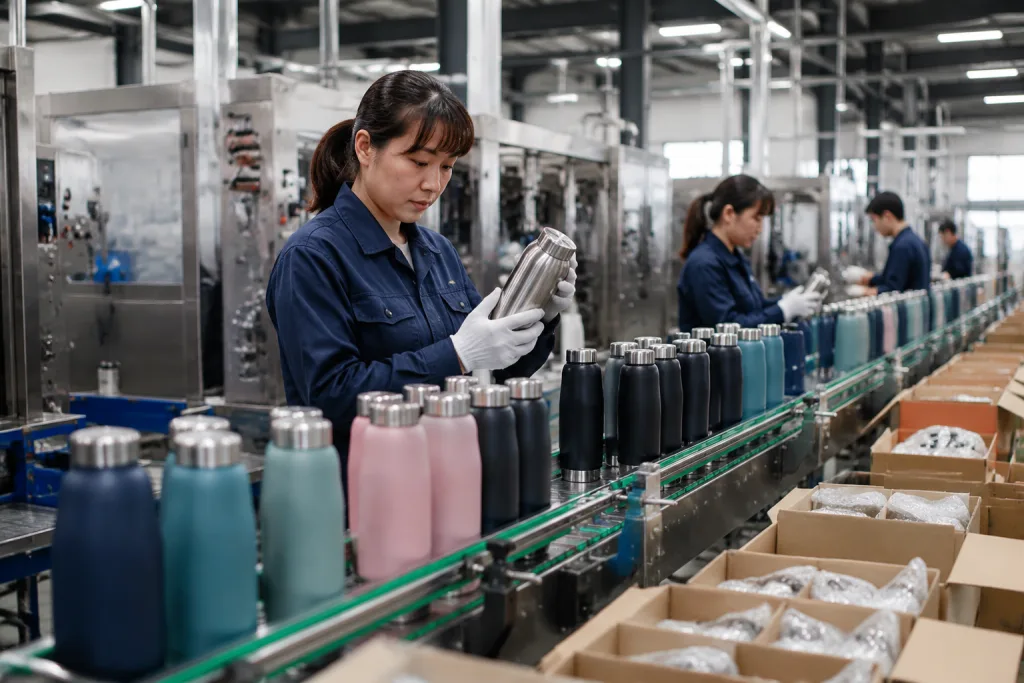
We build and export from Zhejiang, China, and the same buyer mistakes show up again and again: vague steel grades, weak lid tooling, no written insulation target, and artwork that misses the curve on powder coat. QC pulled a sample with a 0.3 mm seam gap last week, and the buyer flagged it before we packed the carton. If you want a custom thermos that sells in a retail set or lands cleanly in a promo campaign, ask the supplier to state wall gauge, finish, test method, and lead time before sample approval. That is the purchase decision. The math does not work otherwise.
Why 316 steel matters
I’ll rewrite just the prose, keep the HTML structure intact, and tune it to sound like a factory-side sales engineer.Q: Do you really need 316, or is 304 enough? For plain hot water, 304 works fine. If the custom thermos will see salty air, sports drinks, citrus tea, coffee with acids, or daily wash cycles, 316 gives the liner more margin. The key difference is molybdenum content, which helps the steel resist corrosion. In procurement terms, 316 cuts the risk of pitting, tea staining, and early surface wear. We’ve seen QC pull samples after a 72-hour salt-spray check and the 304 cups came back with spot marks while the 316 lot stayed clean.
For outdoor retailers, that matters because the bottle goes on boats, trails, and job sites. For promo brands, it matters because returns eat margin fast. A 316 liner does not make a thermos bulletproof, and that is the wrong question to ask. It does make the spec easier to defend when the buyer flags the price gap versus a basic factory thermos. On a 500-unit run, the 316 upgrade usually adds about USD 0.60-1.20 per piece, depending on capacity, lid structure, and finish. We run the math on every PO, and the lid push often costs more than the steel upgrade.
Checklist:
- Confirm 316 inner liner and check whether the outer shell is 304 or 201.
- Ask for the steel certificate, not a sales promise.
- State the drink type: water, coffee, tea, sports drink, or acidic drinks.
- Request corrosion test data if the item ships into coastal markets.
What to specify first
I’ll keep the HTML intact and rewrite the prose to sound like a factory-side sales engineer, with tighter specs and a few concrete shop-floor details.Q: What should you lock down before asking for samples? Start with the use case, not the decoration. A thermos custom program for hiking needs different lid torque, grip texture, and capacity than a desktop promo piece. Give the thermos manufacturer a one-page spec: capacity, target temperature retention, max weight, finish, logo method, and carton style. That saves weeks. We had a buyer send a PO with “matte blaack” once; QC flagged it before tooling, and that typo would have cost a full rework.
For a 500 ml to 750 ml bulk thermos, keep the core specs tight: double-wall vacuum structure, inner liner 316, outer body 304, wall thickness around 0.40-0.50 mm, and a lid with food-grade PP or Tritan parts. If you want a slimmer body for retail shelves, tell the thermos factory the maximum diameter in mm. If you want gift-box presentation, lock the insert and carton size early so the freight quote is not a guess. In Zhejiang, a clean spec moves fast; on our line, a decent manufacturer thermos program can confirm a drawing in 2-3 days and finish samples in 7-10 days. The wrong question is “can you make it cheaper?” before the size and material are fixed.
Checklist:
- Capacity, usually 350 ml, 500 ml, 750 ml, or 1,000 ml.
- Logo area and decoration method: silk screen, laser, UV print, or full-wrap.
- Packaging: polybag, white box, color box, or retail gift set.
- Compliance target: FDA, LFGB, REACH, or Prop 65 support depending on market.
Lids make or break
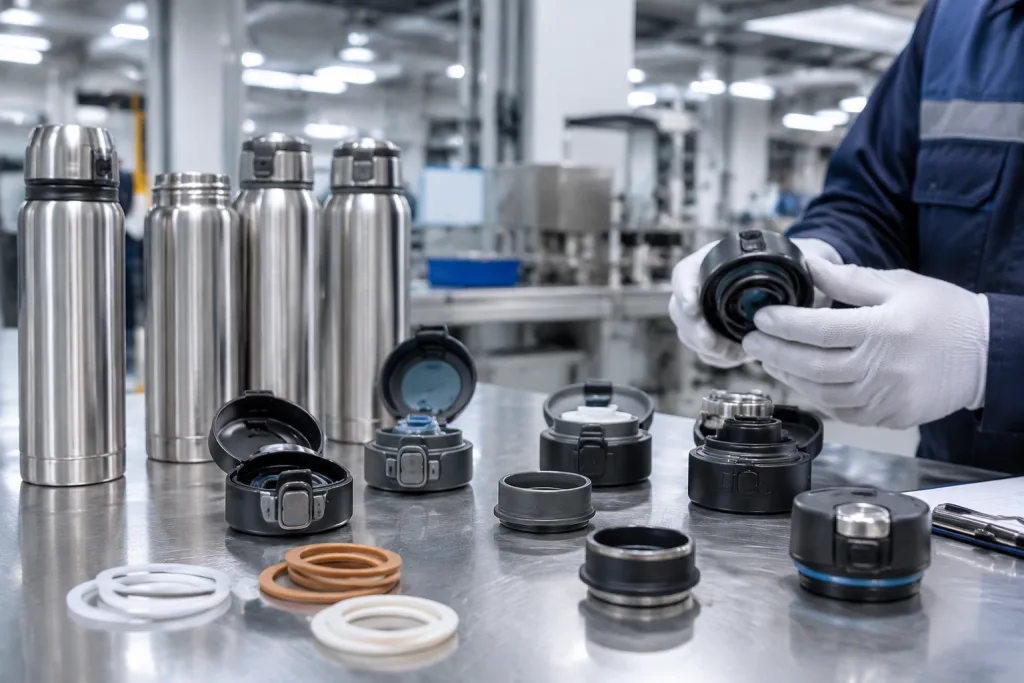
I’ll rewrite the section in place, keep the HTML intact, and make the copy sound like a factory-side sales engineer, not generic web prose.Q: Why do buyers keep complaining about leaks when the body is fine? The lid is where the real work shows up. A custom thermos can pass vacuum checks and still fail if the gasket groove is too shallow, the thread pitch is off, or the flip-top spring loses tension after 200 cycles. If you buy for a distributor thermos program, test the lid the same way your customer will use it: one-handed opening, toss-in-bag travel, and repeated hot-fill cycles on the line.
We usually push a simple screw lid for premium insulated drinkware, and a flip lid only when convenience matters more than seal life. The gasket should be food-grade silicone, not mystery rubber. Ask QC to run a leak test at 45 degrees and upside down for 10 minutes. For a thermos promotional order, a lid with fewer moving parts usually cuts warranty claims, and the math works. In cold markets, check glove grip and opening torque with a 7 mm feeler gauge and a real winter test. A weak lid can wipe out the value of even a good 316 liner.
Checklist:
- Confirm gasket material is food-grade silicone.
- Request leak testing at inverted and shake conditions.
- Check lid cycle life target, ideally 3,000-5,000 openings.
- Verify spare lid availability for repeat orders and after-sales support.
Decoration that survives use
I’ll rewrite the section in-place, keep the HTML structure unchanged, and tighten the sales-engineer tone with a few concrete factory-floor details.Q: What logo method should you choose? Start with the finish. Powder coat takes silk screen well, but fine text can fill in on a textured base. Laser engraving stays clean and permanent on stainless, though the contrast can look soft on brushed silver. UV print gives more color options, yet you still need to check how it holds up after 50 dishwasher cycles and a 1 m drop test. For promo brands, the right call is the decoration that survives handling, not the one that looks biggest on a mockup.
If you sell to outdoor retailers, a matte powder coat with laser logo is the safer setup. We run that combo a lot, and it hides small scratches while still feeling premium in hand. If the buyer wants a bright campaign item, a colorful customized thermos with 1-2 spot colors can work, but the ink system has to meet the abrasion target or the line will reject it. A reliable thermos supplier should show logo size limits on curved areas, registration tolerance, and the exact seal area around the top shoulder. One buyer once flagged a 0.8 mm wrap gap on the PO; the math did not work, so we held the run until proof came back clean. In Zhejiang factories, standard artwork can move fast, but wrap designs need sign-off before mass production.
Checklist:
- Approve logo artwork in vector format, not screenshot files.
- Define PMS or Pantone references for printed colors.
- Ask for scratch and dishwasher resistance expectations in writing.
- Keep one decoration method per SKU if you want lower QC risk.
Testing buyers should insist on
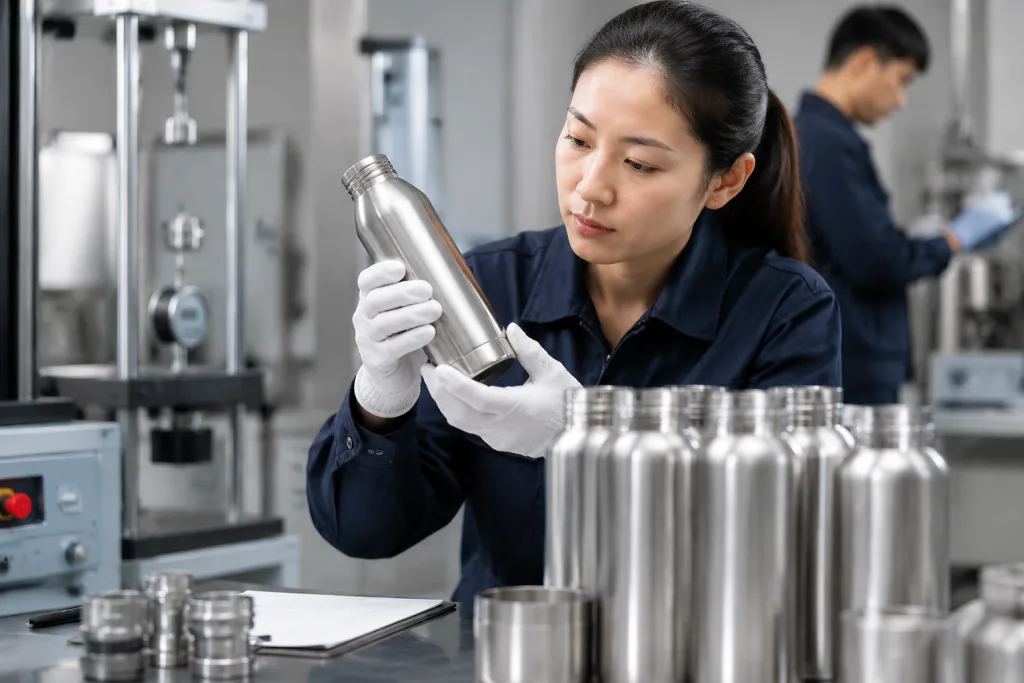
I’ll rewrite the section in-place, keep the HTML structure untouched, and tighten the prose so it sounds like a factory-side sales engineer, not generic copy.Q: What tests matter before you place a PO? Start with the basics: temperature retention, leak resistance, vacuum integrity, and coating adhesion. For a custom stainless thermos order, we write the target on paper, such as 6 hours hot above 60°C and 12 hours hot above 45°C, then tie it to capacity and ambient temperature. “Long lasting heat” is the wrong question to ask. Ask the thermos factory for the test room temperature, fill ratio, and starting water temperature; on the line, that detail decides whether the claim holds up or not.
For procurement, the inspection language matters. Use AQL 2.5 for major defects and AQL 4.0 for minor defects unless your retailer has stricter rules. We have seen POs fail because someone typed “AQL2.5” into a note field and left the sampling plan blank. Ask for drop testing, finish cross-hatch testing, and odor checks on lids. If you ship into Europe or North America, request REACH files, food-contact declarations, and any state-level compliance paperwork you need. A serious thermos manufacturer in Zhejiang will send those files without drama; if they stall, treat it as a risk signal, not a bargaining trick.
Checklist:
- Vacuum retention and thermal performance report.
- Leak, drop, and coating adhesion test results.
- AQL inspection standard written into the PO.
- Compliance documents for your destination market.
Pricing and MOQ reality
I’ll rewrite the section in-place, keep the HTML exactly as-is, and make the pricing/MOQ language sound like a real factory sales note.Q: What does a 316 stainless steel thermos custom order actually cost? For a 500 ml model with powder coating and a one-color logo, a realistic FOB China price usually lands at USD 3.20-5.60 per piece at 1,000 units, depending on lid structure, packaging, and print method. At 500 units, the unit price usually climbs 10%-20%. If the buyer wants a deeper lid mold or a retail gift box, add another USD 0.30-0.90. We run this math all the time on the line. The premium for a stainless-steel inner wall with 316 is real, but the numbers still work if you care about fewer complaints and a cleaner brand story.
Most thermos manufacturers in China set MOQ by color and logo, not just by item. A custom thermos with two body colors may need 500 pieces per color, while a one-color bulk thermos program stays more flexible. On our Hangzhou, Zhejiang floor, monthly output sits around 300,000 units, so short replenishment is possible if the mold and packaging are already in place. QC pulled the sample on a 2 mm lid gap last week, and that saved us from a rework fight later. Typical lead time is 25-35 days after sample signoff, but the first project with new artwork or packaging can stretch to 40 days. If your launch date is fixed, a 2-week buffer is the bare minimum. This is the wrong question to ask if you only chase the lowest quote.
Checklist:
- Ask for FOB, not just EXW, so freight assumptions are clear.
- Confirm whether the quote includes cartons, inserts, and barcode labels.
- Check if sample cost is refundable against the first PO.
- Verify whether the MOQ applies per color, per logo, or per SKU.
Request your 316 thermos quote today
Send your capacity, logo file, and target market. We’ll quote MOQ, FOB price, and lead time from our Zhejiang factory.
Frequently asked questions
Is 316 stainless steel worth the upgrade for a thermos custom order?
Yes, if your customer uses acidic drinks, lives near the coast, or expects heavy daily use. The upgrade typically adds about USD 0.60-1.20 per piece on a 500-1,000 unit run, depending on capacity and lid complexity. For a promo item that will be tossed into bags or left in cars, 316 helps reduce corrosion complaints and protects brand perception. If the product is only for hot water or short-term giveaways, 304 may be enough, but many outdoor retailers prefer the safer spec.
What MOQ should I expect for a custom thermos from China?
A common MOQ is 500-1,000 units per color or per SKU. Some thermos suppliers can do 300 pieces for a simple stock body with one logo, but once you add custom packaging or special lid tooling, the order often moves back up. If you want multiple Pantone colors, each color may need its own MOQ. In Zhejiang, factories are flexible on repeat orders, but first-run customization still needs enough volume to justify setup.
How long does a thermos manufacturer need for production?
After sample approval and deposit, plan on 25-35 days for standard orders. If you need new packaging, new molds, or complicated print registration, allow 35-40 days. Samples usually take 7-10 days if the product structure already exists. For seasonal outdoor retail, I would not leave less than 45 days from final artwork approval to vessel arrival if you are shipping FOB China and then moving by sea.
What inspection standard should I write into the PO?
Use AQL 2.5 for major defects and AQL 4.0 for minor defects as a baseline unless your retailer requires tighter control. Add clear defect definitions for leakage, scratch marks, off-center logos, and vacuum failure. Also request drop testing, leak testing, and coating adhesion checks. A good thermos factory should be able to provide inspection photos, sample records, and a final QC report before shipment. That paperwork matters when you are buying bulk thermos volumes.
Can I get samples before placing a large custom order?
Yes, and you should. Expect either a paid sample or a sample fee that can be credited against the first production order. For a standard custom thermos, samples usually take 7-10 days, sometimes faster if the body shape and lid are already in production. Ask for one decorated sample and one blank sample if possible. That lets you check finish quality, logo placement, and actual hand feel before you commit to 1,000 units or more.