Key Takeaways
- 316 liner upgrades typically add USD 0.35–1.20 per unit over 304 at 3,000–5,000 pcs
- Common MOQ tiers are 500, 1,000, and 3,000 pcs; custom packaging often starts at 1,000 pcs
- Standard lead time from a Zhejiang thermos factory is 20–35 days after sample approval
- FOB China pricing usually changes by USD 0.40–1.80 when you switch lid, coating, or box
If you are buying insulated drinkware for outdoor retail or a promotional program, 316 stainless steel thermos bottle wholesale is usually a higher-stakes order than it looks. The bottle is only one line on the sheet. You still pay for liner grade, finish, lid tooling, carton specs, test reports, and the factory’s slot on the line. In Zhejiang, a quote can shift after a 0.3 mm lid change or a packaging typo on the PO, and the “cheap” option gets expensive fast once it lands at your warehouse.
The better way to buy is to split unit cost from lead time. A custom thermos may look fine at 3,000 units, then miss a retail launch by 20 days because decoration, packaging, and QC sampling were all treated like afterthoughts. We’ve seen that go sideways. QC pulled the sample, found a print offset of 1.5 mm, and the buyer had to approve a rerun. If you read a manufacturer thermos quote the right way, you can compare suppliers thermos on the same basis and avoid paying for delays you could have caught on day one.
What drives the wholesale price
I’ll rewrite the section in-place, keep the HTML structure, and tighten the pricing logic so it reads like a factory-side sales engineer wrote it.When a buyer asks for a quote on a 316 stainless steel thermos bottle wholesale program, the first mistake is to compare only the bottle price. We break it into five cost drivers on the line: body material, vacuum structure, lid build, decoration, and packaging. The body gets attention first, but the lid often moves the number more. A plain PP screw lid is cheap. A leakproof push-button lid with a silicone gasket and spring parts that can survive disassembly is not.
For a 500 ml bottle, a plain 304 interior usually sits around USD 2.10–3.40 FOB China at 3,000 pcs. Move to a 316 interior and the add-on is often USD 0.35–0.90. Powder coating on the outside adds USD 0.18–0.45. Laser logo printing is usually USD 0.08–0.20; one-color silkscreen sits around USD 0.05–0.12. Gift box packaging can add USD 0.20–0.60, depending on paper weight and insert. QC pulled one sample last week because the box insert was 2 mm short, and that kind of miss is exactly why a single quote number is the wrong question to ask.
In Zhejiang, most factory thermos quotes are built on FOB Ningbo or FOB Shanghai terms, and that changes the math. Inland trucking, cartons, and container booking sit after the ex-factory number. If you want a fair comparison between thermos manufacturers, ask for a line-item quote with material grade, wall thickness, lid spec, and carton count per master carton. One PO typo on “30 pcs/carton” versus “36 pcs/carton” can shift the landed cost faster than a small material upgrade.
MOQ tiers that actually work
I’ll keep the HTML intact and rewrite the copy in a more field-tested sales tone, with tighter MOQ language and a few factory-floor details.MOQ is where a lot of distributor thermos programs get messy. A thermos factory may quote a low entry point, but the real order floor depends on what you change on the bottle. Stock color plus logo is often 500 pcs. Custom color with logo usually lands at 1,000 pcs. Once you add a special lid, printed sleeve, and custom box art, 3,000 pcs is where the math starts to make sense. We’ve seen buyers push for 300 pcs on a fully custom spec; that is the wrong question to ask.
- 500 pcs: works for sample runs, seasonal outdoor retail, and small promo thermos campaigns
- 1,000 pcs: fits custom thermos branding, mixed-color retail tests, and Amazon launch stock
- 3,000 pcs: gives cleaner unit cost for bulk thermos sourcing and distributor replenishment
Hidden MOQ usually sits in decoration. A manufacturer thermos factory may accept 500 pcs overall, but screen printing can still ask for 100 pcs per color, and custom packaging may need 1,000 printed boxes. QC pulled a sample on the line last month and found one buyer’s logo split across two Pantone codes; that order burned extra setup time. If you sell promo goods, keep it simple: one logo position, one PMS color, one box style. That is how you buy thermos bulk without sitting on dead cartons.
At BottleForge in Zhejiang, we run 180,000 units per month, and our standard MOQ for a branded stainless thermos starts at 500 pcs for logo-only work. That works for a new distributor thermos line or a regional push. We also had a PO come in with “316 stinless steel” typed three different ways, and the buyer flagged it before sampling. Small typo, big delay.
Lead times by customization level
I’ll keep the tag structure intact and rewrite the prose to sound like a real factory-side sales engineer, with concrete timing and a few line-floor details.Lead time is where the cheapest quote often turns into the most expensive buy. For a stock-style factory thermos order, we usually ship in 20–25 days after sample sign-off. Add a custom color, new carton artwork, and a logo process that needs a fixture, and the window moves to 25–35 days. A fully custom thermos with special lid tooling can take 45–60 days, before the booking even leaves the port.
The schedule is straightforward. 3–5 days for artwork and packing confirmation, 5–7 days for a preproduction sample if you want one, 10–18 days for mass production, 2–4 days for final inspection and carton packing, then 1–3 days to secure FOB loading. If you need REACH-compliant inks, food-contact declarations, or AQL-based inspection, the delay usually sits in document review, not on the line. We’ve seen buyers blame production when the real hold-up was a PO typo or a 2-day pause waiting for approval.
Practical rule: if your launch date is fixed, place the order 8 weeks ahead. If the program uses a custom lid or custom retail carton, give yourself 10 weeks.
For Europe and North America, ocean freight adds another 18–35 days, depending on the route and port congestion. So the true door-to-door lead time on a thermos distributor order is often 45–75 days, even when the bottle body only needed three weeks to make. QC pulled the sample on a 500 ml run last month and the line still waited half a day for carton artwork sign-off. That is the math.
Why 316 changes the bill
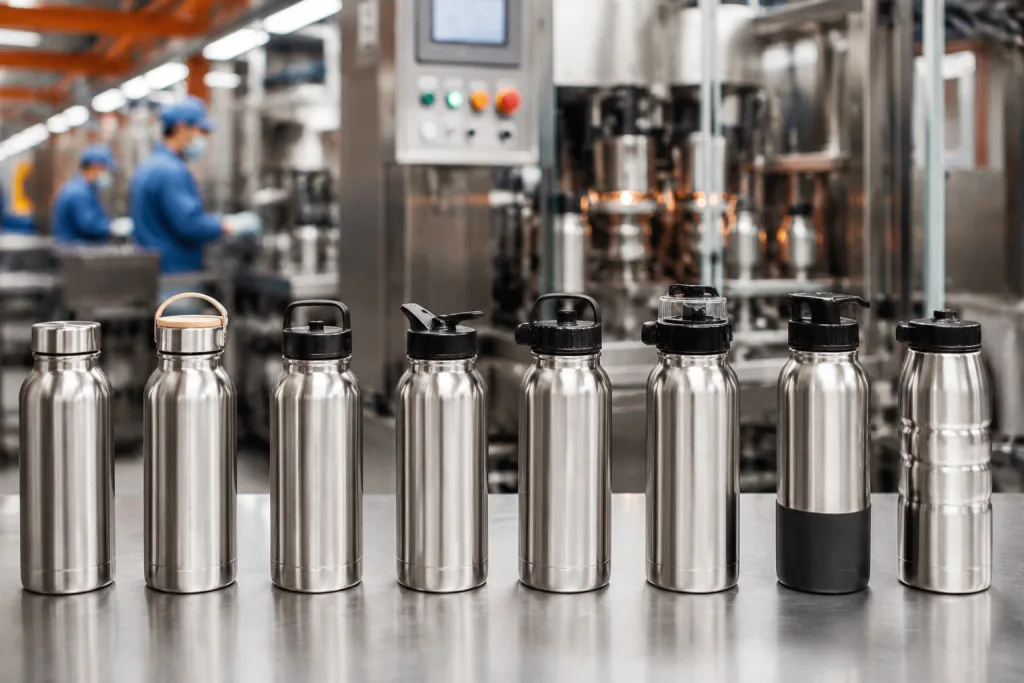
I’ll rewrite the prose only, keep the HTML tags intact, and tighten it to sound like a factory-side sales engineer with concrete pricing and QC detail.Not every buyer needs 316 stainless steel, but brands selling outdoor gear or premium drinkware usually ask for it. The draw is corrosion resistance. 316 has molybdenum, so it holds up better against salt spray, acidic drinks, and rougher use. For coastal retail, camping programs, or sports promo sets, that is an easy upsell. It gives a custom thermos a premium story instead of a plain commodity pitch.
The price gap is real, just not dramatic. For a double-wall vacuum bottle, 316 interior material usually adds 8%–20% to the bottle cost, depending on wall thickness, steel market price, and lid structure. We quoted one buyer USD 2.60 FOB for a 304 thermos, then USD 2.95–3.20 for the 316 version at the same order size. The buyer flagged the math on a matte powder-coated model with a stainless cap, and he was right to push back because the line has to hold tighter scrap control on those runs.
Ask for material proof, not a sales line. A proper thermos manufacturer should show a material declaration, batch traceability, and food-contact compliance papers. QC pulled the sample once when a PO typo listed 304 on the carton but 316 on the spec sheet, and that kind of mismatch slows everything down. For North American buyers, ASTM-related test references and BPA-free lid materials still matter. For EU orders, REACH is the gatekeeper if you want customs to move cleanly.
Decoration choices that affect cost
I’ll rewrite the section in-place, keep the HTML structure unchanged, and make the copy sound like a factory-side sales engineer wrote it. Then I’ll do a quick consistency pass to make sure I didn’t introduce any banned filler or change the tags.Decoration is where a thermos custom program stays profitable or turns messy fast. On our line, laser engraving is the cleanest option on stainless steel. The fiber laser runs in seconds, the mark holds up, and setup stays simple. Screen printing costs less when the artwork is basic, but hard use will wear it sooner. Heat-transfer or full-wrap printing fits promotional thermos orders with big graphics, yet the jig setup takes longer and the reject rate climbs. If you are a distributor thermos buyer, the wrong question is “which print looks best?” Ask how many colors you want and how much masking the line needs, because that is where time and yield get hit.
- Laser logo: USD 0.08–0.20, low setup, good for outdoor retailers and 304 stainless
- Silkscreen: USD 0.05–0.12 per color, better for simple brand marks and 500 pcs MOQ
- UV print: USD 0.18–0.45, works for colorful promo runs and tight artwork
- Embossed or wrapped box: USD 0.20–0.60, helps shelf impact and retail packing
If you are comparing thermos customizable options, ask the supplier thermos team for decoration speed and reject rates, not only renderings. QC pulled one sample last week with a 2 mm offset on the logo, and that sort of miss tells you more than a mockup ever will. A design can look fine on the proof and still slow a factory thermos line by 15% if it needs extra masking or manual alignment. We’ve seen that go sideways more than once.
Inspection, compliance, and shipping math
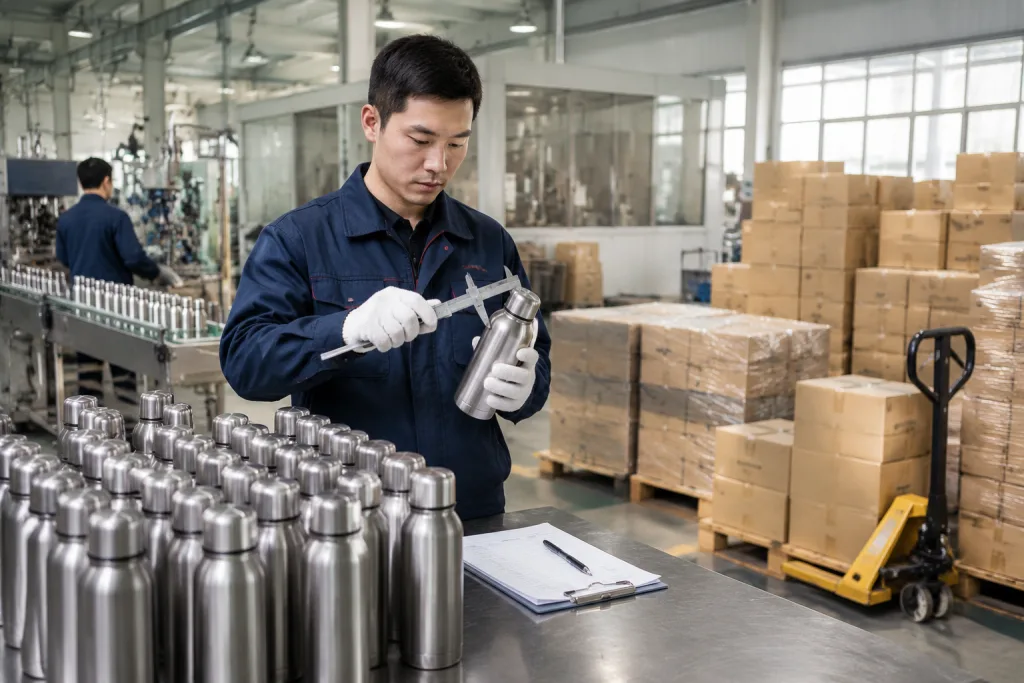
I’ll rewrite the section in-place, keep the HTML tags untouched, and tighten the sales-engineer tone while adding concrete factory-floor details and shipping math.Wholesale drinkware is not just about making bottles. It is about getting a shipment through inspection and onto the truck on time. Most thermos factories run AQL 2.5 for major defects and AQL 4.0 for minor defects on production lots, and the PO should spell that out line by line. We’ve seen buyers skip that clause, then the buyer flagged it after QC pulled the sample and the math turned ugly.
Compliance hits cost fast. A food-contact declaration, stainless composition report, and lid material test may be part of the package, but on smaller orders some suppliers charge USD 30–150 for the report set. If you need carton labels, FNSKU stickers, or case-pack prep for Amazon FBA, add labor and label stock too. On a 3,000 pcs run, FNSKU application can add USD 0.05–0.15 per bottle, and that is before the 12 mm label gap the line has to hold.
Shipping math is where a lot of quotes fall apart. A 500 ml vacuum bottle packed 24 pcs per carton usually lands around 0.16–0.22 cbm per 100 pcs, depending on box style and insert thickness. That changes the 20-foot container count fast. If your thermos bulk quote skips carton count and pallet plan, the landed cost is guesswork. We ship cartons by pallet, check gross weight, and confirm container loading numbers before the order; otherwise the PO typo shows up at the worst time.
Request a clear FOB quote today
Send your lid spec, logo file, and target MOQ. We’ll return a clean cost breakdown and lead time in 24 hours from our Zhejiang factory.
Frequently asked questions
What is the typical FOB price for a 316 stainless steel thermos bottle wholesale order?
For a 500 ml bottle at 3,000 pcs, a realistic FOB China price is often USD 2.95–4.10 depending on lid type, finish, and packaging. A plain 304 version may start around USD 2.10–3.40, so 316 usually adds USD 0.35–1.20 per unit. If you want powder coating, laser logo, or a premium gift box, the total can move another USD 0.25–0.85. Always ask for a line-item quote from the thermos supplier so you can see where the money goes.
How long does a custom thermos order take from sample to shipment?
For a standard custom thermos with logo and packaging, expect 20–35 days after sample approval. If you need a new lid, custom color, or extra compliance paperwork, plan for 45–60 days. Sample production often takes 5–7 days, mass production 10–18 days, and final inspection plus packing 2–4 days. From a Zhejiang manufacturer, the bottleneck is usually approval speed, not machine capacity. If your launch is fixed, place the PO at least 8 weeks early.
What MOQ should I expect from thermos manufacturers in China?
For logo-only jobs, 500 pcs is a common MOQ. For custom color or special packaging, 1,000 pcs is more typical. For a fully customized thermos with a special lid or retail box, 3,000 pcs is the level where pricing becomes efficient. Some suppliers thermos will quote lower, but hidden MOQs often appear in printing, cartons, or color matching. Ask for MOQ by component, not just by finished bottle.
Is 316 stainless steel worth it for outdoor retail?
Usually yes, if your customer base uses the bottle in coastal, camping, or premium lifestyle settings. 316 offers better corrosion resistance than 304 because of the molybdenum content. It does not make the bottle indestructible, but it reduces the risk of long-term surface issues. For outdoor retailers and promotional brands, the extra USD 0.35–1.20 per unit is often easier to justify than dealing with returns or a low-end product story. It also helps your thermos custom line look more premium.
What documents should I request before paying a thermos supplier?
Request a commercial quote, specification sheet, material declaration, compliance documents, and a preproduction sample or approval photo set. For Europe, ask about REACH and food-contact compliance. For North America, confirm BPA-free lid materials and any applicable ASTM test references. If the order is large, include an AQL inspection plan in the PO. A good thermos manufacturer should also confirm carton count, gross weight, and expected lead time in writing so your logistics team can plan freight accurately.