Key Takeaways
- 316 stainless steel usually adds 8% to 18% over 304, but only matters if you need better chloride resistance or premium positioning
- Typical MOQ for custom thermal bottles is 1,000 to 3,000 pcs per SKU, with lead time around 25 to 35 days after sample approval
- A usable wholesale target price for a 500 ml 316 vacuum bottle is often USD 3.20 to USD 6.80 FOB China, depending on lid and finish
- Ask for ISO 9001, BSCI, REACH, and an AQL 2.5 inspection plan before you confirm bulk drinkware
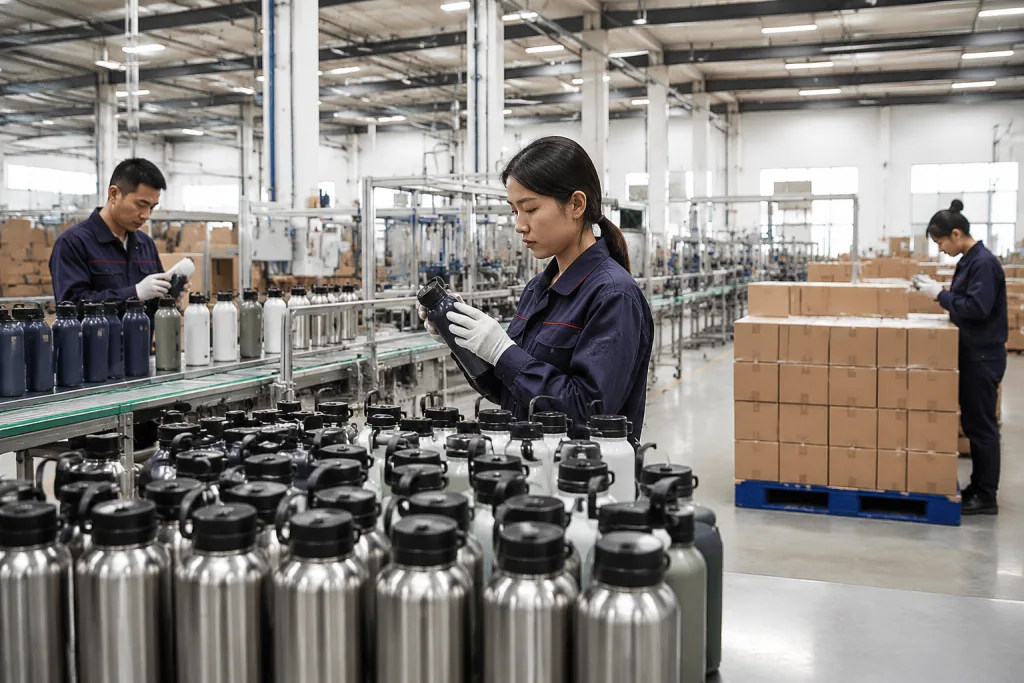
If you are buying a 316 stainless steel thermal bottle wholesale program, the wrong call is usually made before the first sample ships. Buyers fixate on capacity or print method, then get hit by dent resistance, seam quality, and thermal loss after 2,000 cycles. We’ve seen a 500 ml bottle pass a glossy spec sheet and still fail at the shoulder weld. In Zhejiang and across China, the factories that handle serious bulk drinkware work know the real job is matching steel grade, lid system, coating, and order economics to your channel.
For procurement managers and brand owners, the fastest way to sort options is simple: decide where 316 is actually needed, what MOQ and unit cost you can live with, and how much testing you want before a container order. A competent Hangzhou factory can run 80,000 units per month on standard thermal bottles, but your lead time still shifts with logo complexity, vacuum pass rate, and custom packaging. QC pulled a sample last week because the lid torque was off by 1.5 N·m, and the buyer flagged it before shipment. That is the gap between drinkware wholesale that scales and drinkware bulk that traps cash.
Decide why 316 is necessary
I’ll rewrite the section in-place, keep the HTML structure untouched, and make the prose sound like a factory-side sales engineer wrote it.Start with the steel choice, not the print art. 316 stainless steel adds molybdenum, which helps when the bottle sees chloride-heavy water, sweaty hands, sports drinks, or acidic mixes. For a commuter bottle sitting on an office desk, 304 usually does the job. For a premium retail line, a coastal market, or a buyer who wants a clear “better steel” story, 316 is easier to sell. We run this split all the time: 316 for the flagship SKU, 304 for the rest.
Do not pay extra for 316 just because it sounds safer. Wall structure decides a lot more than the grade name. QC pulled a sample on the line last week, and the bottle passed on steel grade but failed on thin walls. For a proper thermal bottle, ask for:
- Inner wall thickness: 0.35 mm to 0.45 mm
- Outer wall thickness: 0.30 mm to 0.40 mm
- Vacuum level: stable thermal performance for 6 to 12 hours hot, 12 to 24 hours cold depending on capacity and lid
If the factory cannot explain 316 versus 304 without vague talk, that is your warning sign. I have seen buyers lose margin by chasing a steel upgrade when the real issue was a loose vacuum spec. In Zhejiang, the better supplier will show material certificates, salt-spray targets for coated parts, and the exact use case where 316 earns its keep. For wholesale drinkware, the buyer who asks the right question gets a cleaner quote and fewer after-sales headaches.
Match MOQ to your channel
I’ll rewrite the prose in place, keep the HTML structure untouched, and make the wording sound like a factory-side sales engineer wrote it.Your channel sets the MOQ. A DTC brand or Amazon seller often starts at 1,000 pcs per color and 2,000 pcs total. A distributor selling into retail chains usually wants 3,000 to 5,000 pcs per SKU so the margin holds. For canteen programs, sport accounts, or corporate gifting, we run mixed colors, but the factory still needs one mold, one lid style, and one decoration method. That keeps setup cost from running away.
For a standard 500 ml 316 stainless steel thermal bottle wholesale order from a Zhejiang plant, the numbers usually look like this:
- MOQ: 1,000 pcs for stock molds, 3,000 pcs for full customization
- Sample lead time: 5 to 10 days
- Production lead time: 25 to 35 days
- Packaging add-on: usually USD 0.18 to USD 0.60 per unit for color box, barcode, or insert card
If you are comparing canteen wholesale, wholesale drinkware, or bulk drinkware programs, ask one direct question: can the factory load mixed SKUs in the same container? On our line, 2 to 4 bottle models can go together if the outer carton size matches, and QC pulled the sample carton stack to check pallet height before loading. That matters when cash is tight and you still need shelf variety. Chasing the lowest unit price is the wrong question to ask; if the MOQ does not match sell-through, the math does not work.
Price the bottle like a business
I’ll rewrite the section in-place, keeping the HTML structure and preserving the existing technical numbers and terms.Unit price looks simple until you break it into parts. A 316 thermal bottle is not just steel. You pay for material grade, vacuum yield, lid tooling, coating, print pass, carton spec, and QC scrap. For a common 500 ml model, a realistic FOB China price usually sits around USD 3.20 to USD 6.80. The low end is a straight-wall bottle with a standard PP lid. The high end covers powder coating, laser logo, complex lids, or double-color finish. We run this math every week on the line.
Use a buying model, not a guess. Ask the factory to quote in this format:
- Bottle body: 316 inner + 304 outer, or full 316 if you really need it
- Lid: PP, Tritan, or stainless cap
- Decoration: silk screen, laser engraving, UV print, or heat transfer
- Packaging: bulk master carton, retail box, or Amazon-ready inner pack
For beer growler wholesale or growler bulk projects, lid cost can swing more because seal strength and handle design matter. A 1,000 ml stainless growler with a gasketed cap can land above USD 5.00 FOB before custom art. Same story on alcohol flask bulk or beer tumbler wholesale jobs: once you add brushed finish, a specialty cap, or a nested gift box, the sheet changes fast. We had one buyer flag a PO that missed the gasket spec, and the quote was off by 8%. In China, factories will quote low on the shell and pull margin from components if you do not ask for a full BOM.
Test what buyers actually return
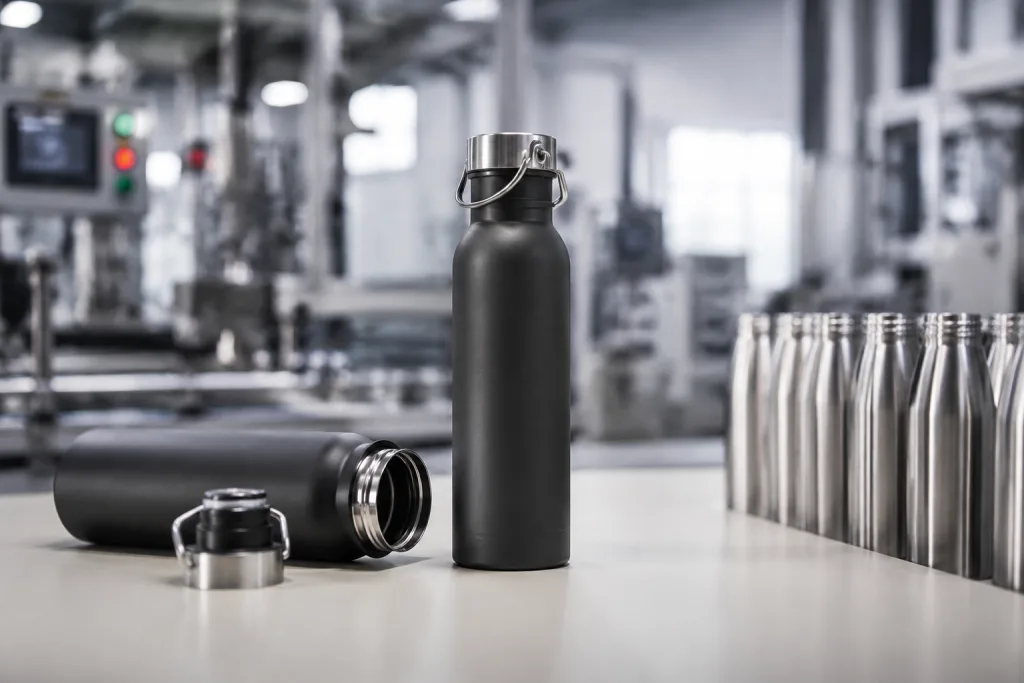
I’ll rewrite the section in place, keep the HTML structure untouched, and tighten the copy so it sounds like a factory-side sales engineer.Most returns are not from the steel grade giving out. They come from a leaky lid, a weak vacuum pull, coating that peels at the corners, or a bottle that fails the drop test. We’ve seen buyers blame 316, then QC pulled the sample and found the cap O-ring was 1.2 mm too thin. If you are sourcing wholesale canteen or wholesale growler products, lock the failure points before mass production. Build the QC plan around thermal retention, lid leak testing, thread engagement, logo abrasion, and carton drop checks. “We do quality control” is not enough; ask for the actual numbers.
A workable inspection setup for drinkware wholesale is:
- AQL: 2.5 for major defects, 4.0 for minor defects
- Leak test: 100% on lid assembly if the bottle is for travel or sport
- Dishwasher test: 50 to 200 cycles, depending on finish claim
- Salt spray or corrosion check: needed for coastal retail and beverage-contact claims
If you sell to North America or Europe, the supplier should back up REACH expectations for coatings and inks and show food-contact compliance for the target market. A serious factory in Zhejiang does not dodge that request. On our line, the better accounts already ask for BSCI audits, ISO 9001 records, and incoming checks on stainless coil, gaskets, and paint; that is the real split between a factory and a trading desk. The math does not work if those records are missing.
Choose the right bottle family
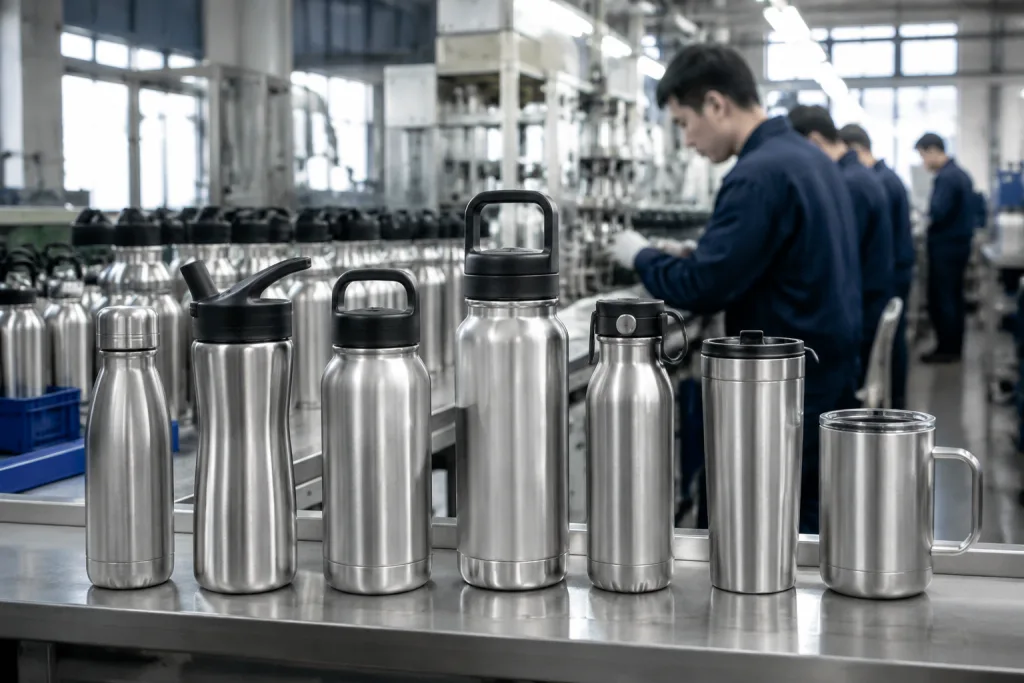
I’ll keep the tags intact and rewrite the copy in a more field-tested sales tone, with concrete factory detail and fewer filler phrases.Not every channel wants the same body shape. A 316 stainless steel thermal bottle wholesale program can run commuter bottles, wide-mouth canteen styles, handled bottles, and outdoor growlers. That choice is not cosmetic; it changes fill speed, washing time, carry comfort, and gross margin. We’ve seen a slim bottle with a one-touch lid move faster for gym and travel accounts, while a growler or canteen form sells better for outdoor, beer, and premium gift packs.
Here is the practical split: we run this split on the line before sampling.
- Canteen bulk / canteen wholesale: outdoor, camping, and military-style branding; the 88 mm mouth and side-handle layout matter here
- Bulk growler / growler wholesale: breweries, hospitality, and beverage carry-back programs; buyers usually ask for a 1.9 kg drop test and a stout handle
- Alcohol flask bulk / alcohol flask wholesale: gifting, event merch, and compact premium packs; the MOQ is usually lower, but the finish has to stay clean
- Beer tumbler bulk / beer tumbler wholesale: food-service and casual retail with simpler lid parts; QC pulled one sample for a lid-thread typo on the PO last month
If a buyer asks for beer growler bulk or beer growler wholesale bulk pricing, get the use case straight first. Does the customer need carbonation hold, a stronger carry handle, or fridge fit? Those are different specs, and the math doesn’t work if you mix them up. The better buyers cut the SKU count first, then add color and logo versions later. That keeps tooling stable and gets a test order into repeat production faster.
Control packaging and shipment risk
I’ll rewrite the section in-place, keep the HTML exactly as-is, and tune the prose to sound like a factory-side sales engineer with concrete shipping details.Packaging is where a lot of wholesale drinkware programs lose margin without anyone noticing. We’ve seen a bottle pass factory drop tests and still land dented because the inner tray was loose or the master carton was 20 mm too big. For Europe and North America, carton strength, pallet pattern, and barcode flow need to be checked as one job. If you sell on marketplaces, ask for FNSKU labeling, polybag specs, and inner carton count before the line starts.
A practical shipment checklist looks like this:
- Master carton test: use a 5-layer or 7-layer export carton based on the 1.2 m drop requirement
- Pallet loading: confirm stack height, compression resistance, and whether the stretch wrap holds at 18 kg per layer
- Labeling: barcode, country of origin, and carton mark checked before loading; QC pulled one sample with a wrong PO number last month
- Incoterms: FOB is cleaner for importers who know their forwarder; CIF often hides the real freight and surcharge math
For alcohol flask in bulk or beer growler in bulk orders, packaging matters even more because these SKUs often move through gift channels. A rigid box adds about USD 0.25 to USD 0.80, and that is not a bad trade when it cuts breakage and lifts shelf value. We run this kind of pack check with a caliper, a carton compression test, and a quick pallet fit on the floor. The wrong question is “can we make the box cheaper?” The better question is whether the pack survives the route from Hangzhou to your warehouse without claims.
Get a quote for your bottle program
Send your capacity, lid style, target price, and market. We will map the fastest sourcing path for your wholesale drinkware order from Zhejiang.
Frequently asked questions
Is 316 stainless steel worth it for a thermal bottle order?
Yes, if your market needs stronger corrosion resistance or you want a premium story. For regular office use, 304 is often enough. 316 usually adds about 8% to 18% to material cost, but the final finished bottle may only rise USD 0.20 to USD 0.70 depending on size and lid. If you sell into coastal regions, outdoor channels, or high-end retail, 316 is easier to defend. Ask the factory to show material certificates and to confirm whether the inner wall is 316 only or full 316 construction.
What MOQ should I expect for wholesale drinkware?
For stock molds, many Zhejiang factories accept 1,000 pcs per SKU. For custom color, logo, or packaging, 3,000 pcs is more common. If you want a mixed program across bottle, canteen, and growler styles, total order value often matters more than one SKU quantity. A serious factory can still support drinkware wholesale with 2 to 4 variants if the lid and carton specs stay close. Always ask whether sample cost is refundable on the first bulk order.
What price should I budget for a 316 stainless steel thermal bottle wholesale order?
A realistic FOB China budget for a 500 ml bottle is often USD 3.20 to USD 6.80 per unit. Basic shapes with standard PP lids sit lower, while laser logos, powder coating, and premium caps push the price up. If you need retail boxes, barcode labels, or custom inserts, add USD 0.18 to USD 0.60. The final quote should show bottle body, lid, decoration, packaging, and inspection cost separately. That is the only way to compare suppliers fairly.
What tests should I ask for before mass production?
Ask for leak testing, vacuum performance, logo abrasion, carton drop test, and AQL inspection records. For export into Europe and North America, also request REACH-related documentation for coatings and food-contact compliance statements for the specific market. AQL 2.5 major and 4.0 minor is a common commercial standard for drinkware bulk orders. If the bottle is for travel or sport, insist on 100% lid leak checks. That small step prevents most customer complaints.
Can one supplier handle canteen, growler, and flask programs?
Yes, if the factory has enough tooling and assembly lines. A good supplier in Zhejiang can often manage bulk canteen, bulk growler, and alcohol flask wholesale bulk runs under one quality system, especially if the plant has around 80,000 units per month capacity or more. The key is whether they can keep lid sourcing, vacuum pass rate, and packaging consistent across SKUs. If they cannot explain how they control mixed orders, they are not ready for serious wholesale growler or canteen bulk work.