Key Takeaways
- 316 stainless is worth the premium when your bottle sees salty drinks, fruit acids, or repeated dishwasher exposure; expect about 8%–15% higher material cost than 304.
- A practical MOQ for custom canteen orders in Zhejiang is often 3,000–5,000 units, with 25–35 days lead time after sample approval.
- Double-wall vacuum bottles typically perform best with 0.4 mm–0.5 mm inner and outer wall thickness and a 12–18 hour hot-retention target.
- Good export buyers ask for AQL 2.5 sampling, REACH documentation, and lid cycle testing before release.
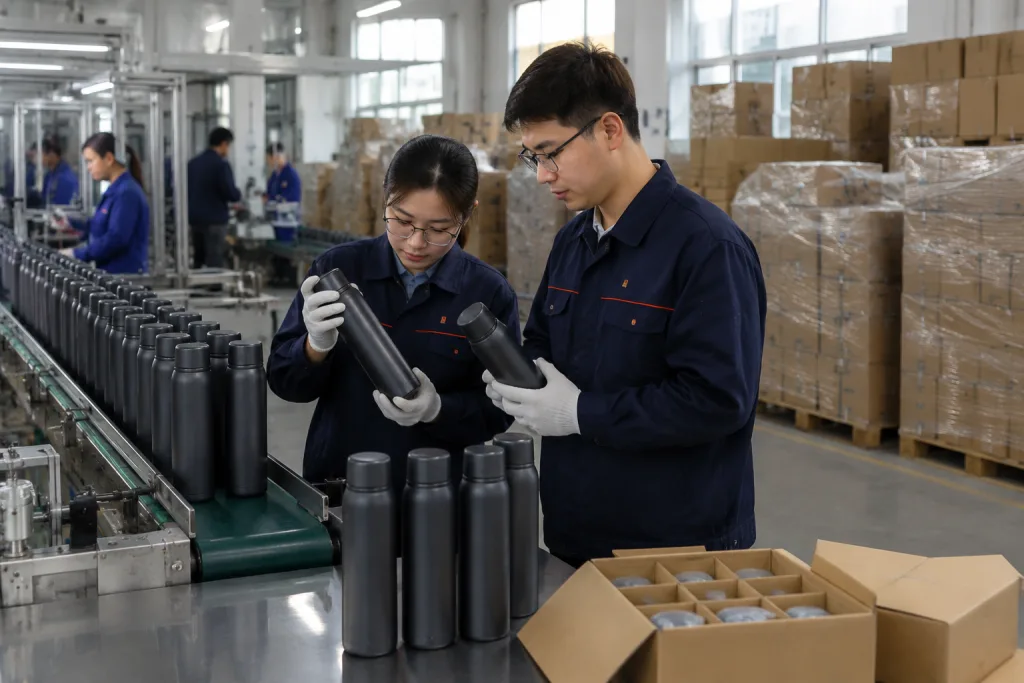
If you buy thermal bottles for retail, gifting, or marketplace resale, the spec sheet is where the deal starts. A 316 stainless steel thermal bottle supplier is not selling “better quality” in the abstract; you are buying corrosion resistance, weld consistency, insulation numbers, and packaging that survives a 1,200 km freight run from Zhejiang to your warehouse. On our line, QC pulls the lid seal sample before we release mass production.
The mistake we see most is treating every canteen supplier as interchangeable. They are not. A canteen manufacturer in China may quote a clean FOB price, but if the steel grade is vague, the liner is 0.3 mm thinner than promised, or the lid seal fails after 500 cycles, the math does not work. For custom drinkware, read each line item like a buyer who has seen a PO typo on the cap color code blow up an entire shipment.
What 316 steel really changes
I’ll rewrite the section in place, keeping the HTML structure and the existing technical specs intact while stripping the AI-ish phrasing.Start with the material callout. If a supplier says “stainless steel” and stops there, you still do not have a buying decision. For a 316 stainless steel thermal bottle supplier, the point is molybdenum content. That small addition lifts resistance to chloride corrosion, and you see it when the bottle holds electrolyte drinks, citrus water, or tea with additives, or sits in a damp warehouse for 6 months.
From a procurement angle, 316 is the sensible upgrade when your brand wants fewer complaints about metallic taste, pitting, or discoloration. In Zhejiang, we run lines that source both 304 and 316, but you should ask for mill certificates, not a sales口头确认. QC pulled the sample at 7:40 a.m. and checked the liner with a gauge; a real factory will show the material grade, thickness, and whether the inner liner is 316 while the outer shell stays 304 to keep the quote under control.
- 316 liner: better corrosion resistance with salts and acids; good for sports drink and citrus use.
- 304 outer shell: common for cost control, and it still gives a clean finished look.
- Material premium: usually 8%–15% over 304, depending on gauge and order volume.
- Buyer impact: fewer returns, cleaner brand story, stronger performance in premium channels.
If your market sells “premium hydration,” 316 is not a luxury spec. It is a risk-control spec.
For custom drinkware sold in Europe or North America, this matters because your customer support team will not care that the quote was cheaper if the bottles fail in use. We’ve seen this go sideways on a PO with one wrong line item: the buyer flagged “316 inner” but the sample came back as full 304. A canteen supplier should state exactly which parts are 316, which parts are 304, and which parts are food-contact grade PP or silicone.
Wall thickness and weight
I’m rewriting the section in-place, keeping the HTML tags and list structure intact while making the prose sound like a real factory sales engineer wrote it.Wall thickness is where a lot of buyers get caught. A bottle can look heavy and premium, then turn out to have a weak liner or uneven drawing depth. For a double-wall vacuum canteen custom project, we usually start at 0.4 mm to 0.5 mm for both inner and outer walls. Below 0.35 mm, you are buying a cheaper number, not a better bottle. We’ve seen that go sideways on dent resistance and vacuum hold.
Weight changes freight cost and the feel in hand. A 500 ml 316 thermal bottle usually lands around 290 g to 380 g, depending on lid structure, coating, and base reinforcement. On our line, QC pulled a 287 g sample once and the buyer flagged it immediately. Good call. The steel had been trimmed too far, and the base ring was too thin for a rough drop test.
What to ask the factory
- Inner wall thickness in mm, plus the tolerance range.
- Outer wall thickness in mm and whether the base ring is reinforced.
- Total net weight by size, not a sales estimate.
- Whether the bottle passes dent and drop checks after vacuum sealing.
A reliable canteen factory in China will put these numbers on the table before deposit. If the supplier dodges the spec sheet, the line is loose and the math does not work for serious custom drinkware.
Vacuum performance by size
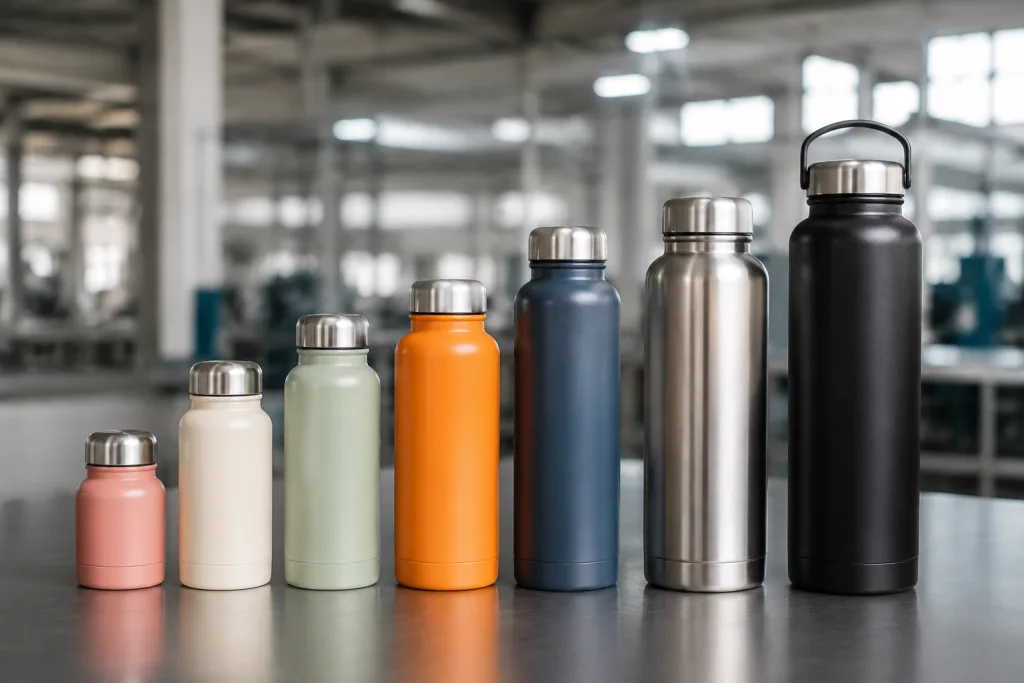
I’ll rewrite the section in a more natural sales-engineer voice, keep the HTML exactly as-is, and preserve the existing numbers and structure.Insulation numbers only matter when the test setup is clear. A serious supplier should state liquid temperature, room temperature, fill ratio, and test time. Otherwise, “12 hours hot” could mean almost anything. For thermal bottles in the 350 ml to 750 ml range, export buyers usually see 8–12 hours hot and 18–24 hours cold, depending on lid design and how the line is built.
The buyer impact is simple. Better retention helps sell-through, but inflated claims create legal trouble and damage the brand. We’ve seen this go sideways on Amazon listings and distributor catalogs. If you are selling through those channels, lock down the label copy and keep the test record on file. Ask for factory data based on ASTM or ISO-aligned internal procedures, even if the factory does not hold a formal consumer thermal certificate.
- Small size bottles: heat drops faster because the surface area is high for the volume.
- Wide-mouth designs: easier to fill, but the lid opening usually gives up heat faster.
- Straw lids: handy for daily use, not the best choice when thermal retention is the target.
- Thread quality: a loose cap kills seal integrity fast, and QC will catch it in a 2 mm gap check.
For a canteen distributor building a mixed catalog, this is where you split promo stock from retail-grade bottles. A promotional bottle can live with lighter specs. A premium custom growler or customizable growler needs tighter thermal data and a better lid stack-up. The math does not work otherwise.
Lids, seals, and closures
I’ll rewrite just the prose inside the existing HTML, keep the tag structure intact, and make it sound like a factory-side sales engineer wrote it.The lid is where complaints start. The bottle body can pass, then one weak seal wrecks the whole order. When you buy from a canteen supplier, spell out the closure: screw cap, push-button, flip-top, sports lid, or carry-handle cap. Each one changes leak risk, wash time, and how the buyer judges the price. We run this check on the line with a 50 ml water tilt test before packing.
For export orders, ask for a 5,000-cycle open-close test on the cap, then a leak check after thermal cycling at 60°C and 4°C. Silicone gaskets should be food-grade and replaceable if the program needs service parts. If you are building a canteen customizable program, the lid is the easiest place for color, logo embossing, or a strap, and you do not need to cut a new body mold for that. QC pulled the sample on one batch because the gasket sat 1.2 mm off-center; that kind of miss turns into a buyer flag fast.
- Silicone seal: should sit flat, with no flash or deformation.
- Thread engagement: needs a clean start and steady torque.
- Closure feel: should match the price tier you sell into.
- Spare parts: useful for distributor drinkware programs and warranty support.
Many canteen vendors quote the body well and then treat the lid as a side item. That is the wrong way to buy. For distributor canteen programs, the closure carries the repeat-order risk, because the buyer remembers a leak on day 3 and forgets print quality by day 30. We’ve seen that go sideways on a PO where the lid spec said “black” and the buyer meant matte black; one typo, one rework.
Logo methods and decoration
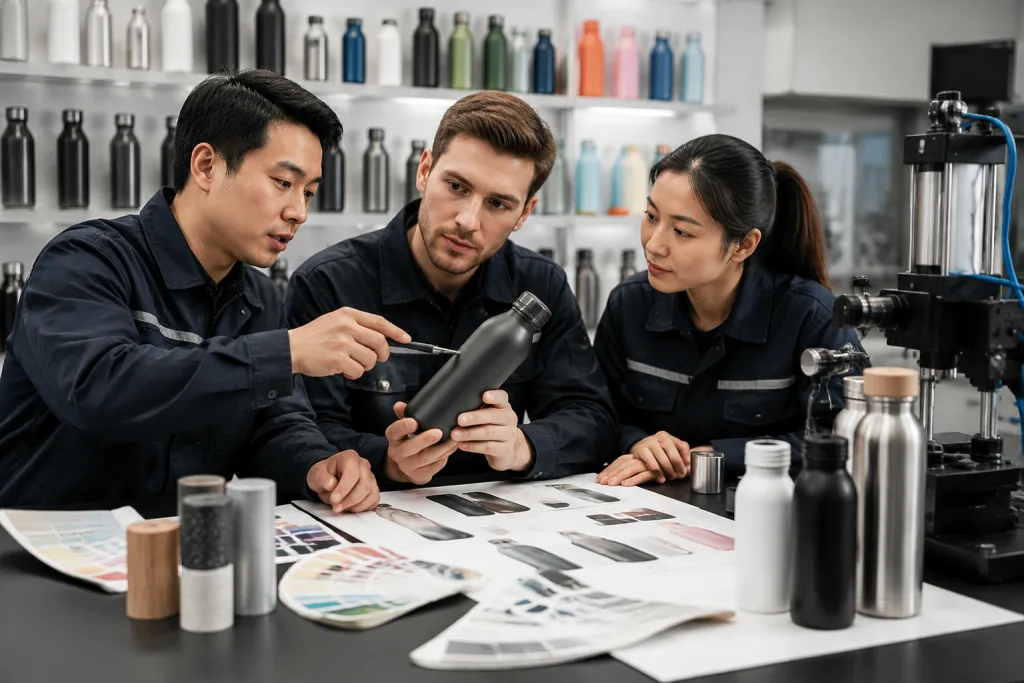
I’ll rewrite the prose in-place, keep the HTML and list structure unchanged, and tighten it so it reads like a factory-side sales engineer wrote it.Pick the decoration method for the job, not for the brochure. For a corporate gift order, silk screen or pad print is often enough. For a retail SKU with a higher ticket, laser engraving or powder-coat etching usually sells better. The math does not lie: if the margin is thin, a four-color print on a 500 MOQ run can kill it fast. A European buyer may pay for a matte coat with a laser mark; a canteen promo order may only need one spot color.
On 316 bottles, coating adhesion is where orders go sideways. Ask the supplier about pre-treatment, curing temperature, and scratch testing. QC pulled a sample with a coin rub at the line and the logo held up; that tells you more than a catalog photo. If the factory offers multiple logo positions, confirm the print area still survives dishwasher cycles and 20–30 washes. A good Zhejiang factory will show real samples with each method, not just a rendering.
- Silk screen: low cost, clean for simple logos, usually best at 1–2 colors.
- Laser engraving: durable, sharp, higher perceived value.
- Heat transfer: useful for complex graphics, but check wash resistance.
- Powder coating: improves grip and retail appeal on shelf.
If your business covers custom canteen, customizable canteen, or customized canteen programs, ask for color control on repeat orders. A 3%–5% shade shift is fine on some SKUs and a problem on others, especially when the buyer flags a PMS match. We ship plenty of reorders, and this is where specs get tested in the real world.
MOQ, pricing, and lead time
I’ll rewrite the section in-place, keep the HTML structure intact, and tune the copy to sound like a real export sales engineer.This is the line that tells you if the project is real. In Zhejiang, a serious canteen factory usually quotes a MOQ of 3,000 to 5,000 units for a customized 316 thermal bottle, with sample lead time around 7–12 days and mass production at 25–35 days after sample approval. We ran one order last month where the buyer flagged a lid typo on the PO, and QC pulled the sample again before we released the line. Complex lids, matte coatings, or special packaging can add 5–10 days.
Pricing comes down to capacity, steel grade, lid build, and decoration. For a 500 ml double-wall 316 bottle, FOB China pricing often starts around USD 3.20 to USD 6.80 in volume, with premium retail builds going higher. The math does not work if you stare at unit price only. Check carton count, master carton drop resistance, pallet efficiency, and the defect allowance. We’ve seen a “cheap” bottle turn into a headache after 2% leakage complaints.
- FOB basis: standard for export buyers who control freight.
- Sample charge: often refundable on large orders, but not always.
- Tooling: logo or color changes may need no tooling, while new shapes do.
- Payment terms: common practice is 30% deposit and 70% before shipment.
For canteen distributors and distributor growler programs, ask if the supplier can run multiple pack formats in one production lot. We ship this kind of mix when the carton spec is clean, and it cuts inventory risk when you test retail, corporate, and e-commerce channels at the same time.
Testing, standards, and QC
I’ll rewrite the section in-place, keep the HTML exactly as-is, and make the prose sound like a factory-side sales engineer wrote it.Don’t buy on appearance alone. A real canteen supplier should run incoming material inspection, in-process checks, final sampling, and packed-carton verification. Ask for the AQL plan, not a vague promise. For export drinkware, AQL 2.5 for major defects is common, and we tighten it when a buyer hates cosmetic misses.
Ask for food-contact paperwork too. For Europe, that usually means REACH declarations plus traceability on inks, coatings, silicone, and plastic parts. For North America, buyers often want LFGB-style test reports, FDA-aligned food-contact declarations, and carton labels that match marketplace rules. If the bottle claims thermal performance, the test report should show the ambient temp, fill temp, and hold time; otherwise the numbers are theater.
A factory that can explain its QC process in plain numbers is usually safer than one that only promises “high quality.”
In China, plenty of canteen factories have the gear for this, but discipline on the line is another story. We’ve seen a buyer flag a PO typo on lid color and the same job later fail a vacuum leak check because the torque wrench was off by 0.3 N·m. Ask if they run leak checks, lid torque checks, and a drop test at 1.0 m or higher. That’s where the return rate gets decided, not in the sample room.
Request specs from a Zhejiang factory today
Send your target size, lid type, logo method, and MOQ. We will quote a practical build, not a brochure promise.
Frequently asked questions
Why choose 316 instead of 304 for a thermal bottle?
Choose 316 when the bottle will see acidic drinks, salt exposure, or repeated wash cycles and you want a stronger corrosion margin. The material premium is usually 8%–15% over 304, but the payoff is fewer stains, less pitting, and better long-term brand perception. For premium custom drinkware, that is often worth it. If your product is a basic canteen promotional item, 304 may be enough. Ask the supplier which parts are 316, because sometimes only the inner liner uses 316 while the outer shell stays 304 to control cost.
What MOQ should I expect from a canteen factory in China?
For a custom 316 thermal bottle, a realistic MOQ is usually 3,000–5,000 units per design and color. Simple logo work may stay at the lower end, while special coatings or lid changes can push it higher. Sample lead time is often 7–12 days, and mass production is commonly 25–35 days after sample approval. If a canteen vendor offers 500 units with full customization, check whether they are reselling stock or making false promises. In Zhejiang, a real factory can usually explain the production line capacity and carton plan.
What should I check in the sample before placing an order?
Check steel grade confirmation, wall thickness, weight, lid sealing, thread smoothness, logo alignment, and vacuum performance. Fill the bottle with hot water, turn it upside down, and leave it for 30 minutes to check leakage. Then inspect the finish after hand washing and a short thermal cycle. For a custom canteen or customizable canteen project, also check the color match and whether the print holds up against rubbing. Ask for a simple sample report, even if it is not a formal lab document.
How much does a 316 stainless steel bottle cost FOB China?
For a 500 ml double-wall bottle, FOB China pricing often lands around USD 3.20 to USD 6.80 depending on lid type, coating, printing, and order volume. A basic custom drinkware model is cheaper than a premium retail build with a powder-coated finish and laser logo. Freight, duty, and local handling can add significantly more, so compare landed cost, not just the factory quote. A canteen supplier in Zhejiang should be able to separate unit price from packing and carton costs clearly.
Can I order mixed styles for distributor canteen programs?
Yes, but ask early. Many canteen distributors buy one body shape with several lid colors or print variants to keep inventory manageable. This works well if the factory can batch by body and finish while keeping cartons labeled separately. A common setup is 3,000 units split across 2–4 colorways, with the same bottle body and different artwork. That is often easier than ordering multiple fully different shapes. If you sell as distributor drinkware or distributor growler, the factory should also support carton barcodes and master carton markings.