Key Takeaways
- A real 316 stainless steel thermal bottle factory should quote MOQ from 1,000 to 3,000 units and lead time around 25-35 days
- For 316 inner steel, specify 0.4-0.5 mm wall thickness and ask for material traceability, not just a verbal claim
- FOB China pricing for a 500 ml custom bottle often sits around USD 3.20-6.80 depending on lid, finish, and print complexity
- QC should cover vacuum retention, lid torque, 24-hour insulation, carton drop test, and AQL 2.5 or 1.5 inspection points
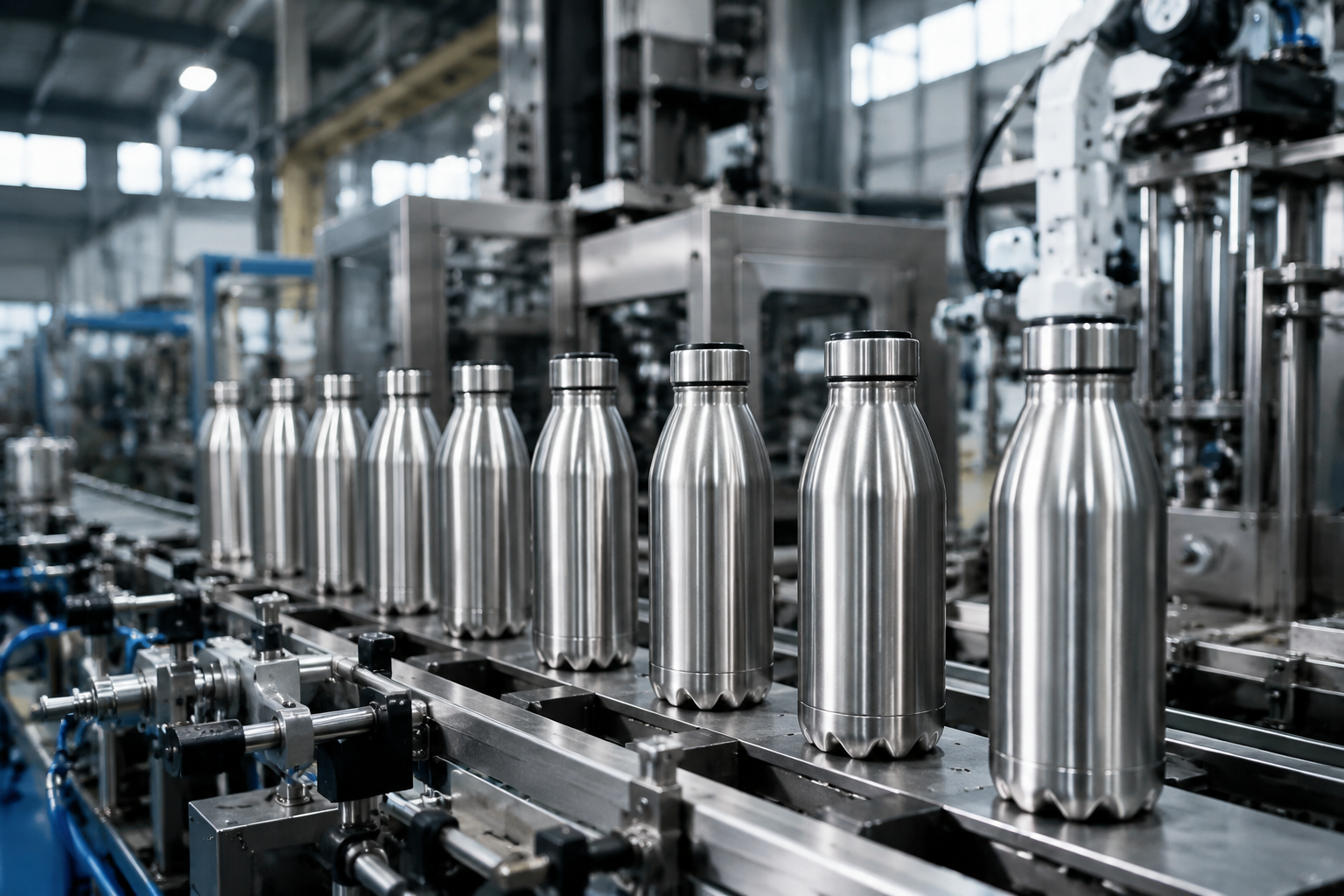
You are not buying a pretty bottle. You are buying the same 500 ml thermal bottle showing up with the right steel grade, a clean logo, no leaks, and cartons that survive a transatlantic move. That is where a 316 stainless steel thermal bottle factory earns its keep. If you source from Zhejiang or the wider China manufacturing base, the real check is not the brochure. It is whether the factory can pull coil certificates, show vacuum test data, and hold steady output at 30,000 pcs a month without talking around the numbers.
For a first order, the safe move is one shipment at a time. Pick the spec, lock the sample, confirm the print method, then QC the line like the margin depends on it, because it does. A serious canteen factory in Zhejiang should handle canteen custom work, not just plain-stock bottles. We have seen a buyer accept a PO with a typo on the lid color code and pay for it later. If they cannot tell you the MOQ, lead time, and carton drop-test standard in one call, the math does not work.
Start With the End Use
I’ll keep the HTML structure intact and rewrite the prose to sound like a real sales engineer, with concrete factory details and tighter wording.The first thing we ask is not the bottle spec. It is where the bottle will live. A trade show canteen promo piece fails in a different way than a distributor SKU going to Amazon or a retail chain. If the buyer wants hot coffee, we check lid venting, mouth size, and how the coating holds up after 50 dishwasher cycles. If it is a beer growler, we look at carbonation pressure, cap seal, and drop damage in export cartons.
At spec stage, give us the actual use case: hiking, office, gym, corporate gifting, or reseller program. Then lock the target volume, usually 350 ml, 500 ml, 750 ml, or 1,000 ml. A North America project often lands at 500 ml with powder coating and laser logo. A Europe order may need a cleaner matte finish and REACH-compliant coating. On our line, QC pulled the sample and checked the lid torque with a torque tester before we quoted, because the use case changes steel gauge, lid type, and carton pack count.
Skip the word “premium.” It does not help us run production. Give measurable specs: 18/8 or 316 inner steel, 304 outer shell if cost matters, double-wall vacuum structure, and a thermal retention claim stated in hours at a defined room temperature. If the factory in Zhejiang cannot turn that into a spec sheet and a PO-ready drawing, the math does not work—they are selling metal, not buying risk.
Lock the Material Spec
I’ll keep the HTML structure intact and tighten the prose so it sounds like a factory-side sales engineer wrote it. Then I’ll give you only the rewritten HTML.This is where orders slip. Buyers write “316 stainless steel,” then the line runs a 304 body and one 316 insert, or someone mixes up the inner liner with the lid ring. On a real 316 stainless steel thermal bottle factory spec sheet, the callout has to be plain: 316 for the inner liner, 304 or 201 for the outer shell if cost matters, and every part that touches drink or vapor listed in writing. If you sell into the EU or North America, ask for mill certificates. A sample photo is not enough.
For most custom drinkware runs, 0.4 mm to 0.5 mm wall thickness is the sweet spot. QC pulled a shell at 0.38 mm last month, and carton pressure left a flat spot on the shoulder. Go thinner and dents show up after packing. Go thicker and the math stops working because unit weight climbs fast while MOQ stays the same, so freight eats your margin. A canteen factory in Zhejiang should be able to quote piece weight within 3 g, not “around it.”
Ask for these points in one line item list:
- Inner steel grade: 316
- Outer steel grade: 304 or better if needed
- Wall thickness: 0.4-0.5 mm
- Finish: powder coat, spray paint, brushed, or raw polish
- Lid material: PP, Tritan, stainless, or bamboo composite
If the factory skips the material stack and sends only a sample price, that is the wrong question to ask. We’ve seen that go sideways on repeat orders. You are buying consistency, not one nice-looking bottle.
Ask for the Right Sample
I’ll keep the tags intact and rewrite the prose to sound like a factory-side sales engineer, with concrete test details and tighter wording.A sample is not a souvenir. It is a check on whether the factory reads your order the same way you do. For a custom canteen or customized drinkware program, ask for two samples: one plain engineering sample and one decorated pre-production sample. The engineering sample checks structure, lid fit, and vacuum performance. The decorated sample checks logo edge quality, color tolerance, and carton fit. One hand-finished piece is not enough to approve the line.
Watch the lid first. Most leak complaints come from the closure, not the steel body. We run a 24-hour inversion test and a 4-hour hot-water heat-retention check before samples leave the line. If the bottle is a canteen customized for retail, ask for cap cycle testing too: 500 open-close cycles is the minimum we use before QC signs off. A real canteen vendor should have that fixture on the floor already. If they do not, that is the wrong factory to trust.
Sample cost is normal. For a complex vacuum bottle with custom packaging, expect USD 40-120 for a sample set, and in many cases the fee gets deducted after a confirmed PO. Sample lead time is usually 7-12 days, depending on print method and coating. We have seen buyers push for a “fast” sample and then flag a bad PMS match later; that math does not work. If you are checking a distributor canteen line or a distributor growler catalog, use the sample stage to judge decoration durability, not office-light shine.
Price the Order Like a Buyer
I’ll rewrite the section in-place, keeping the tags and structure unchanged, and tighten the commercial language so it sounds like a buyer-side sales engineer.Do not ask only for unit price. Ask for the full commercial picture: FOB China, tooling if any, carton configuration, and whether the quote includes one-color print or laser marking. On our line in Zhejiang, the same bottle can swing several dollars based on lid build and surface finish. A 500 ml 316 stainless steel thermal bottle with powder coating and one-color silk screen often lands around USD 3.20-4.60 FOB at 1,000-3,000 units. Add a spring lid, metallic paint, or a gift box, and you are looking at USD 5.00-6.80.
For a custom growler or customizable growler program, larger capacity changes freight math more than it changes labor. A 1,000 ml bottle may cost only 15-25% more to make, but it ships less efficiently. We’ve seen buyers argue over a USD 0.18 handle upgrade while ignoring the carton count; that is the wrong question to ask. Ask for gross weight, carton size, and loading data. A serious canteen supplier should tell you whether 20,000 units fit in a 20-foot container or if you need a 40-foot high cube.
Practical rule: if the factory cannot quote FOB, MOQ, lead time, and carton size in the same email, your buying team will spend more time cleaning up errors than saving money on the unit price.
Also check payment terms. First-time buyers usually see 30% deposit and 70% before shipment, with larger accounts sometimes getting LC or shorter balance terms after two or three clean orders. QC pulled one sample with a typo on the carton mark last month, and the buyer flagged it before dispatch. That is standard for a canteen manufacturer in Zhejiang and across China.
QC the Production Line
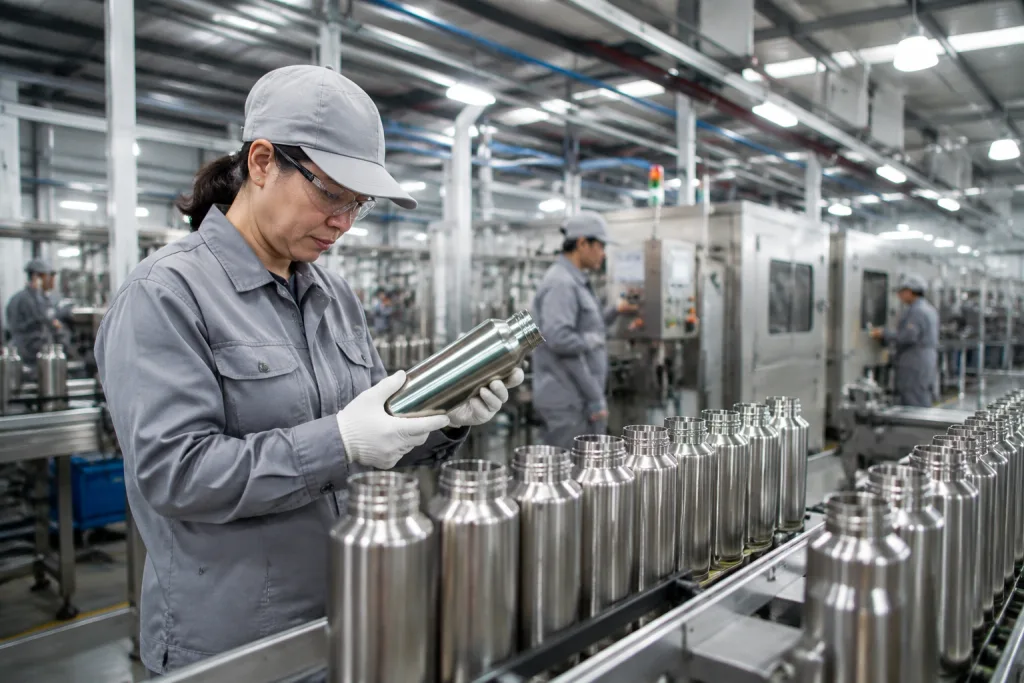
I’ll rewrite the section in place, keeping the HTML structure intact and sharpening it with factory-floor detail, tighter phrasing, and more buyer-facing language.Once the PO is signed, the work shifts from buying to risk control. A proper factory should send a pre-production sample photo set, a mass-production report, and a final inspection summary. If the line is running 30,000 to 60,000 units a month, which is normal for a mid-size China bottle plant, there is no excuse for guessing where quality stands. Ask for checkpoints at raw material, forming, welding, vacuum sealing, and final packing. We run this way on the floor, or the buyer flags it later.
Use numbers, not adjectives. AQL 2.5 is standard for general defects, while 1.5 makes more sense for leakage or decoration failures on premium retail orders. QC pulled the sample with a caliper and a torque gauge before release, and that is the kind of discipline you want. Your inspection should include:
- Leak test on random samples
- Vacuum retention check
- Insulation performance at stated temperatures
- Lid fit and torque consistency
- Logo alignment and color tolerance
- Carton compression and drop test
If you are ordering canteen custom products for a distributor canteen program, insist on lot coding. We’ve seen one wrong PO typo on the carton mark turn a clean shipment into a tracing headache. With lot codes, a failed carton in Germany or the US points back to one batch, not just a ship date. A Zhejiang factory that ships export volume will already get this. One that does not can still make a decent sample, but the math doesn’t work when the sea freight lands.
Protect the Brand After Shipping
I’ll rewrite the three paragraphs to sound like an experienced factory-side sales engineer, keep the HTML intact, and tighten the wording with concrete packaging and QC details.The order is not finished when the truck leaves the gate. You still need packaging that protects the bottle and keeps the resale channel clean. For custom drinkware, we run individual polybags or paper sleeves, then an inner box if the retailer asks for it, then master cartons sized to the pallet, usually 1200 × 1000 mm. If the bottle goes to Amazon or a distributor network, label placement matters as much as print quality. FNSKU, barcode, carton marks, and country-of-origin labels should be locked before the first run.
If your buyer model includes canteen distributors or a canteen distributor network, think about replenishment. One shipment is easy; the second one tells you whether the factory can hold the spec. We’ve seen this go sideways when a buyer reordered 5,000 pcs and the lid torque changed by 0.3 N·m, which is why tooling, color files, and inspection records stay on file. That is where a canteen manufacturer or canteen vendor in China earns its keep.
For branded programs, ask how the factory holds logo repeatability. Laser engraving gives the cleanest wear resistance. Silk screen works better for color branding. Heat transfer handles detailed art, but QC needs to check registration on the line. When you buy a customized canteen or customized drinkware line, the print method is part of the product. If the supplier treats it like a last-minute add-on, the re-order will not match the first run.
Request a factory quote with real specs
Send your target volume, logo method, and carton needs. We will quote a clean FOB China price, MOQ, and lead time without filler.
Frequently asked questions
What MOQ should I expect from a 316 stainless steel thermal bottle factory?
For a standard custom bottle, expect MOQ around 1,000 to 3,000 units per SKU. If the lid is highly customized, MOQ can rise to 5,000 units because of separate molding or tooling. A practical Zhejiang factory will tell you whether the MOQ applies per color, per logo version, or per carton configuration. If you need canteen custom work with multiple SKUs, ask whether the factory can mix colors within one PO. Some canteen manufacturers can do it, but it usually raises setup time and inspection work.
How much does a custom 500 ml 316 bottle cost FOB China?
For a 500 ml double-wall bottle with 316 inner steel, 304 outer steel, powder coat, and one-color print, a realistic FOB China range is USD 3.20-4.60 at 1,000-3,000 pieces. Add a premium lid, laser logo, gift box, or special finish, and the price can move to USD 5.00-6.80. Freight is separate. A good canteen supplier in China should quote in writing with packaging details, because carton count can change your landed cost more than the bottle itself.
How do I verify the factory is really using 316 stainless steel?
Ask for mill certificates, material specification sheets, and a clear BOM showing which parts are 316 and which are 304 or PP. Then compare the sample weight, finish, and weld area against the written spec. You should also request a photo of the production sheet or incoming material label. A credible canteen factory in Zhejiang will not hesitate. If a canteen vendor only gives marketing language, assume you have not verified anything yet.
What QC tests should I request before shipment?
At minimum, request leak testing, vacuum retention, insulation testing, logo check, and carton drop testing. For export orders, use AQL 2.5 for general defects and 1.5 for critical leakage or decoration failures if the order is retail-facing. If you are buying customizable drinkware for a distributor program, ask the factory to keep batch records and lot codes. That makes after-sales claims much easier to manage.
Can I order multiple styles in one shipment?
Yes, but you need to split the conversation between product and logistics. A canteen distributor order can often combine 2-4 styles if each style meets its own MOQ, but the factory may charge separate setup fees for different lids, prints, or packaging. If you are building a custom canteen or custom growler program, ask the factory to map the SKUs by carton and pallet before confirming the PO. That keeps shipping and receiving cleaner at your warehouse.