Key Takeaways
- 316 stainless steel thermal bottle bulk often adds 12-25% over 304, depending on wall gauge, finish, and lid spec
- Typical MOQ is 1,000-3,000 pcs per SKU; sample lead time is 7-10 days and mass production is 25-40 days
- FOB China pricing for a 500 ml 316 bottle usually lands around $2.60-$4.80 before freight and duties
- AQL 2.5/4.0, REACH, LFGB, and vacuum retention checks matter more than polished sample photos
If you are buying 316 stainless steel thermal bottle bulk for retail, Amazon, or distributor channels, the real question is not whether 316 is “better.” The real question is whether the extra spend still leaves margin after freight, decoration, carton packing, and the first 90 days on the shelf.
That is where buyers get caught. We’ve seen a $2.80 FOB quote turn into $4.10 landed after 316 inner liner material, a thicker 0.6 mm wall, vacuum test loss, custom lids, and a 35- to 45-day slot on the line in Zhejiang. At BottleForge in Hangzhou, we run this check every week with a caliper, a vacuum tester, and a carton drop test. Buyers want wholesale drinkware pricing. They also want corrosion resistance, low odor retention, and steady lead times. That math only works when the cost split and MOQ are set right from the start.
What 316 really changes
I’ll rewrite the prose in place, keep the HTML exactly as-is, and tighten the wording so it sounds like a factory sales engineer wrote it.316 stainless steel is not a marketing sticker; it is an alloy choice. The real difference from 304 is molybdenum, which gives better resistance to chlorides and harsher liquids. For a thermal bottle, that matters once the buyer expects more than plain water use. We run into this on sports hydration, electrolyte mixes, coffee, tea, and acidic drinks, plus travel bottles that get washed hard every day.
In bulk sourcing, the price jump is real, but it stays manageable. A standard 500 ml double-wall bottle in 304 may sit around $2.20-$3.90 FOB China at 1,000 pcs, while the same build in 316 often lands at $2.60-$4.80. The gap comes from raw material, scrap rate, and wall gauge control. On the line, 0.4 mm for the inner liner and 0.4 mm for the outer shell is common; if you push to 0.5 mm for a heavier hand feel, the math moves fast. We had one buyer flag a PO that said “316 body” but left out the wall spec, and QC pulled the sample apart before quoting. That is the wrong question to ask: alloy alone does not tell you the real cost. Define the alloy grade, wall thickness, and weld quality first, then ask for price.
- 316 helps where corrosion and odor control matter.
- 304 is still fine for many drinkware wholesale programs.
- Wall thickness and lid quality often move cost more than the alloy itself.
Cost drivers that move your quote
I’ll rewrite the prose in-place, keep the HTML structure untouched, and tighten the pricing logic so it reads like a factory-side quote note.When buyers push for a better price on drinkware bulk programs, the quote barely moves unless something real comes off the spec sheet. The big drivers are alloy grade, bottle capacity, lid build, finish, and decoration. A plain powder coat costs less than a 360-degree printed wrap. A basic PP lid costs less than a leakproof cap with stainless accents and a silicone gasket. Soft-touch coating also adds curing time, and QC pulls more rejects when the surface is off.
There is a cost hiding in the line too. Deep drawing, trimming, necking, weld grinding, vacuum sealing, and polishing all hit output. On our Hangzhou line, a standard thermal bottle run can reach 35,000 units a month, but that drops fast when the order splits into 4 SKUs or adds laser engraving, silk screen, or color-spray. The buyer flagged a 2 mm lid mismatch once, and we lost half a shift fixing it. That is why a bulk drinkware buyer should lock these points before we quote:
- Capacity: 350 ml, 500 ml, 750 ml, or 1,000 ml
- Alloy: 316 inner liner, or full 316 body if needed
- Finish: bare steel, powder coat, or painted finish
- Decoration: laser, silk screen, or heat transfer
- Packing: egg crate, color box, or mailer for retail
If you are buying best wholesale drink bottle options for more than one channel, standardize the body and vary only the lid insert or print. The math works better. We’ve seen mixed-body orders blow up MOQ planning because one PO typo turned 500 ml into 50 ml on the packing list, and the whole lot had to be rechecked.
MOQ tiers that make sense
I’ll keep the tags and list structure intact, rewrite the prose to sound like a factory-side sales engineer, and make the MOQ section more concrete without drifting from the original meaning.MOQ is where a lot of buyers burn days. A factory may say yes to 300 pcs, but the unit cost will bite later. For a 316 bottle program, the breakpoints are simple. At 300-500 pcs, you are still near sample pricing and finish choices stay narrow. At 1,000 pcs, the line moves into normal export production. At 3,000 pcs and up, you can push on material yield, carton cost, and lead time stability.
For a bottle line in Zhejiang, this is the MOQ matrix we run:
- 300-500 pcs: prototype or market test; expect 20-40% above normal bulk pricing
- 1,000 pcs: standard MOQ for one SKU and one color
- 3,000 pcs: stronger pricing, better for distributor and private label rollouts
- 5,000 pcs+: best leverage for custom box, logo, and mixed lid components
Lower MOQ is not always the smarter move. If you need canteen wholesale or wholesale canteen runs with two lid colors, each extra part adds setup time and QC has to pull the sample again. We have seen this go sideways on a PO typo for lid code, and the buyer flagged it only after the line was already set. If the same order also includes growler wholesale or beer tumbler wholesale items, split it by mold family. That keeps changeovers down. For buyers sourcing canteen bulk or bulk canteen for promotions, one body, one lid, one print method, and one master carton spec usually wins on the math.
Lead time from sample to ship
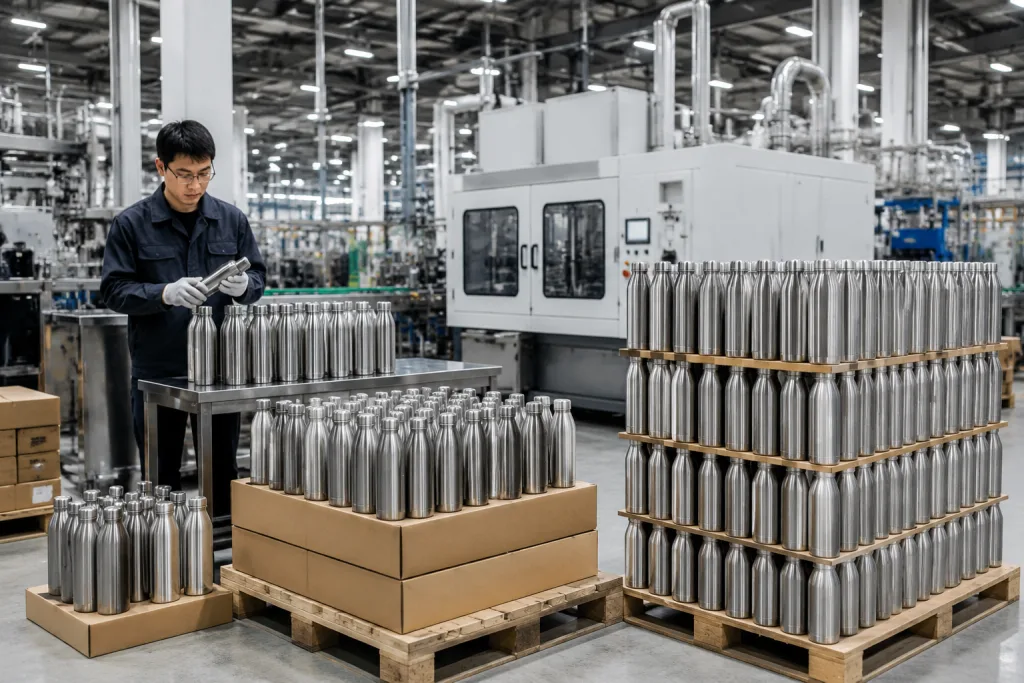
I’ve got the section and constraints. I’ll rewrite the prose in-place, keep the HTML exactly as-is, and make the timeline sound like a factory-side sales engineer wrote it.Lead time is a supply chain number, not a sales promise. For a standard 316 stainless steel thermal bottle bulk order from China, sample approval usually takes 7-10 days if the mold is already in the tool room. If the buyer asks for a new lid or cap profile, add 15-25 days for tooling or a trim adjustment. Mass production usually takes 25-40 days after deposit and final artwork sign-off. We run the line on that clock.
That looks clean on paper, until packaging, inspection, and booking hit the schedule. If you need carton artwork, barcodes, or retail inserts, leave 5-7 more days. QC pulled the sample, and we’ve seen buyers miss this step and then blame the factory when the box art is still in email. Third-party inspection under AQL 2.5 for major defects and 4.0 for minor defects should be booked before final packing. Export files, especially REACH or LFGB support for Europe, can take extra time if the documents are not already on file. A realistic project timeline looks like this:
- Day 1-3: confirm spec, target price, artwork, and packing
- Day 4-10: samples and revisions
- Day 11-18: approve final sample and pay deposit
- Day 19-50: production, inspection, and packing
- Day 51-60: sea freight booking and export handoff
If you are running a tight retail launch, do not promise a launch date before vessel space is confirmed from China. A PO typo on the ship date can cost you a week, and the math does not work when the buyer wants 12 days but the line only gives 18. Zhejiang factories can move fast; the shipping line moves on its own schedule.
How to price by use case
I’ll rewrite the section in-place, keep the tags and structure intact, and tighten the sales-engineer tone with concrete pricing details and fewer AI-style fillers.The same bottle can sit in three price bands, and the use case decides which one you quote. A 316 thermal bottle sold as premium hydrationware does not price like an alcohol flask wholesale or alcohol flask wholesale bulk run with a narrow body and a tighter lid spec. A bulk growler or beer growler bulk order needs a different closure, a cleaner internal polish, and heavier carton protection than a travel bottle. We’ve seen buyers miss that and then wonder why the margin disappears on the second PO.
Here is the practical way to think about channel pricing:
- Retail hydration bottle: higher finish quality, cleaner welds, better print, stronger carton
- Promotional drinkware wholesale: lower decoration cost, simpler lid, controlled MOQ
- Craft beer / growler wholesale: leak resistance, larger mouth, often heavier packaging
- Alcohol flask in bulk: compact body, tighter cosmetic tolerances, gift-box needs
For beer channels, terms like beer growler wholesale, beer growler wholesale bulk, and beer growler in bulk usually mean a stronger lid seal and a thicker outer box, because transit damage goes up fast. QC pulled a sample with a loose cap at 1.2 mm gap, and the buyer flagged it before we loaded the carton line. If your range also includes beer tumbler bulk or beer tumbler wholesale bulk, keep the body finish and carton spec matched across the family, or you end up juggling spare lids and mixed inserts. In Europe and North America, one core platform with 2 or 3 label programs is the cleaner math.
Factory checks you should demand
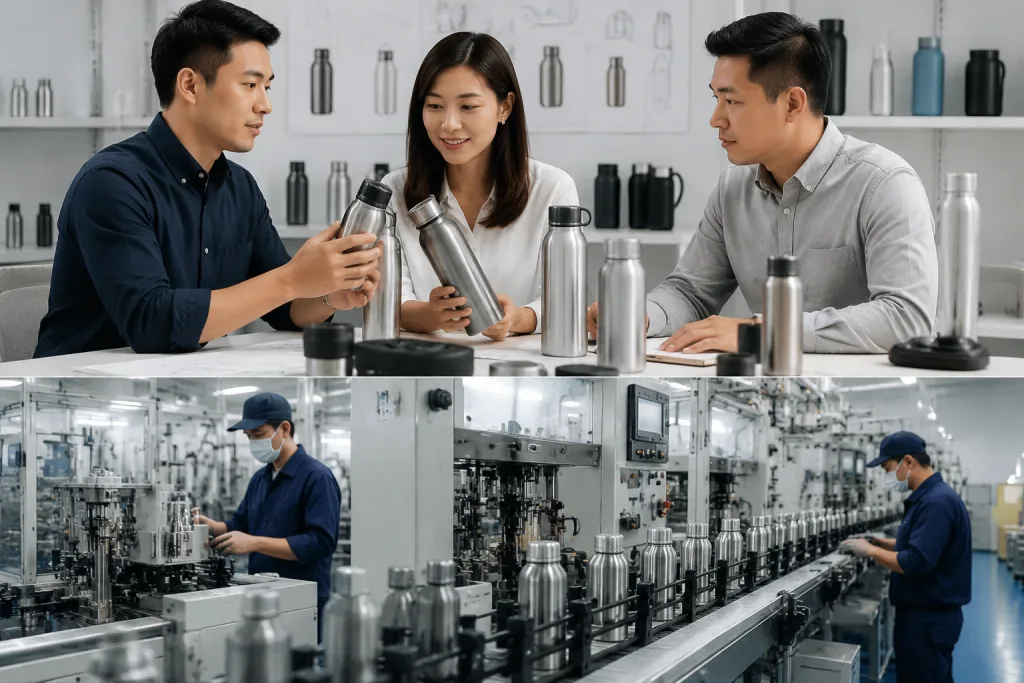
I’ll keep the HTML exactly as-is and rewrite only the prose with tighter factory-floor language, concrete checks, and fewer generic phrases.Do not buy from photos alone. A polished sample can still hide weak welding, an off-center lid, or poor vacuum retention. For export to the EU or North America, your supplier should have a written QC plan on file. Ask for raw material traceability, incoming inspection, in-process checks, final AQL inspection, and vacuum and thermal retention tests. If the factory cannot show a QC sheet, that is not a bargain. It is a claim waiting to happen.
At BottleForge in Hangzhou, Zhejiang, we run the checks in a fixed order: material verification for 316 stainless, weld seam inspection, leak test at 30-60 seconds per unit on a sampling basis, and thermal performance checks against the agreed spec. QC pulled the sample, tagged one lid at 0.6 mm off-center, and the buyer flagged it before packing. If the buyer needs brand compliance, ask for REACH for Europe, FDA-related material declarations where relevant, and carton drop testing for e-commerce. A buyer sourcing wholesale drinkware or drinkware wholesale should also verify print adhesion after hot-water and detergent exposure. Ink that looks fine on day one can fail after three wash cycles.
“If the supplier cannot put defect rate, thermal retention, and lead time in the same quote, the quote is incomplete.”
That is the gap between a random vendor and a steady export supplier in China. The math does not work any other way. Zhejiang stays strong on this kind of order because the tooling shop is next door, the line knows metal drinkware, and we ship on routes built for container flow.
Where this spec fits best
I’ll rewrite the prose in place, keep the HTML structure intact, and tune the copy to sound like a factory-side sales engineer.Not every program needs 316. Use it when the story depends on corrosion resistance, premium positioning, or tighter performance specs. That usually means outdoor retail, premium gifting, specialty hydration, and some food-contact programs. If the SKU is a plain office bottle, 304 usually does the job and protects margin better. We ran one buyer sample last quarter with a 0.8 mm wall and the line held fine, but the buyer still moved to 316 because the shelf story mattered more than the metal cost.
For sourcing teams comparing wholesale drinkware options, the best wholesale drink bottle is rarely the cheapest unit price. It is the one that survives your channel. If your customer base needs bulk drinkware with repeat orders, the better spec is usually a simple body, one decoration method, and a vendor that can hold a 1,000-3,000 pc MOQ without slipping the ship date. We’ve seen this go sideways when a buyer flagged a PO typo on the decoration position and QC had to pull the sample again. For special categories like bulk growler, growler bulk, growler wholesale, or wholesale growler, the same math applies: keep the build simple, put money where the buyer sees it, and lock the lead time before you chase the lowest quote.
That is how you keep a China sourcing program boring in the good way: stable pricing, stable lead time, and fewer surprises after the PO is signed. On our side, the line runs smoother when the spec is fixed at 316 for the right use case and the buyer stops changing cap color in week 3.
Get a factory quote with real numbers
Send your target capacity, MOQ, finish, and delivery port. We’ll price it in FOB China terms and show the lead time before you commit.
Frequently asked questions
What is a realistic FOB price for 316 stainless steel thermal bottle bulk?
For a standard 500 ml double-wall bottle in 316, FOB China is often $2.60-$4.80 at 1,000 pcs, depending on lid type, coating, and logo method. If you want a heavier wall, premium finish, or retail box, expect the quote to move up 10-25%. At 3,000 pcs, you can usually trim $0.10-$0.35 per unit. Sea freight, duties, and inland trucking still sit outside FOB, so compare landed cost, not just factory price.
What MOQ should I expect for canteen wholesale or drinkware bulk orders?
For standard export production, 1,000 pcs per SKU is the most common MOQ for canteen wholesale and drinkware bulk programs. Some factories in Zhejiang will accept 300-500 pcs for test orders, but the unit price is usually 20-40% higher. If you want multiple colors, custom lids, or printed retail cartons, plan on 3,000 pcs to keep tooling and changeover costs under control. The cleanest approach is one body, one lid, one artwork set.
How long does production take after sample approval?
A normal 316 stainless steel thermal bottle bulk order takes 25-40 days after deposit and final artwork approval. Samples usually take 7-10 days if the mold already exists. If you need new tooling, add 15-25 days. For Europe and North America, factor in another 5-7 days for carton approval, inspection scheduling, and export paperwork. If you are shipping in peak season, book freight space early because vessel delays can add 1-2 weeks.
Can I source beer growler wholesale bulk and alcohol flask wholesale bulk from the same factory?
Yes, if the supplier has overlapping metal forming and lid assembly capability. Many Zhejiang factories can handle beer growler wholesale bulk, beer growler in bulk, and alcohol flask wholesale bulk under the same export workflow, but the molds, seals, and packaging differ. Expect each product family to carry its own MOQ, often 1,000-3,000 pcs. Do not bundle them into one price unless the supplier actually shares tooling and packaging lines, or the quote will be unreliable.
What quality checks should I ask for before placing a PO?
Ask for material traceability, leak testing, vacuum retention data, print adhesion checks, and a final AQL inspection. For export, request REACH support for Europe and any material declarations your compliance team needs. AQL 2.5 major and 4.0 minor is a common baseline for wholesale drinkware. If the supplier can also show monthly output, such as 35,000 units per month, that helps you judge whether they can hold your lead time during peak demand.