Key Takeaways
- 316 stainless steel is usually chosen for salty, acidic, or high-expectation retail programs, not just for marketing copy
- Typical MOQ for a private label thermos starts at 1,000 units per SKU, with lead time around 30-45 days after sample approval
- A decent bulk thermos quote can vary by USD 0.60-1.80 per unit depending on wall thickness, lid complexity, and decoration
- If you need FDA-style market access, REACH, and AQL 2.5 checks, confirm them in writing before production
If you are buying a 316 stainless steel stainless steel bottle private label program, do not treat every thermos bottle as the same item. A 5,000-piece promo run and a retail-ready custom thermos for Europe or North America are different jobs. Steel grade, liner wall thickness, lid seal, and print method all move the cost and the test result.
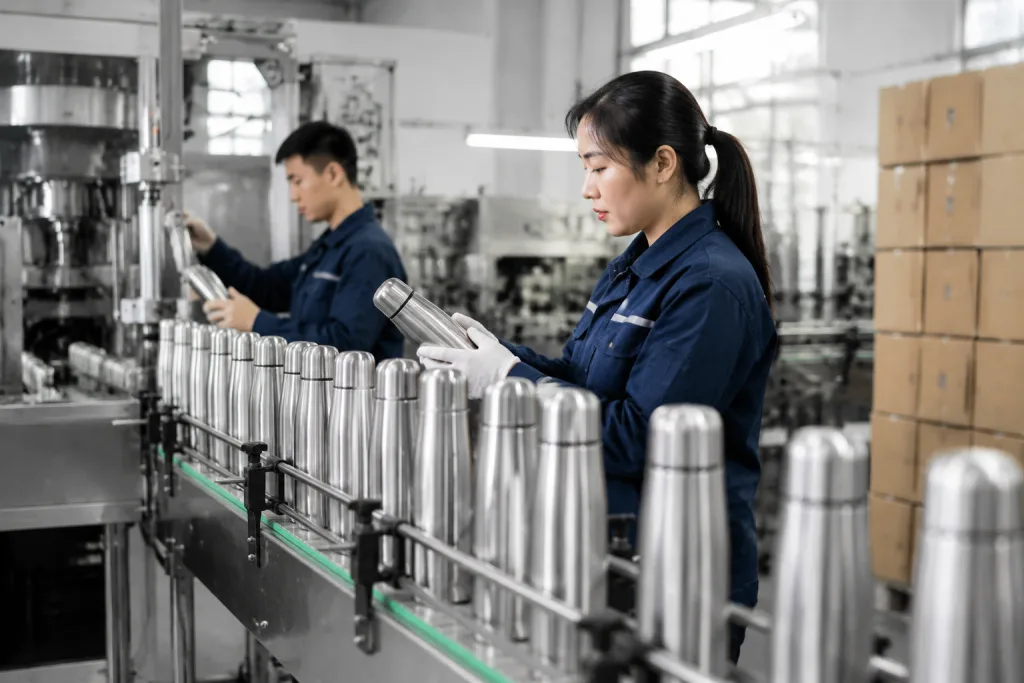
At our Zhejiang factory, we see the same thing every week: the buyer wants a stainless thermos that looks sharp, clears REACH, and still hits a workable FOB price. That is doable, but only if you lock the details before sampling. QC pulled a lid test on the line last Tuesday; one 0.3 mm gasket change fixed a leak, and that is the kind of detail that saves an order from going sideways.
What 316 actually changes
I’ll rewrite the section in place, keep the HTML exactly as-is, and tighten the sales-engineer tone with concrete factory detail and cleaner buyer language.Buyers often ask whether 316 is just a nicer label than 304. It is not. On a stainless thermos, 316 brings better resistance to chloride corrosion and acidic drinks. That matters when the bottle carries sports drinks, citrus water, or gets used in coastal and humid markets. For private label retail, 316 gives the brand a cleaner premium story, and we have seen that sell better on the shelf.
Do not pay for 316 on a plain office giveaway. A standard manufacturer thermos in 304 is the better value on a lot of promo runs. The math does not work if the bottle sits on a desk and never sees acid or salt. QC pulled the sample on a 500 ml run last month, and the quote only moved about USD 0.20-0.50 per unit when we switched liner grade, depending on wall build and steel price. That is the right way to judge it.
What to specify
- Inner liner steel grade: 316 or 304
- Outer shell steel grade: usually 304 for cost control
- Wall thickness: commonly 0.4-0.5 mm for liner use
- Finish: powder coat, lacquer, brushed, or mirror polish
If the supplier cannot tell you which parts are 316 and which are 304, you are not buying a controlled private label product.
Ask these before sampling
I’ll rewrite the prose to sound like a factory-side sales engineer, keep the HTML exactly intact, and preserve the existing numbers and structure.Before you order samples from a thermos factory, get the engineering facts in writing. You want a sample that matches the real production line, not a hand-polished prototype that never shows up in bulk output. We run into this all the time. Ask for capacity tolerance, lid structure, vacuum retention target, and decoration method before the first sample shot. One typo on the PO can turn a 500 ml request into 550 ml.
For outdoor retailers, the bottle has to survive repeated use, not just look good in a catalog. For promotional brands, it still has to stay tight in a freight carton and keep working after a few weeks in the field. That is the wrong question to ask if you only talk about appearance. A proper custom thermos brief should pin down target temperature retention, drop-test expectations, and package style. If you plan to sell as a distributor thermos line, ask for carton dimensions too; we had one buyer flag a 6 kg carton limit after QC pulled the sample and checked the outer box.
- Confirm MOQ: 1,000 pcs per design is common for private label
- Confirm lead time: 30-45 days after sample approval
- Confirm sample charge: often USD 30-80, refundable on order in some cases
- Confirm production output: a stable factory thermos line should support 80,000-150,000 units/month
Private label checklist that matters
I’ll rewrite the HTML in place, keeping every tag and the list structure intact, while making the prose sound like a factory-side sales engineer wrote it.Private label is more than a logo hit. A proper 316 stainless steel stainless steel bottle private label program starts with product fit, brand consistency, and repeat runs that match. If the bottle is for retail, we run every unit against coating thickness, logo position, and lid torque. For a thermos promo job, the spec is simpler, but the print still has to survive pallet shake and courier abuse.
Use this checklist before you release the PO:
- Steel grade: confirm 316 inner liner and any 304 outer shell
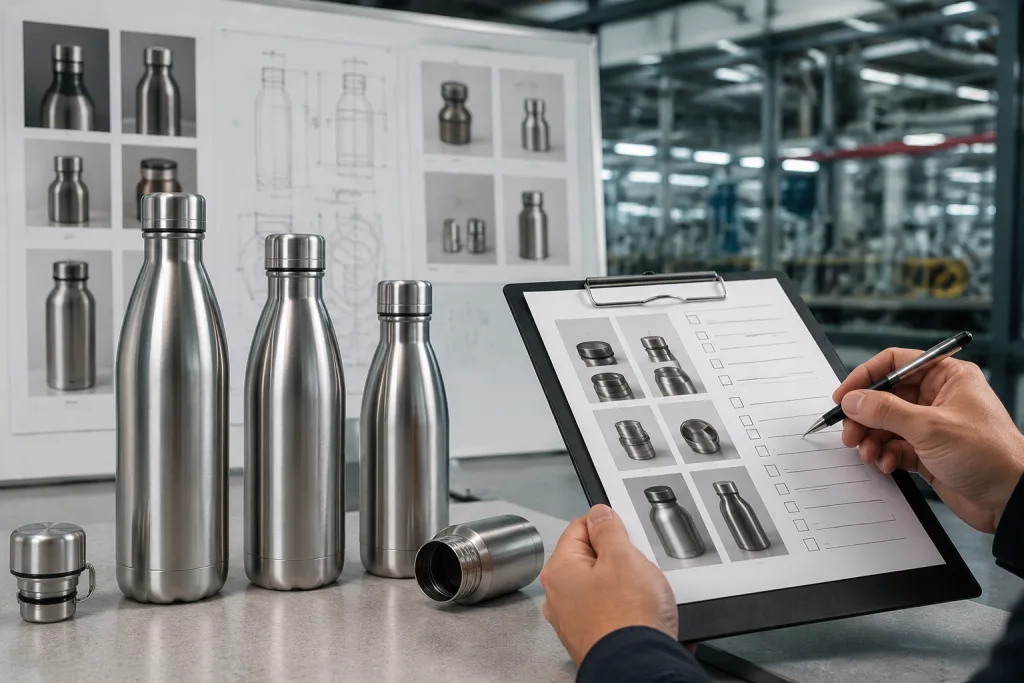
- Capacity: 350 ml, 500 ml, 750 ml, or 1,000 ml with tolerance
- Lid type: screw lid, push button, cup lid, or tea filter
- Decoration: silk screen, laser engraving, or UV print
- Testing: leak test, vacuum retention, salt spray if needed
- Compliance: REACH, LFGB, FDA-related market requirements as applicable
Do not skip packaging. We’ve seen a good bottle get crushed because the outer carton was thin, 3-ply instead of 5-ply. That is the wrong thing to save money on. For export to Europe and North America, we usually push drop-tested inner boxes and a carton spec that holds up in transit.
Pricing for bulk orders
I’ll rewrite the section in-place, keep the HTML exactly as-is, and tighten the sales language so it reads like a factory-side pricing note.Let’s talk money first, because that is where most bulk deals get decided. A thermos order from China looks cheap on the quote sheet until you add the lid upgrade, logo setup, extra packing, and freight. For a basic 500 ml vacuum bottle, FOB China pricing usually starts around USD 3.20-4.20 for a standard steel build. Switch to 316 liner material, laser logo, and a premium lid, and the same thermos bulk order can land closer to USD 4.50-6.20, depending on quantity. QC pulled one sample at 24-hour heat retention and the buyer flagged the lid gap; that kind of issue is why the math matters.
“Cheap” is the wrong question to ask in this category. We have seen this go sideways when a thermos supplier saves a few cents with thinner steel, a weak vacuum pull, or a bare-bones cap. Fine for a promo run. Bad for a private label line that needs repeat orders and the same spec every time. If you are comparing manufacturers thermos quotes, compare the same steel grade, lid, finish, and carton count, or the numbers do not mean much. On the line, a 0.4 mm wall and a 0.5 mm wall are not the same bottle.
Price drivers
- Quantity: 500 pcs and 5,000 pcs sit in different price bands
- Decoration: one-color print costs less than 2-position branding
- Lid tooling: custom cap designs add tooling cost and 15-25 days
- Packing: retail box, color sleeve, or mailer pack changes carton size and freight volume
Testing and quality control
I’ll rewrite the section in-place, keep the HTML structure untouched, and tighten the sales-engineer tone with concrete QC details and numbers.A polished bottle is not enough. A good thermos factory should explain QC in plain language, without the marketing fluff. For export buyers, that means incoming steel checks, vacuum leak monitoring, lid fit checks, and final inspection under AQL. For a private label run, consistency beats showroom shine every time.
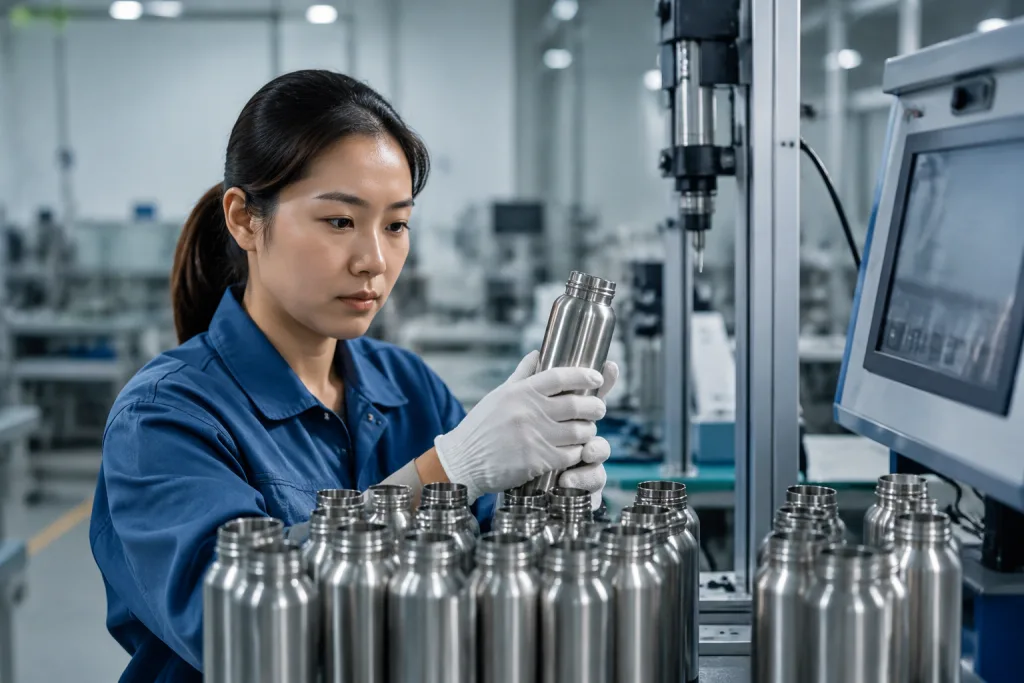
At our Zhejiang plant, we run a standard export flow: first article approval, in-process vacuum checks on the line, then final random inspection under AQL 2.5 for major defects. QC pulled the sample after thermal cycling and we rechecked seal integrity at the lid groove, because that is where weak builds show up. If you need a reusable bottle for outdoor retail, ask for hot-water and cold-water targets in hours, not vague claims. A serious thermos manufacturer should put 6 hours, 12 hours, or 24 hours on paper with test conditions stated clearly.
Ask for these documents when needed:
- Material declaration for 316 and 304 steel
- REACH or LFGB-related test reports
- Carton drop-test or transit test notes
- Inspection photos from the final lot
How to choose the right supplier
I’ll keep the HTML structure intact and rewrite the prose to sound like a factory-side sales engineer, with concrete plant details and fewer AI-like transitions.The market is full of thermos suppliers, thermos distributors, and trading companies calling themselves a factory. We see this all the time. A real thermos factory can point to the forming line, the seam weld check, the vacuum chamber, and the powder coating booth. If a seller cannot walk you through those steps, they are probably outsourcing the risky parts and hoping you do not ask who runs the line.
For outdoor retailers and promotional brands, the safer move is a manufacturer thermos partner in China that handles sampling, decoration, and export packing in one plant. Zhejiang works because steel slitters, coating shops, and carton vendors sit within the same 30 km belt. That saves 3 to 5 days on sample loops. We ship a lot of private label thermos orders this way, and when a buyer asked for a lid color change after PP sample approval, the order only stayed on track because the mold room and QC were in the same building.
Useful questions to ask any thermos supplier:
- Do you produce in-house or outsource vacuum processing?
- What is your monthly output for this SKU?
- Can you support ODM changes for a thermos customizable program?
- Do you keep old tooling for reorder stability?
If the answers are vague, your private label program will be vague too. That is the wrong place to save money. We have seen a 500 pcs MOQ order slip because the PO said “316 steel bottle” but the drawing called for 304; QC pulled the sample, and the buyer flagged it before we cut cartons.
Request your private label thermos quote
Send capacity, lid style, logo file, and target market. We’ll quote FOB China pricing, MOQ, and lead time for your stainless thermos line.
Frequently asked questions
Is 316 worth it for a private label thermos?
Yes, when your product faces acidic drinks, coastal climates, or premium retail expectations. For a 500 ml bottle, 316 liner material usually adds about USD 0.20-0.50 per unit versus 304, depending on current steel prices and finish. If you are selling a promotional thermos in high volume, 304 can still be the better value. For a retail-ready stainless thermos, 316 is easier to market and easier to defend on quality.
What MOQ should I expect from a China supplier?
For a standard custom thermos or promotional thermos, 1,000 units per SKU is common, though some thermos suppliers will quote 500 pieces with a higher unit price. If you need multiple colors, each color may require its own MOQ. For a serious private label line, I usually recommend planning at 3,000-5,000 units so your FOB price improves and your packaging setup cost is spread out.
How long does production take?
A realistic lead time is 30-45 days after sample approval and deposit. If you need a new lid mold, special coating, or extra testing, add 10-20 days. In a Zhejiang factory with stable lines, common monthly output can reach 80,000-150,000 units across several SKUs, but your exact timing depends on whether the bottle is a stock shape or a fully customized thermos.
What tests should I request before shipment?
Ask for leak testing, vacuum retention checks, lid torque checks, and final AQL inspection at minimum. For Europe, ask about REACH or LFGB-related compliance. For North America, many buyers also request material declarations and packaging review. If the bottle is for outdoor use, you can also request thermal performance data such as 6-hour hot retention or 12-hour cold retention under stated test conditions.
Can I order a mixed design line for my brand?
Yes, but mixed orders change the math. If you want a thermos customizable range with 2-4 colors or lid styles, you may still keep one body mold while creating separate SKUs. That is practical for distributors thermos programs and retail sets. Expect separate MOQs per color or print position, and confirm whether carton packing can stay common to reduce freight cost. A good thermos manufacturer will tell you where the real cost split is.