Key Takeaways
- 316 stainless usually adds about USD 0.20–0.60 per unit over 304 in a 1,000-piece thermos order
- Typical MOQ at a Zhejiang thermos factory is 500–1,000 pcs per SKU, with 35–45 day lead time
- A 0.5 mm inner wall and 0.45 mm outer wall is a common durable setup for bulk thermos orders
- For promotional thermos projects, laser logo on cap or body usually adds 1–3 days, not 2 weeks
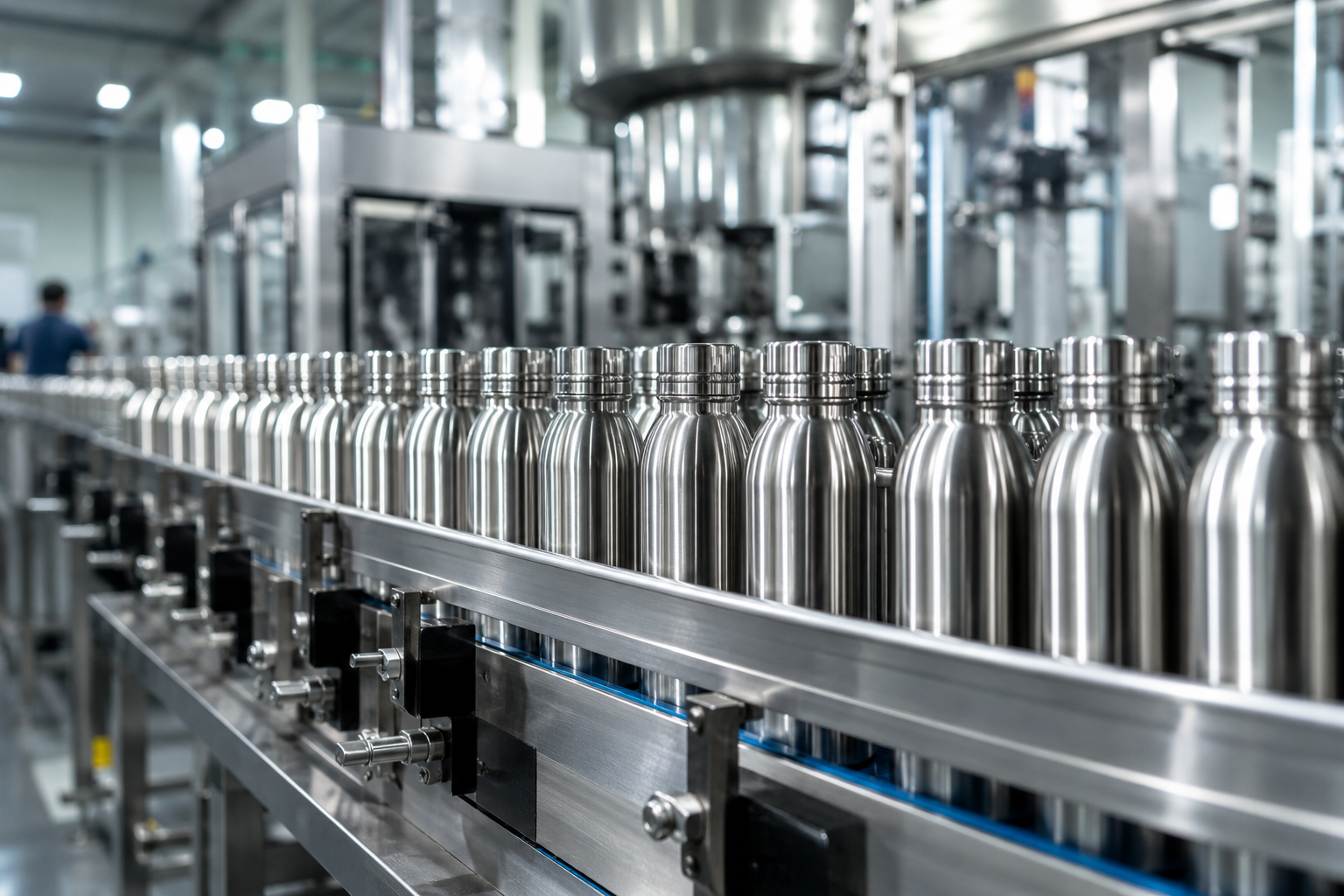
If you are buying for outdoor retail or a promo run, the wrong thermos spec gets expensive fast. A bright sample is easy; a bottle that survives daily use, passes REACH, and still looks clean after 12 months is the real job. That is why the phrase 316 stainless steel stainless steel bottle factory matters more than most buyers think: steel grade, wall build, finish, and test discipline decide whether you get a steady bulk thermos or a warranty mess.
In Zhejiang and across China, the better thermos factories do not push one bottle for every channel. We run different builds for different buyers. A 500 ml vacuum bottle for camping is not the same item as a 750 ml giveaway bottle for an event, and the buyer who asked for “same spec, lower price” learned the math does not work. If you want a custom thermos that ships on time, meets AQL 2.5, and lands at a workable FOB price, compare specs, not slogans.
316 vs 304: the real split
I’ll rewrite the section in-place, keep the HTML structure untouched, and make the copy sound like a factory-side sales engineer wrote it.Most buyers ask for 316 because it sounds like the safer spec. Fine. But on the line, the first question is where the bottle will live. For desk use, gifting, and normal retail, 304 stainless gets the job done. For salt air, dishwasher-heavy programs, acidic drinks, or a higher-end outdoor thermos, 316 gives you better corrosion resistance and a cleaner sales story for a custom thermos.
| Spec | 304 stainless thermos | 316 stainless thermos |
|---|---|---|
| Typical material cost | Lower | +USD 0.20–0.60/unit at 1,000 pcs |
| Corrosion resistance | Good | Better in salt and acids |
| Best use case | General retail, promotional thermos | Outdoor retail, premium custom thermos |
| Buyer message | Value and volume | Durability and margin story |
If the end user pours coffee, sports drinks, or citrus water, 316 often earns its keep. We saw a sample pass 48-hour salt-spray testing on 304, then the buyer flagged tea stains after two weeks of daily use; that is why this is the wrong question to ask in the abstract. For a thermos bulk program with a tight target, 304 protects margin better. A serious thermos manufacturer in China does not push 316 into every PO—on a 5,000 pcs order, that extra metal grade can blow the math before QC even pulls the sample. Use 316 when the use case pays for it.
Compare the specs that matter
I’ll rewrite the section in place, keeping the HTML structure and all existing numbers/codes intact, while making the prose sound like a factory-side sales engineer.Use-case fit comes down to a few numbers, not a glossy catalog page. We run the line by wall thickness, capacity, vacuum hold, finish, and closure type. On 500 ml, 750 ml, and 1,000 ml, the shelf math works for outdoor retail. For promo jobs, 350 ml and 500 ml ship easier and keep print cost down.
Buyer-facing spec table
| Specification | Entry retail thermos | Outdoor retail thermos | Promotional thermos |
|---|---|---|---|
| Steel grade | 304 | 316 | 304 |
| Capacity | 500 ml | 750 ml / 1,000 ml | 350 ml / 500 ml |
| Vacuum hold | 6–8 hours hot | 8–12 hours hot | 5–6 hours hot |
| Wall thickness | 0.4/0.35 mm | 0.5/0.45 mm | 0.4/0.35 mm |
| MOQ | 500 pcs | 1,000 pcs | 500 pcs |
| FOB price target | USD 3.20–4.50 | USD 4.80–7.20 | USD 2.90–4.20 |
If a thermos custom quotation skips these specs, the math does not work. You are not comparing products; you are comparing guesses. Ask for lid material, gasket grade, coating thickness, and whether the supplier uses spot welding or full seam welding at the joints. QC pulled a sample with a 1.2 mm lid gap last month, and the buyer flagged it right away. In Zhejiang, the stronger factories put those details on the table first because they know the PO will come back with a typo, a revision, or both.
Match the bottle to the channel
I’ll rewrite the section to sound like a factory-side sales engineer, keep the HTML structure intact, and strip the AI-ish phrasing.Outdoor retailers and promotional brands buy the same stainless thermos for different reasons. Retail wants thermal performance, fewer claims, and a bottle that looks right beside tents, stoves, and hydration packs. Promotional buyers care about lead time, logo space, and landed cost. We run both jobs in the same shop, but the spec has to match the channel.
- Outdoor retail: use 316 body steel, powder coat, one-hand lid, and a 100% leak test before packing; QC pulled 20 samples and 2 lids failed the first drop check.
- Promotional brands: use 304 steel, matte spray, a simpler lid tool, and one-color silk screen or laser mark; this is where the buyer usually pushes back on unit price.
- Distributor thermos programs: keep two SKUs max per capacity so inventory does not clog the shelf.
- Bulk thermos orders: keep colorways tight; each extra color can add 3–5 days and more carton mix-up risk, and the math does not work on small runs.
For distributors thermos catalogs, a narrow range sells better than a messy one. A factory thermos line with 3 capacities, 2 lids, and 4 colors already covers most channels. We’ve seen this go sideways when a buyer asked for 9 variants on one PO—the line stayed busy, but the defect rate climbed because operators kept swapping parts. In China, the factories that segment by channel usually hold better defect control, because they are not trying to make one bottle fit every order.
Logo methods and decoration
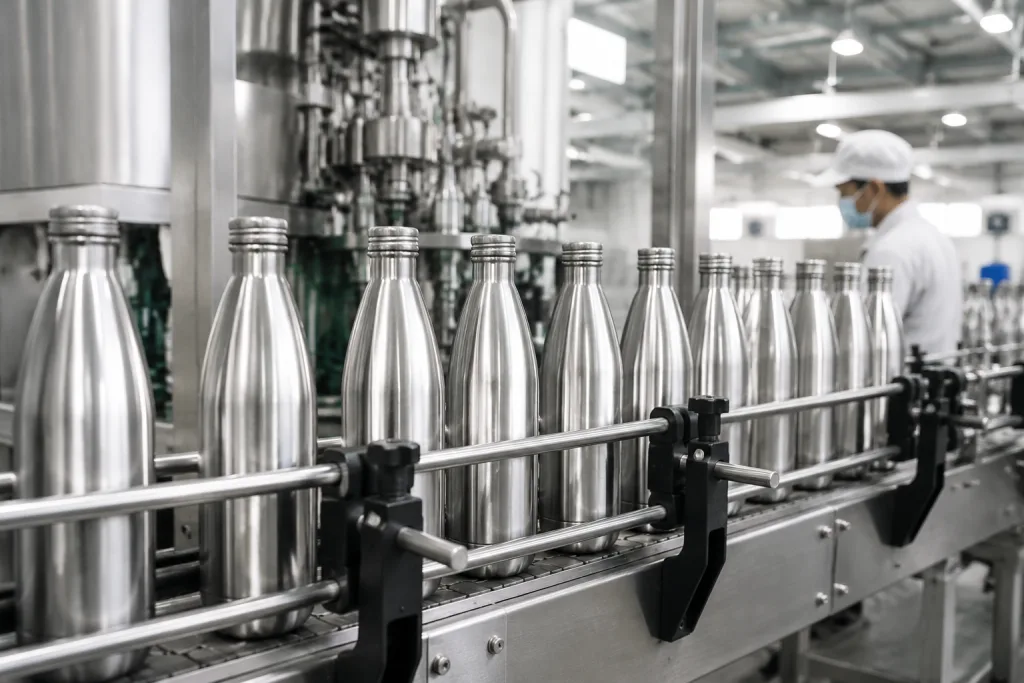
I’ll rewrite the section in place, keep the HTML exactly as-is, and tighten the sales tone with concrete factory details and cleaner English.Decoration decides whether a thermos order looks like a retail piece or cheap stock. For a custom thermos with a clean shelf look, laser engraving is the safest choice. It does not peel, and it holds up better than printed ink after 50 dishwasher cycles. Silk screen costs less and still works for promotional thermos runs when the buyer wants solid color on a tight budget.
| Decoration | Best for | Typical add-on | Lead-time impact |
|---|---|---|---|
| Laser engraving | Premium retail, outdoor brands | USD 0.10–0.35/unit | 1–3 days |
| Silk screen | Promotional thermos, giveaways | USD 0.08–0.25/unit | 1–2 days |
| Heat transfer | Full-color brand art | USD 0.20–0.50/unit | 2–4 days |
| Pad print | Small logos, curved areas | USD 0.06–0.18/unit | 1–2 days |
Packaging matters too. A distributor thermos program with a printed color box, barcode, and FNSKU-ready label saves the warehouse a real chunk of time. We once caught a PO typo on the inner-box count — 24 pcs written as 42 pcs — and QC pulled the sample before the line ran. If you sell on marketplaces, send the carton marks, inner-box labels, and master carton size before production starts. A proper 316 stainless steel stainless steel bottle factory in Zhejiang should handle this cleanly, but we still confirm artwork, barcode width, and pack-out count on the first sample run. That extra check is cheap. The rework is not.
What a good factory checks
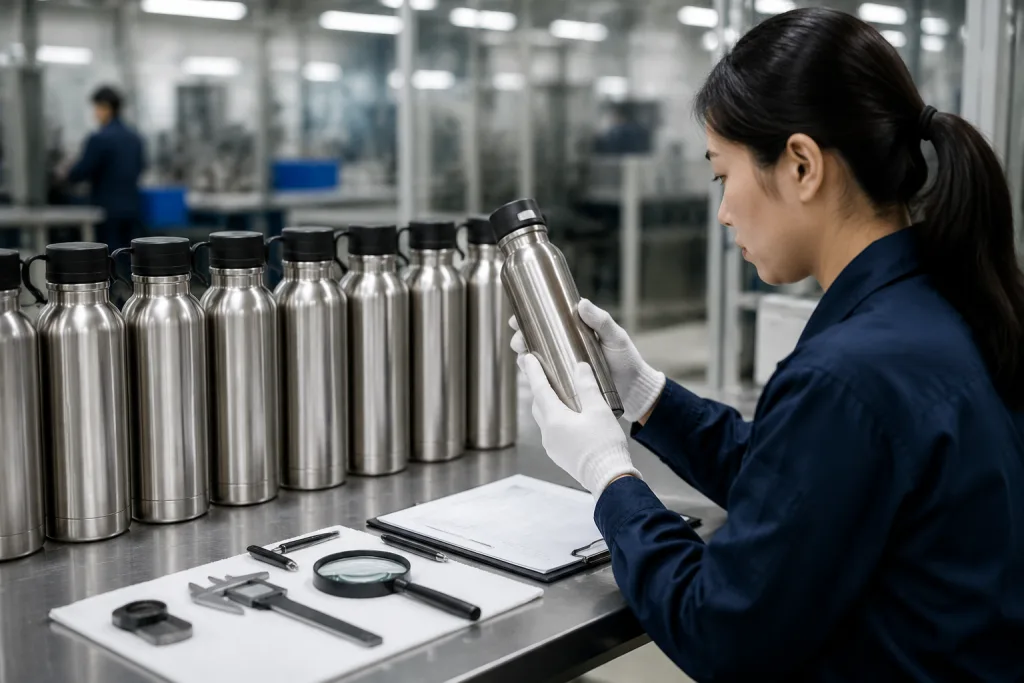
I’ll rewrite the section in-place, keep the HTML exactly as-is, and tighten the language so it reads like a factory-side sales engineer wrote it.Some buyers only check the sample. That is a trap. The sample usually comes from a senior technician, not from the same line setup used in mass production. A real thermos manufacturer should show how it checks vacuum integrity, coating adhesion, and migration risk. For Europe and North America, this is not optional.
Look for factories in China that can support BSCI audits, REACH documentation, and material traceability back to the coil lot. For thermal performance, buyers often ask for ASTM-style temperature retention tests or internal factory reports covering 20°C ambient and hot-fill conditions. A decent manufacturer thermos line should explain the pass/fail criteria in plain terms, not toss out “good quality” and call it done. The buyer flagged that kind of answer on a 500 ml order once, and the deal stalled.
Ask for AQL 2.5 for major defects, 4.0 for minor defects, and 100% leak testing on finished thermos units. If the factory cannot explain those numbers, keep looking.
In Zhejiang, the stronger stainless thermos suppliers usually run monthly output around 300,000 to 600,000 units across several bottle lines. That scale matters because it supports stable raw material purchasing, steadier welding on the line, and lead times you can actually quote. A smaller thermos vendor can still work, but the math does not work unless defect data and shipping discipline are already proven. QC pulled one sample with a 0.3 mm weld gap last month, and that was enough to hold the shipment.
Price, MOQ, and lead time
I’ll keep the HTML structure intact and rewrite only the prose, with tighter commercial language and factory-floor detail.For sourcing, price, MOQ, and lead time sit in the same line item as the steel grade. A 316 upgrade changes the cost sheet, so we quote it in tiers: 500 pcs, 1,000 pcs, and 3,000 pcs. That is the only way to see whether the margin still works for a bulk thermos launch. Last week the buyer flagged a PO typo on the lid code, and that kind of slip burns a day before the line even starts.
| Order size | 304 thermos FOB | 316 thermos FOB | Lead time |
|---|---|---|---|
| 500 pcs | USD 3.60–5.10 | USD 4.10–5.80 | 35–45 days |
| 1,000 pcs | USD 3.20–4.50 | USD 3.80–5.10 | 35–45 days |
| 3,000 pcs | USD 2.90–4.10 | USD 3.50–4.70 | 30–40 days |
Lid structure, brushed finish, and carton spec all move the number. If you want a thermos customizable with mixed lids, gift boxes, and QR-code packaging, add time up front. We run this every week on the line: a simple 2-SKU launch ships cleaner than 8 colors and a rushed sell-in date. QC pulled the sample, checked the 0.3 mm wall, and the right answer was to keep the mix tight instead of chasing a fantasy ship date.
Request your thermos spec and FOB quote
Send your capacity, lid style, logo method, and target market. We’ll quote your custom thermos with real MOQ, lead time, and carton data.
Frequently asked questions
Should I choose 316 or 304 for a custom thermos order?
Choose 316 if the bottle will face salt air, acidic drinks, or a premium outdoor retail position. For a 1,000-piece order, 316 usually adds about USD 0.20–0.60 per unit over 304. If you are doing a promotional thermos for events, 304 is often the better value. A good factory in Zhejiang will recommend the grade based on use, not just price.
What is a realistic MOQ for a thermos factory in China?
A common MOQ is 500 pcs per SKU for standard shapes and 1,000 pcs for more complex lids or premium finishes. Some factories in Zhejiang can accept 300 pcs on repeat work, but the unit price rises fast. If you want thermos bulk pricing, plan for 1,000 pcs or more and keep the spec simple.
How long does custom thermos production take?
For a standard bulk thermos order, 35–45 days is normal after sample approval and deposit. If you add custom packaging, new lid tooling, or multiple logo colors, add 3–7 days. A factory thermos line with stable tooling and in-house decoration usually moves faster than a trading-only supplier.
What tests should I ask for before shipment?
Ask for 100% leak testing, vacuum retention checks, and appearance inspection under AQL 2.5 for major defects. For Europe and North America, request REACH-related material declarations and confirm BPA-free lid components if applicable. If the thermos manufacturer can also share drop-test or thermal-retention reports, even better.
Can I get branding on a thermos promotional order quickly?
Yes. A silk screen or laser logo usually adds only 1–3 days if your artwork is ready and the sample is approved. For a promotional thermos order of 500–2,000 pcs, the fastest path is one logo color, one carton spec, and one ship-to location. That keeps the thermos supplier from wasting time on revisions.