Key Takeaways
- 316 stainless steel usually adds 8%–18% to unit cost versus 304, but it pays off when corrosion resistance matters.
- A serious MOQ for a custom sports water bottle is often 3,000–5,000 units per SKU, with sampling in 7–12 days.
- For bulk gym water bottle orders, check vacuum performance, lid torque, and coating adhesion before approving mass production.
- A Zhejiang factory with 80,000+ units/month can still fail you if it lacks AQL 2.5 inspection and documented leak testing.
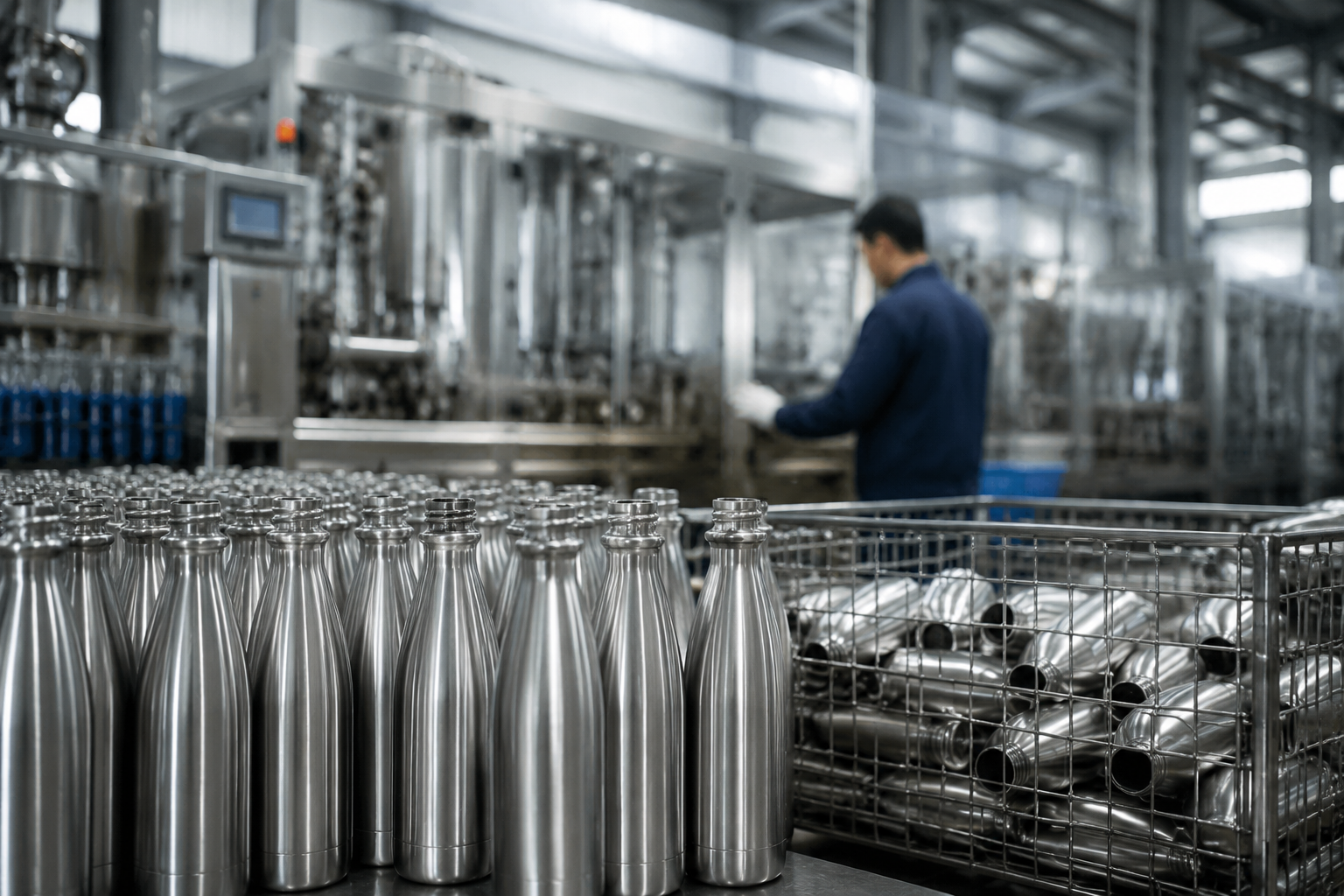
If you are sourcing a 316 stainless steel sports water bottle factory, do not start with unit price. That is the usual trap. The real cost shows up in lid cracks, coating scuffs, slow sample rounds, or a line that cannot hold tolerance on 20,000 pieces. For fitness brands and gym chains, that turns a reorder into customer complaints fast.
At BottleForge in Zhejiang, we treat this as a sourcing decision, not a catalog pick. A solid bulk sports water bottle program comes down to four things: steel grade, bottle structure, decoration method, and how tightly the factory runs production. A real Zhejiang factory should talk through 0.4 mm wall thickness, vacuum retention, AQL, and carton packing without guessing. If they cannot, you are buying promises, not bottles.
Start With the End Use
I’ll rewrite the section in-place, keep the HTML exactly as-is, and tune the prose to sound like a factory-side sales engineer with concrete sourcing detail.Before you compare quotes, define how the bottle will actually be used. A bulk fitness water bottle for a gym retail wall is a different job from a custom shaker bottle packed with supplements, and neither behaves like a premium custom gym water bottle in a corporate membership kit. Sweat, acidic sports drinks, protein residue, dishwasher cycles, and repeated drops all change the spec. We run this check on the line before sampling. The first decision is not decoration. It is application.
For plain water every day, a double-wall 18/8 body can do the job. If the buyer uses salt tablets, electrolytes, or citrus drinks, 316 stainless steel is the cleaner choice because molybdenum improves pitting resistance. QC pulled a sample with 24-hour saline soak last month, and 18/8 showed the first dull spots faster than 316. You pay a little more, but the math works if you want fewer returns and a stronger premium story. If you sell a distributor fitness water bottle program, that trade-off is simple: less complaint risk versus a modest cost bump. For a commodity bulk sports water bottle, the extra cost is hard to recover. For a premium line, it usually is.
- Fitness clubs: prioritize leak resistance and easy-clean lids.
- Retail brands: prioritize finish quality and logo durability.
- Supplement bundles: prioritize shaker ball fit and mixing performance.
Choose the Steel Grade Wisely
I’ll keep the tag structure intact and rewrite only the prose to sound like a factory-side sales engineer, with concrete sourcing details and fewer generic lines.316 stainless steel is not a slogan. It is a different alloy, and it matters when the bottle sees chloride exposure, acidic drinks, or wash cycles every day. If you are sourcing a 316 stainless steel sports water bottle factory, ask for the inner wall spec, the outer wall spec, and the lid material by name. We have seen buyers sign off on “316 body” and then get a cap made with cheaper plastic.
For most buyers, the real choice is a standard custom fitness water bottle in 304 or a premium customizable fitness water bottle in 316. On our line, the factory price gap usually sits around 8%–18%, depending on capacity, brushed or painted finish, and order size. A 500 ml bottle can end up only USD 0.35–0.80 higher per piece before freight and duty. If your brand sells on shelf feel, that math works. If your margin is thin and you run 12 SKUs, keep 316 for the top movers and leave the entry line in 304.
Ask the factory to put steel grade, wall thickness, and certificate source in writing. “316” on a sales chat is not procurement evidence.
In Zhejiang, a serious factory will show material traceability, heat numbers, and incoming inspection records from the mill. QC pulled the sample with a micrometer once and found a 0.18 mm wall mismatch on a supposedly premium order. That is the standard you should expect from China, not a special favor.
Lock the Bottle Structure
I’ll keep the HTML exactly as-is and rewrite only the prose, with a more sales-engineer voice and a few concrete factory details.The structure sets the price and the sell-through. A single-wall custom sports water bottle ships lighter and costs less, but it sweats on the shelf and in the gym bag. A double-wall vacuum bottle brings insulation and a better retail read, yet the weld seam and rim seal need tighter control on the line. For a bulk gym water bottle, insulation is not the first question; for retail, a cooler bottle usually wins the buyer’s attention. That is the wrong question to ask if you only look at unit cost.
Check the real dimensions. On our line, 0.4 mm to 0.5 mm inner wall thickness is normal for mid-range production, and we hold the neck finish to a 0.2 mm tolerance when the lid supplier is strict. Vacuum retention should be tested, not taken on faith. We normally state temperature performance at 6 and 12 hours, then QC pulled the sample and rechecked the lid torque at 18 N·cm when the buyer flagged a loose cap. If the factory cannot show that kind of report, the testing is probably loose. A 316 stainless steel sports water bottle factory in Zhejiang should also keep handle alignment, mouth diameter, and cap fit stable from one batch to the next.
- Single-wall: lower cost, lighter freight.
- Double-wall vacuum: stronger retail value, tighter QC burden.
- Wide-mouth: faster filling, easier washing.
- Shaker-style: needs a hard seal and a mixer part that does not rattle loose.
Pick Decoration That Survives Use
I’ll rewrite the section in-place, keep the HTML intact, and tighten the sales-engineer voice with concrete factory details and cleaner phrasing.Most failures are not metal failures. They come from decoration. A custom logo shaker bottle can look sharp on day one, then lose its branding after 3 dishwasher cycles if the print system is wrong. Laser engraving holds up well for premium orders; the line uses it when the buyer wants a clean mark that will not rub off. Screen printing costs less, but it needs the right ink and curing temp, usually around 160-180°C. Powder coating gives better grip and a nicer hand feel, yet it chips if film thickness and adhesion are not controlled. If you are building a customizable shaker bottle line for retail, this is not a side issue.
For brand owners, the right choice comes down to reorder speed. A custom made shaker bottle for a gym chain with monthly replenishment can use a one-color logo and still look fine on shelf. A customized sports water bottle sold through e-commerce needs a cleaner finish because buyers judge from photos, and we ship the first sample before the listing goes live. We’ve seen this go sideways when the buyer wanted a matte body, then the logo bled after the first dishwasher run. Ask for 48-hour cross-hatch, 3M tape adhesion, and salt-spray checks. That is standard QC, not a special favor.
Ask for color tolerance too. If your brand uses Pantone 186 C, the factory should tell you the real delta, not just say “red.” On one PO, the buyer even wrote “Panton 186” and QC flagged it before printing. That saved a full run. For a customizable sports water bottle, a small color miss can look cheap on the shelf, so we match against a physical chip when the order is serious.
Treat the Lid as a Product
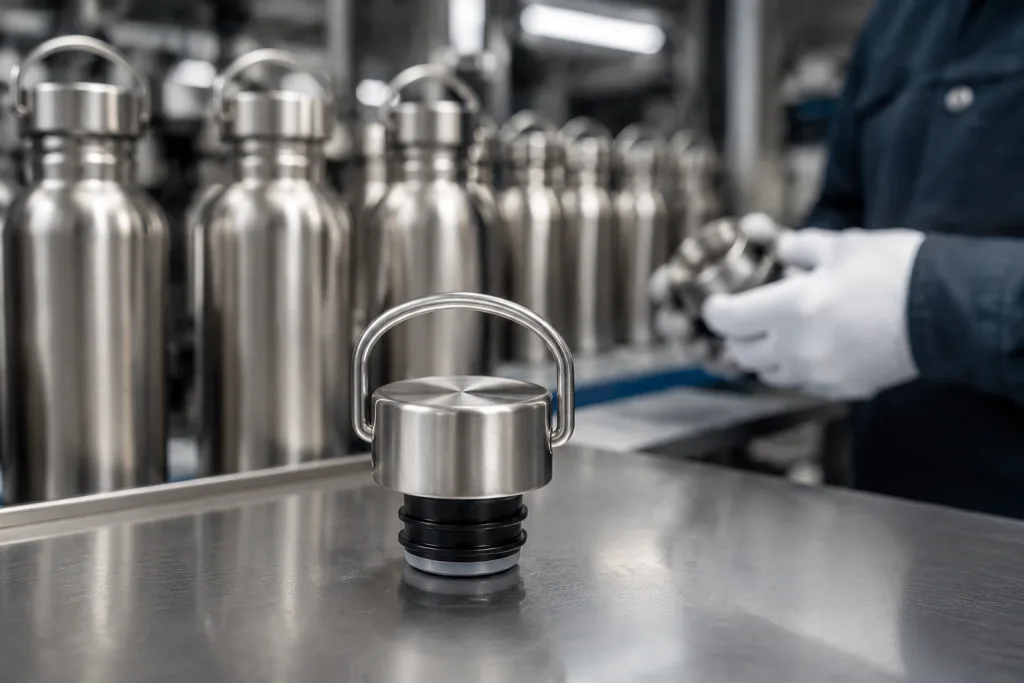
I’ll rewrite just the prose inside the existing HTML, keep the tags intact, and tighten it up with factory-floor detail and cleaner sales-engineer voice.Buying a bottle without checking the lid is lazy procurement. On a custom shaker bottle, the lid is the product. For a sports bottle, the cap decides leaks, airflow, and how the buyer judges quality. If you are sourcing bulk shaker bottle volume, the lid has to handle 300 open-close cycles, a drop from 1.2 meters, and repeated washing without a loose hinge or a cracked spout. A cheap lid can sink an otherwise solid bottle program.
Ask whether the factory molds the lid in-house or buys it outside. A real custom logo shaker bottle program should spell out gasket material, thread engagement, and closure cycle testing. We had a buyer flag a PO typo once because the lid color code was off by one digit; that small miss would have cost a full container. For gym use, buyers often want one-hand open lids, straw lids, or flip-top lids. For supplement blends, a custom made shaker bottle may need a tight screw top and a mixing insert. For a customizable gym water bottle, leak resistance is non-negotiable; we test it upside down at 45 degrees for 30 minutes with colored water. QC pulled the sample and checked the cap seam before packing. If a factory skips that step, the invoice looks fine and the claim shows up later.
Good lid design also cuts freight damage. A bottle shipped with the lid only half assembled fails in transit more often than a better-built bottle packed the right way. We run this check on the line with a simple torque tool, and the math does not lie.
Demand Factory Proof, Not Promises
I’ll rewrite the section in-place, keep the HTML tags intact, and make the prose sound like a factory-side sales engineer wrote it. Then I’ll quickly check that the wording stays tight and the required specifics are still there.This is where buyers separate a real 316 stainless steel sports water bottle factory from sales talk. You need proof, not a quote sheet. Ask for the basics: monthly output, line count, in-house tooling, QC checkpoints, and sample lead time. At our Hangzhou, Zhejiang plant, we run 80,000+ units a month across drinkware lines, with 7–12 days for samples and 25–35 days for mass production after approval, depending on the spec. A buyer once pushed back on a 9-day sample promise; QC pulled the sample on day 8 and found a lid torque issue, so we reworked it before the order went live. That is the kind of detail that keeps a chain account from getting stuck on replenishment.
Ask for certificates and test coverage that match your market. For Europe, REACH and food-contact compliance are standard asks. For North America, you may need FDA food-contact statements, carton labeling discipline, and barcodes that scan in retail systems. If you sell through Amazon or retail distribution, lock in FNSKU or SKU label placement at the start. For factory quality, use AQL 2.5 for major defects and AQL 4.0 for minor defects as a baseline, then tighten it for a premium SKU. We’ve seen this go sideways when a PO typo changed the carton barcode format, and the buyer flagged it before shipment. A factory that knows these terms is easier to work with than one that only says “good quality.”
In Zhejiang, the better factories are usually blunt about limits. Good. That is the right answer. A cheap unit price from China without process control is the wrong question to ask.
Price the Program, Not the Piece
I’ll rewrite the section in-place, keeping the HTML tags and structure intact while making the copy sound like a factory-side sales engineer wrote it.Unit price alone is a trap. We see it all the time. A custom fitness water bottle at USD 2.10 FOB looks fine until you add weak packing, slow sampling, and a 5% defect rate; on one line, the real cost lands closer to USD 2.70. For a customized fitness water bottle program, quote the full landed plan: bottle, lid, logo, inner tray or polybag, carton, test cost, and freight class. If you are buying a customized gym water bottle for a chain rollout, ask for replenishment pricing at 5,000 and 10,000 units, not just the first order. QC pulled a sample with a loose cap last month, and that kind of miss eats margin fast.
Most buyers should compare three commercial paths: entry-level bulk fitness water bottle pricing, mid-tier custom gym water bottle pricing, and premium 316 stainless steel sports water bottle pricing. The first wins on volume, the second gives room for branding, the third sells on durability and trust. For distributor shaker bottle or distributors shaker bottle programs, margin usually improves when you standardize one body and three lid colors instead of opening eight SKUs. That is the wrong question to ask if someone pushes “lowest piece price” first; the math does not work once you add carton split, color change, and rework. We run this setup every 45 to 60 days, and one steady factory beats three cheap quotes.
If the supplier cannot quote MOQ, sample time, and delivery window in the same conversation, keep looking.
Send Your Bottle Spec Sheet Today
We’ll review steel grade, MOQ, lid structure, and decoration options for your next custom sports water bottle program in China.
Frequently asked questions
What MOQ should I expect for a 316 stainless steel sports water bottle?
For a custom sports water bottle in 316 stainless steel, a practical MOQ is often 3,000 to 5,000 units per SKU. If you want a special lid, matte powder coat, or multi-color logo, the MOQ can rise to 8,000 units because tooling, color setup, and QC all add cost. Smaller test runs are possible, but the unit price usually jumps by 15%–30%. If your program includes a custom logo shaker bottle or a custom made shaker bottle, the lid mold and gasket spec also affect MOQ. Ask for the MOQ separately for bottle body, lid, and printed packaging so you see where the real constraint is.
How do I know if a factory really uses 316 steel?
Ask for material certificates, incoming inspection records, and the steel grade for both inner wall and any exposed metal components. A credible 316 stainless steel sports water bottle factory should provide traceability from coil or sheet to finished bottle. You can also request XRF spot testing on samples and compare with supplier documents. Do not accept a vague claim like “food grade steel.” For premium bulk sports water bottle programs, I would also ask for salt-spray or corrosion-related test evidence if the bottle will be used with electrolytes or citrus drinks. The factory should be able to explain the difference between 304 and 316 without hesitation.
What is a realistic lead time for custom gym water bottle orders?
For a normal custom gym water bottle order, sampling usually takes 7–12 days if the decoration is straightforward and the lid is standard. Mass production typically runs 25–35 days after sample approval and deposit, assuming the factory has capacity and no new mold is needed. If you require a custom shaker bottle lid, new Pantone color, or special packaging for a distributor fitness water bottle rollout, add another 7–10 days. Shipping time is separate: about 30–40 days by sea to many North American ports, depending on routing. If a supplier promises 10-day mass production for a complex order, ask how many shifts they actually run.
Which decoration method lasts longest on a fitness bottle?
Laser engraving is usually the most durable for a premium custom fitness water bottle because it removes surface material rather than relying on ink adhesion. Powder coating can also hold up well if the coating thickness is controlled and the surface is cured properly. Screen printing is lower cost and works for large bulk fitness water bottle orders, but it can wear faster under dishwasher use and abrasion. If your bottle is a customizable sports water bottle for retail, many brands combine powder coat with laser logo for a clean, premium look. For a custom logo shaker bottle, durability matters more than fancy effects because customers handle it more roughly.
Can I mix distributor orders with custom branding?
Yes, but only if you plan the SKU logic carefully. Many distributors fitness water bottle programs use one bottle body and several lid colors, logo placements, or packaging variants. That keeps inventory manageable while still serving multiple channels. For a distributor shaker bottle line, I would limit the number of body colors to two or three and use label or sleeve changes for channel-specific branding. The factory should confirm whether each SKU needs its own MOQ or whether one production batch can cover several label versions. In practice, consolidating SKUs can reduce inventory carrying cost by 10%–20% and make reorders much easier.