Key Takeaways
- 316 stainless steel sport bottle wholesale pricing usually lands at USD 3.20-7.80 FOB China depending on capacity, finish, and cap complexity
- A 3,000-unit MOQ is common for custom color or logo work; 1,000 units is realistic only for stock or near-stock builds
- Standard lead time is 25-35 days after sample approval; push to 40-55 days if you need matte coating, engraving, or gift boxes
- AQL 2.5 for critical defects and 4.0 for major defects is a practical inspection baseline for wholesale drinkware
If you buy drinkware for a brand, Amazon store, chain retailer, or distributor program, 316 stainless steel sport bottle wholesale is not a glossy purchase. It is a numbers game. A wrong wall thickness, cap spec, or print method can add USD 0.35 to 1.20 per unit before freight, and one weak factory can turn a 35-day lead time into 60 days without a clean explanation.
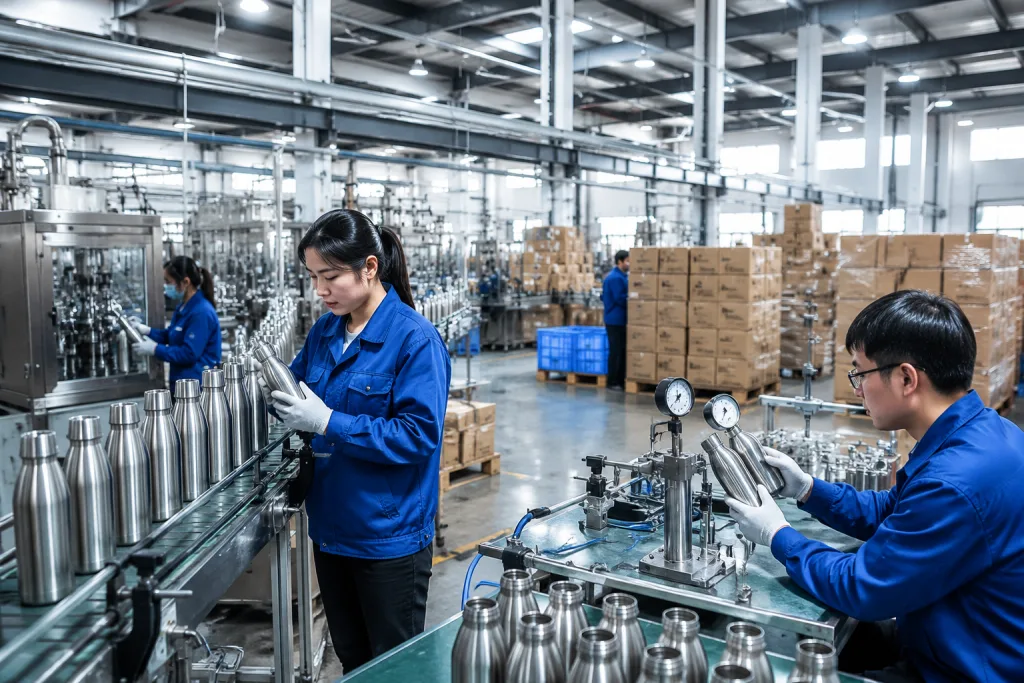
We build in Zhejiang, China, and the buyers who keep margin are the ones who ask about cost drivers before they ask for samples. They want the break at 3,000 units versus 10,000 units, the difference between a 0.4 mm inner wall and 0.6 mm, and whether the line can hold 120,000 units per month without QC slipping. We had a buyer flag a PO typo on a 12,000-piece order once; the math does not forgive sloppy sourcing.
What actually drives unit cost
I’ll keep the HTML exactly as-is and rewrite only the prose, with tighter sales-engineer language and concrete cost detail.For 316 stainless steel sport bottle wholesale, the metal is only one line on the quote. 316 costs more than 304 because of the nickel and molybdenum, but the bigger swing comes from build spec. A plain 500 ml single-wall bottle with a screw cap can land around USD 2.10-3.00 FOB Zhejiang on volume. Add double-wall vacuum, powder coating, laser logo, and a leakproof sport lid, and the number climbs to USD 4.80-7.80 FOB. We run these parts on the line every week, and that spread is normal.
Buyers miss tooling and pack cost all the time. A custom cap mold can add USD 1,500-4,000 once, and a printed color box may add USD 0.18-0.45 per set. The buyer flagged a brushed body, laser logo, and silicone base on one PO, then wondered why the quote moved. The math doesn’t work if you treat each upgrade as noise. In Zhejiang, where factories switch between SKUs fast, ask for a split quote: body, lid, finish, packaging, carton. That is where the margin leaks out.
- Material thickness: 0.4 mm is cheaper, while 0.5-0.6 mm feels firmer and takes denting better.
- Capacity: 500 ml is usually the lowest-cost size; 750 ml and 1,000 ml add steel and carton weight.
- Decoration: screen print usually costs less than laser; 2-color print can add USD 0.12-0.28.
- Cap structure: a basic PP cap is cheaper than a stainless cap with silicone gasket and carry loop.
Ask for FOB China pricing by component, not one headline number. QC pulled the sample, checked the lid fit at 1.2 mm gap, and that kind of split quote saves you from hidden cost later.
MOQ tiers that make sense
I’ll rewrite the section in-place, keep the HTML structure untouched, and tighten the language so it sounds like a factory-side sales engineer wrote it.For buyers comparing drinkware wholesale offers, MOQ should fit the sales channel, not the factory’s mood that week. At BottleForge in Zhejiang, we run 3,000 units per SKU for a custom 316 bottle when you want one logo, one finish, and one cap color. If you take a stock-color body with laser logo, 1,000-1,500 units works. For a custom cap or a packed gift set, 5,000 units is the cleaner number because the packing line and accessory sourcing need volume. QC pulled a sample last month and the cap insert alone added 11 seconds per bottle.
That is why search terms like canteen wholesale, bulk drinkware, or wholesale drinkware only matter after you split stock programs from custom programs. If you are testing a new market, 1,000 units beats forcing 10,000 units into a slow SKU. If Amazon velocity is already there, or a retail chain has shelf space, 8,000-12,000 units usually cuts unit cost by about 8% to 18% depending on decoration and packaging. The buyer flagged a PO typo on “cap colour” once, and we had to stop the line for a reprint.
- 1,000 units: best for launch tests, limited colors, or near-stock bottles.
- 3,000 units: standard custom MOQ for most branded programs.
- 8,000+ units: better for lower unit cost and stable replenishment.
Carton setup is not a small detail. If you want 24 pcs per master carton instead of 50 pcs, carton cost and freight density both move. We’ve seen this go sideways when a buyer compared bulk drinkware quotes without checking whether the carton spec matched landed margin in Europe or North America. The math does not work if the outer carton changes by 60 mm and nobody updates the freight estimate.
Lead time from sample to shipment
I’ll rewrite the section in place, keep the HTML exactly as-is, and tighten the sales-engineer tone while preserving the numbers and structure.Lead time is where a lot of first-time buyers get burned. For 316 stainless steel sport bottle wholesale, a normal run is 7-10 days for sampling, 3-5 days for sample revisions, and 25-35 days for mass production after approval. If you want matte powder coating, multicolor printing, or retail-ready packaging, plan on 35-45 days. Add 5-10 days if you want a third-party inspector on site before booking the vessel.
We run about 120,000 units a month in our Zhejiang factory, but that does not mean every order ships on day one. The line slows down on color matching, cap assembly, and final leak testing. QC pulled a sample last week with a 0.8 mm cap gap, and the buyer flagged it before we packed the cartons. Lock the artwork and carton spec before the production slot is confirmed; if you wait until week two, you usually lose a full week. That is the wrong question to ask when the schedule is already tight.
- Sample: 7-10 days for standard tooling; 12-15 days if a new cap is needed.
- Production: 25-35 days for standard orders; 40-55 days for decorated or gift-boxed programs.
- Inspection and booking: 3-7 days depending on factory schedule and shipping line.
If you are planning seasonal programs, count backward from your ship window. If goods must land in the warehouse by September 15, a China FOB booking should be ready to load by mid-August at the latest. We’ve seen this go sideways when a PO typo changed the carton mark from 24 pcs to 42 pcs, and the reprint cost 2 days. Zhejiang factories can move fast, but only if the buyer stops changing artwork after approval.
Spec choices that change margin
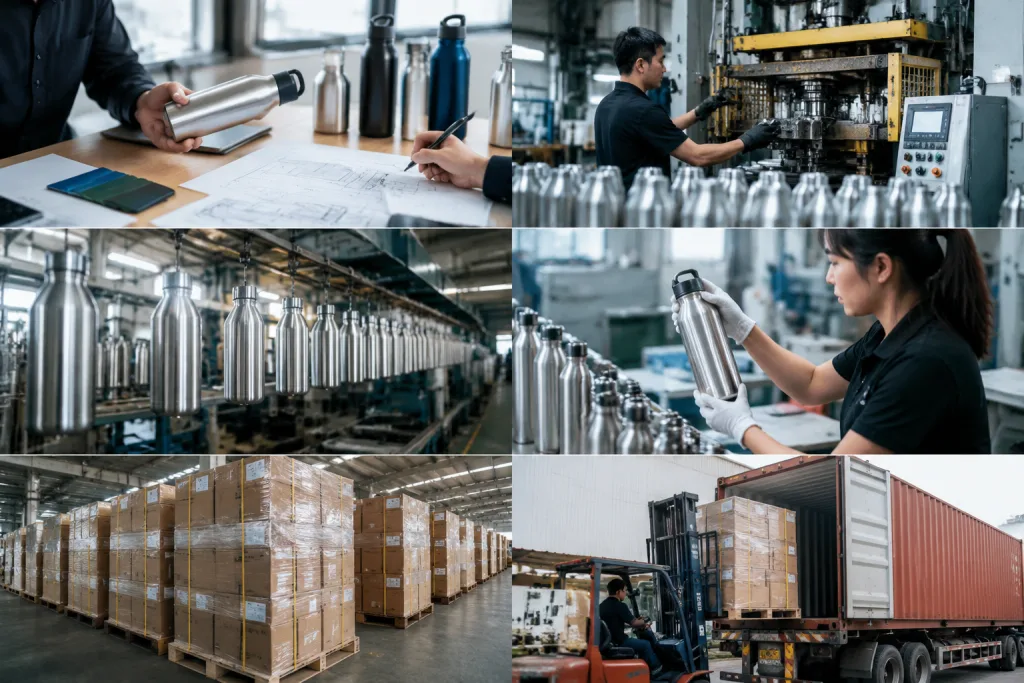
I’ll rewrite this section in-place, keeping the HTML and links untouched while stripping the AI-like phrasing and adding more factory-floor detail and sharper sales-engineer language.Smart sourcing teams read the bottle spec like a margin sheet. A 316 inner wall makes sense when the buyer wants stronger corrosion resistance, better odor control, or a premium retail story. For a straight gym SKU, the question is whether 316 justifies the jump over 304. We’ve seen the gap sit at USD 0.25-0.60 per unit, and on 20,000 units that changes the deal fast.
Wall thickness hits margin just as hard. A 0.4 mm body runs lighter and cheaper; 0.5 mm is where most branded bottles land; 0.6 mm feels better in hand but adds weight and cost. QC pulled a 0.5 mm sample last week with a caliper at 0.48 mm on one side, and that is the kind of drift the buyer flags. If you are selling as the best wholesale drink bottle in a premium channel, those extra grams can sell. For promo work, the lighter spec usually wins.
- Finish: matte powder coat hides fingerprints and scuffs better than glossy paint.
- Logo method: laser engraving holds up; screen print is cheaper for bigger color logos.
- Seal: a silicone gasket with tested torque cuts leakage claims.
- Testing: ask for hot-water, drop, and pressure checks before shipment.
For wider programs such as bulk canteen, wholesale canteen, or crossover SKUs like bulk growler and beer growler wholesale, the rule stays the same: define the use case first, then lock the thickness, cap, and finish. We had one PO typo where the buyer wrote 0.6 mm but priced it like 0.5 mm, and the math did not work. Do not buy a premium wall spec for a low-margin promo account.
Inspection, compliance, and paperwork
I’ll rewrite the section in place, keep the HTML exactly as-is, and make the copy sound like a factory-side sales engineer.Factories in China can quote a sharp price and still miss compliance. For Europe and North America, we start with food-contact declarations, REACH checks for coatings and inks, and a test plan tied to the target market. If the bottle has a coating, we verify the coating system and the decoration ink. For children’s items the bar is higher, and even adult sport bottles need traceability plus batch records. QC pulled a 316 sample last week with a 0.12 mm coating pinhole, and that sort of miss becomes a claim fast.
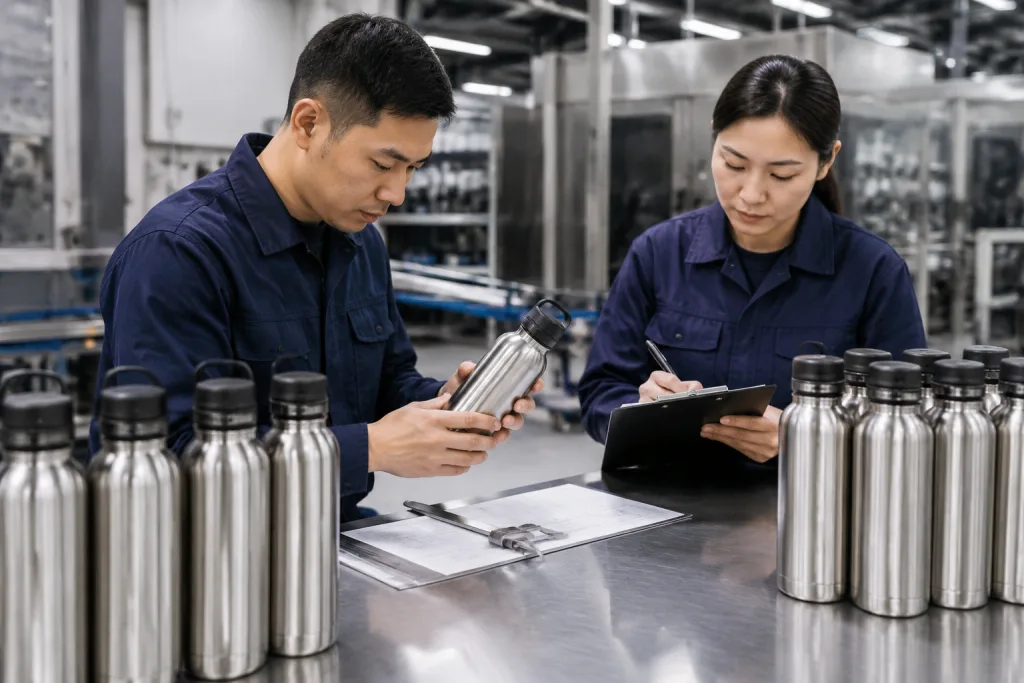
A practical QC plan for drinkware wholesale is straightforward. Set AQL 2.5 for major defects and 4.0 for minor defects, then run 100% leakage checks on critical batches when a new SKU launches. Check thread fit, cap torque, weld seam quality, and vacuum performance on double-wall bottles. If the buyer wants Amazon prep, we lock carton labels and FNSKU placement before packing; otherwise the math doesn't work and the warehouse eats relabeling cost. We have seen a PO typo on the FNSKU line turn one pallet into two days of rework.
- Documents: commercial invoice, packing list, test reports, and origin documents as required.
- Compliance: REACH-relevant checks, food-contact statements, and packaging material declarations.
- QC focus: leakage, dent resistance, coating adhesion, and print durability.
Some buyers lump every metal bottle into one bucket, but sourcing is more exact than that. A growler wholesale order for beverage service, a beer growler bulk program, or an alcohol flask wholesale bulk request each needs different packing, closure, and compliance language. We run those jobs differently on the line, and the buyer who treats them as the same order usually gets stuck in rework. If our Zhejiang factory understands the use case, carton count, closure spec, and label wording from day one, the shipment moves.
How to compare supplier quotes
Lowest FOB is the wrong question. We have seen two China quotes only USD 0.40 apart, then QC pulled the packing sheet and found one price included a 5-ply K=A export carton at 58x38x32 cm, while the other was a bare bottle quote with the polybag, 1 g desiccant, and master carton billed later. That USD 0.40 gap becomes a USD 0.95 landed gap fast.
Ask each supplier to quote the same format: 316 grade, capacity, wall thickness in mm, surface finish, logo method, cap style, and export carton spec. For canteen bulk or canteen wholesale, state the handle style and lid seal detail; our line checks the silicone ring with a 0.02 mm feeler gauge when leakage claims are a risk. For beer tumbler bulk or alcohol flask in bulk, write down matte finish, gift box, or individual white box instead of leaving it to the salesperson. Clean specs protect margin.
- Ask for: FOB Ningbo or FOB Shanghai, because inland freight from Hangzhou to each port changes the comparison.
- Check: whether the sample fee is refundable against order volume.
- Confirm: if tooling ownership transfers to you after payment.
- Require: production photos and pre-shipment inspection before balance payment.
For buyers handling wider ranges like wholesale growler, growler bulk, alcohol flask bulk, or beer tumbler wholesale bulk, one clean spec sheet beats five emails. We run quotes through the same cost sheet the merchandiser uses for bulk orders; if the PO says “316 inside” but the artwork file says “304 stainless,” the buyer flagged it and the schedule slipped. Zhejiang factories that ship daily can price accurately with exact inputs. Vague specs mean safety buffers: 12 days becomes 18 days, and the math does not work.
Get a quote with your exact bottle spec
Send capacity, logo method, cap style, and target quantity. We will return a clean FOB China quote with lead time, MOQ, and compliance notes.
Frequently asked questions
What is a realistic FOB price for 316 stainless steel sport bottle wholesale?
For a standard 500 ml double-wall 316 bottle with powder coating and one-color logo, a realistic FOB Zhejiang range is USD 4.80-7.80 per unit at 3,000 units. Simple single-wall promo bottles can be closer to USD 2.10-3.00. If you add a custom lid, gift box, or special finish, budget another USD 0.30-1.20 per unit depending on the spec and order size.
What MOQ should I expect for custom branding?
Most factories in China will ask for 3,000 units per SKU for custom color and logo work. If you only need a stock body with laser engraving, 1,000-1,500 units may be possible. For a custom cap or premium retail box, 5,000 units is a more realistic MOQ. In Zhejiang, the MOQ often tracks tooling and packaging complexity more than the bottle itself.
How long does production take after sample approval?
A normal schedule is 25-35 days after sample approval. Add 5-10 days if the order needs powder coating, multi-color printing, or retail packaging. If tooling is required for a new cap, sampling can take 12-15 days before mass production starts. For a tight launch, build at least 45-55 days from final artwork approval to ship-ready goods.
Which QC standards should I ask for?
Use AQL 2.5 for major defects and 4.0 for minor defects as a practical baseline. For new launches, insist on 100% leak testing on critical SKUs. Also check weld seams, coating adhesion, cap torque, and vacuum retention if it is a double-wall bottle. Good factories in Zhejiang should provide batch records and photo evidence before shipment.
Can I source related items like growlers or flasks in the same order?
Yes, but only if you keep the spec sheet clean. A supplier that handles bulk drinkware may also quote bulk growler, beer growler wholesale, wholesale growler, alcohol flask wholesale, or beer tumbler bulk programs. The closure, packing, and compliance requirements are different, so separate each SKU by capacity, material, finish, and carton spec. That keeps pricing accurate and avoids rework.