Key Takeaways
- 316 stainless bottles usually cost USD 1.60-3.80 ex-works at 5,000 pcs depending on capacity and finish
- A practical MOQ for a customized canteen is often 3,000-5,000 pcs with 18-28 day production
- Double-wall 18/8 body plus 316 inner liner is common for premium custom drinkware, but full 316 makes more sense for harsher use
- Ask for REACH, LFGB, and AQL 2.5 inspection data before you approve a canteen manufacturer
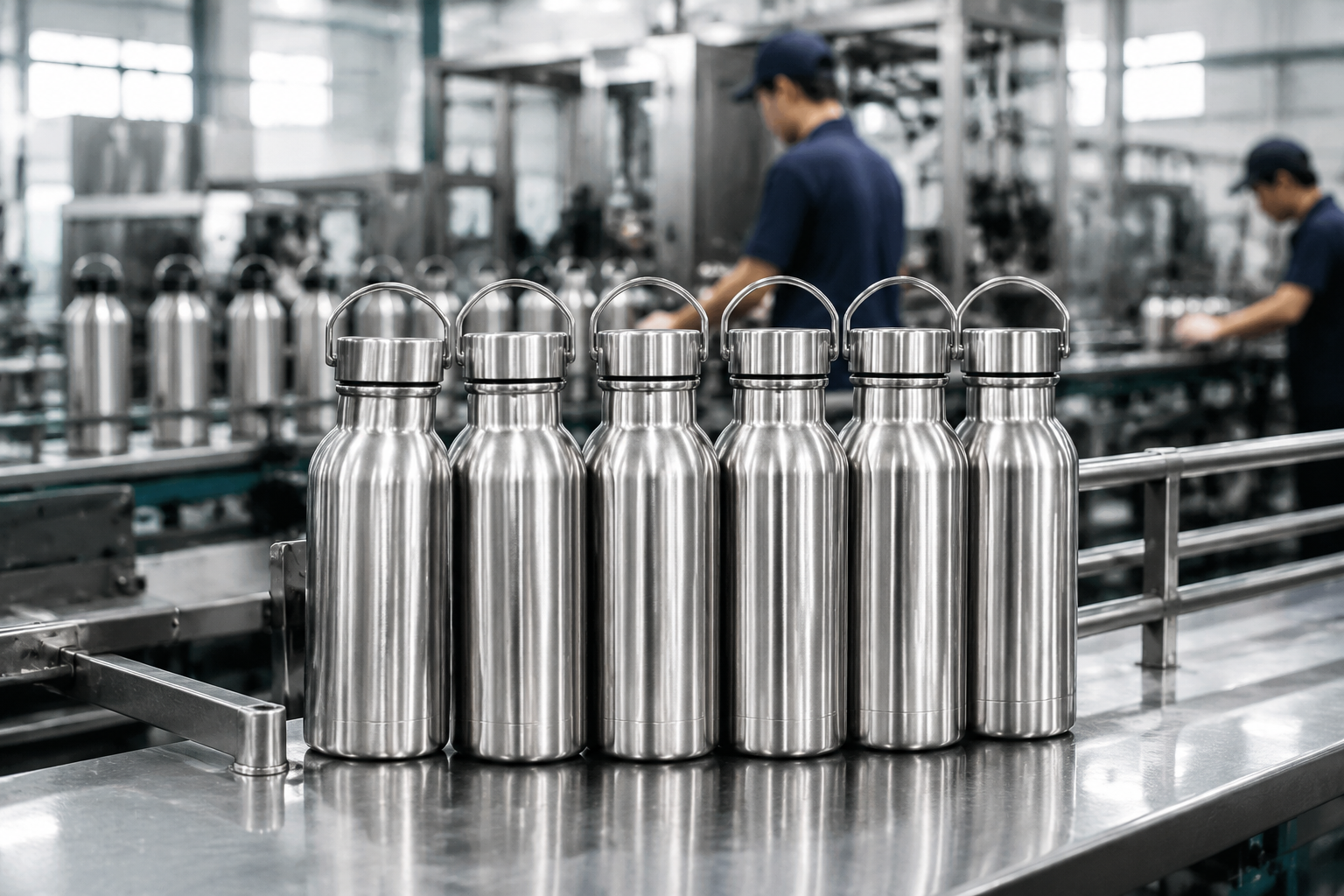
If you are sourcing a 316 stainless steel refillable water bottle supplier, do not treat every stainless bottle as the same SKU. It is not. On paper, 304 and 316 look close, but 316 holds up better in salty, acidic, and high-chloride use. That is why buyers ask for it when the bottle is headed for outdoor retail, premium gifting, or marine-side sales.
At BottleForge in Zhejiang, we hear this every week from brand owners, procurement managers, and distributor teams. The real work is not finding the lowest-priced canteen supplier in China; it is matching wall thickness, cap sealing, surface finish, and test standards to the channel. We run a line that ships 200,000 units a month, and a 5,000-piece MOQ is normal when the spec is clean. One buyer once sent a PO with “316 bottle, same as sample” and forgot the coating code; QC pulled the sample and the whole order stalled for two days. The buyer who wins checks specs, not just samples.
Why 316 changes the purchase
I’ll rewrite the prose in place, keep the HTML intact, and make it sound like a factory-side sales engineer wrote it. Then I’ll check that the tone stays sharp and the numbers/specs remain unchanged.For a buyer, 316 is not a slogan. It is a spec line with a real cost and a real use case. Compared with 304, 316 adds molybdenum, so it holds up better against chlorides and pitting. That matters when the bottle sits in sweaty gym bags, coastal air, sports drinks, fruit infusions, or field teams that rinse late. If the program is office gifting, 304 still works. If you need a premium canteen customized for harsher use, 316 is the safer pick.
The right comparison is not “316 versus stainless steel.” It is 316 versus what your channel actually needs. We run 500 ml builds in full 316, 304 outer body with 316 inner liner, and plain 304 entry lines, depending on the buyer’s margin and test file. Last month QC pulled a sample after a buyer flagged a cap stain issue on salty water exposure. In Zhejiang, most canteen suppliers stay on 304 because the math is cleaner, but we only push 316 where the extra USD 0.20-0.45 per unit can be defended.
| Spec | 304 bottle | 316 bottle | Buyer note |
|---|---|---|---|
| Corrosion resistance | Good | Better | 316 wins for salty or acidic use |
| Typical material delta | Base price | +USD 0.20-0.45 | Depends on wall thickness and cap |
| Best fit | Mass retail | Premium / harsh use | Choose by channel, not habit |
Compare specs before price
I’ll rewrite the section in place, keep the HTML structure intact, and tighten the sales-engineer tone with concrete factory details.A serious comparison starts with the spec table, not the quote total. Two canteen vendors can both say “500 ml vacuum bottle” and ship different product. We’ve run 0.4 mm and 0.5 mm wall builds on the same line; the 0.5 mm version holds up better in drop tests and feels less tinny, but the math changes fast on FOB China. Finish matters too. A painted body can scuff in carton transit, while powder coating with a 60-80 micron film survives distributor handling better. Compare the construction first, then talk price.
Here is the buying logic I recommend for a custom canteen or customizable drinkware program:
- Body material: full 316 or 316 inner liner only
- Wall thickness: 0.4-0.6 mm depending on target price
- Capacity: 350 ml, 500 ml, 750 ml, or 1 L based on channel
- Finish: brushed, powder coat, UV print, or laser mark
- Seal: silicone ring tested for 3,000+ open/close cycles
For distributor drinkware orders, consistency beats a hero sample. QC pulled the sample twice on one 5,000-piece run because the color delta was off by a shade, and the buyer flagged it before we packed. If you sell across Europe and North America, ask for dimensional drawings, carton specs, and a packing drop test result, not just a catalog photo. A 30-day ocean move will expose loose lids and weak coating fast.
Head-to-head use-case fit
I’ll rewrite the section in-place, keep the HTML structure untouched, and tighten the sales-engineer voice with concrete factory-floor details.The right bottle depends on the channel. A canteen promotional item for a trade show should not be built like a mountain guide bottle. A customized growler for a brewery run has different wash cycles and lid torque than a custom canteen for a corporate wellness campaign. We see this all the time on the line: the buyer wants one SKU to cover three jobs, and the math does not work. A good canteen supplier earns its margin by stopping that mistake before QC pulls the sample.
| Use case | Recommended spec | Why it fits | Watch-outs |
|---|---|---|---|
| Canteen promotional | 500 ml, 304/316 mix, screen print | Lower landed cost, fast branding | Do not pay for full 316 when the bottle stays on a desk |
| Custom growler | 750 ml-1 L, full 316, wide mouth | Holds up to acidic drinks and frequent wash cycles | Need stronger cap torque, and the gasket must pass leak checks |
| Distributor canteen | 500-750 ml, powder coat, retail box | Works for multi-store resale | Check carton compression at 12 kg and barcode placement on the side panel |
| Custom drinkware gift set | Laser logo, gift box, AQL 2.5 | Premium look for B2B gifting | Demand color tolerance control; we have seen a PO typo on the Pantone code turn into a reprint |
If you sell into retail and corporate at the same time, split the program. A canteen distributor usually runs better with two SKUs: one promotional line with tighter cost control, one premium line with full 316 and cleaner packaging. We ship that way for a reason. One bottle doing every job usually ends up as a compromise nobody likes.
What Zhejiang factories can actually do
I’ll rewrite the section in place, keeping the HTML tags and structure intact while making the prose sound like a Zhejiang factory sales engineer wrote it.Not every factory in China can do the same job, and that gap shows up fast once the order lands on the line. A Zhejiang canteen factory with in-house forming, polishing, coating, and leak testing will move faster and keep the spec tighter than a trading company that farms out each step. At BottleForge, we run about 200,000 units a month, and a custom canteen order usually ships in 18-28 days after sample approval, depending on print count and cap sourcing. That is the real schedule. If someone quotes 7 days for a full custom bottle, the math does not work.
When you check canteen manufacturers or canteen suppliers, ask for the unglamorous stuff:
- Can they support MOQ 3,000-5,000 pcs per model?
- Do they provide REACH and LFGB compliance documents?
- Is the inspection system based on AQL 2.5 for major defects?
- Can they hold Pantone color within a reasonable tolerance, typically ΔE under 2.0 for premium programs?
If you buy in Zhejiang or source from China more broadly, ask how they pack the goods. Inner polybag, egg-crate divider, and master carton strength decide whether your canteen customized order reaches the warehouse clean or shows up with coating rub marks. QC pulled the sample on our line last week and caught a carton crush issue at 8 kg stacking; that is the kind of detail that saves a claim later. Export packing is part of the product, not an afterthought.
Branding without ruining the bottle
I’ll rewrite the section in place, keep the HTML exactly as-is, and tighten the sales-engineer tone while preserving the technical meaning and pricing logic.Custom logos get ruined fast. A mark that looks clean on a mockup can vanish on a curved powder-coated bottle, or start flaking after 3 wash cycles if the ink stack is wrong. For canteen custom work, the decoration method has to match the material and finish. Screen print works for promotional runs. Laser engraving stays clean on premium stainless steel. UV print carries more color, but the line needs tighter handling. If you want durability and a quiet logo, laser is the default we run.
Here’s the real trade-off: a customized canteen with one-color print may add only USD 0.10-0.25 per piece, while a full-wrap UV decorated customized drinkware program can add USD 0.35-0.90. That gap is why some canteen vendors quote low first and then add charges after artwork is locked. We’ve seen that go sideways. Lock the decoration method before you approve pricing. If your channel is e-commerce, keep the SKU count tight and use the same artwork across the range. If you need a custom growler or customizable growler for a brewery program, ask for cap print, neck-label space, and dishwasher resistance testing. The buyer flagged a neck logo once because the PO typo put it 12 mm too low.
Good branding on stainless steel is the kind that survives transit, storage, and washing. If it only looks good in the sample room, it is not production-ready.
How to compare quotes cleanly
I’ll rewrite just the prose inside the existing HTML, keep the tag structure intact, and make it sound like a factory-side sales engineer comparing quotes on the ground.Buyers often line up three canteen suppliers and still pick the wrong one because they stare at unit price. That is the wrong question. We run the quote by landed cost: product, packaging, test fees, freight terms, then the real use case. An FOB quote from a canteen factory in China can look higher than a loose EXW number, but if it already covers export cartons, compliance papers, and a better yield on the line, the math can flip fast.
A clean comparison sheet should include:
- Material grade and wall thickness
- MOQ and sample cost
- Production lead time and 7-day buffer
- Decoration method and maximum logo size
- Inspection standard and defect allowance
- Carton pack count and palletization
For a distributor drinkware launch, I would not sign off until the supplier sends a signed spec sheet, carton drop test data, and a plain replacement rule for leakage or coating failure. QC pulled the sample at 10:15, and a 1.2 mm wall spec on paper turned into 1.0 mm at the gauge — that is how these deals go sideways. The buyer flagged it, and they were right. The cheapest canteen vendor on day one can turn into the most expensive one once chargebacks, returns, and shelf-space loss start hitting. In Zhejiang, the factories that keep B2B programs steady are the ones that document the boring stuff cleanly.
Get a production-ready 316 bottle quote
Send your capacity, logo method, target MOQ, and market. We will match the right canteen spec, pricing, and lead time for your channel.
Frequently asked questions
What MOQ should I expect from a 316 stainless steel refillable water bottle supplier?
For a real custom program, expect 3,000-5,000 pcs per design and color. Some factories in China will quote 1,000 pcs, but the unit price usually jumps 20-35% and decoration options narrow. If you need multiple colors, many canteen manufacturers treat each color as a separate MOQ. For a distributor canteen program, that matters more than the headline price.
Is full 316 always better than 304 for custom drinkware?
No. Full 316 is better for corrosion resistance, but you pay for it. If your bottle is for office use, school, or general retail, 304 is often enough. Choose full 316 when the bottle will see salty environments, acidic drinks, heavy wash cycles, or premium positioning. The usual cost delta is about USD 0.20-0.45 per unit at 5,000 pcs.
What compliance documents should a canteen supplier provide?
Ask for REACH and LFGB at minimum for Europe-focused orders, and request food-contact declarations plus material traceability. For the factory itself, BSCI or another social compliance audit helps if you are selling into chain retail. For quality control, ask for AQL 2.5 inspection records and leak test results. A serious canteen supplier in Zhejiang should provide these without drama.
How do I choose between screen print and laser engraving?
Screen print is cheaper and works well for canteen promotional orders, usually adding USD 0.10-0.25 per bottle. Laser engraving is more durable and better for premium custom canteen or custom growler projects, but it is less colorful. If your customer will wash the bottle often or resale value matters, laser is usually the better long-term choice.
Can a factory handle both small distributor and retail orders?
Yes, if the canteen factory has the right line setup. A well-equipped Zhejiang plant can run 200,000 units per month and still handle mixed orders, but you should separate SKUs by channel. Keep retail packaging, barcodes, and FNSKU labeling distinct from distributor cartons. That avoids confusion in fulfillment and keeps your customized drinkware program easier to scale.