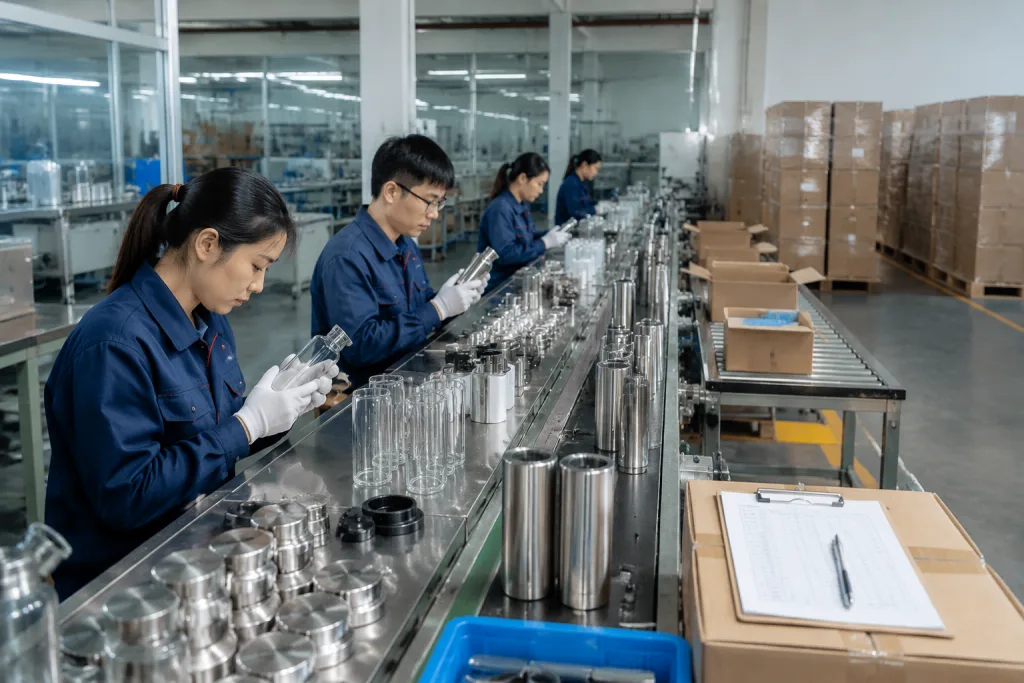
Key Takeaways
- Start RFQ with 6 hard specs: volume, steel grade, wall thickness, lid type, print method, and carton pack.
- For 316 stainless steel glass bottle orders, expect sample lead time of 7-12 days and bulk lead time of 25-40 days at a Zhejiang canteen factory.
- A practical MOQ is often 1,000-3,000 pcs per SKU, with FOB China pricing commonly starting around USD 3.20-6.80 depending on finish and accessories.
- Ask for AQL 2.5/4.0 inspection, REACH or FDA paperwork, and carton drop test data before you release a PO.
If you are sourcing a 316 stainless steel glass bottle supplier, the question is not whether they can make one sample. The real check is whether they can hold tolerance, pass compliance, and keep quality steady when the order moves from 1 sample to 8,000 units. We have seen a lid look perfect in photos, then fail on a 0.3 mm fit issue, coating adhesion, or a drop test at carton level.
That is why buyers in Europe and North America treat this like a project, not a catalog search. You need a supplier who knows the paperwork for custom drinkware, handles canteen customized options without confusion, and can quote the factory price and the landed cost in the same breath. In Zhejiang, the better factories run a clean RFQ flow, give a sample lead time you can plan around, and show a production schedule that QC can actually check on the line.
Start with the RFQ, not the quote
Good sourcing starts when you give the factory enough data to fail fast. A vague line like “please send your best price for custom drinkware” gets a vague reply. A serious 316 stainless steel glass bottle supplier wants a clean RFQ pack: capacity, target market, lid style, logo method, color, packaging, and compliance needs. For retail orders, add barcode and master carton specs. For canteen programs, add sell-through assumptions and whether you need canteen promotional packaging.
Right here, price is the wrong question. You are checking whether the supplier can quote each option cleanly. Ask for a line-item quote with:
- Bottle body: 350 ml, 500 ml, or 750 ml
- Inner steel: 316 stainless steel, outer wall glass
- Lid: PP, bamboo, or stainless cap with silicone ring
- Decoration: silk screen, laser engraving, UV print
- Packing: bulk pack, color box, or gift box
Ask for quoted unit price, MOQ, mold cost if any, sample charge, sample freight, and FOB Ningbo or Shanghai terms. If the vendor cannot separate those items, your landed cost will be messy.
Lock the spec sheet before sampling
Sampling is where buyers lose 10 to 14 days fixing mistakes that should never have left the spec sheet. Freeze the sheet before you pay for samples. State whether you need a canteen customizable body, a customized canteen lid, or a fully customized drinkware set with accessory bundle. The outside may read as a glass bottle, but the buyer will judge it by leak resistance, weight, and the hand feel of the steel insert. We’ve seen a 0.3 mm cap-seat shift turn a good sample into a reject.
Put numbers on the page:
- Capacity tolerance: ±5%
- Wall thickness: 1.2-1.5 mm for the stainless insert
- Glass thickness: 2.0-3.0 mm depending on format
- Leak test: inverted 24 hours, no seepage
- Temperature claim: only if you can verify with test data
If you are comparing canteen suppliers, make each factory confirm the same drawing revision. “Similar sample” is the wrong question to ask. A canteen factory in China can run five versions that look close, then cap torque, print position, and carton fit all move by a few mm. On the line, that is enough to wreck a launch. The best custom canteen programs are won here, not in bulk production.
For branded distributor drinkware, lock the pack-out too: retail barcodes, FNSKU labels, or Amazon prep. If the bottle goes through a canteen distributor channel, packaging consistency carries the same weight as the bottle itself. QC pulled the sample, checked the carton drop mark, and that told us more than the brochure ever did.
Treat samples like a production audit
Sample approval is not paperwork. It is the first live audit of the line. A solid canteen supplier should send one pre-production sample, one decorated sample, and one packed sample if retail packaging is in the PO. We usually quote 7-12 days after payment and artwork sign-off. If a factory says 2 days for a custom growler-style bottle with glass and 316 steel parts, they are shipping stock pieces, not your real sample.
When the sample lands, check the points that break in mass production:
- Thread fit: cap opens and closes smoothly, no cross-threading
- Silicone seal: no odor, no warp after hot water soak
- Decoration: logo centered within ±2 mm
- Surface finish: no scratches, pits, or trapped dust
- Drop resistance: carton and bottle hold up from 80 cm to 100 cm
Ask for QC photos, torque data, and a short internal test report. If the supplier is running a stable SOP, this is normal. If they push back, we know the line is not locked yet. That is the wrong place to gamble, because a retail order turns every defect into a visible return.
One rule we follow: approve only the exact decoration, packaging, and accessories that will go into the PO. A sample with different ink, a different cap, or a cleaner carton is not approval. It is a sales demo.
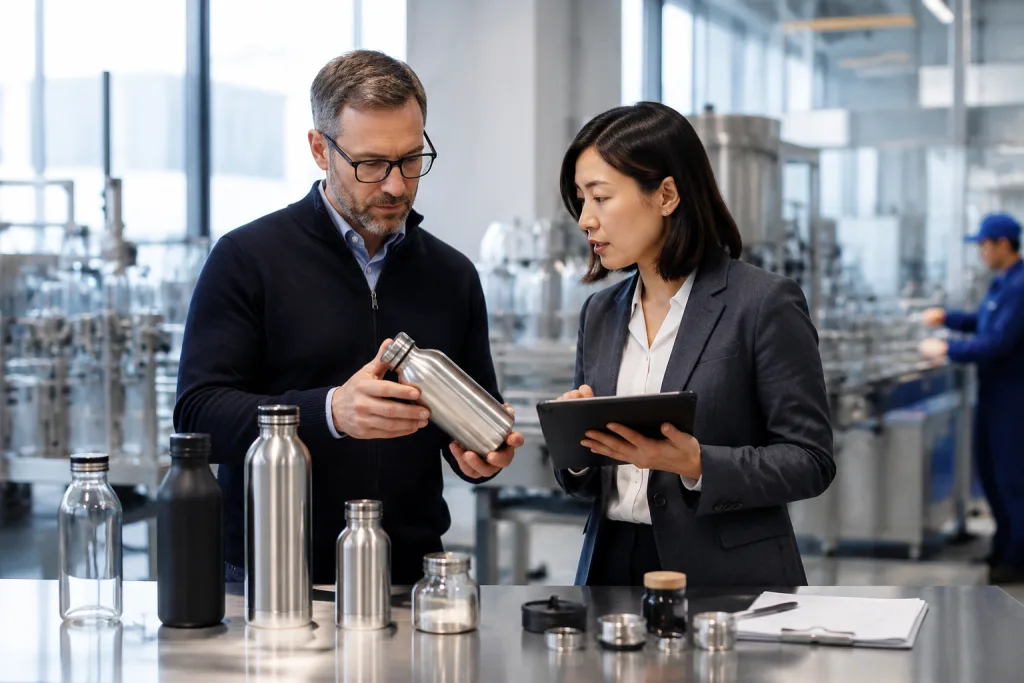
Translate the quote into a purchase order
Once the sample is approved, turn the quote into a PO with exact line items. Serious buyers do this. Casual resellers don’t. Your PO should not say “custom bottles, 5,000 pcs.” It should read like a production sheet the line can follow without guessing. A clean PO cuts disputes and keeps the factory accountable.
Include these PO line items:
- Item description: 316 stainless steel glass bottle, 500 ml
- Qty: 5,000 pcs
- Unit price: FOB Ningbo USD 4.28/pc
- Decoration: 1-color silk screen, 1 position
- Packing: 1 pc/color box, 50 pcs/master carton
- Carton marks: SKU, barcode, country of origin
- Inspection: AQL 2.5 major, 4.0 minor
- Payment: 30% deposit, 70% against inspection copy
For a Zhejiang canteen factory, MOQ often lands at 1,000-3,000 pcs per SKU depending on finish and packaging. We run into this every week. A stock cup may quote lower, but a custom canteen build with lid tooling or molded packaging will not. QC pulled the sample on a 2 mm print shift, and that is the kind of detail buyers miss when they only chase unit price. If you are a distributor canteen buyer, ask for tier pricing at 3,000, 5,000, and 10,000 pcs so you can see where the margin improves.
Use Incoterms properly. FOB is the cleanest start for custom drinkware from China. If your freight team wants DDP, ask for it after you have checked the factory quote, not before. We’ve seen this go sideways when buyers compare landed cost too early, then the hidden logistics line eats the savings. One PO typo on a carton mark can trigger a reprint, and that bill is on you.
Control bulk production with checkpoints
I’ll rewrite the prose only, keep the HTML tags and list structure intact, and tighten the sales-ops language so it sounds like a factory-side account manager.Bulk production is where a supplier earns the second order. A capable canteen factory in Zhejiang should show you a live schedule with material arrival, line setup, printing, packing, and final QC. For orders of 3,000-10,000 units, bulk lead time is usually 25-40 days after sample approval and deposit. If someone promises 15 days for a decorated 316 stainless steel glass bottle with custom packaging, the math does not work unless cartons, bottles, and lids are already on the shelf.
Ask for three checkpoints:
- Pre-production sample: confirms final artwork and assembly
- Mid-production inspection: checks the first 10%-20% off the line
- Pre-shipment inspection: checks AQL, carton count, and labels
We run this way because one PO typo can snowball fast. QC pulled a sample last month and the buyer flagged a 2 mm logo shift on the lid, which saved a reprint before the line hit 1,200 units.
You should also know the factory’s monthly output. A solid mid-sized China factory can often produce 200,000-300,000 units per month across multiple drinkware lines, though your own SKU may sit in a smaller lane. That matters when a seasonal launch cannot sit behind a 60,000-unit commuter mug order. Ask where your order sits on the board, not just what the total capacity is.
For custom growler or customizable growler programs, production control matters even more because the heavier body and larger lid parts bring more leak and fit risk. The same logic applies to customized drinkware programs with mixed materials. More parts mean more chances for mismatch, and we have seen that go sideways on a 28 mm gasket that looked fine in sample but failed after 500 hand-tighten cycles.
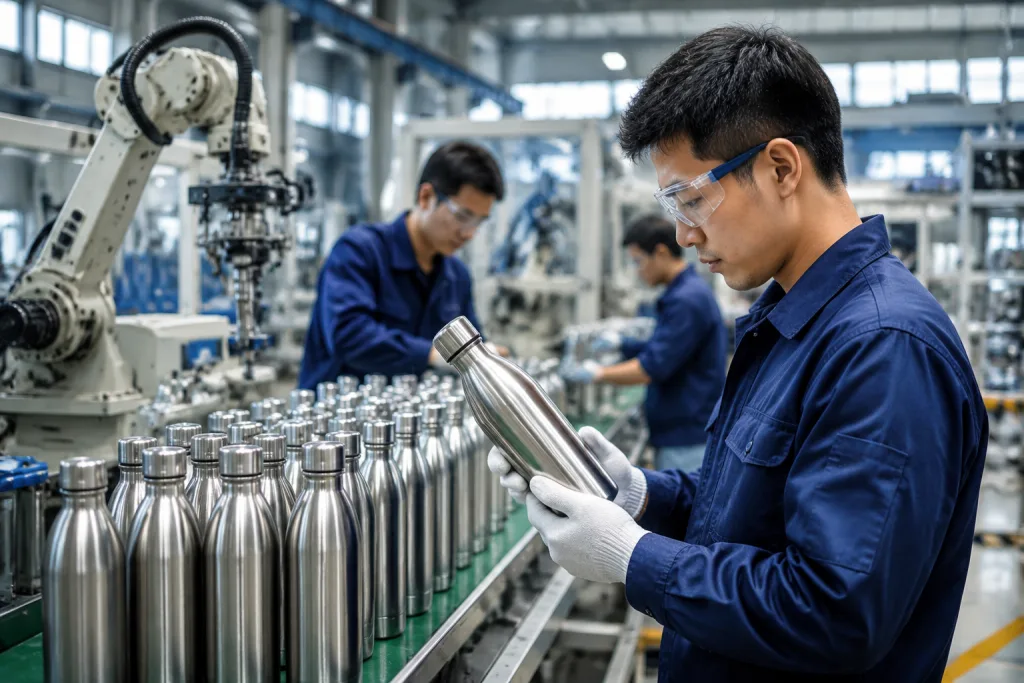
Check compliance before booking freight
I’ll rewrite the section in-place, keep the HTML structure intact, and tighten the language so it sounds like a factory-side sales engineer.Compliance needs to be settled before cargo leaves China, not after it lands in Rotterdam, Hamburg, Los Angeles, or Vancouver. For Europe and North America, your 316 stainless steel glass bottle supplier should know REACH, FDA food-contact checks, and packaging rules. If testing is needed, get the lab reports before booking space. We ship out of Zhejiang every week, and the paper trail has to line up with the carton mark and the PO.
Useful documents to request:
- Material declaration: 316 stainless steel and food-grade silicone confirmation
- Test reports: REACH, LFGB, FDA, or ASTM where relevant
- Inspection report: AQL results and defect photos
- Packing list: gross/net weight, carton count, carton size
- Commercial invoice: exact SKU and unit value
Do not buy vague compliance claims. If the bottle has a glass body with a steel insert, each material needs its own document. We have seen buyers try to cover a glass-only report with a full bottle spec; that math does not work, and the buyer flagged it on the first customs check. A solid canteen manufacturers team will tell you what gets tested and what stays a manufacturing claim. That saves a week. It also matters if you sell as a canteen promotional item or build a branded custom canteen line for retail, where marketplace checks can come later.
The better suppliers in China do not dodge paperwork. They expect it, because export runs on documents first and freight second.
Send your spec and get a factory quote
We can quote your custom canteen, custom growler, or distributor drinkware project with clear MOQ, lead time, and FOB pricing from Zhejiang.
Frequently asked questions
What MOQ should I expect from a 316 stainless steel glass bottle supplier?
For a custom order, a realistic MOQ is usually 1,000-3,000 pcs per SKU. If you want multiple lid colors, special packaging, or laser engraving, the MOQ can rise because the setup cost is spread across fewer units. A Zhejiang canteen factory may quote lower on a stock configuration, but a true customized drinkware build with printed cartons and compliance paperwork usually needs a larger run. For distributor drinkware programs, ask for tier pricing at 3,000 and 5,000 pcs so you can see the margin step.
How long do samples usually take?
A normal sample cycle is 7-12 days after artwork confirmation and payment. If the bottle needs new tooling, custom mold inserts, or special packaging, allow more time. A practical supplier will send one unbranded sample, one decorated sample, and one packed sample if the order is retail-ready. If a canteen supplier promises 2-3 days for a fully customized canteen build, they are probably sending a near-match, not a true approval sample.
What price range is normal for FOB China?
For a 316 stainless steel glass bottle, a broad FOB China range is often USD 3.20-6.80 per piece depending on capacity, lid material, print method, and box style. A simple bulk pack is cheaper than a color box or gift set. Laser engraving usually costs more than one-color silk screen if the artwork is simple. If you are comparing canteen vendors, ask them to separate bottle, lid, decoration, and packing so you can judge the real landed cost.
Which documents should I ask for before paying the balance?
Ask for the pre-shipment inspection report, carton count, packing list, commercial invoice, and any test reports you need for REACH, FDA, or LFGB. If you use Amazon, also request FNSKU label placement photos and carton label photos. A good canteen manufacturer will give you AQL data and defect photos. For North America and Europe, that document set is more useful than a sales brochure.
Can I use this bottle as a promotional item or distributor SKU?
Yes, but treat it as a structured custom drinkware project. For canteen promotional use, focus on logo durability, gift-box presentation, and unit price. For a distributor canteen line, focus on carton efficiency, barcode readiness, and repeatable supply. If you sell through multiple canteen distributors, keep one master spec and one approved sample on file so every reorder matches the first shipment.