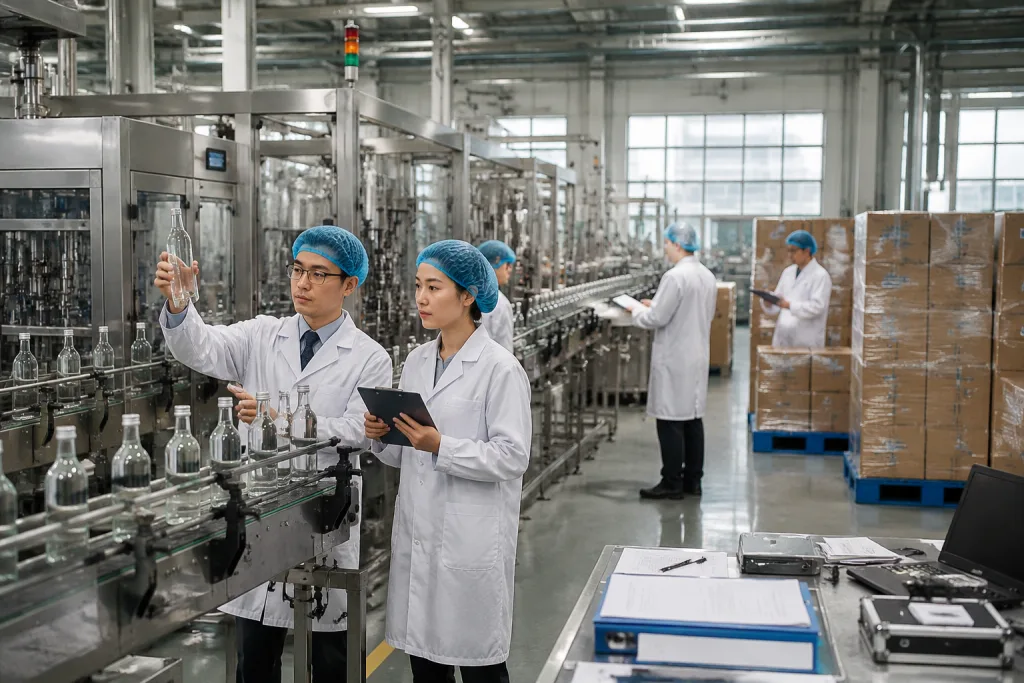
Key Takeaways
- Expect MOQ to start at 1,000-3,000 pcs for a custom 316 stainless steel glass bottle bulk order
- Budget USD 2.80-6.90 per unit FOB China depending on glass thickness, lid style, and decoration
- A proper sample cycle usually takes 7-12 days, while bulk lead time is often 25-40 days
- Ask for AQL 2.5/4.0, REACH, LFGB, and steel material certificates before you approve production
If you are buying a 316 stainless steel glass bottle bulk program, do not treat it like standard drinkware wholesale. It is a mixed build: metal parts, a glass body, sealing parts, and usually a logo spec on top. The weak point is rarely the bottle shape. It is the 0.2 mm tolerance, the cap fit, the finish, and whether the supplier can show the build on paper.
At BottleForge in Hangzhou, Zhejiang, we see the same thing every week: a buyer wants a cleaner premium bottle, asks for a fast quote, then finds out that 316L steel, borosilicate glass, and an airtight lid change the price, MOQ, and lead time. We run 180,000 units per month, and QC pulled the sample last Tuesday because the lid torque was off by 0.3 N·m. A factory that cannot explain the RFQ, sample, and bulk PO path is the wrong partner, simple as that.
Start With The Use Case
I’ll keep the HTML structure intact and rewrite the prose to sound like a factory-side sales engineer, with tighter phrasing and a few concrete shop-floor details.Start with what the bottle has to do. Do not ask for price first. A 316 stainless steel glass bottle bulk order can be a tea SKU for retail shelves, an office bottle with logo print, a café takeaway item, or a corporate gift. Each use case changes the spec: volume, weight, lid, and decoration. If you sell into Europe or North America, the compliance work also shifts with the target market and the contact materials.
Write the RFQ around use, not looks. Include:
- Capacity: 350 ml, 500 ml, 750 ml, or 1,000 ml
- Glass type: borosilicate or soda-lime
- Steel grade: 316 or 316L for the contact components
- Lid type: screw cap, flip lid, bamboo lid, or sports cap
- Finish: matte, polished, powder coat, or printed wrap
When buyers ask for drinkware wholesale pricing without these points, the quote is guesswork. We have seen one factory quote a 0.4 mm steel shell and another quote 0.6 mm; that gap alone can shift unit cost by 12-18%. Last week QC pulled a 500 ml sample with the wrong lid torque, and the buyer flagged it before packing. In Zhejiang and across China, a clean brief gets a faster reply because the line can tell you whether the item is a real best wholesale drink bottle or just a pretty sample.
Build A Useful RFQ
I’ll rewrite this section in-place, keeping the HTML tags and list structure intact, and tighten the sales-engineer voice with more concrete sourcing detail.Your RFQ should read like a shop-floor instruction sheet, not a brand deck. If you want a clean quote for wholesale drinkware, spell out every cost driver up front. A solid China supplier will come back with bottle structure, material list, unit price, MOQ, sample cost, tooling cost if any, carton spec, and lead time. A weak one sends a single number and waits for your next email.
Include these PO-level items in the RFQ:
- Product name and SKU code
- Material breakdown: 316 stainless steel, glass body, silicone seal, PP or tritan parts
- Dimensions and wall thickness: for example, 0.5 mm steel, 2.8 mm glass wall
- Decoration method: laser engraving, silkscreen, heat transfer, or color coating
- Packing: single box, master carton quantity, carton drop test target
- Compliance: LFGB, REACH, FDA, ASTM where relevant
For a 316 stainless steel glass bottle bulk program, ask for pricing split by carton setup. A retail gift box adds about USD 0.18-0.45 per unit. A molded tray adds another USD 0.10-0.30. We have seen buyers skip this line and then blame the factory when the margin vanishes after freight and repacking; the math does not work. If the supplier cannot quote by line item, your landed cost will be a mess later.
Ask for the quote in FOB Ningbo or FOB Shanghai, not just EXW. For a Zhejiang factory, the port choice should be stated on the RFQ, and QC pulled the sample against the wrong port label once because the buyer left it vague.
Choose The Right Sample Path
I’ll rewrite the section in-place, keep the HTML structure untouched, and make the prose sound like a factory-side sales engineer wrote it.Sampling is where a project gets controlled or gets expensive. For a 316 stainless steel glass bottle bulk order, do not take a random shelf sample and call it matched. You need a pre-production sample that matches the final glass wall, lid seal, logo position, and coating. QC pulled one lid ring at 0.8 mm off spec last week, and that tiny gap turned into a full buyer complaint. If the sample is loose, the bulk order will drift, and then everyone starts arguing over what “same as sample” means.
A clean sample path looks like this:
- Ask for a plain functional sample first, usually 3-5 days if the bottle structure is standard
- Approve the closure and seal test before any decoration goes on
- Check the logo sample on the right substrate, because laser on 316 steel and print on powder coat do not behave the same
- Request a leak test, drop test, and dishwasher or thermal-cycle report if your buyer asks for them
Sample fees usually run USD 40-120 per design, and we often refund them against the first PO. Courier to Europe or North America usually takes 5-8 days. We keep the sample bench and the line separate from mass production in Hangzhou, because one mixed-up assembly cart can send a 5000 pcs order sideways. That is the wrong place to cut corners.
Check Compliance Before Payment
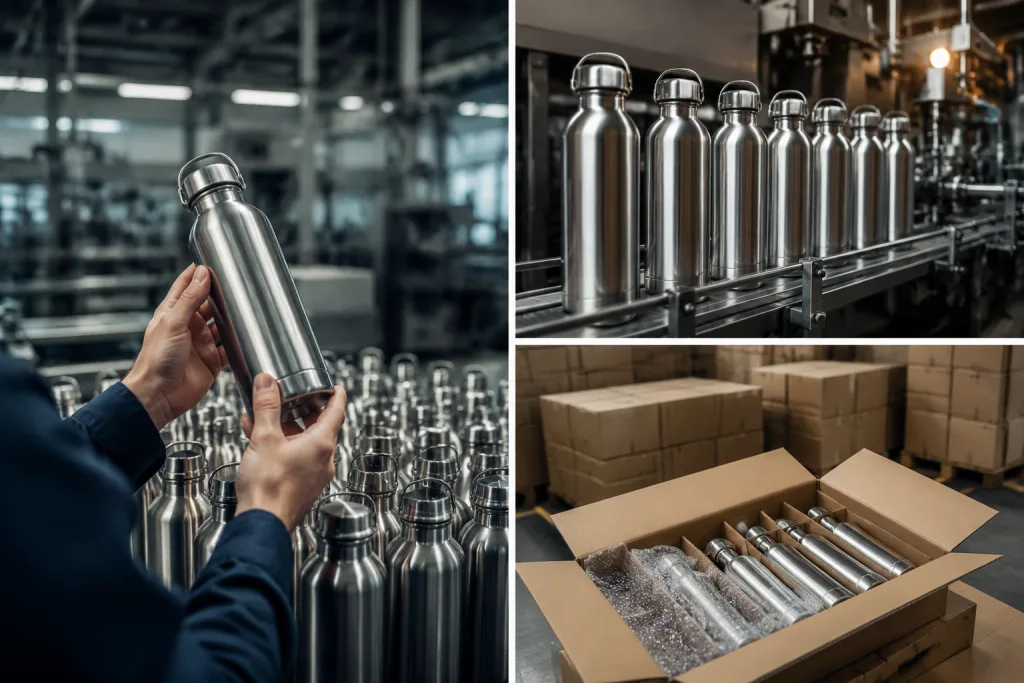
I’ll rewrite the section in place, keep the HTML exactly as-is, and tune the prose to sound like a factory-side sales engineer.If you sell into Europe or North America, compliance is not paper-shuffling. One missing file can turn a 12-day clearance into an 18-day hold at customs. For a 316 stainless steel glass bottle bulk order, ask for material declarations on every food-contact part, plus test reports where the market calls for them. We run this check on the line before packing; stainless steel needs the grade on paper, and the glass body should have food-contact and heavy-metal results if the buyer’s market asks for it.
Ask your supplier for:
- REACH declaration for EU markets
- LFGB test if the item touches food or drink in Germany-sensitive channels
- FDA food-contact declaration for North America
- ISO 9001 or BSCI factory documents if your retailer requires them
- RoHS only if there are electronic accessories, which most bottles do not have
Do not treat “316 stainless steel” as a full quality promise. That is the wrong question to ask. Grade tells you one part; the rest is thickness, polish, weld treatment, and silicone hardness. QC pulled the sample on a 0.8 mm wall once and the buyer flagged a rough weld seam, not the steel grade. If your brief mentions alcohol flask bulk, alcohol flask wholesale bulk, beer growler bulk, or beer tumbler wholesale, the math changes again because pressure, carbonation, and seal tightness start to matter. That is why a Zhejiang supplier asks about market, use case, and filling temperature before quoting. They are not stalling; they are avoiding a bad PO and a costly remake.
Lock The Bulk PO Details
The purchase order needs to leave no room for guesswork. Treat it as the control document. For a 316 stainless steel glass bottle bulk deal, state the SKU, approved sample reference, quantity, unit price, tolerance, packaging, and inspection standard. We want the factory and the freight forwarder reading the same sheet and shipping the same product.
Use these PO line items:
- Product name, color, capacity, and logo artwork code
- Approved sample date and sample photo reference
- Quantity per SKU and overage allowance, usually 2-3%
- FOB port, shipment window, and partial shipment rule
- Inspection standard: AQL 2.5 for critical and major defects, AQL 4.0 for minor defects
- Carton mark, barcode, and FNSKU if you sell through Amazon
Typical MOQ for a custom premium bottle is 1,000 pcs per color. Some Zhejiang factories will take 500 pcs if the structure stays standard and the print is simple. A buyer once flagged a PO that said “red” with no Pantone code; QC pulled the sample and the mismatch was obvious at 2 meters. For a bulk canteen or canteen bulk order with multiple colors, 3,000 pcs total is more realistic. If a supplier promises 20 days for a fully custom structure, the math doesn’t work; 25-40 days is the range once materials and decoration are locked, and the line is already tooled.
Inspect Like A Buyer Who Pays Freight
By the time the cartons are sealed, your room to push back is thin. Inspect before shipment. For a 316 stainless steel glass bottle bulk order, we check leaks, lid torque, logo placement, surface scratches, glass chips, odor, and carton crush. I want a real pre-shipment inspection, not a warehouse walk-through. If the PO is worth $20,000 or more, paying for third-party QC is cheap insurance.
Focus on the defects that hurt sell-through:
- Glass body chips at the rim or base
- Loose seals that fail a 1-meter inversion leak test
- Print misalignment over 1.5 mm
- Scratches visible at 30 cm under standard light
- Odor in gaskets or straw parts
If the order is for beer growler wholesale bulk or wholesale growler channels, test closure performance with the bottle filled and shaken. Carbonated fills are less forgiving than still beverages. For beer tumbler bulk or beer tumbler wholesale, weight and grip matter; a heavier bottle is not the answer by itself. We’ve seen this go sideways when the buyer skipped a torque check on the cap—QC pulled the sample, and the gasket failed after 12 inversions. A Zhejiang supplier shipping 180,000 units a month should run inline checks, keep retained samples, and track lots by batch number. If they can’t show that on the line, your “bulk drinkware” buy is a gamble.
Plan Freight And Reorder Timing
Freight moves your landed cost more than first-time buyers expect. A 316 stainless steel glass bottle bulk SKU that looks cheap at USD 3.20 FOB can land above USD 5.10 once you add cartons, inland trucking, ocean freight, duty, and last-mile handling. We run this math before PO approval. If the buyer flags a pallet overhang or a carton typo, the whole quote shifts. For Amazon or distributor sales, carton size and pallet pattern can matter more than the bottle body.
On a repeat order, ask the factory to hold the approved parts and the packaging structure. That usually cuts the next lead time by 3-7 days and lowers sample risk. Reorders are where a good China supplier earns the next PO. QC pulled the sample, checked the cap torque, and the line kept moving because the artwork, carton spec, and inspection standard were already locked.
When the project grows into canteen wholesale, wholesale canteen, drinkware bulk, or wholesale drinkware across multiple SKUs, keep one master file: material spec, sample approval, PO template, and inspection checklist. This is the part people try to skip, and the math does not work. We’ve seen it go sideways when one PO says 6,000 pcs and the packing list says 6,500. Buyers in Europe and North America keep a premium line stable by holding the same file set while sourcing from Zhejiang or another China base.
Send Your RFQ For A Real Factory Quote
Get pricing, sample timing, and PO-ready specs from a Hangzhou team that handles 316 stainless steel glass bottle bulk orders every week.
Frequently asked questions
What MOQ should I expect for a 316 stainless steel glass bottle bulk order?
For a standard custom build, expect 1,000-3,000 pcs per SKU or per color. If the structure is already tooled and you only change logo or carton, some Zhejiang factories can accept 500 pcs. True custom shapes usually need a higher MOQ because tooling, glass forming, and lid sourcing all need setup time. If you want multiple colors, count the MOQ across the total order, not each shade. For growler wholesale or alcohol flask wholesale bulk projects, the MOQ can move higher if the closure system is pressure-sensitive or the decoration is complex.
How much does a 316 stainless steel glass bottle bulk price usually cost?
A realistic FOB China range is USD 2.80-6.90 per unit, depending on capacity, glass wall thickness, lid type, and decoration. A simple 500 ml model with one-color print may sit near USD 3.10-3.80 FOB. Add a bamboo lid, custom mold, or premium gift box and you can move above USD 5.00 quickly. Your landed cost will also include freight, duty, and packaging. Ask for a quote broken into bottle, lid, logo, carton, and sample costs so you can see where the money goes.
How long does sampling and bulk production take?
A functional sample usually takes 3-5 days if the structure is standard, and a fully branded pre-production sample takes 7-12 days. Once you approve the sample and deposit, bulk production is typically 25-40 days. If the supplier promises 10-15 days for a complex custom bottle, be careful; they may be quoting from stock or skipping proper checks. Add 5-8 days for courier sample shipping and 20-35 days for ocean freight, depending on your destination and booking speed.
Which compliance documents should I request from the factory?
For Europe, ask for REACH and, where applicable, LFGB testing on food-contact parts. For North America, request FDA food-contact declarations. Also ask for 316 or 316L material certificates for the steel, and a factory quality document such as ISO 9001 or BSCI if your customer requires it. If the item has no electronic component, RoHS is usually not relevant. For bulk drinkware and wholesale drinkware programs, also confirm carton drop-test expectations and AQL inspection levels before production starts.
What should I put in the PO for a bulk canteen or growler order?
List the approved sample code, quantity by SKU, unit price, shipment window, packaging spec, and inspection standard. Include AQL 2.5 for critical and major defects and AQL 4.0 for minor defects if that matches your quality plan. Add carton quantity, barcode or FNSKU if needed, artwork file version, and any overage allowance, usually 2-3%. For beer growler bulk, beer growler wholesale, or wholesale growler orders, specify leak testing and closure torque so the factory cannot improvise on pressure-sensitive items.