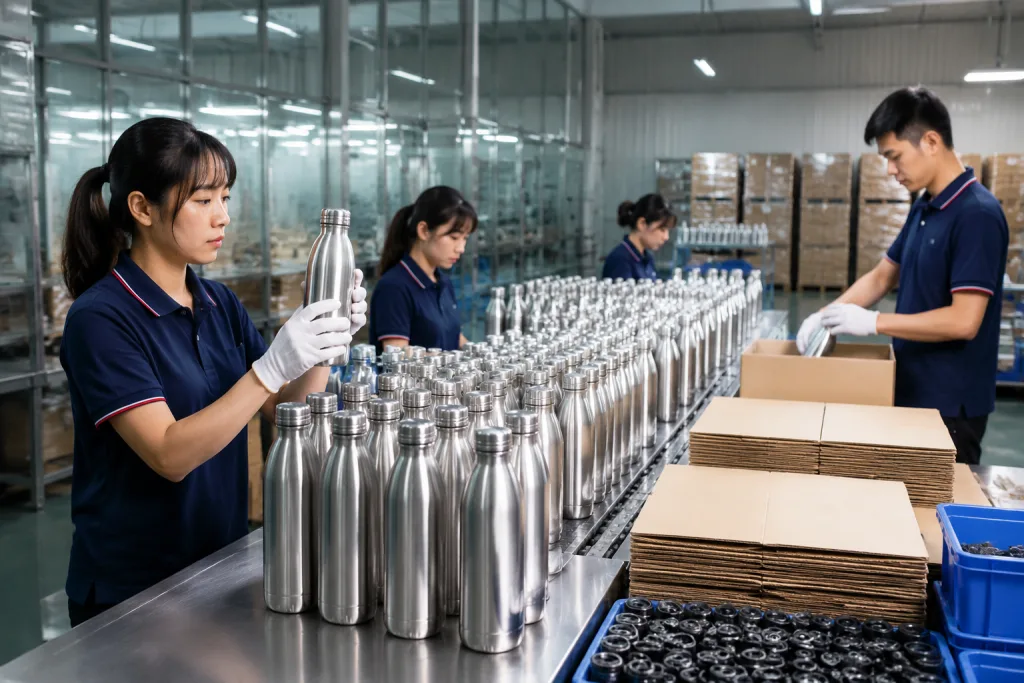
Key Takeaways
- 316 stainless steel is the right call when your customers want better chloride resistance, especially for sweaty gym use and protein mix routines.
- Typical factory MOQ for a custom sports water bottle in Zhejiang is 500 to 1,000 units per design, with 35 to 45 day lead times after sample approval.
- A premium custom shaker bottle usually uses 0.5 mm to 0.7 mm inner wall steel, AQL 2.5 leakage testing, and REACH-compliant coatings.
- For branded programs, expect FOB China pricing from about USD 3.20 to 7.80 depending on volume, lid complexity, and decoration method.
If you are buying from a 316 stainless steel fitness water bottle supplier, do not treat the bottle as a plain container. It is not. The alloy, wall thickness, cap torque, coating stack, and test standard decide whether your customer gets a clean premium SKU or a pile of returns. In Zhejiang, the better factories talk in specs, not slogans. That is where margin gets protected.
For fitness brands and gym chains, the real question is simple: will this bottle hold up through daily use at the target landed cost? We run these programs by checking the metal grade first, then MOQ, decoration, sealing, and compliance. Skip those checks on a custom gym water bottle order, and the buyer flags it later with leakage claims, color drift, and reorders that stall. QC pulled the sample on one line last month because the cap torque was off by 0.3 N·m. That is the wrong place to save money.
What 316 actually changes
I’ll rewrite just the prose, keep the tags and structure intact, and make it read like a factory-side sales engineer wrote it.Start with the alloy. Buyers skip this part, then call us six months later with rust stains and unhappy photos. 316 stainless steel adds molybdenum, which gives better resistance to chlorides and general corrosion than 304. If bottles sit in sweaty gym bags, get filled with electrolyte drinks, or go through repeated hot washes, 316 gives more room before pitting shows up. That is the point for a custom fitness water bottle line: the brand is selling durability, not just shine.
Most fitness chains do not need marine-grade spec, but they do need repeatable results. A real 316 stainless steel fitness water bottle supplier should tell you whether the inner wall, outer wall, or both use 316. On the line, we usually build premium vacuum bottles with 316 on the inner wall and 304 on the outer wall; it keeps performance up and stops the cost from running away. If you are sourcing a bulk gym water bottle program, ask for mill certs or at least batch traceability on the steel coil. We had a buyer flag a PO typo once—304 written where 316 was intended—and QC pulled the sample before packing. That kind of check saves everyone a headache.
Buyer impact: the move from 304 to 316 is usually about 8% to 18% in material cost, and the math works only if the position is premium enough to pay for it. The real gain is fewer corrosion claims and a cleaner story for retail buyers. For a custom sports water bottle sold at USD 19.99 to 29.99 retail, that delta is easy to defend.
Wall thickness and heat retention
I’ll rewrite the prose tightly, keep the HTML intact, and preserve the section logic while making it read like a factory-side sales engineer wrote it.Wall thickness sounds dull until you compare a bottle that dents in transit with one that takes a warehouse drop and still ships clean. For vacuum-insulated drinkware, the inner wall usually runs 0.5 mm to 0.7 mm, and the outer wall often sits in the same band depending on capacity. Go thinner and you cut weight and cost, but the bottle starts feeling soft in hand and the stiffness drops. We run these on the line every week, and a good customizable fitness water bottle should not feel flimsy.
If you are sourcing a custom gym water bottle for chain retail, check the full build, not just the steel grade on paper. Vacuum performance depends on weld quality, the vacuum draw process, and whether the inner chamber gets copper plating or another thermal layer. A solid 500 ml bottle should hold hot liquids above 55°C for 6 to 8 hours and cold liquids below 10°C for 12 to 24 hours under standard test conditions. QC pulled the sample at 23°C ambient, and the buyer flagged it because the supplier forgot to state the room temperature. That question matters. Vague claims get inflated fast.
Buyer impact: thicker walls add a little freight weight, but they cut dent rates and give the bottle the solid feel gym members notice after a workout.
Cap design decides leakage
I’ll rewrite the prose only, keep the HTML tags intact, and tune the copy to sound like a factory-side sales engineer.Cap engineering is where return claims are won or lost. A leak-resistant lid is not just the gasket. It comes down to thread pitch, mold tolerance, venting, and how the cap seats at torque. For a bulk sports water bottle program, ask for a torque test and a 1-meter drop test with the bottle filled to 80% capacity. We run those checks on the line with a simple torque meter. If the supplier cannot state the pass criteria, walk away.
For shaker use, the cap gets even more sensitive. A bulk shaker bottle with a flip-top lid or screw-top lid needs a seal that holds up after protein residue and warm liquid start attacking weak parts. If you want a custom shaker bottle or custom logo shaker bottle, specify silicone grade, gasket hardness, and whether the lid is PP, Tritan, or stainless. Tritan gives clearer walls for a premium custom made shaker bottle; PP keeps the landed cost lower on volume orders. QC pulled a sample last month with a 0.3 mm gasket mismatch, and the buyer flagged it right away. For gym chains, a solid carry loop and true one-hand opening beat fancy shape talk.
Buyer impact: a lid upgrade can add USD 0.25 to 0.90 per unit, but the math still works if it cuts replacements and support tickets.
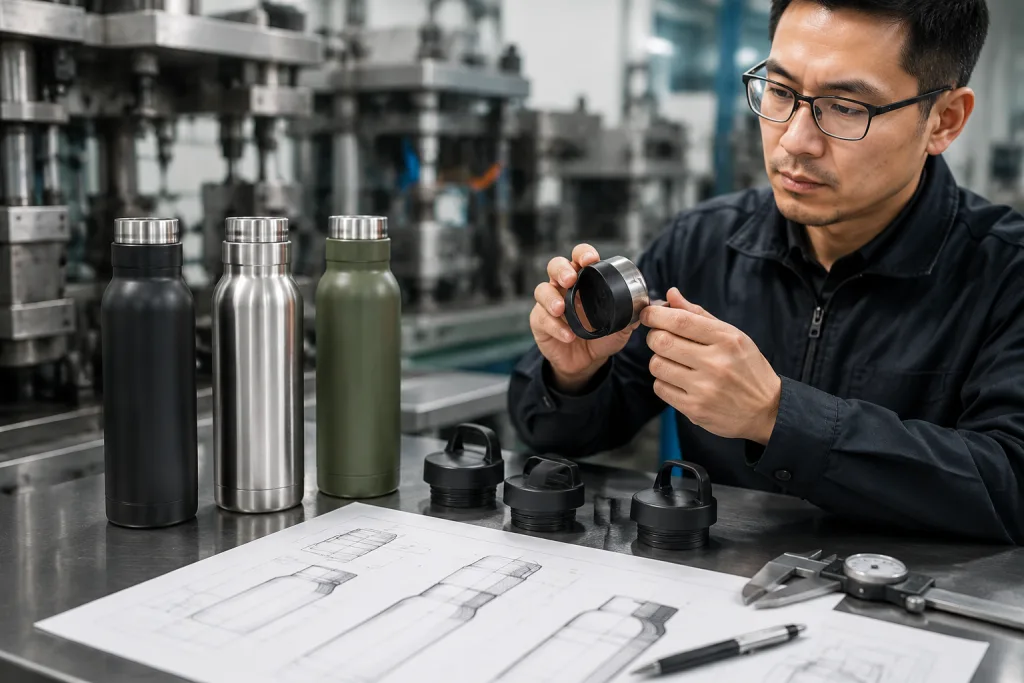
Decoration and branding choices
I’ll rewrite just the prose, keep every tag and the existing strong text intact, and tighten the sales-engineer voice with a few concrete shop-floor details.Branding is not one decoration method. It is a cost ladder, and the math changes fast once you add setup, color count, and rework. Screen print works for simple logos and lower unit cost. Laser engraving gives a clean, permanent mark and is the better fit for premium metal bottles. Powder-coated bodies with laser reveal can look sharp on a custom fitness water bottle line, especially when the brand needs to read as durable instead of promotional. If you need a custom gym water bottle for chain stores, check the logo after 300 dish cycles, not just on day one. We’ve seen the buyer flag a 0.2 mm shift on a white sample; QC pulled the sample and the line had to stop.
For distributors, the smart move is usually to standardize the bottle and change only color plus logo. That is how you build a workable customizable sports water bottle program without bloating inventory. On our Zhejiang print line, logo registration usually stays within 0.3 mm to 0.5 mm, but only if the artwork is locked and the pre-production sample is signed off. If you want a customized fitness water bottle for a gym chain rollout, ask for Pantone matching and one control sample from each side. I’ll say it plain: sending a PO with a typo in the Pantone code is the wrong question to ask the factory. One digit off can change the whole run.
Buyer impact: laser engraving changes slower but takes abuse better; screen print costs less and fits shorter retail cycles and seasonal designs.
MOQ, pricing, and lead time
Let’s put real numbers on it. For a Zhejiang factory, MOQ on a plain bulk fitness water bottle or bulk sports water bottle run is often 500 units per color. If the lid has extra parts, like a flip-top with silicone seal or a shaker insert, we usually move to 1,000 units. On a distributor gym water bottle program, mixed colors are possible, but the buyer pays a setup fee. We’ve seen that math go sideways fast when someone asks for 6 colors at 80 units each.
FOB China pricing for a 500 ml 316 stainless bottle usually starts around USD 3.20 to 4.50 at 1,000 units for a basic build and climbs to USD 6.00 to 7.80 for a better lid, vacuum upgrade, or laser logo. Add USD 0.15 to 0.40 for each polybag, and more if you need retail boxing, FNSKU labels, or carton barcodes for Amazon. Standard lead time is 35 to 45 days after sample sign-off. If we open new tooling, add 15 to 25 days. QC pulled a sample on a 28-day promise once, and the wall thickness was off by 0.3 mm. The buyer flagged it, and we reworked the order.
Buyer impact: the lowest quote often turns into the most expensive shipment once freight, breakage, and rework hit the invoice.
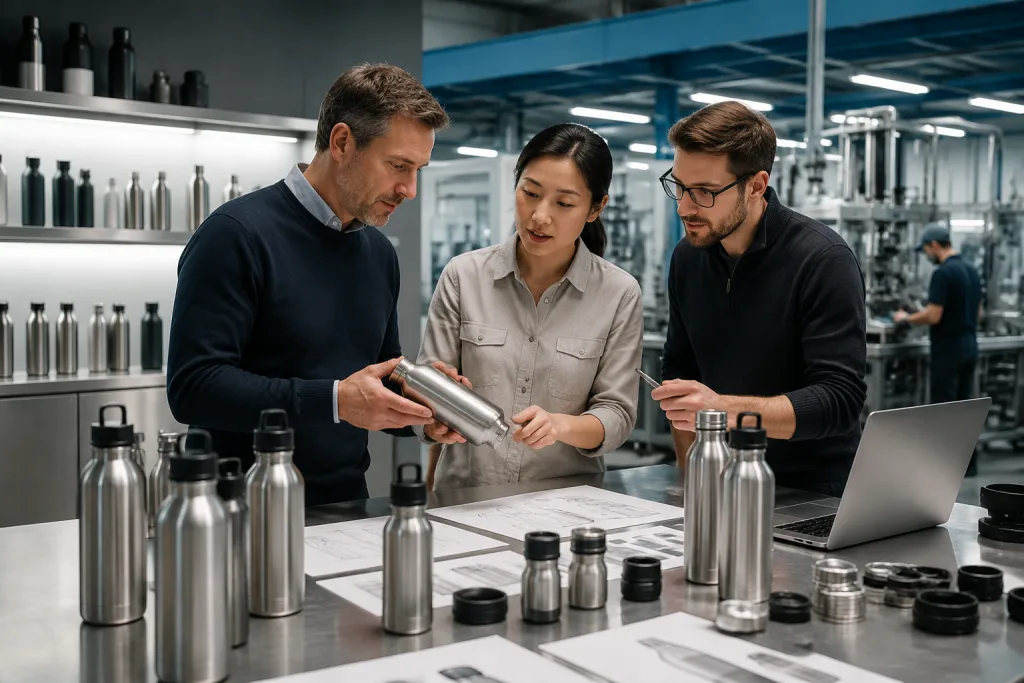
Compliance and test paperwork
I’ll keep the HTML exactly as-is and rewrite only the prose, with tighter sourcing language and a few factory-floor details.Do not skip paperwork because the bottle is metal. Your buyer in Europe or North America will still ask for food-contact proof, migration test reports, and repeatable quality records. For a serious distributor fitness water bottle or distributor sports water bottle order, we ask for REACH confirmation, LFGB for Germany, and FDA food-contact support when the market needs it. For coatings and inks, check the whole build: ink, paint, and adhesive all need to be covered. We have seen buyers flag a single missing adhesive statement and stall the PO for 12 days.
On quality, AQL is the language that matters. For appearance and function, AQL 2.5 is common; for leakage, buyers often tighten to AQL 1.0 or 0.65 depending on channel risk. Ask for drop tests, vacuum retention data, and dishwasher resistance if the bottle will go through commercial dishwashing. A proper customized gym water bottle program should run incoming inspection, in-process QC, and final random inspection before shipment. QC pulled one sample on the line last week and caught a cap torque issue at 18 N·m, which saved a rework batch. Buy without that system, and you are betting on luck.
Good paperwork will not rescue a bad bottle, but bad paperwork can stop a good bottle from scaling.
Choosing the right supply model
I’ll rewrite the prose in place, keep the HTML intact, and tighten the sourcing language to sound like a factory-side sales engineer.Your sourcing model has to fit the channel. For a gym chain, we run a tight custom sports water bottle program: fixed colors, 30-day replenishment, and the same carton spec every time. If you are a brand owner, the cleaner setup is a small range — one customizable shaker bottle, one insulated bottle, one premium metal carry bottle. For a distributor, the math usually favors one base bottle with logo flexibility, because dead stock kills margin fast.
For fast-moving programs, ask how many units the supplier ships each month. A Zhejiang factory with a live commercial line can push 150,000 to 300,000 units monthly across several SKUs, but your real question is slotting and whether a reorder lands in 7 days. We had a buyer flag a PO typo once — the color code was off by one digit — and that held the line for 4 days. If you need a customized shaker bottle or custom made shaker bottle in a new color, check whether the factory pulls from stock tools or needs a new mold; that changes both lead time and scrap risk. Also confirm whether the supplier can handle distributors fitness water bottle and distributors shaker bottle orders with carton labels, pallet patterns, and export papers that match your warehouse flow. QC pulled the sample on a 58 mm cap fit once, and the buyer still had to redo inbound checks.
We see better results when the supplier is treated like a technical partner, not a quote inbox. The factories that know what they are doing ask about your channel, retail target, and claim rate before they talk price. That is the right sign. If they ask those questions, they run the line with fewer surprises.
Send your spec, and we’ll quote it
Share capacity, lid type, logo method, and target price. We’ll return a factory quote, MOQ, and sample schedule from Zhejiang.
Frequently asked questions
What MOQ should I expect for a 316 stainless steel fitness water bottle order?
For a standard build, expect 500 to 1,000 units per SKU or per color. Simple screen-printed bottles usually sit at 500, while a custom lid, unique coating, or shaker system often pushes the MOQ to 1,000. If you need a mixed-color run for a gym chain, the factory may accept it, but setup costs usually rise 5% to 12%. A Zhejiang supplier with stock components can sometimes support a lower first order, especially if you repeat within 30 to 60 days.
Is 316 worth the upgrade over 304 for gym use?
Yes, if your customers use sweat-heavy training environments, electrolyte drinks, or frequent wash cycles. 316 has better resistance to chloride attack because of the molybdenum content. In practical terms, that helps reduce spotting and pitting. The price increase is commonly 8% to 18% depending on steel market conditions and design complexity. For premium retail or chain-gym programs, that premium is usually easier to justify than dealing with corrosion complaints later.
What lead time should I plan for custom orders from China?
For most custom orders from China, plan 35 to 45 days after sample approval. If your design needs new tooling, allow another 15 to 25 days. Simple logo-only jobs may ship faster if the factory has stock bodies in the right capacity, but anything involving a new cap, new color, or new packaging should be treated as a full production cycle. If your launch date is fixed, build in at least 10 extra days for QC and export booking.
How do I check if a supplier is good for bulk gym water bottle programs?
Ask for monthly output, defect rate, test reports, and real export references. A serious factory should be able to show AQL targets, leakage testing, REACH or LFGB support, and clear MOQ and lead time. In Zhejiang, experienced exporters usually handle 150,000 units per month or more across multiple drinkware SKUs, but capacity alone is not enough. You want stable repeatability, not just a big machine room.
Can I use the same bottle for retail and distributor orders?
Yes, and that is often the smartest way to keep tooling and inventory controlled. Use one base bottle, then vary the logo, color, and packaging for retail, distributor, or gym chain accounts. For example, a custom logo shaker bottle can be sold as a premium retail item while the same body becomes a distributor shaker bottle with simpler print and carton packing. This approach cuts SKU complexity and usually improves reorder speed.