Key Takeaways
- 316 stainless steel is the right call for salty sweat, protein residue, and longer corrosion resistance in a bulk fitness water bottle program.
- A realistic MOQ for a custom order is often 500–3,000 units, with 25–35 days lead time after sample approval.
- For a 32 oz bottle, 18/8 or 316 body steel around 0.4–0.5 mm and a lid with PP plus silicone sealing is the practical baseline.
- Ask for REACH, food-contact, and 1,000-cycle leak or opening tests before you place a bulk sports water bottle order.
If you are buying 316 stainless steel fitness water bottle bulk, the trap is simple: the seller shows a clean sample, then the wall comes in too thin, the lid starts leaking after 30 days, or the coating fails the transit test. That gets expensive fast when you are filling gym shelves, subscription boxes, or retail replenishment orders. A fitness buyer needs a bottle that survives real use, not just a hero shot.
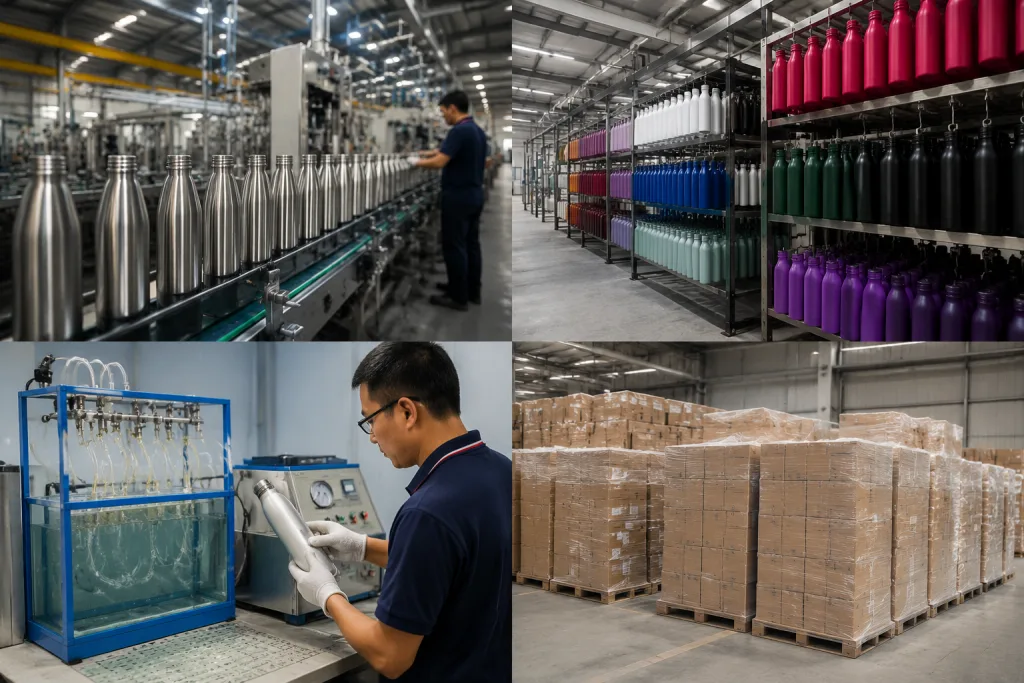
We make and export drinkware from Zhejiang, China, and the spec that usually matters most is not the logo. It is the steel grade, wall thickness, lid system, finish, and test standard behind the sample. For a bulk fitness water bottle program, a straight factory will quote MOQ, lead time, coating process, and inspection method up front. On one 750 ml run, QC pulled the sample and found the lid torque missed the target by 0.3 N·m; that is the kind of miss a buyer should catch before the PO goes in. If a supplier dodges those details, the math does not work.
What 316 steel changes
Most buyers ask the same thing first: is 316 worth the jump over 304. For gym use, usually yes once the bottle sees sports drinks, electrolytes, or salty sweat in a humid locker room. 316 stainless steel adds molybdenum, so chloride resistance goes up. That matters when bottles ride in gym bags, sit near a pool deck, or stay hot in a warehouse at 35°C. It will not make the bottle bulletproof, but it gives you more room before staining and pitting show up.
From the sourcing side, treat 316 as a spec, not a sales line. Ask for the steel grade on the body, the inner liner if the bottle is vacuum insulated, and the lab standard used for composition testing. We run into suppliers who say “316” on the catalog and send a mixed lot; QC pulled the sample and the buyer flagged it before shipment. A Zhejiang factory that works this segment will show the mill certificate, not just a polished sample table. For a distributor fitness water bottle line, that is the difference between a clean 12-month program and a pile of corrosion complaints after the first summer.
Pay for corrosion resistance where the bottle actually gets abused. Shiny language does not hold up on the line.
Wall thickness and weight
Wall thickness is where bulk orders slip if nobody checks the line. Too thin, and the bottle dents, the paint chips, and insulated models lose vacuum faster. For a 24–32 oz bottle, the outer shell often lands around 0.4–0.5 mm, and the inner wall on a double-wall build needs to stay even end to end. We run a micrometer on sampled parts, then QC pulled the sample against the spec sheet. If the buyer asks only for a lower price, that is the wrong question to ask.
A light bottle looks cheap and feels worse. Retailers see that fast, and the buyer flagged it in one of our last gym programs: “too tinny in hand.” A heavier bottle can support a custom gym water bottle sold at USD 8–15 FOB, but there is a ceiling. Once unit weight climbs too far, freight and shelf price take the hit. For a bulk gym water bottle line, I prefer a build that survives a drop from bench height and still carries well in a gym bag.
- Typical 24 oz insulated bottle weight: 280–360 g
- Typical 32 oz insulated bottle weight: 360–480 g
- Common bulk MOQ: 1,000 units per SKU
Lid design decides returns
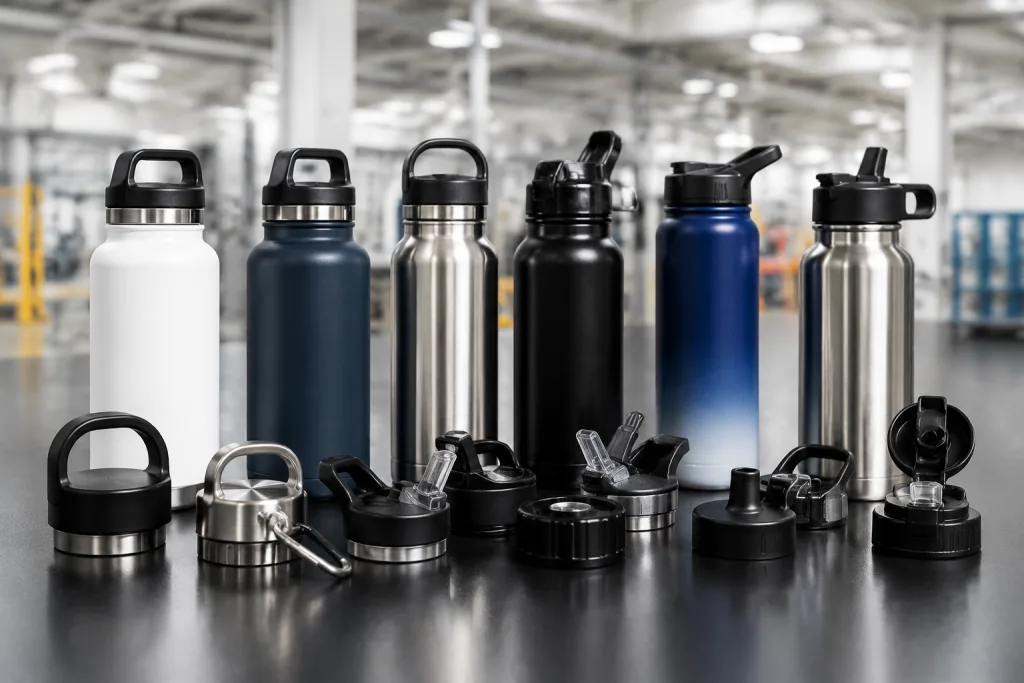
The lid decides your return rate. The body can be fine, but a leaking cap or a bad thread start point sends the complaint to your brand, not to the factory. For fitness use, we run a screw cap with a silicone gasket first. Clean, simple, fewer surprises. If you sell a bulk shaker bottle, the closure has to handle liquid and powder at the same time, so you need a tight seal and a vent path that does not spit protein mix into the gym bag.
For a custom shaker bottle or custom logo shaker bottle, ask if the cap is PP, Tritan, or a mixed structure, and check the closing torque in N·cm. The buyer flagged it on one order because the cap felt loose in hand but failed under shipping vibration. Too stiff and users hate it; too soft and it leaks in transit. A distributor shaker bottle order should include 1,000 opening and closing cycles, plus an inverted leak test. If the factory cannot explain the lid structure in plain terms, the design is not ready for bulk fitness water bottle deployment.
What to check on the sample
- Silicone ring fit and hardness
- Thread alignment and start point
- Leak test after 24 hours inverted
- Ease of cleaning after protein residue
Finish, coating, and grip
Surface finish is not cosmetic only. On a gym floor, the bottle gets wet, knocked against dumbbells, and stacked in crates. Powder coating gives better grip than bare polished steel and hides scratches better over time. If you want a custom sports water bottle that feels premium, specify a matte powder coat with a controlled gloss level, then ask for abrasion data. We run a 50-cycle rub check here; soft-touch looks good in photos, but it can mark faster if the buyer ships through big-box distribution with rough handling.
On a large custom fitness water bottle run, decoration compatibility matters too. Laser engraving holds up well on stainless steel when you want a mark that stays through 316 stainless steel bulk use. Silk screen costs less for color logos, but the wear limit is the point, not the print sample. I’d push back on any buyer who asks only for “a nice finish” and skips the logo method. For gym chains, a two-layer finish with laser logo on a powder-coated body often gives the best balance of premium feel and durability. Zhejiang factories that export regularly should quote coating thickness, curing temperature, and salt-spray or abrasion targets without stalling.
As a buyer, ask the wrong question and you get the wrong bottle. The real check is simple: does it still look acceptable after 3 months in a sweaty boot bag?
Capacity and use case fit
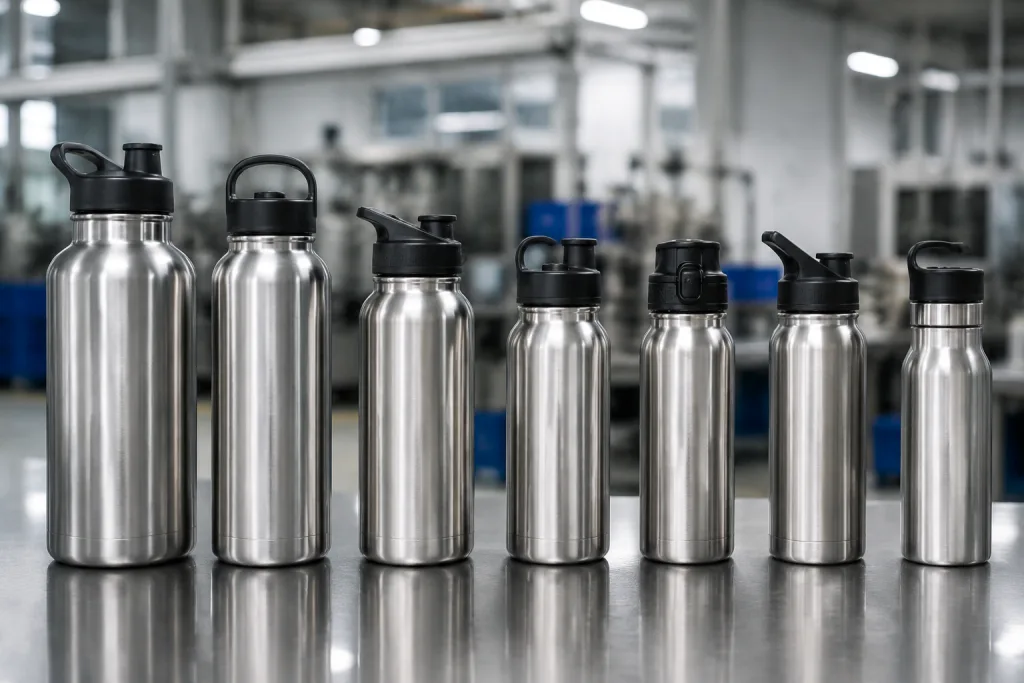
Capacity sounds simple until you have to sell it. A 20 oz bottle fits studio classes and compact retail shelves; a 32 oz bottle sells better for strength training, long sessions, and all-day hydration. On gym-chain orders, 24–32 oz moves fastest because buyers want something useful without turning it into a bulky carry item. For supplement-heavy programs, a bulk shaker bottle in the 28–36 oz range leaves room for liquid, powder, and ice. QC pulled a 32 oz sample on the line and checked the fill line at 5 mm below the neck; that kind of detail matters.
Do not pick capacity from a spec sheet alone. Check cup holder fit, bag space, and refill frequency. A smaller custom gym water bottle often sells faster in boutique studios, while a larger custom sports water bottle can support a higher retail bundle price. For distributor sports water bottle programs, keep one or two core capacities only. Too many SKUs create dead stock, and the math does not work. We’ve seen this go sideways in Zhejiang when a buyer pushed for five sizes and then flagged the PO for slow-moving inventory after the first 1,000 pcs. China supply chains reward focus, not clutter.
| Use case | Good capacity | Buyer impact |
| Gym retail | 24 oz | Easy to carry and display |
| Team training | 32 oz | Lower refill frequency |
| Protein mixing | 28–36 oz | Better shake space |
Printing, logo, and artwork
Logo placement has to follow the bottle geometry, not the designer’s mood board. Curved bodies bend artwork, and narrow silhouettes make that worse. For a custom logo shaker bottle or custom made shaker bottle, keep the imprint area clean and confirm the wrap tolerance before you sign off the sample. Tiny text is a bad bet. On powder coat edges and across seams, fine lines disappear fast.
For a customizable fitness water bottle program, the working options are laser engraving, silk screen, heat transfer, and full-color wrap if the shape gives enough room. We run laser on 316 stainless steel when the buyer wants a mark that survives daily washing and lower claim risk; that is usually the safest call. Silk screen has the lowest setup cost, but the print life depends on how the bottles are packed and washed. For retailer and gym chain orders, ask for artwork proofing on the actual bottle, not only a flat PDF. A factory in China that does export work should also lock Pantone values, print location, and seam-shift tolerance before the line starts.
For seasonal campaigns, keep the branding flexible. One body, one lid, one logo method can cover a customized gym water bottle, a customized fitness water bottle, or a customized shaker bottle without forcing a new SKU. QC pulled the sample on a 50 mm print panel last week, and the buyer flagged a 2 mm shift; this is the kind of detail that saves rework.
MOQ, pricing, and lead time
Now the part buyers actually need. For a custom 316 stainless steel fitness water bottle bulk order, MOQ usually starts at 500 units for a stock shape with simple decoration and moves to 1,000–3,000 units once you change the lid, finish, or box. If a supplier says they can do 100 units with full custom tooling, ask for the mold line drawing and the tooling fee breakdown; the math does not work. A fair FOB range for a vacuum insulated bottle in 316 steel sits around USD 6.80–12.50, depending on capacity, lid structure, surface finish, and packaging. We run this quote sheet every week, and the buyer flagged a “cheap” PO last month because the carton spec was missing.
Lead time matters more than first-time buyers expect. Sample approval usually takes 7–12 days, and QC pulled the sample twice when the lid torque missed the 12N·cm target. Bulk production often takes 25–35 days in a normal season, plus 5–10 days for carton packing and export booking from China. If the supplier is in Zhejiang, that helps: caps, coatings, cartons, and printing all sit close to the line. For a distributor gym water bottle rollout, ask for monthly capacity in units, not a vague promise. A factory turning 200,000–500,000 units per month handles replenishment; a 20-person workshop does not.
Be careful with low headline prices. The cheap quote often assumes lighter steel, a thinner coating, no inner box, and no test report. That saves a few cents and burns your margin later. We’ve seen this go sideways on a PO typo too, where the buyer wrote 18/8 instead of 316 and the carton label had to be reworked.
Source your 316 bottle with real specs
Send us your target capacity, logo method, and annual volume. We will quote a production-ready custom sports water bottle spec for China and Zhejiang supply.
Frequently asked questions
Is 316 worth it for a fitness bottle order?
Usually yes if the bottle will carry electrolyte drinks, sit in humid lockers, or face repeated washing. 316 stainless steel gives better chloride resistance than 304, which helps reduce pitting and staining over time. For a 24–32 oz bottle, the premium is often worth it when you are building a brand line or gym chain program that needs fewer complaints. If your product is a budget giveaway or short-life promo, 304 may be enough. For a retail program, I would still ask for 316 on any custom sports water bottle that claims premium durability, especially if you sell into Europe or North America where buyers notice finish quality fast.
What MOQ should I expect from a China factory?
For a straightforward custom fitness water bottle, expect 500–1,000 units if you choose an existing mold and standard decoration. If you want a deeper custom shape, special cap, or multiple logo colors, 1,000–3,000 units is more realistic. Some Zhejiang factories can flex lower for test orders, but you usually pay more per unit. For a bulk gym water bottle program, I would rather buy 1,000 clean units than 200 expensive ones with weak negotiating power. Ask whether the MOQ is per color, per artwork, or per carton configuration, because those details change the real commitment.
How do I check if the steel is really 316?
Ask for a material declaration, mill certificate, or third-party test report that shows composition. The factory should be able to confirm chromium, nickel, and molybdenum content for the bottle body or liner. Do not accept a vague reply like “food-grade steel” because that says almost nothing. For a bulk sports water bottle order, request the exact part that is 316: body, liner, or both. If the supplier is professional, they will also explain whether the lid parts are PP, Tritan, or silicone and what food-contact standard they follow. In China, serious exporters usually know how to support REACH and FDA-style compliance requests.
What tests should I require before shipment?
At minimum, ask for leak testing, appearance inspection, and a carton drop test. For a vacuum insulated bottle, I would also ask for vacuum retention or thermal performance data, plus an opening and closing cycle test on the lid. A practical QC setup often uses AQL 2.5 for major defects and AQL 4.0 for minor defects, depending on your risk tolerance. If you are buying a custom shaker bottle, add a shake-leak test with powder and water. For a distributor sports water bottle account, the best protection is a documented pre-shipment inspection, not a promise after the cargo leaves China.
Can I mix logo styles across the same order?
Yes, but do it carefully. You can often combine one bottle body, one lid, and two logo treatments, such as laser engraving for premium accounts and silk screen for volume retail. The factory will usually charge extra for multiple print setups and may split the MOQ by artwork. For a customizable shaker bottle or customizable gym water bottle line, keeping the same base SKU lowers risk and makes replenishment easier. If you need different buyer groups, it is better to vary color or logo method than to create a new shape for each distributor fitness water bottle account.