Key Takeaways
- For 316 stainless steel drinkware custom, start RFQ with exact steel grade, 0.5-0.8 mm wall thickness, and target lid standard.
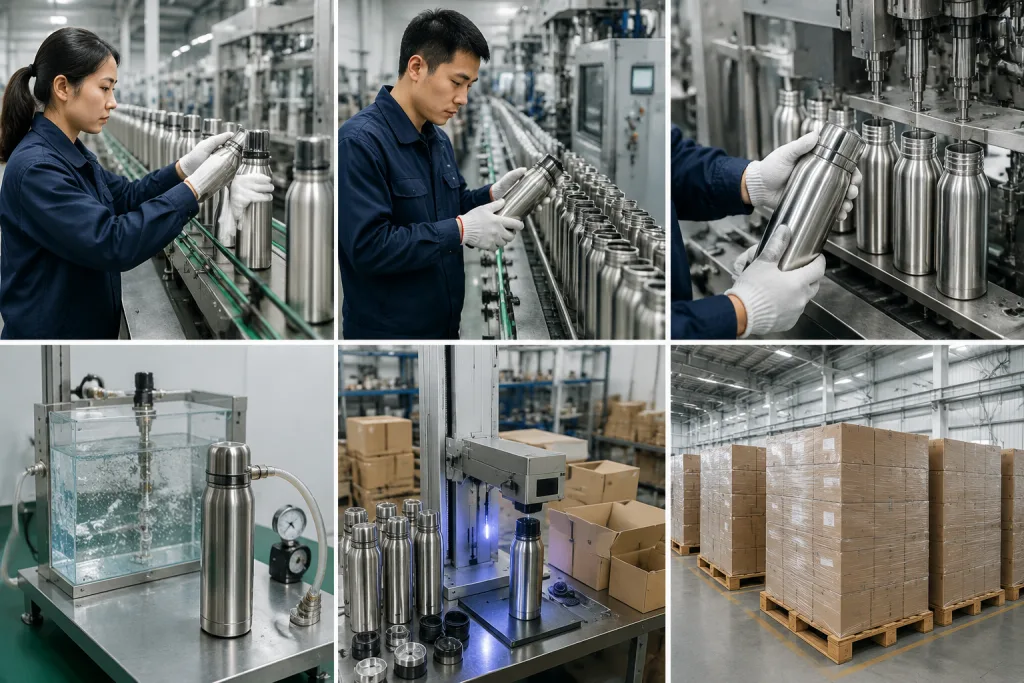
- A usable sample should pass 24-hour leak testing, 70°C fill stability, and logo adhesion checks before you approve bulk.
- Typical factory MOQ is 3,000 pcs, with sampling in 7-10 days and bulk production in 25-35 days after approval.
- For importers, ask for REACH, LFGB, and AQL 2.5 / 4.0 inspection terms on the PO, not after production starts.
If you are buying 316 stainless steel drinkware custom for retail, corporate gifting, or marketplace resale, the hard part is not finding a factory. The hard part is asking for the right thing on the first round so you do not burn 2 sample rounds and 3 weeks on lid leaks or finish problems. We see this every month. In Zhejiang and across China, the factories that move fast are the ones getting a clean RFQ with wall thickness, lid type, logo method, and test standards written down before the line starts.
316 stainless is not a marketing word. It matters for coastal sales, medical-adjacent buyers, and high-acid use cases, and it gives you a product story that supports a higher landed price. BottleForge Industrial in Hangzhou runs 400,000 units per month across drinkware lines, with a common custom MOQ at 3,000 units and bulk lead time around 25 to 35 days after sample approval. QC pulled the sample on a 0.2 mm wall check last week, and the buyer flagged it because the spec sheet had a typo on the lid code. That is the pace you should expect from a serious canteen manufacturer or canteen supplier in Zhejiang.
Start With the Use Case
I’ll keep the HTML exactly as-is and rewrite only the prose, making it sound like a buyer-facing factory note with concrete details and less filler.Before you ask for a quote, lock down the actual job. A 316 stainless steel bottle for a gym chain is a different build from a customized growler for a brewery, and the lid, finish, and target cost all move. If you want a canteen customizable enough for private label retail, name the channel first: Amazon, wholesale, corporate gifting, or distributor drinkware. We ran one PO where the buyer forgot the channel, then asked for FNSKU labels after packing was done. That waste showed up fast.
Good RFQs are plain. Give the capacity, like 500 ml, 750 ml, or 32 oz; the shape; and whether you need a custom canteen, custom growler, or a broader custom drinkware line with shared parts. Then spell out the real spec: vacuum insulation, powder coating, or brushed steel finish. 316 stainless gives better corrosion resistance than 304 in salty or acidic use, but the math still has to work on cost. If you leave that vague, the factory will guess, and QC will catch the gap later on the line.
- State end use: retail, promo, outdoor, or food-service.
- Pick capacity: 350 ml, 500 ml, 750 ml, or 1 L.
- Define finish: powder coat, satin, mirror, or printed.
- Call out whether you need canteen promotional packs or shelf-ready cartons.
Build a Clean RFQ Pack
I’ll rewrite the section in-place, keep the HTML exactly as-is, and tune the prose to sound like a real factory-side sales engineer.Your RFQ should read like a buyer canteen manufacturer checklist, not a vague email. Send the drawing, target FOB China price, logo position, lid spec, and carton count in one file. If you are comparing canteen manufacturers or canteen suppliers in Zhejiang, keep the format the same across all quotes so the math works. We’ve seen buyers compare a low unit price and miss a higher tooling charge, then the landed cost jumps after the PO is fixed.
Use PO-style line items even at the inquiry stage. It keeps the line honest and shows missing details fast. One typo on a PO can change the whole quote.
RFQ line items: 316 inner wall, 304 outer wall if needed, 0.6 mm body thickness, BPA-free lid, laser logo, one color print, individual polybag, 24 pcs per carton, export master carton, REACH and LFGB compliance, carton drop test, and target FOB Ningbo or Shanghai.
Ask for sample cost, tooling cost, and mass-production lead time as three separate numbers. A serious canteen vendor in China should send a price ladder by quantity, usually 3,000, 5,000, and 10,000 pcs, not one flat figure. If they are a distributor canteen source rather than a true canteen factory, engineering changes usually move slower and mold ownership gets fuzzy. That is the wrong place to find out.
Choose the Right 316 Build
I’ll rewrite this section in-place, keep the HTML exactly as-is, and tune the prose to sound like a factory sales engineer rather than generic copy.316 stainless steel is not overkill by default. We choose it when the drink sits with salt, citrus, coffee, supplements, or other corrosive contents for hours, or when the buyer wants a premium metallurgy story they can sell without hand-waving. For a canteen customized for marine use, hiking, or medical merchandising, 316 is easier to defend than 304. For a basic office bottle, the math does not work.
Ask the factory to lock the exact structure. Too many buyers only check the outer shell and miss the details that drive leaks, weight, and claim rates. QC pulled one sample here with a 0.42 mm inner wall, and the buyer flagged it on the PO before we shipped.
- Inner wall: 316 stainless, ideally 0.5 to 0.6 mm.
- Outer wall: 304 stainless or 201 if the price target allows, but put it in writing.
- Lid: PP, Tritan, stainless, or bamboo composite depending on market and testing.
- Seal: food-grade silicone with leak performance confirmed on the sample.
If you are buying a customizable growler, spell out hot-fill, cold-fill, or carbonated-use only. For a distributor growler sold through beverage retail, pressure and cap retention matter more than a fancy print. We have seen this go sideways: a bottle looked premium, then leaked in transit, and the first US carton came back with 12 damaged units out of 200.
Order Samples That Prove Reality
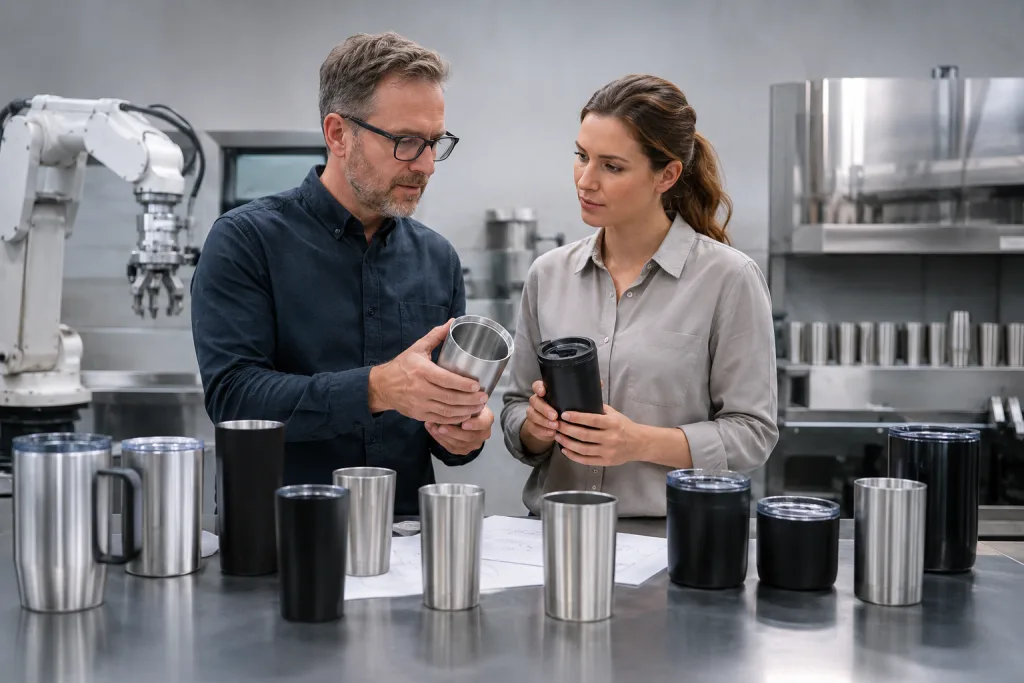
I’ll rewrite this section in-place, keep the HTML structure intact, and make the copy sound like a field-tested sales engineer wrote it.Sampling is where weak suppliers get exposed. Pay for a pre-production sample, not a stock sample with your logo slapped on. A stock sample can show print quality, but it will not prove your exact finish, cap fit, or carton build. A disciplined canteen supplier should give you 7 to 10 days for a decorated sample and send line photos before it leaves Hangzhou, Yiwu, or the wider Zhejiang belt.
Your sample checklist should stay tight and measurable. Run the fill test at 70°C, 90°C, or your own use case. Leave the unit inverted for 24 hours. Check closure torque, logo abrasion, and whether the shoulder picked up a dent in transit. If you ordered canteen promotional pieces, make sure the gift box still holds up under export stacking. If you ordered a customized canteen for retail, check color variance under daylight and fluorescent light. QC pulled one sample here last month and the cap failed after 18 turns; that is the kind of thing that saves a bad PO.
Use sample approval notes as part of the purchase trail. This is the wrong question to ask: “Can we move fast?” The math does not work if the sample record is fuzzy.
Sample PO line items: 2 prototype units, laser logo, matte powder coat, silicone gasket, leak test at 24 hours, carton sample, one shipping label set, and one revision round included.
Do not approve bulk until you can say yes to the feel in hand, the lid closure, and the print. We run into buyers who try to skip this step, then the buyer flagged the lid gap at 1.2 mm and the whole order went back to rework. One missed sample round can cost more than the sample fee itself.
Lock the Bulk PO Terms
I’ll rewrite the section in-place, keep the HTML exactly as-is, and tighten the sales language so it reads like a factory-side PO checklist.Once you move from sample to bulk, write the purchase order like a factory schedule, not a buyer wish list. A strong PO for 316 stainless steel drinkware custom should split out product spec, artwork, packaging, inspection, and delivery terms. That keeps the canteen manufacturer accountable and cuts down on rework when the buyer flagged a mismatch. If you want FOB China, name the port. If you want DDP, spell out duty, VAT, and last-mile fees. The factory in Zhejiang should never be guessing on logistics.
Bulk terms are usually 30% deposit and 70% balance before shipment, though some canteen vendors will take LC on larger orders. Ask for AQL 2.5 for critical defects and AQL 4.0 for major defects; QC pulled the sample, and this is where the math either works or it doesn’t. For logo and color approval, attach the signed golden sample. For packaging, state inner box, master carton, and pallet wrap. We’ve seen distributor buyers lose margin fast when carton spec is missing and damaged goods come back from the line.
Be explicit about numbers.
- MOQ: 3,000 pcs per style or color.
- Lead time: 25 to 35 days after deposit and sample sign-off.
- Tooling: quote separately, especially for a new lid or handle.
- Inspection: third-party or in-house, but write it into the PO.
Check Compliance and Margin
I’ll keep the HTML exactly as-is and rewrite only the prose, tightening it for a real sales-engineer voice with concrete factory details and cleaner margin/compliance language.Compliance is not something you tack on at the end. For Europe, ask for REACH and LFGB files. For North America, ask for food-contact declarations and test reports for the exact build, not a close SKU. We had a buyer flag a PO typo once—“316” became “316L” on the carton art—and the shipment still had to be held until the docs matched. If you sell on Amazon, FNSKU labels, carton marks, and warning text can cause more trouble than the bottle. A corporate canteen promotional order may need lighter retail labeling, but it still needs traceability.
Margin comes from controlling the stack: steel grade, decoration method, carton count, and failure rate. Laser engraving often wins on repeat orders; on a 10,000-unit run, the setup gets spread out fast. Silkscreen is cheaper upfront for a simple logo. If you are a canteen distributor or canteen supplier reselling to regional accounts, ask for tiered pricing at 3,000, 5,000, and 10,000 units. The math does not work if the factory only looks good at one volume.
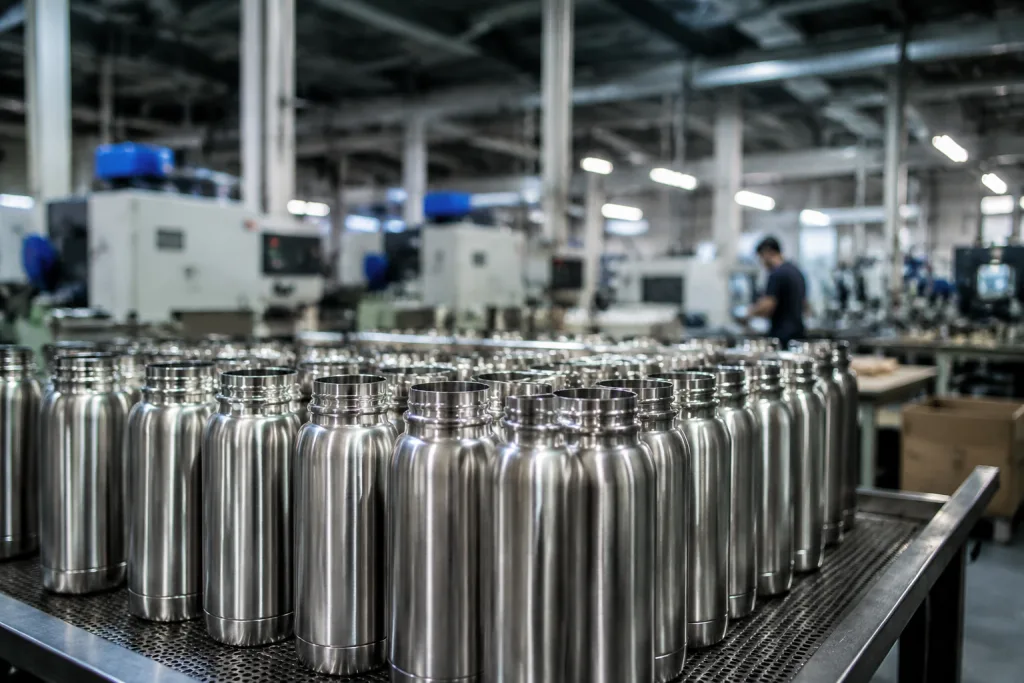
China has plenty of drinkware factories, and Zhejiang has plenty of lines that can quote in a day. The real question is whether they can hold the spec. On our floor, QC pulled the sample after a 48-hour salt-spray check and checked the weld seam again before release. If a canteen manufacturer cannot show incoming steel control, leak test records, and final AQL results, that low price is fake. A proper custom drinkware program runs on repeatability, not one lucky sample.
Send your RFQ for 316 steel drinkware
Share your capacity, logo method, packaging, and target price. We’ll quote from Zhejiang with clear MOQ, sample timing, and bulk lead time.
Frequently asked questions
What MOQ should I expect for 316 stainless steel drinkware custom?
For most Zhejiang factories, a realistic MOQ is 3,000 pcs per style and color. If you need a new lid mold or handle, expect a higher commitment or separate tooling. For simpler runs, 2,000 pcs may be possible, but the price usually rises by 8% to 15%. If you want a canteen custom program with multiple SKUs, ask the factory to combine colors under one body tooling set. That is usually the fastest way to keep unit cost under control.
How long does sampling and bulk production take?
A decorated sample usually takes 7 to 10 days once artwork is confirmed. Bulk production for 3,000 to 10,000 units normally runs 25 to 35 days after deposit and sample approval. Add 5 to 7 days if you need special packaging, a new mold, or third-party inspection. A good canteen factory in China will tell you where the bottleneck is before you pay, not after.
How much more does 316 cost than 304?
In custom drinkware, 316 usually adds about 8% to 20% over 304 depending on market steel pricing, wall thickness, and the finish you choose. On a 500 ml vacuum bottle, that can mean an extra USD 0.40 to USD 1.20 per unit at factory level. The real premium is justified when the buyer needs corrosion resistance, long-term content stability, or a stronger premium-positioned product story.
What should I put on the PO to avoid disputes?
Put the exact capacity, steel grade, wall thickness, logo method, packaging count, carton dimensions, compliance tests, inspection standard, and delivery term on the PO. If you want FOB China, name the port. If you want AQL 2.5 for critical defects, write it. For canteen promotional or custom growler orders, attach the signed golden sample and artwork file version. That removes most ambiguity.
Can a canteen distributor handle custom requests efficiently?
A distributor canteen partner can handle simple artwork and packaging changes, but for structural changes, direct canteen manufacturers or a real canteen factory are usually better. If you need new lid tooling, handle redesign, or a customized growler with performance testing, go straight to the source. For reorders of the same spec, a strong canteen supplier or vendor can be perfectly fine and faster on documentation.