Key Takeaways
- 316 stainless steel usually adds 8%–18% to raw material cost versus 304, so only pay for it when corrosion risk is real.
- For most bulk drinkware programs, MOQ starts at 500–1,000 units per SKU, with 30–45 day production from approved samples.
- Ask for ASTM or ISO material confirmation, REACH documentation, and AQL 2.5 inspection terms before you approve any PO.
- A 0.5 mm to 0.8 mm wall thickness is common; below that, dent risk rises fast in wholesale canteen and growler programs.
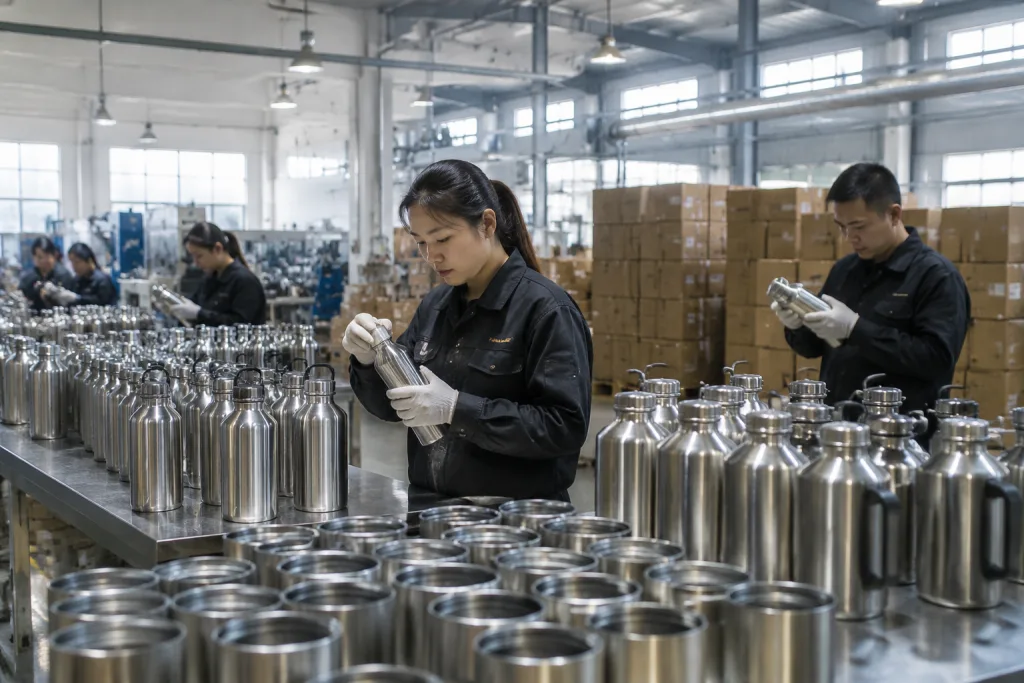
If you are buying 316 stainless steel drinkware bulk, the real question is not whether 316 beats 304. It is whether your product, price point, and sales channel can absorb the extra alloy cost. For most buyers, the answer comes down to end use: salt spray, acidic drinks, long dwell time, and how much corrosion risk your brand is willing to carry. We run this check on the line before quoting. In Zhejiang, factories will quote 316 in one email, but the spec sheet only gives part of the picture.
The common mistake is treating every bulk drinkware order as the same job. A bulk canteen for outdoor retail, a bulk growler for craft beer, and an alcohol flask bulk order for gift sets do not call for the same wall thickness, finish, or test route. A buyer once sent a PO with the wrong polish code, and QC pulled the sample before packing. Start with three numbers: what 316 is paying back, your target landed cost, and the compliance file you need to pass. The math decides the rest.
Start with the use case
The first question is where the cup will work. Boat deck, coastal shelf, acidic drinks, or a wash line that runs every day — that is where 316 earns its keep. We ship a lot of this for marine retail, premium outdoor channels, and bar programs that need a corrosion story buyers can repeat. If the item lives in an office, on a commute, or in broad promo use, 304 is usually the better number on the quote sheet.
Do not pay for alloy the channel does not need. We’ve seen buyers ask for 316 on a 20,000-piece beer growler bulk order, then the math falls apart once the margin sheet lands on the table. A standard beer tumbler wholesale program can often stay at 304 and still clear target margin. The same goes for canteen wholesale and bulk canteen programs: 316 makes sense when the buyer is selling durability, not just printing a logo. One factory in Yiwu once pushed “food grade stainless” on a PO with no material cert attached; QC pulled the sample, found no traceability, and the buyer flagged it before the line even started.
- Choose 316 for salt, acids, and premium positioning.
- Choose 304 for broad retail and price-sensitive wholesale drinkware.
- Reject vague specs like “food grade stainless” without a material certificate.
Know what 316 changes
316 is a metallurgy choice, not magic. Molybdenum gives it better resistance to chlorides and pitting, so buyers use it for growler wholesale and marine-adjacent programs. We see the gain when a bottle sits in sweaty hands, salty air, acidic juice, or gets hit with harsher dishwashing. QC pulled a sample last month with light tea staining on a 304 cup after 12 wash cycles; the 316 sample stayed cleaner. If your best wholesale drink bottle needs a premium outdoor story, 316 gives you fewer customer calls.
The cost delta matters. On a typical Zhejiang quote, 316 raw material can add 8%–18% before printing, packaging, and freight. For a drinkware bulk program, that can wreck the margin math fast. At $6.50 FOB or below, the room disappears quickly. At $14–$24 retail, the premium is easier to carry. Ask the supplier to split material, forming, welding, and finishing costs; otherwise the buyer flags the quote and the math does not work.
What to check on the spec sheet
Ask for the grade designation, thickness, and whether the body, lid parts, and internal components all use the intended material. The shell is only part of the job. We’ve seen PO copies where the lid was typed as 304 and the body as 316, then the buyer blamed the line when the spec drifted. For alcohol flask wholesale and alcohol flask wholesale bulk orders, the closure system matters as much as the shell because taste transfer and seal failure show up in complaints, not lab reports.
Match construction to price tier
Wall thickness, finish, and lid architecture decide whether a bottle feels premium or disposable. For 316 stainless steel drinkware bulk, we usually see 0.5 mm to 0.8 mm on the line. At 0.4 mm, the shell dents fast and feels flimsy in hand; at 0.8 mm, stiffness improves, but freight weight and unit cost jump. For canteen bulk and wholesale canteen programs, that 30% thickness gap can decide whether the SKU moves or stalls.
Do not let a glossy surface hide weak construction. We have seen a polished bottle pass first glance and still fail on seam control or lid fit, and the buyer flagged it in the sample room. For a bulk growler or beer growler wholesale bulk order, I check neck finish, gasket compression, weld smoothness, and cap torque before I care about decorative packaging. On beer tumbler bulk and beer tumbler in bulk programs, the usual problem is lid mismatch after assembly, not the steel grade.
- 0.5 mm: workable for lower-cost retail, higher dent risk.
- 0.6 mm–0.7 mm: balanced choice for most wholesale drinkware.
- 0.8 mm: premium feel, better rigidity, higher freight weight.
Request samples and abuse them like a buyer, not like a catalog reader. Fill them, shake them, drop them from 1 meter, then check lid seepage after 20 cycles. QC pulled the sample and found one cap leaking at the gasket edge after the third drop, which is exactly why this test matters. If you are sourcing bulk drinkware for Amazon or specialty retail, this is the wrong question to ask: “Does it look good?” Ask whether the structure survives use.
Treat compliance as a gate
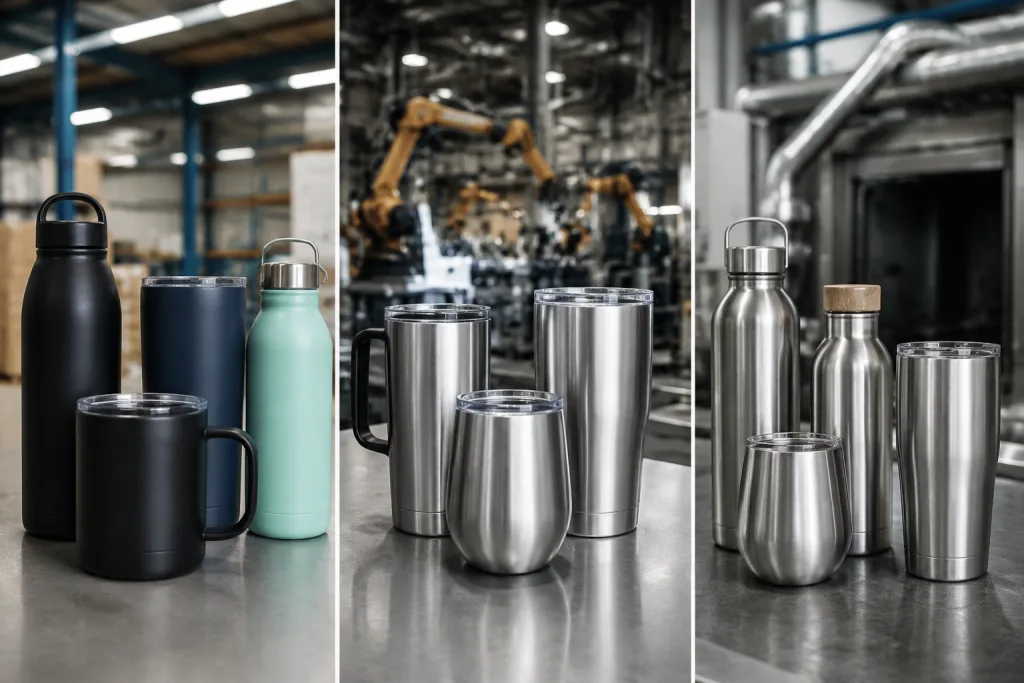
For Europe and North America, compliance is a gate, not a checkbox. Ask for the material declaration, migration papers where they apply, and a quality file with ISO 9001 or an equivalent process-control record. If the supplier says BSCI, check the audit date and scope. Don’t just scan the logo. For food-contact drinkware, REACH is a common baseline in Europe, while U.S. buyers usually ask for FDA supplier declarations plus internal migration or heavy-metal test reports. If the cup has coatings, print, or colored lids, treat those parts the same way as the steel. QC pulled a lid sample at 23mm the other day and the color rub failed after 50 cycles; that kind of miss turns into a buyer flag fast.
On a serious drinkware wholesale order, we lock inspection terms before the line starts. AQL 2.5 is normal for major defects on standard consumer goods, but premium buyers often push for tighter limits on leakage, cosmetic marks, and carton damage. Fair call. If the retail channel is strict, the math changes. I’ve seen a 1% leak rate blow up into a full rework because the buyer skipped pre-production sample sign-off. One PO even came in with “316 stainelss steel” typed twice, and that typo hid a missing lid spec until the sample stage. China has strong factories, including in Zhejiang, but the buyer has to write the standard clearly.
Ask for the certificates, then ask how the factory controls incoming coils, welding, and lid assembly. A certificate without line control is just paper.
Price the order like a landed program
Your FOB price is only the start. For 316 stainless steel drinkware bulk, we price the landed program: tooling, sampling, packaging, freight, duty, and the cost of a bad run. A Zhejiang supplier can quote a sharp FOB number, then the lid needs a new mold or the logo needs one more pass on the pad printer, and the math changes. On one order, MOQ was 500 to 1,000 units per color or SKU, and sample approval to ship-out was 30 to 45 days. If you need a rush slot, say it early; we’ve seen rush fees land at 8% to 15%.
When the customer asks for a beer growler in bulk or beer growler wholesale run with custom branding, packaging changes freight weight faster than most buyers expect. A 2 mm thicker box, a gift carton, or a PE insert all adds cubic volume. That hits bulk drinkware moving by sea, and it bites harder when 2 or 3 SKUs share one container. For alcohol flask in bulk programs, we push for dent protection too, because QC pulled the sample and found corner crush on thin-wall gift packs.
Use the quote to force clarity. Ask for unit price at 1,000, 3,000, and 5,000 units. Ask for separate pricing on laser engraving and silkscreen. Ask what changes if you switch from matte to brushed finish. The buyer once flagged a PO typo on the finish code, and the factory had to recheck the line before we could run. Do that homework, and you see fast whether 316 fits the target or whether a simpler build wins.
Build your supplier shortlist
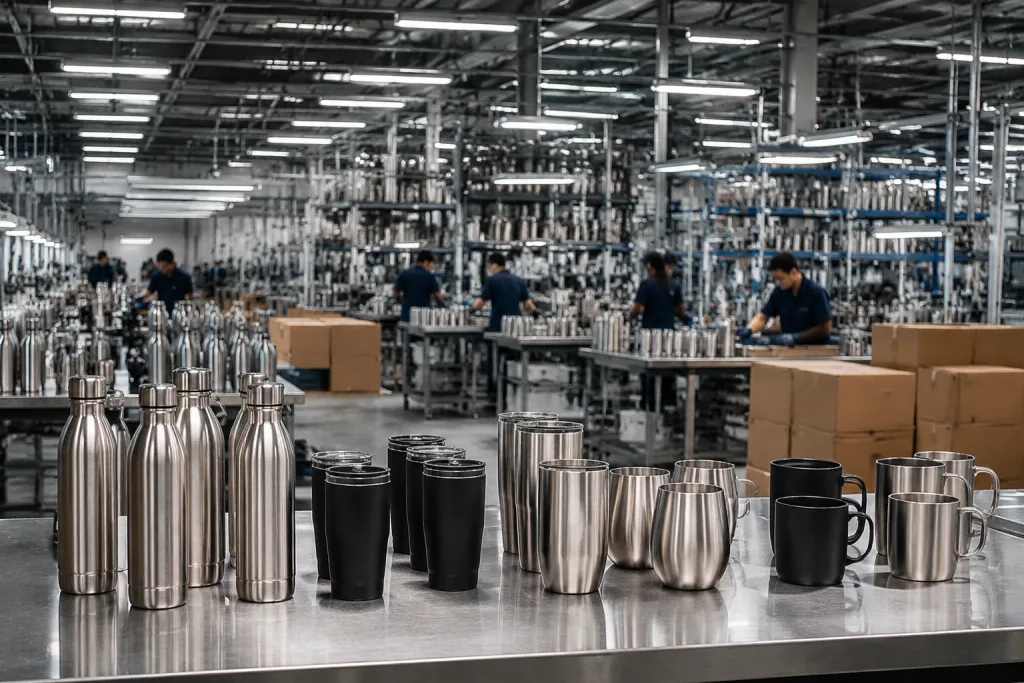
Do not pick a supplier from one polished catalog. Shortlist factories that can show real output, test records, and stable finishing. A stainless drinkware factory in Zhejiang should state its monthly capacity plainly, usually 200,000 to 500,000 units depending on model mix, and point to the bottleneck on the line: polishing, vacuum sealing, lid assembly, or packing. If the sales rep cannot talk through those limits without drifting, you are probably dealing with a trading layer, not the factory.
This applies whether you are buying canteen wholesale, wholesale growler, or alcohol flask wholesale bulk. The supplier needs the right machines, and the discipline to hold spec across lots. Ask for in-process QC photos, not just glossy finished shots. Ask how they track material from coil to finished unit. Ask whether they can handle private label, FNSKU stickers, and carton labeling for Amazon. We have seen this go sideways when a buyer skipped that part and only checked the sample cup. A good partner in China answers straight; a weak one keeps sending lifestyle images.
If your launch date is fixed, set the cadence early. Weekly sample updates, signed artwork, and one change-control point save a lot of rework. We once caught a PO typo on a lid color code before mass production, and that saved a 12-day delay. That is the real sourcing job: the factory can run scale, but you still need fast decisions from both sides.
Request a quote with real spec control
Send your target grade, wall thickness, MOQ, and destination. We will quote 316 drinkware bulk with clear costs, timing, and compliance documents.
Frequently asked questions
Is 316 stainless steel worth it for wholesale drinkware?
It is worth it when corrosion resistance is part of the selling point or when the product sees salt, acids, or aggressive washing. In standard retail use, 304 is usually enough. On bulk programs, 316 commonly adds 8%–18% to material cost, so you should reserve it for products priced to carry that premium. For premium outdoor, marine, or beverage-specific SKUs, 316 can reduce complaints and support a stronger margin story.
What MOQ should I expect for 316 stainless steel drinkware bulk?
For most Zhejiang factories, MOQ is 500 to 1,000 units per SKU or color, sometimes higher if the lid or finish is custom. Simple shapes may accept lower trial quantities, but you will pay more per unit. If you need printing, laser engraving, or special packaging, ask for tiered pricing at 1,000, 3,000, and 5,000 units so you can see the cost curve before you commit.
What lead time is normal for a bulk canteen or growler order?
After artwork and sample approval, 30 to 45 days is normal for a bulk canteen, growler bulk, or other wholesale drinkware order. If tooling is new or packaging is custom, plan for 45 to 60 days. Sea freight adds roughly 20 to 40 days depending on destination. Rush production is possible, but factories often charge 8% to 15% more and will expect faster feedback from you.
What inspection standard should I use?
AQL 2.5 is a common starting point for major defects, with tighter limits for leakage and functional issues if the product is premium. Ask for pre-production samples, in-line checks, and final inspection before shipment. For Europe, request REACH-related documentation; for U.S. buyers, ask for food-contact declarations and testing records. If the supplier cannot describe traceability, keep looking.
Can I source beer growler wholesale bulk and alcohol flask wholesale from the same factory?
Yes, many stainless drinkware factories can handle both if they have deep drawing, welding, polishing, and assembly capability. The key is whether they can control different neck finishes, closures, and cosmetic standards in one program. Beer growler wholesale bulk often needs stronger body construction and lid testing, while alcohol flask wholesale bulk focuses more on seal integrity and finish quality. Ask for capacity by product type, not just general monthly output.