Key Takeaways
- 316 stainless usually adds USD 0.35-0.90 per unit over 304 on a 5000-piece run
- Simple custom canteen MOQ starts at 1000-2000 pcs; complex lids often need 3000 pcs
- Standard lead time is 25-35 days, while OEM packaging can add 7-12 days
- AQL 2.5 major / 4.0 minor is common; REACH and food-contact testing should be quoted early
If you are sourcing a 316 stainless steel drink bottle custom program, the real question is not whether the bottle looks good. It is what pushes the unit price from USD 3.20 to USD 7.80, how MOQ shifts when you add matte powder coat or laser engraving, and whether your launch can live with a 28-day or 55-day production window. Buyers underquote that part all the time.
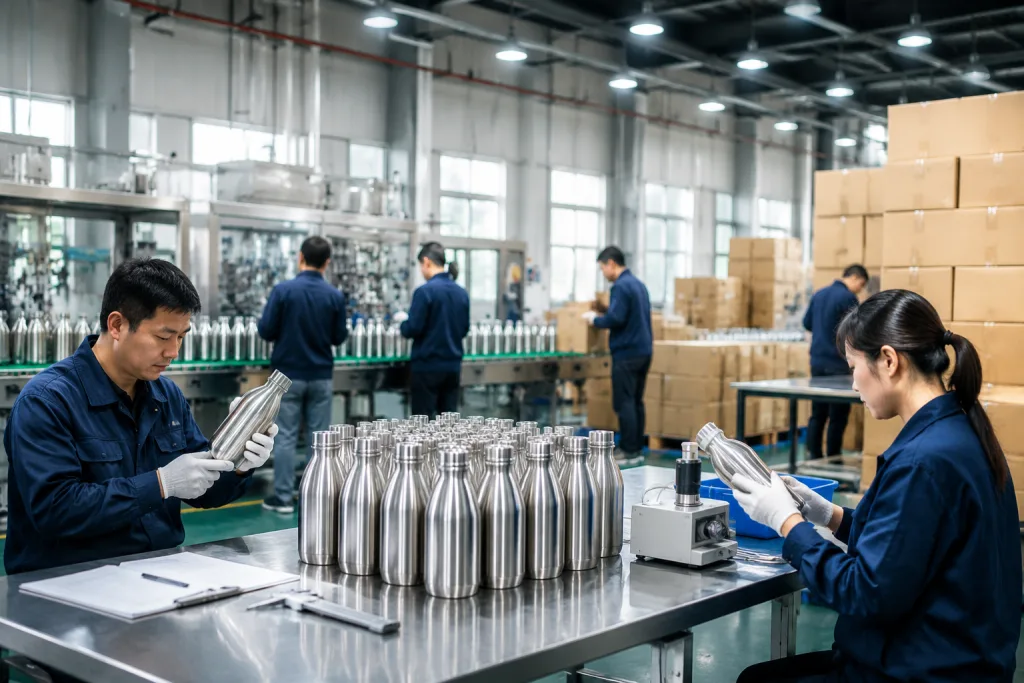
At our Zhejiang canteen line, we see the same pattern every week: grade matters, but the lid mold, decoration method, and inspection standard move the landed cost faster than the steel spec. QC pulled a sample last month for a 0.3 mm lid gap, and the buyer flagged it before shipment. If you are comparing canteen custom options across China, this guide gives you the numbers that matter, not sales fluff.
What 316 changes in cost
I’ll rewrite the section in a more grounded sales-engineer voice, keep the HTML structure intact, and preserve the exact numbers and tags.Buyers ask this all the time: does 316 stainless steel justify the extra spend? For most custom drinkware runs, the answer depends on corrosion exposure and where the bottle sits in your price ladder, not on a material badge. We run this in Hangzhou every week, and the mill quote tells the story fast. In China, 316L inner walls usually cost more than 304 because the alloy carries more molybdenum and the steel market does not give you a break. On a 5000-piece order for a 500 ml bottle, the raw-material delta is usually USD 0.35-0.90 per unit, and with a tighter wall spec it can hit USD 1.10.
The bottle price does not come from steel alone. A plain double-wall canteen custom body with a basic PP lid may land around USD 3.20-4.10 FOB Ningbo, while a 316 interior, food-grade silicone seal, and matte powder finish often moves to USD 4.60-6.20. We had one buyer flag a PO typo on the lid spec, and the rework ate two days on the line. Add a stainless cap, carry loop, or a fussy gasket stack, and the unit cost climbs again because assembly labor in Zhejiang is not the pinch point; sourcing the right parts is.
What you pay for is the cost stack:
- Material: 316 inner wall premium for acidic drinks, coastal markets, or a higher-end custom drinkware line
- Finish: spray paint, powder coat, or gradient wrap adds labor and scrap risk; QC pulled the sample twice on a 0.3 mm print offset
- Lid: one-part lids are cheap; multi-function lids are not, especially when the spring and gasket come from different vendors
- Testing: REACH, LFGB, BPA-free declaration, and migration testing can add USD 120-450 per SKU at the sample stage
If you are buying from a canteen supplier in Zhejiang, ask for a quote split by body, lid, print, and packaging. That is the right question to ask. Otherwise the math does not work, and you end up comparing two bottles that are not built the same.
MOQ tiers that actually work
I’ll rewrite just this section, keep the HTML structure intact, and tune the wording to sound like a factory-side sales engineer.MOQ is where a lot of distributor drinkware jobs get stuck. We see it on the line all the time. One factory gives you a sample qty, another quotes production, then a third number appears once decoration is added. Read those as three cost models, not sales talk. For a standard 500 ml stainless bottle, a workable MOQ ladder is 500 pcs for stock-color sampling, 1000-2000 pcs for one-color logo work, and 3000 pcs+ for custom packaging or lid tooling changes.
The math is simple. At 1000 pcs, you may pay USD 5.80-7.50 per unit because setup cost sits on a small run. At 5000 pcs, the same bottle often drops to USD 4.10-5.30. At 10000 pcs, a well-run canteen factory in Zhejiang can sometimes shave another USD 0.25-0.40 if the lid stays standard and the artwork is clean. QC pulled the sample and found the same thing twice: repeat orders win on unit cost. A buyer once pushed back on a 1,200 pcs logo run, then came back at 5,000 pcs after seeing the landed price.
Do not treat MOQ as a yes-or-no gate. Treat it as a design constraint. If your first launch needs only 800 units, skip the extras:
- two-tone silicone sleeves
- custom-shaped lids
- full-wrap CMYK artwork
- gift boxes with inserts
Those add-ons can push a custom bottle into the next MOQ tier even when the bottle body is standard. We’ve seen that go sideways when the PO says “custom lid” but leaves the cap drawing blank. A good vendor will point out which parts are stock and which parts need new tooling. If they cannot do that, the quote is not solid.
Lead times by build complexity
I’ll rewrite just the HTML prose, keep the tags and numbers intact, and tighten the wording so it sounds like a factory-side sales engineer.Lead time carries as much weight as price. A standard custom canteen with existing tooling usually takes 25-35 days after sample approval and deposit. If you need new lid tooling, a special coating, or printed gift packaging, plan on 35-50 days. A fully customized growler or heavier customized drinkware format with new molds can stretch to 55-70 days, and peak season in China will push it further. We run that schedule on the line every week, so the math is not a guess.
Do not mix shipping into production time. A 40-foot container from Zhejiang to North America may add 18-32 days ocean transit, depending on port routing. Air freight moves fast, but the bill jumps hard; on small urgent runs, it can add USD 2.50-6.00 per unit to a stainless bottle. That works for a launch batch. It does not work for repeat distributor canteen orders. QC pulled the sample once and found the carton test still pending, which is why the buyer flagged the lead time as sloppy.
A realistic schedule from a canteen manufacturer in Zhejiang looks like this:
- Day 1-5: final artwork, spec confirmation, and quotation lock
- Day 6-12: pre-production sample and lid fit check
- Day 13-20: material booking and decoration setup
- Day 21-35: mass production, inspection, packing
If a canteen factory promises 12-day production on a custom bottle with powder coat, logo, and gift box, they are quoting the shell or skipping QA time. That is the wrong question to ask. Ask where inspection, labeling, and carton drop testing sit in the schedule. We have seen this go sideways on a PO with a missing lid color code, and the whole shipment sat for 4 extra days.
Decoration choices that move the price
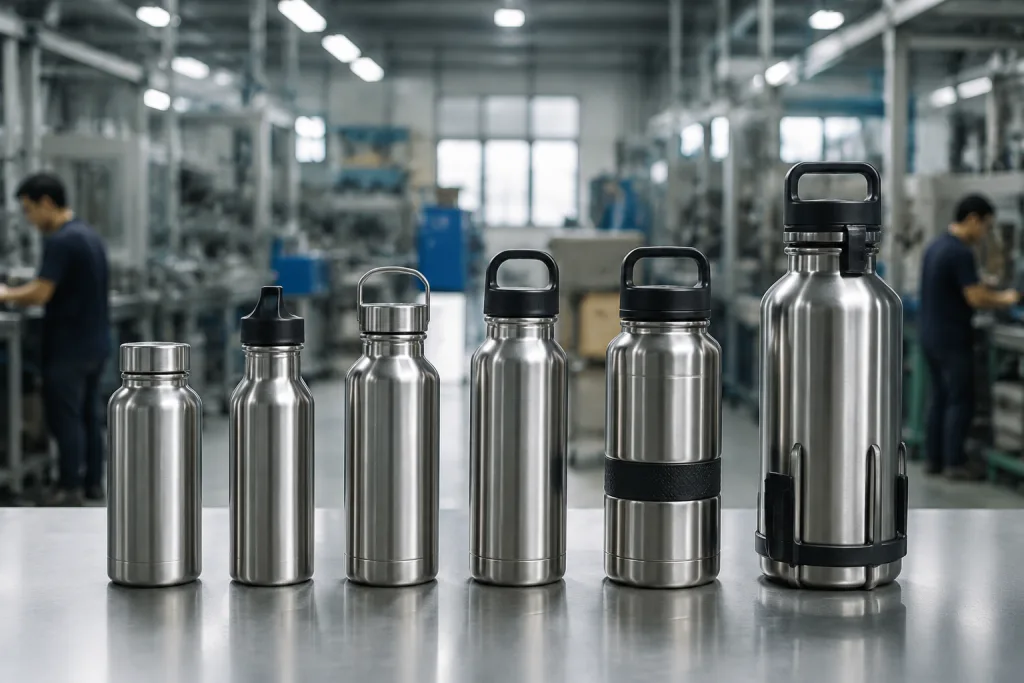
I’ll rewrite the section in-place, keep the HTML exactly as-is, and strip the AI-ish phrasing while making it sound like a factory-side sales engineer.Decoration is where buyers blow the budget or underquote it. On a 316 stainless steel drink bottle custom order, laser logo is usually the cheapest branding route and the least risky on the line. On 5000 pieces, it often adds only USD 0.08-0.20 per unit. One-color silk screen lands in the same range, but the real test is the topcoat and whether the bottle goes through dishwashing. Full-wrap UV or heat transfer can add USD 0.35-1.20, and once you choose that route, scrap gets expensive fast.
If you want a premium hand feel, powder coating is the better buy. It usually adds USD 0.25-0.70 depending on color and curing time. Soft-touch coating, speckled paint, and metallic gradients photograph well, then QC pulls the sample and the defect rate shows up. We’ve seen this go sideways on export orders when the buyer approved artwork before asking for the reject rate; a Zhejiang canteen supplier should give you that number up front.
For distributor programs, plain and durable usually wins. If the bottle is going out as canteen promotional stock, keep the artwork tight and print on the carton instead. If it’s for premium retail, pay for the finish and skip the extra print layers. One clean logo on a 316 interior bottle sells better than five effects that start chipping after 6 weeks.
Good decoration is the one that survives freight, shelf handling, and 50 dishwasher cycles, not the one that looks expensive in a render.
That is why canteen distributors should ask for a sample with the exact lid, exact logo position, and exact carton. A PO typo on logo height or carton size sounds small, but the line will catch it only after tooling is set, and then the math does not work.
Testing and compliance costs
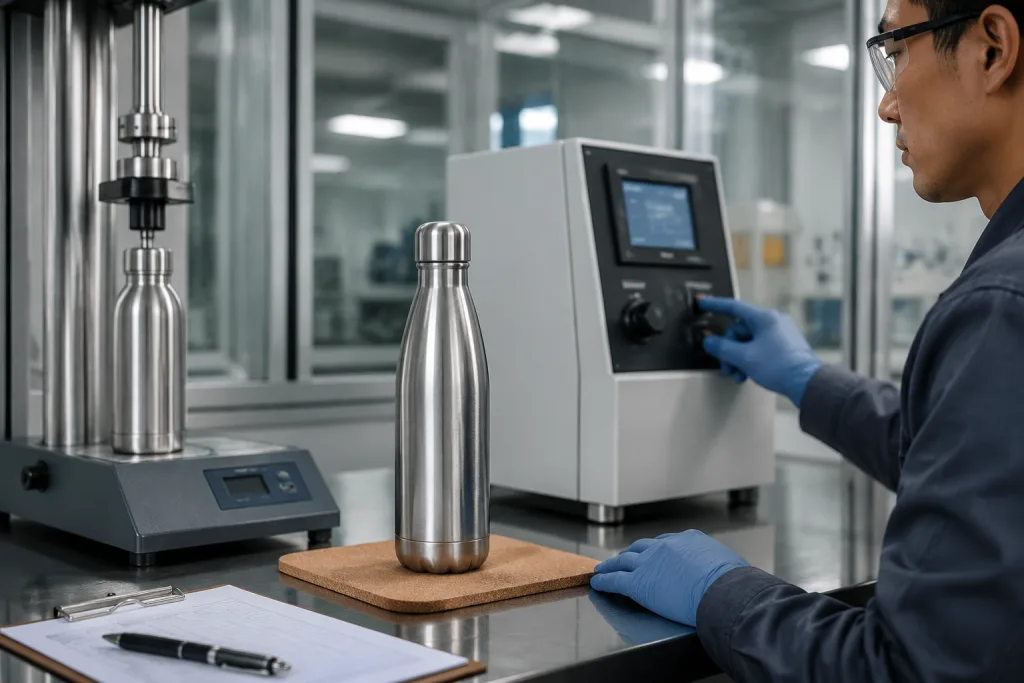
I’ll rewrite the section in-place, keep the HTML tags and numbers intact, and tighten the language to sound like a factory-side sales engineer.For Europe and North America, compliance is not optional. If you are sourcing from China, ask your bottle factory for current test reports, not old PDFs from a different SKU. The usual set covers food-contact migration tests, REACH screening, BPA-free declarations for plastic parts, and sometimes California Proposition 65 review, depending on channel requirements. We’ve seen buyers get burned by a report that matched the shape but not the resin. Lab fees often add USD 120-450 per SKU, and re-testing costs more when the cap material or coating changes.
On the line, ask for AQL 2.5 major / 4.0 minor as the default inspection basis unless your channel wants tighter controls. For Amazon or retail programs, buyers also ask for carton drop testing and barcode verification. If FNSKU labels are required, confirm whether the bottle vendor applies them or only prints outer carton marks. Miss that early and packing slips by 1-3 days. The math doesn’t work if the PO says one thing and the carton spec says another.
BSCI or similar social compliance audits matter when your brand needs chain-of-custody reassurance. A Zhejiang factory that ships at scale usually has those records on file; we run into this every season. If not, build time into approval. QC pulled the sample, and the buyer flagged it because the audit file was still in process. Cheap bottles get expensive fast when a container sits on hold for missing paperwork.
One practical point: custom drinkware programs with 316 steel are sold as premium, but the paper trail stays the same as a standard customized canteen order. Premium pricing does not reduce regulatory responsibility. We’ve seen this go sideways when a buyer assumed the spec alone was enough.
How to brief the factory well
I’ll rewrite the section in-place, keep every HTML tag and list structure intact, and tighten the language so it reads like a factory-side sales engineer wrote it.The fastest way to get a clean quote is to brief the bottle factory like an engineer, not like a shopper. Send volume, target market, lid type, logo method, packaging requirement, and required certifications in one shot. If you only ask for a “316 stainless steel drink bottle custom price,” the reply will be mush. If you specify 500 ml, 5000 pcs, laser logo, matte black, gift box, REACH report, FOB Ningbo, we can price it without back-and-forth. QC pulled a sample on the line last week and found the PO said “mat black”; that one typo would have delayed print setup.
Good factories in Zhejiang can turn around first quotes in 24-48 hours and physical samples in 7-12 days if the tooling is already there. For larger programs, a bottle maker may run 200,000-300,000 units per month across multiple lines, but that number only works when your spec stays fixed. Change the cap, and the math changes. We’ve seen buyers push for “small revisions” after approval; then tooling, inspection timing, and carton counts all move. A caliper on the bench does not care about sales urgency.
Use this brief structure:
- Product: custom canteen, custom growler, or insulated bottle
- Material: 316 interior, 304 exterior if applicable
- Decoration: laser, silk screen, UV, powder coat
- Commercial: target unit price, MOQ, lead time, shipping term
- Compliance: REACH, LFGB, FDA, ASTM, AQL target
That level of clarity helps suppliers quote straight. It also lets distributors compare China offers without guessing what is hidden in the price. The wrong question is “can you give me your best price”; the better one is “what changes if I move from 1000 pcs to 5000 pcs and keep the same carton pack?”
Get a real quote from Zhejiang
Send your volume, lid spec, logo method, and destination port. We’ll price your custom drinkware with MOQ, lead time, and test scope upfront.
Frequently asked questions
What is a fair FOB price for a 316 stainless steel drink bottle custom order?
For a 500 ml double-wall bottle, a fair FOB China price is usually USD 4.10-6.20 at 3000-5000 pcs, depending on lid, coating, and logo method. A simple laser logo and standard PP lid sit at the low end. Add a stainless cap, powder coat, or gift box, and the price can move to USD 6.80-8.50. If someone quotes far below that, check wall thickness, vacuum retention, and whether they are using true 316 on the inner wall or only advertising it on the spec sheet.
How long does sampling take for a custom canteen?
For an existing bottle shape, sample lead time is usually 7-12 days after artwork confirmation. If the lid is standard, you may get a pre-production sample faster. If you need a new mold for a customizable canteen lid or special carry handle, plan on 15-25 days. You should also allow 2-5 days for courier transit from Zhejiang to your office. For North America or Europe, request two samples: one for appearance and one for fit and thermal testing.
Is 316 worth it for customized drinkware sold in retail?
Yes, if your buyer sees the bottle as premium or if the bottle will carry acidic drinks, sports nutrition, or repeated dishwasher use. 316 is more corrosion resistant than 304 and can justify a higher shelf price. On the factory side, the premium is often only USD 0.35-0.90 per unit in volume, which is small compared with the retail margin. If your market is price-led and the bottle is for light promotional use, 304 may be more economical.
What MOQ should I expect from canteen manufacturers in China?
For most custom drinkware, 1000 pcs is a realistic entry point for simple logo work, and 2000-3000 pcs is more common for complex decoration or custom packaging. Some canteen manufacturers can do 500 pcs for a stocked model, but that usually means less price leverage. If you are a distributor canteen buyer planning repeat orders, ask for a tiered quote at 1000, 3000, and 5000 pcs. That shows the real price curve and helps you forecast margin.
What quality checks should I require before shipping?
Ask for incoming material checks, in-process leak testing, vacuum retention checks, and final carton inspection using AQL 2.5 major / 4.0 minor. For 316 stainless steel drink bottle custom projects, also request migration testing, seal fit confirmation, and drop testing on packed cartons. If you sell into Amazon or retail, ask for barcode verification and FNSKU label placement before packing. A good canteen supplier in Zhejiang will document these checkpoints and share photos or inspection reports.