Key Takeaways
- 316 stainless steel gives better chloride resistance than 304, but it usually adds 8-15% to unit cost.
- A serious RFQ should specify 0.5 mm or 0.6 mm wall thickness, 18/8 inner wall, and vacuum retention targets.
- Sample approval should cover lid torque, drop test, and hot-fill performance before you issue the bulk PO.
- For China sourcing, ask for REACH, LFGB, FDA, and AQL 2.5/4.0 inspection terms in writing.
When you source a 316 stainless steel double walled bottle wholesale, you are not buying a “bottle.” You are buying a spec, a coating system, a lid assembly, a packing plan, and a production slot in China or Zhejiang. Miss one line in the RFQ, and the cheap quote turns into an expensive bulk order. We see that mistake all the time.
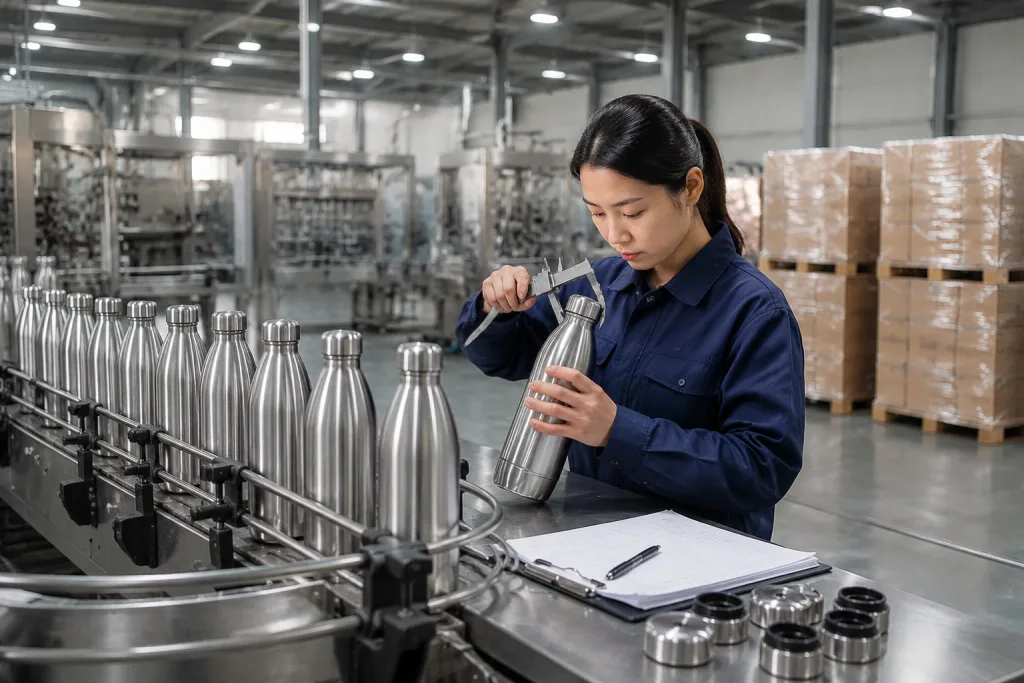
The better move is plain: write the RFQ like a production engineer, not a marketing brief. Ask for grade, wall thickness, vacuum performance, finish, test standards, carton count, and whether the factory can keep the same raw-material lot from sample to bulk run. On our line, MOQ starts at 3,000 pieces per SKU, monthly capacity is 200,000 units, and normal lead time is 25-35 days after sample approval. QC pulled the sample last week at 316L, and the buyer flagged a missing carton count on the PO. That is the kind of detail a China supplier should answer without hedging.
Start with a hard RFQ
Do not send a vague note asking for “best price.” The factory cannot quote a ghost. For 316 stainless steel double walled bottle wholesale, the RFQ needs capacity, lid style, finish, logo method, carton requirements, destination port, and target annual volume. We had a buyer send “500ml bottle, urgent” and the line asked six follow-up questions before lunch. If you need a best wholesale drink bottle for retail, name the use case first: office, outdoor, gym, or premium gift. A complete brief saves 3-5 days; an incomplete one burns them.
For the PO line items, write them exactly as they should be produced. The buyer flagged one PO last month because “750 ml” appeared in the spec sheet and “500ml” was typed in the order line; QC pulled the sample and caught it before packing.
- 316 inner wall, 304 outer wall, 0.5 mm thickness
- Vacuum double-wall construction, 500 ml or 750 ml
- Powder coat or brushed finish, Pantone reference if needed
- Lid type, gasket material, and spare-part count
- Packaging: 1 pc polybag, 24 pcs/carton, master carton dimensions
Ask for FOB Ningbo or FOB Shanghai pricing, and state the testing standard in the same message. For wholesale drinkware, the quote should say whether the factory works to AQL 2.5 for critical defects and AQL 4.0 for major defects. We run these checks on the line; if the supplier cannot write that cleanly, the math does not work.
Read the quote like an engineer
The first quote is not the decision; it is the filter. We run this check on the line every week: a unit price can hide steel grade, wall gauge, lid tooling, and coating thickness. A quote for drinkware bulk that is $0.40 lower often means thinner steel or a generic lid with no spare gasket. On a premium 316 stainless steel double walled bottle wholesale program, a realistic EXW range is usually USD 2.80-5.40, depending on size, finish, and packaging. If a supplier goes below that with no breakdown, ask where the cost was cut.
Compare line items, not just the total:
- Material grade: 316, 304, or “food-grade stainless”
- Wall thickness: 0.4 mm, 0.5 mm, or 0.6 mm
- Vacuum performance: 6-12 hours hot, 12-24 hours cold depending on design
- Lid tooling: existing mold or new mold fee
- Print method: silkscreen, laser engraving, heat transfer
For wholesale drinkware orders, the supplier should show sample cost, tooling cost, and packaging surcharge as separate lines. QC pulled a sample last month and found a hidden 0.2 mm wall drop that never showed up in the headline price. That is why this is the wrong question to ask: “What is your best price?” Two factories in Zhejiang can look close on paper and ship different reality.
Sample before you scale
Never place a bulk PO off renders. We’ve seen that go sideways. Request physical samples and test them like a buyer who has already budgeted for returns. For a canteen wholesale or premium bottle program, ask for 2 sample sets, or 3 if lid colors and coatings are in scope. On the line, QC pulled the sample and checked the 316 liner wall at 0.5 mm, then we watched the cap threads by hand. The sample stage tells you if the bottle sweats, if the lid cross-threads, and if the coating chips at the base after a controlled drop. That is the question that matters: does this factory know drinkware, or just email replies?
Use a simple sample checklist:
- Leak test with 100% fill and inverted hold for 24 hours
- Hot water test at 95°C and ambient cooling check
- Drop test from 80 cm onto hard surface
- Odor check after first wash and after boiling water
- Logo alignment and color match against approved artwork
For alcohol projects like alcohol flask bulk or alcohol flask wholesale, the same discipline applies. Ask for the stainless interior spec and the cap lining data, then match them to your market’s contact rules. On one PO, the buyer flagged a simple typo in the artwork file and it would have put the logo 4 mm off center. If you are sourcing a growler wholesale item, check the mouth diameter and handle rigidity, because that is where user complaints start. Good samples can save one full production cycle in China. Bad samples turn into claims.
Lock compliance and test data
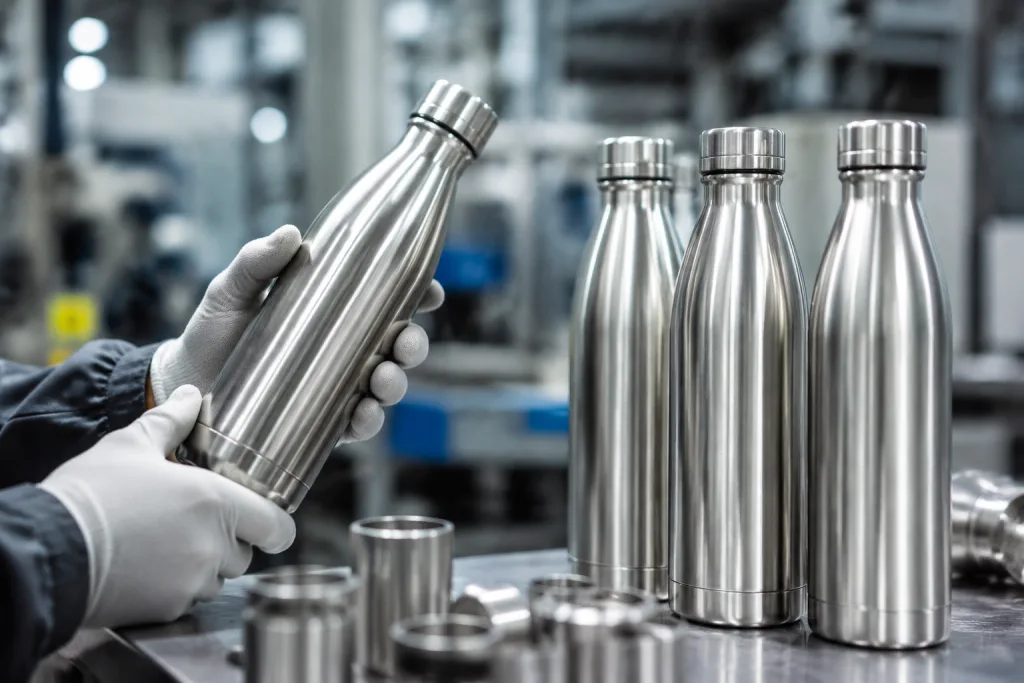
Compliance is where a lot of buyers slip. If a factory says “food grade” and shows no paper, customs and retail audits will treat it as noise. For Europe, ask for REACH and LFGB support; for North America, ask for FDA food-contact declarations and material traceability. If you want a Zhejiang factory to look serious, ask for the mill certificate on the steel coil and keep the batch number tied to the PO. That is the line between a real supplier and a quote collector.
At minimum, the bulk file should contain:
- Material declaration for 316 stainless steel
- Test report for heavy metals and coating safety
- BSCI or similar social compliance status if your buyer asks for it
- Carton drop test or ISTA-style packing evidence if shipping by sea
- Inspection plan using AQL 2.5 for appearance and leakage
This step gets more important on niche SKUs. A beer growler bulk order can need a different lid torque and pressure target than a standard bottle; we have seen that go sideways when a buyer copied the wrong spec sheet. A beer tumbler wholesale bulk run may need a different finish to hold up against condensation marks, and QC pulled the sample at 0.3 mm because the buyer flagged the cap fit. Ask for the test method in plain English or your language. If the supplier can put the numbers on the table, they usually know how to pass.
Place the bulk PO cleanly
Your purchase order should be plain and tight. That is the right way to do it. Include the exact SKU, approved sample number, color code, finish, carton spec, barcode format, and delivery schedule. If you need wholesale canteen or canteen bulk quantities in 3 colors, split the PO by variant so the line cannot mix cartons later. We have seen a 2-color PO turn into a 4-carton mess because the buyer left the packing detail to email. The production manager needs build instructions; the warehouse needs pack instructions.
A clean PO for drinkware wholesale usually has this structure:
- Item description with capacity and grade
- Approved sample reference and artwork code
- Unit price, total quantity, and overrun/underrun tolerance
- Inspection standard and hold point before shipment
- Packing marks, pallet rules, and FNSKU if you sell on Amazon
If you are doing beer growler wholesale, beer growler wholesale bulk, or growler bulk orders, confirm whether the handle or cap packs separately, or you will get scuff marks by the time QC pulls the sample. For alcohol flask wholesale bulk or alcohol flask in bulk, tell us if the inner carton needs extra space so the finish does not get crushed. This is the wrong question to ask after the PO is issued. A good PO cuts rework, and that usually means we can ship on time instead of spending 2 days chasing clarifications.
Inspect before shipment
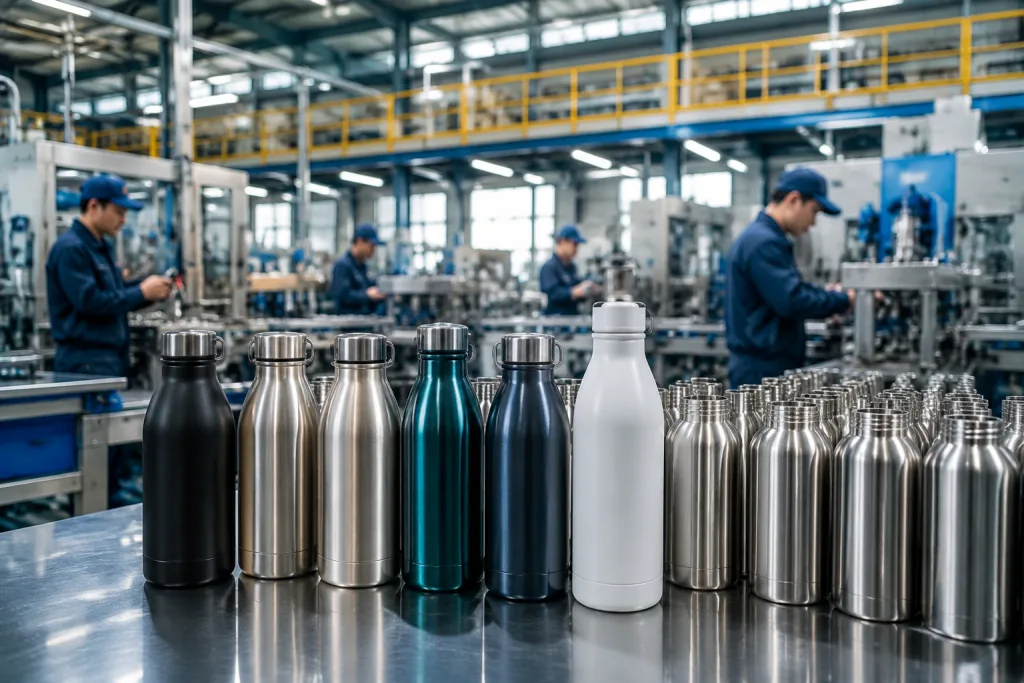
Do not release payment just because the line is done. Final inspection is where we catch the problems samples miss at scale: mixed lids, scratched bodies, wrong carton labels, and missing accessories. For a commercial order from Zhejiang, we run a pre-shipment check on 100% of cartons for count verification, then pull AQL samples for appearance and leakage. On one 18,000-unit lot, QC found 17 cartons with the wrong barcode. If the order is urgent, ask for carton photos, pallet wrap shots, and random opening videos before you book the vessel.
Use a practical release checklist:
- Count matches the PO and the approved overrun tolerance
- Logo position and color are checked on random cartons
- Leakage and vacuum pull tests pass on sampled units
- Outer carton marks, country of origin, and barcodes are verified
- Shipping documents match the commercial invoice and packing list
This gate matters across the board, whether you source a bulk canteen, bulk growler, or a premium beer tumbler in bulk. If inspection fails, do not argue about it; ask for rework, replacement, or credit before the goods leave the factory. We’ve seen this go sideways when a buyer signed off on a typo in the packing list and the math stopped working at the port.
Send your RFQ with exact specs
We can quote 316 stainless steel double walled bottle wholesale with clear MOQ, samples, and bulk terms from Zhejiang, China.
Frequently asked questions
What MOQ should I expect for 316 stainless steel double walled bottle wholesale?
For a factory in Zhejiang, a practical MOQ is usually 3,000 pieces per SKU for a custom 316 stainless steel double walled bottle wholesale program. If you want multiple colors, lid types, or logo variants, each variant can trigger its own MOQ. Some suppliers will quote 1,000 pieces, but the unit price is usually 10-20% higher and the lead time can stretch by 7-10 days. For better pricing, keep the bottle body constant and change only one variable, such as the lid color or print method.
How do I compare 316 vs 304 stainless steel pricing?
316 normally costs more because of the added molybdenum content and the better corrosion resistance. In wholesale drinkware, the upgrade often adds about 8-15% to the raw-material portion of the price, and the final EXW increase can be around USD 0.20-0.60 per bottle depending on size and finish. If your product is sold in humid, coastal, or chloride-heavy environments, 316 is worth it. If you only need a basic promotional item, 304 may be enough, but say that clearly in the RFQ.
What should I test on samples before bulk ordering?
Test leakage, lid torque, vacuum retention, coating durability, and odor. For a double-walled bottle, fill it with 95°C water, seal it, and check the outer wall after 30 minutes and again after 2 hours. Do a 80 cm drop test, then inspect the base, weld line, and lid threads. If you are sourcing beer growler wholesale bulk or alcohol flask wholesale bulk, also check seal integrity after repeated opening and closing. One bad sample usually becomes a bulk problem later.
What compliance documents should a China supplier provide?
For Europe, ask for REACH and LFGB support; for North America, ask for FDA food-contact declarations. For a professional China supplier, also request material certificates, coating test reports, and social compliance such as BSCI if your customer requires it. Keep the batch number tied to the mill certificate. If the supplier cannot provide written documents, treat the product as unverified, no matter how good the sample looks.
How long does production take after sample approval?
For a normal 316 stainless steel double walled bottle wholesale order, production is often 25-35 days after sample approval and deposit receipt. If you need custom tooling, new lids, or special packaging, add 10-20 days. Shipping time is separate: sea freight from China to Europe or North America usually adds another 18-35 days depending on route and congestion. If your launch date is fixed, build a 60-day buffer from PO to warehouse receipt.