Key Takeaways
- 316 stainless steel usually adds USD 0.35-1.10 per unit over 304 on a 500-1,000 piece order
- Typical MOQ tiers are 300, 1,000, and 3,000 pieces, with unit price drops of 8-18% per tier
- A standard custom canteen sample lead time is 7-12 days; mass production is usually 25-45 days
- A Zhejiang canteen factory with 200,000+ units/month can still miss your date if artwork, testing, or packaging changes late
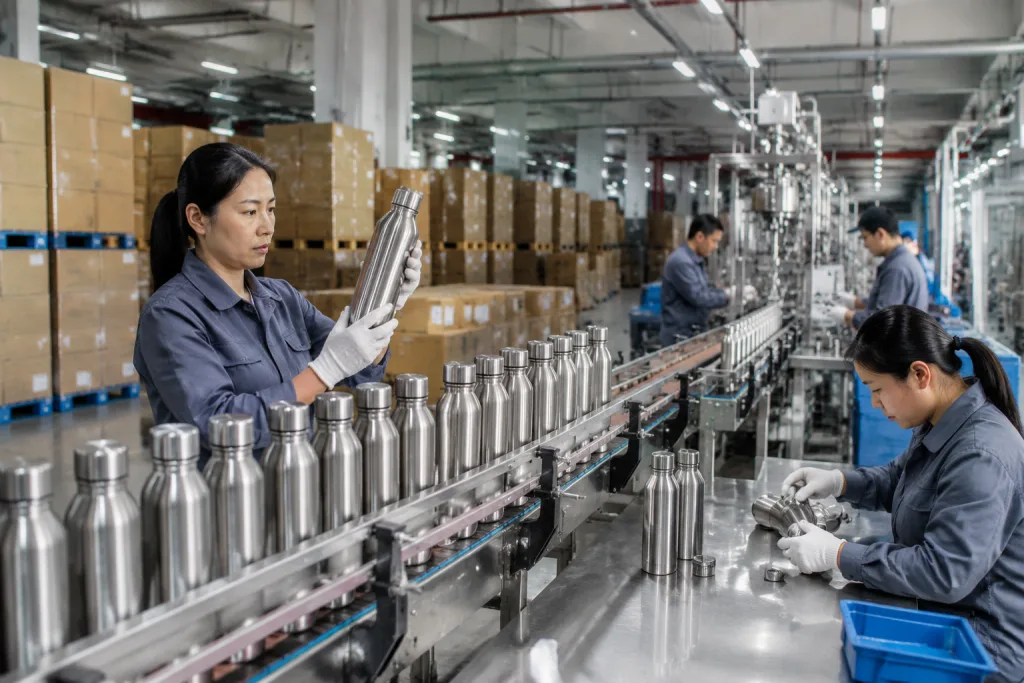
Quoting a 316 stainless steel double wall bottle factory is not the same as buying an off-the-shelf tumbler. You are paying for 316 inner steel, weld control, vacuum pass rate, surface finish, print setup, and whether the line can ship before your promo date locks. On our Hangzhou floor, we check wall thickness with a 0.01 mm micrometer because 0.4 mm versus 0.5 mm changes both dent resistance and cost. In Zhejiang and across China, a fair quote and a painful one often sit in small numbers: 300 pieces versus 3,000 MOQ, 25 days versus 45 days.
Most canteen supplier quotes look almost identical on page one. That is the trap. Asking “what is your best price?” is the wrong question to ask before you pin down the model, decoration method, carton spec, and test files such as REACH or LFGB for Europe, or ASTM-related support for North America. We have seen this go sideways when a buyer flagged “matte black” after sampling, but the PO said “gloss black” in one line item. QC pulled the sample. The schedule slipped 6 days. Lock the quote format early, then match each cost driver to lead time so the canteen customized order stays profitable instead of messy.
What drives the factory quote
For a 750 ml 316 double-wall bottle with basic 1-color print and a standard white box, we usually quote USD 4.20-7.80 FOB China at 500-1,000 pieces. At 3,000 pieces, the same bottle often comes down to USD 3.60-6.40, mainly because the line spreads setup time, carton tooling, and print film cost over more units. Lid choice and surface finish move the price fast; a powder-coated body with a carry-loop lid is not the same job as a brushed body with a simple screw cap. We had one buyer push back on a USD 3.25 offer last month, then QC pulled the sample and the liner tested as 304 stainless, not 316. The math does not work if the quote sits far under this range, so ask for the steel test report, vacuum warranty terms, and confirmation that the inner wall is 316 stainless, not just “316 style” copy on the PI.
MOQ tiers that make sense
I’ll rewrite just this paragraph, keep the HTML intact, and make it sound like a factory-side sales engineer wrote it.Small MOQs work when the bottle is already on our shelf mold and you only change the logo, carton, or cap. We run this setup a lot for distributors and first-time importers. Expect USD 0.20-0.60 extra per piece if you want mixed-pack flexibility, but that is cheaper than sitting on dead stock. We had one canteen buyer flag a 500-piece order because the PO typo said 50, and the fix was easy once QC pulled the sample. For corporate gifts, that tradeoff usually makes sense.
Lead time from sample to ship
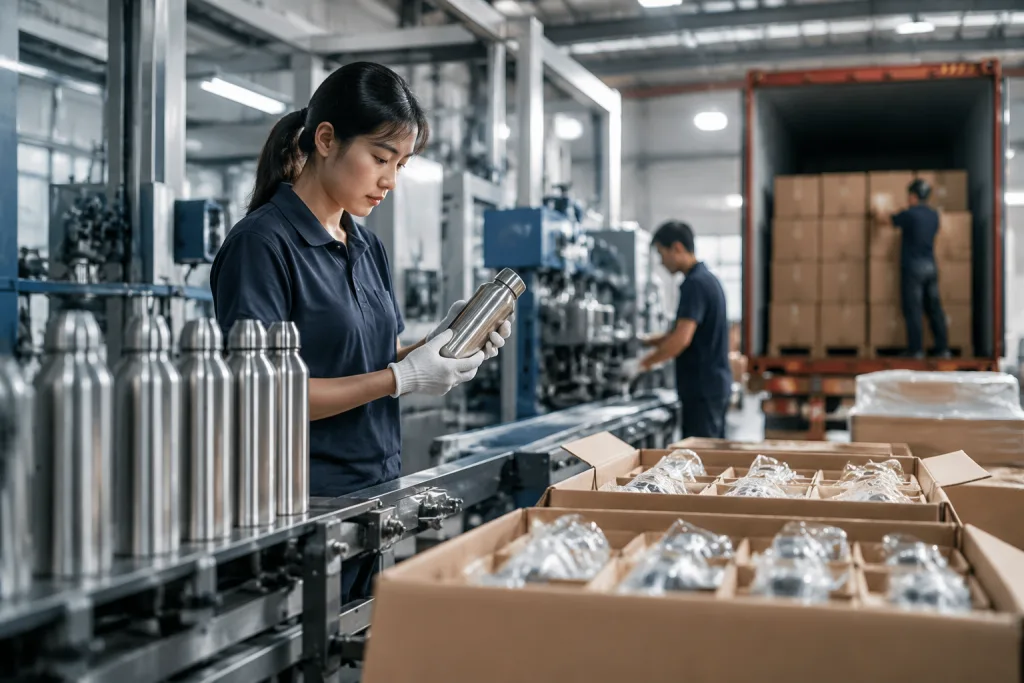
I’ll rewrite this section in a more factory-floor voice, keep the same HTML tag, and make the timing constraints concrete without changing the topic.The bottle itself is not the slow part. On our line, the wait usually comes from artwork sign-off, label text, and pack-out fixes. A 2 mm logo shift or a wrong carton mark can add 3 to 5 days fast. For Europe, REACH file checks stall the order when the material list is incomplete. For the United States, the buyer flagged barcode placement or carton rules before we could release the batch.
Testing and compliance costs
Ask the factory for the steel grade, wall thickness, lid build, MOQ by color, FOB price at 500 pieces and 3,000 pieces, sample lead time, mass lead time, and the compliance papers they can hand over for your market. We run this check early because the math falls apart fast if the quote hides a $0.18 lid upgrade or a 12-day sample delay.
How packaging changes your landed cost
- E-commerce: we run a 5-layer export carton, FNSKU label, and a 1.2 m drop-tested shipper; a buyer once flagged a PO typo on the barcode field, and that saved us a headache at the line.
- Distributor programs: use a plain box, reusable master carton, and clear quantity marks; at 500 pcs MOQ, the math does not work if you add fancy print nobody asked for.
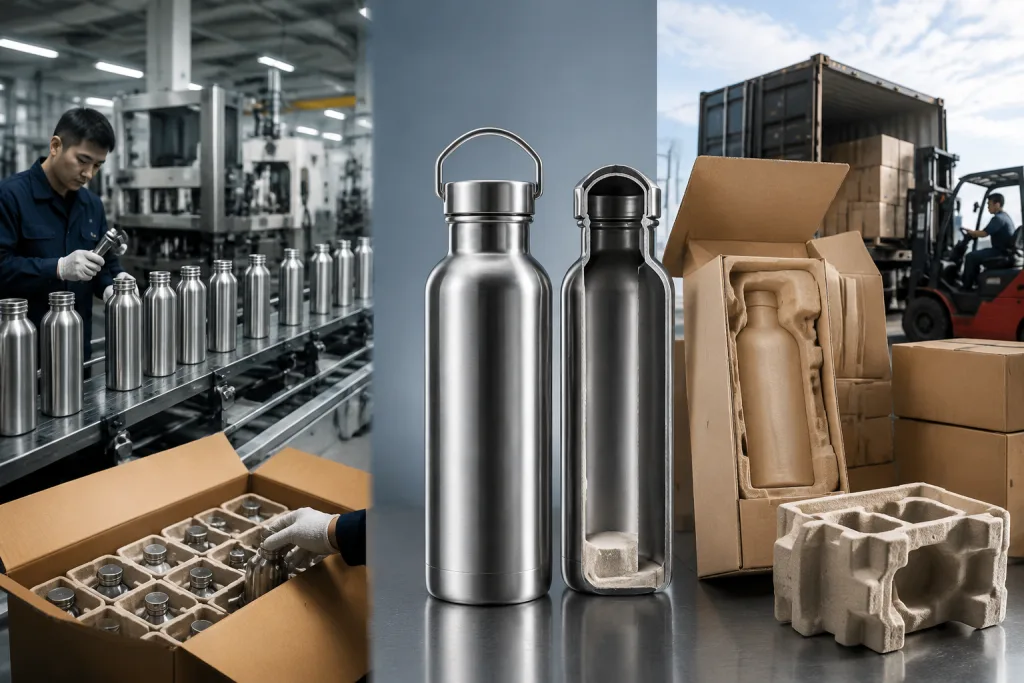
- Gift and promotional: printed box, insert, and brand card lift shelf appeal; QC pulled the sample on a missing insert slot, and that one detail changes the landed cost fast.
Picking the right factory partner
I’ll keep the HTML tag intact and rewrite the prose in a sharper factory-sales voice, with one concrete shop-floor detail and no AI filler.Use clear terms when you ask for quotes: `canteen custom`, `customizable canteen`, `customized canteen`, `canteen distributors`, or `distributor drinkware`. The wording matters less than the spec sheet, but exact terms get your inquiry to the right desk faster and avoid a stock quotation that misses the mark. On our side, QC pulls the sample against the drawing before we price it, and a 2 mm wall mismatch can change the number fast. This is the wrong question to ask if the spec is still fuzzy.
Request a factory quote with real numbers
Send your target volume, lid style, print method, and market. We will return a clean FOB quote, MOQ tier, and lead time in one working day.
Frequently asked questions
What is a normal MOQ for a 316 stainless steel double wall bottle?
For most factories, the normal MOQ is 300-500 pieces for a trial run, 1,000 pieces for standard pricing, and 3,000 pieces for a better tier. On a 750 ml bottle, the unit price often drops 8-18% when you move from 1,000 to 3,000 pieces. If the bottle uses stock tooling and simple logo print, some Zhejiang factories can go lower, but the per-unit cost rises fast. If you need multiple lid colors or mixed artwork, expect the MOQ to increase because the line setup time becomes expensive.
How much does 316 stainless steel add versus 304?
A realistic premium for 316 stainless steel is usually USD 0.35-1.10 per piece, depending on volume, thickness, and finish. At 500 pieces, the gap is often near the top of that range. At 3,000 pieces, the difference can narrow because the factory spreads labor and overhead across more units. 316 is worth the extra money when the buyer wants stronger corrosion resistance, marine use, or a premium position in the custom drinkware market. Do not pay for 316 unless the spec and use case justify it.
How long does sample and mass production take in China?
A stock-model sample usually takes 7-12 days. If you need custom logo placement, new carton artwork, or a special lid, add 3-7 more days. Mass production is typically 25-45 days after sample approval and deposit. A factory in Zhejiang with strong capacity can ship faster, but only if your artwork, compliance files, and packaging spec are locked. If you want a rushed order, ask for a formal schedule in writing so you can see where the bottleneck sits.
What lead time should I budget for testing and inspection?
For a standard order, allow 3-7 days after production for final inspection, carton labeling, and export booking. Third-party sample checks can take 5-10 days depending on the lab and the document set. If you need REACH, LFGB, or retailer-specific reports, add time before mass production starts. Many canteen suppliers can produce quickly but lose days in paperwork. That is why you should ask for the compliance plan before you approve the sample.
How do I compare FOB quotes from different canteen manufacturers?
Compare the same exact spec: steel grade, wall thickness, lid type, finish, print method, packaging, and inspection standard. A quote of USD 4.80 FOB is not cheaper than USD 5.10 if the first one uses thinner steel, a simpler carton, or no leak test. Ask for the MOQ at 500, 1,000, and 3,000 pieces, plus sample lead time and production lead time. If a canteen vendor cannot break out these numbers clearly, the quote is not ready for real sourcing.