Key Takeaways
- A realistic MOQ for custom color 304 bottles is 3,000-5,000 units per model
- Expect 7-10 days for pre-production samples and 30-40 days for mass production after approval
- Specify 304 inner steel, wall thickness, coating, AQL level, and carton drop test before deposit
- FOB China pricing for a 750 ml vacuum bottle often lands around USD 3.20-5.80 depending on lid and finish
You do not buy 304 stainless steel water bottles custom the same way you buy catalog gifts. A logo file and target price will not protect you when the liner thickness is 0.40 mm instead of 0.50 mm, or when QC pulled the sample and found the lid thread leaking at 45 degrees. You need to fix the steel grade, insulation, lid structure, coating, carton strength, testing, and inspection rules before the first deposit leaves your account. Otherwise, the math doesn’t work.
Here is the buyer scenario: you are sourcing a 750 ml vacuum bottle for a retail or promotional program in Europe or North America. You need 5,000 units, two colors, one logo, FOB Ningbo terms, and predictable delivery. We run this kind of custom drinkware order every month at BottleForge Industrial in Hangzhou, Zhejiang, and the clean orders usually start with a tight spec sheet, not a “please quote best price” email. One buyer flagged a PO last month because the color code was typed as Pantone Black 6C on one page and Black 7C on another. Small typo. Big delay.
Start With The Actual Use Case
Start the order brief like a buyer, not a designer. A 304 stainless steel water bottles custom project changes as soon as we know the sales channel and who eats the warranty cost. We would not put the same lid, coating, or carton spec on a gym retail bottle, distributor drinkware line, school program, or canteen giveaway; last quarter QC pulled 32 samples from a mixed-lid trial, and 5 failed the 30-minute inverted leak test.
For this case, use a 750 ml double-wall vacuum bottle for a North American outdoor campaign. It will sell through a distributor canteen channel and also work as branded custom drinkware for corporate clients. The bottle needs to look shelf-ready, survive courier handling, and avoid leak complaints when tossed into a backpack. This is where we see projects go sideways: the buyer asks for the coolest lid, but the real question is whether that lid passes a 1.2 m drop test after the silicone ring is removed and reinstalled on the line.
A workable starting spec: 750 ml capacity, 304 stainless steel inner wall, 201 or 304 outer wall depending on target cost, copper-coated vacuum insulation, powder coating, silicone carry loop, screw lid with PP inner structure, and one-color laser engraving or screen print. Keep it tight. If a custom growler or customized growler comes later, match the design language, but do not assume the same tooling or lid test will carry over; a 64 oz growler neck diameter changes the sealing pressure, and our torque meter usually tells the story before the carton test does.
At our Zhejiang factory, the standard MOQ is 3,000 units for existing bottle molds with custom logo, and 5,000 units if you need custom color powder coating. New mold development is a separate discussion, usually 45-60 days before production. China can move fast only when the spec is clear; we once lost 4 days because the PO said “mat black” instead of “matte black,” and the powder supplier would not release the batch without written confirmation.
Translate The Brief Into Specs
The specification sheet is where a canteen supplier proves its value. We push buyers to lock the parts that drive cost, leaks, rust claims, and rework. If a canteen vendor only asks for logo file and order quantity, the approval will get messy. We have seen a PO say “mat black” instead of “matte black,” and the line stopped for 6 hours while the buyer confirmed the finish code.
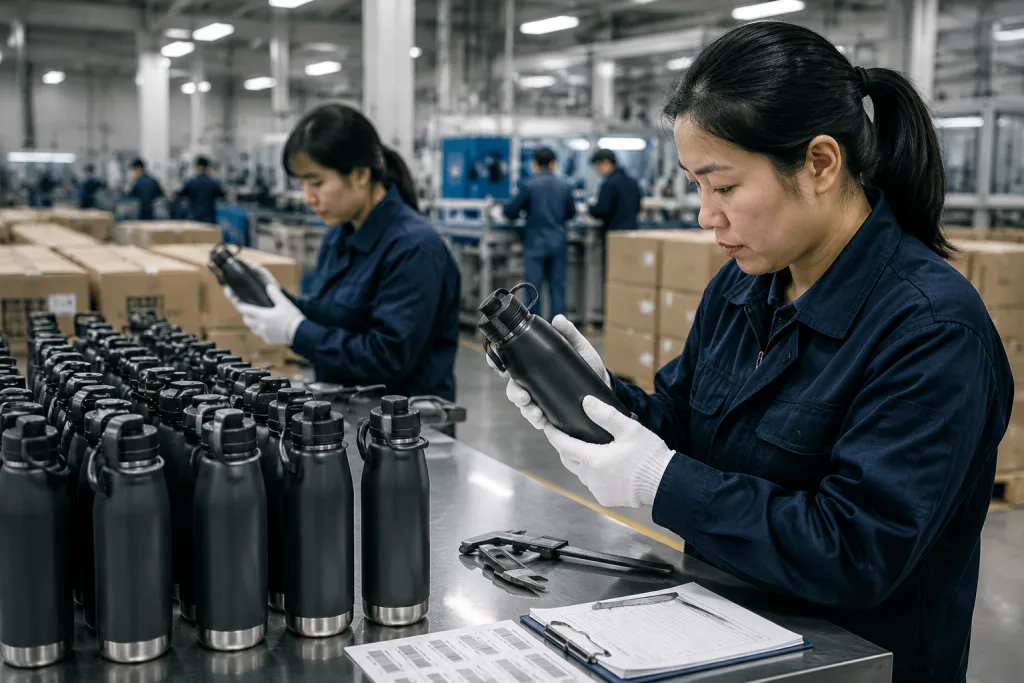
For a 750 ml bottle, start with material and construction. The inner wall should be SUS304 stainless steel, commonly 0.4-0.5 mm before forming depending on bottle shape. The outer wall may be 201 or 304 stainless steel; 304 outer is more corrosion-resistant but costs more. For export programs, we normally recommend 304 inner plus 201 outer for standard promotional use, and 304 inner plus 304 outer for higher-end retail or marine/outdoor positioning. On our floor, QC checks wall thickness with a digital micrometer before the first 30 pcs move to vacuum welding.
Then define performance. A credible vacuum bottle should keep water above 60°C after 6 hours when tested from a 95°C starting temperature at room conditions around 20°C. For cold retention, buyers often ask for 12-24 hour claims, but those claims must match the test method, lid type, and ice ratio. “24 hours cold” sounds good, but the math does not work if the test starts with room-temperature water. Last month QC pulled the sample after 6 hours and recorded 58.7°C, so we adjusted the lid gasket before the buyer saw it.
Color and decoration need numbers too. Powder coating should pass a basic cross-hatch adhesion check, and higher programs may require 3M tape testing, 48-hour salt spray for exposed metal parts, or 500-cycle rub testing for printed logos. Laser engraving is cleaner for long-term use. Screen print is cheaper when the brand needs 2 Pantone colors on 10,000 pcs. For canteen customized programs, Pantone matching usually needs a tolerance agreement because powder coating on stainless steel never looks exactly like paper; the buyer flagged this on a navy blue sample under office LED light.
Do not forget packaging. A 5,000-unit order might use white boxes, color boxes, or kraft boxes inside 5-ply export cartons. If the product ships to Amazon FBA or a retailer DC, add barcode placement, FNSKU labeling, carton weight limits, and pallet height before production starts. We ship plenty of cartons at 12-15 kg, but one retailer capped cartons at 10 kg and forced a carton redesign after artwork approval. Wrong question: “Can you pack it nicely?” Better question: “Show the box dieline, carton mark, drop-test plan, and pallet layout before we run mass production.”
Price The Order Without Guessing
Buyers asking for 304 stainless steel water bottles custom pricing often line up quotes that were built on different specs. One canteen factory quotes 304 inner and 201 outer, one quotes 304 inner and 304 outer, and a third trims the wall from 0.50 mm to 0.42 mm or swaps in a cheaper silicone gasket. On paper, all 3 say “750 ml vacuum bottle.” QC pulled one sample last month and found the outer shell was 201, even though the PO typed “304/304.” That spreadsheet was lying.
For this buyer scenario, a normal FOB China price range for a 750 ml double-wall vacuum bottle is about USD 3.20-5.80 per unit. The lower end usually means existing mold, 304 inner plus 201 outer, basic powder coating, simple screw lid, bulk white box, and one-position logo. The higher end covers 304 inner and outer, a better lid assembly with a 55-60 Shore silicone ring, full color box, extra accessories, tighter testing, and decoration that needs slower line speed. We run powder coating at about 180-200°C, and a matte finish with poor pretreatment will get flagged fast in tape testing.
Here is the cost stack buyers should expect: bottle body, lid, coating, decoration, packaging, inner carton, master carton, testing, and inland freight to Ningbo or Shanghai. If you ask for a custom canteen with a new lid, a silicone boot, and retail packaging, the unit price may rise by USD 0.60-1.40 before freight is even on the table. The math gets worse when the MOQ is 3,000 pcs and the carton artwork changes 4 times. We’ve seen this go sideways because the buyer priced the bottle only, then argued over a USD 0.18 insert tray at pre-production.
Payment terms also change the risk on both sides. Standard China export terms are often 30% deposit and 70% balance before shipment after inspection. For established canteen distributors, some factories discuss looser terms after 3-5 clean orders, but credit on the first order is not realistic. BottleForge Industrial runs about 450,000 stainless drinkware units per month across bottles, tumblers, and growlers in Zhejiang; we still prefer clean deposits and signed samples over big payment promises. The line waits for approvals, not stories.
Ask each canteen supplier to quote against the same line-by-line spec. Same capacity, same steel grade, same lid drawing, same logo size in mm, same box style, same test standard. That is the only fair way to compare canteen suppliers, canteen vendors, or canteen manufacturers. If one quote is USD 0.40 lower, ask what was removed.
Sample Before You Approve Production
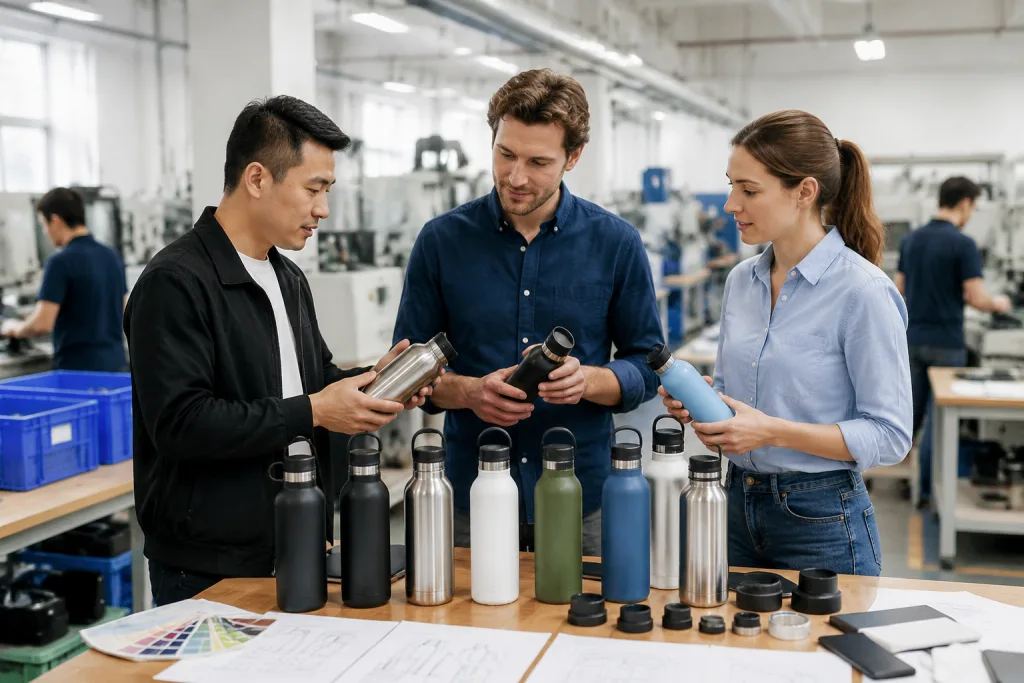
Sampling is not a decoration formality. It is your last cheap stop before mistakes get welded, coated, printed, packed, and counted as finished goods. For existing molds, a pre-production sample normally takes 7-10 days after artwork, Pantone color, and sample charge are confirmed. If you need a new mold, plan 22-30 days, sometimes 35 days if the lid thread needs EDM adjustment. We run the first check with a digital caliper, scale, and leak test fixture before sending photos, because a pretty bottle with a 0.4 mm lid mismatch is still a problem.
For this 5,000-unit order, request two sample stages if timing allows. First, a blank structure sample to confirm hand feel, lid sealing, weight, capacity, and packaging size. Second, a decorated pre-production sample with the approved color, logo, and packaging. If you are buying through a canteen distributor or managing distributor growler and bottle lines together, keep one approved sample in your office and one sealed golden sample at the factory in China. Do not skip this. We have seen a buyer approve matte black by phone, then flag the production color because their office sample was from a different coating batch.
Check the sample like a customer will. Fill it with water, invert it for 30 minutes, shake it, place it in a backpack, open and close the lid 50 times, and look for thread roughness or gasket movement. Weigh the bottle on a 0.1 g scale. Measure actual capacity to the practical fill line, not only brim capacity. A 750 ml advertised bottle should not hold 690 ml in normal use unless that is clearly stated. QC pulled one sample last month where the silicone gasket shifted 1.5 mm after the shake test; that is the kind of small finding that becomes 5,000 complaints if nobody checks.
Decoration approval needs discipline. For customized drinkware, logo size should be recorded in millimeters, not just visual approval by photo. Laser engraving may look different on black, navy, and white coating, so ask for close-up photos under normal factory light and daylight if brand color is sensitive. Screen print ink needs curing control on powder coating; our line checks oven temperature and rub resistance before packing. If you are planning a customizable canteen program with 12 corporate logos, define one repeatable decoration zone, for example 55 mm wide by 70 mm high, so every later order does not turn into a new engineering argument.
Do not approve mass production from a beauty photo. Approve from a measured sample, an artwork file, and a written spec sheet.
QC The Order Like A Retailer
A smart buyer does not wait for bad reviews to learn QC. For 304 stainless steel water bottles custom orders, inspection should be finished before balance payment and before the container leaves China. We normally run final random inspection under AQL; for drinkware, buyers often set AQL 2.5 for major defects and 4.0 for minor defects, with critical defects at zero acceptance. On a Hangzhou line last quarter, QC pulled the sample after the buyer paid 70% balance too early; 312 bottles had logo ghosting, and the math did not work for rework before vessel closing.
Define critical, major, and minor defects before production starts. Critical defects mean sharp edges, contamination, wrong material, serious leakage, unsafe odor, or packaging that breaks legal labeling rules. Major defects cover failed leak testing, wrong logo, wrong color outside the approved tolerance, dented bottle body, poor lid fit, or failed insulation. Minor defects are small coating specks, slight print position deviation, or light carton scuffing inside agreed limits. Put the limit in writing: for example, logo drift over 1.5 mm from the approved artwork is major, not “factory judgment.” We have seen this go sideways when a PO said “blue” but the approved Pantone chip on the sample card was 2995C.
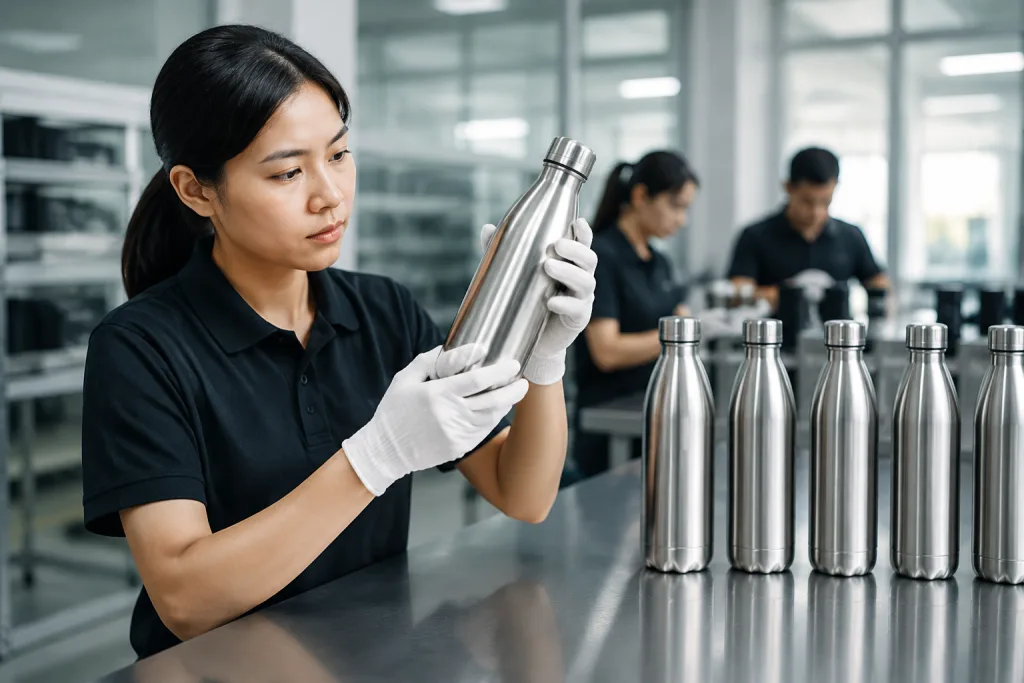
For this 5,000-unit order, inspection may pull 200 units depending on the sampling plan. The inspector should check appearance, capacity, logo position, barcode, carton mark, carton quantity, gross weight, drop test records, and function. Use real tools: 3M tape for print adhesion, a digital caliper for mouth diameter, a scale for gross weight, and a barcode scanner instead of phone-camera guessing. A practical leak test uses room-temperature water, full fill, inverted placement, and shake testing. Simple works. Insulation checks should be sampled separately because they take time; pretending every unit can be heat-tested during final inspection is the wrong question to ask. For one 24-hour heat-retention check, the line needs a thermometer log, not a quick shake beside the packing table.
Material compliance matters for Europe and North America. For EU buyers, discuss LFGB food-contact testing, REACH for coating and components, and packaging requirements. For US buyers, discuss FDA food-contact expectations, California Proposition 65 if relevant, and ASTM-related requirements for children’s items if the bottle is positioned for kids. If the order is for canteen promotional use in schools, be stricter on coatings, small parts, and printed claims. The buyer flagged this once on a 600 ml kids bottle because the carton copy said “BPA free and safe for all ages,” while the lid had a removable silicone plug under 8 mm.
A BSCI-audited canteen factory or ISO-managed system helps, but certificates do not replace inspection. Certificates show the factory has a process. Your inspection decides whether this shipment can ship. We ship containers every week, and a clean certificate has never caught a missing inner carton label, a loose straw brush, or a 0.3 kg carton weight mismatch before the retailer’s warehouse does.
Plan Shipping And Reorders Early
Freight is where 7 out of 10 custom drinkware projects lose margin. A 750 ml stainless steel bottle takes space, even when the weight looks harmless. Carton dimensions drive container loading, LCL freight, warehouse handling, and retailer chargebacks. We measure the master carton with a tape on the packing line, not from a nice-looking PDF. If the carton is weak or oversized, the landed cost eats the margin after the product already looks profitable on paper.
For 5,000 units, ask the factory to send carton size, units per carton, gross weight, net weight, CBM, HS code suggestion, and loading estimate before production. Get it early. A typical bottle packs 24 units per master carton, but the number changes fast when the buyer adds a straw lid, silicone boot, color box, or spare gasket. Last month QC pulled a sample carton at 18.6 kg, and the buyer’s warehouse limit was 15 kg. We changed to 18 units per carton before mass packing, which saved a handling fight later.
FOB Ningbo or FOB Shanghai is common for Zhejiang drinkware exports. Hangzhou sits close enough to both ports, so we run trucks to whichever sailing fits the schedule and cost. Air freight works for 100 urgent samples, but the math doesn't work for a 5,000-unit bottle order unless the launch date is already in trouble. For North America, sea freight plus domestic trucking often needs 30-45 days after vessel departure, depending on port congestion and destination. We once had a PO typo list “Shanghai” while the forwarder booked Ningbo, and that mistake cost 2 days before the SI cut-off.
Reorders need planning before the first shipment leaves our warehouse. If you want a canteen customizable program with rotating logos, or a distributor drinkware catalog with seasonal colors, archive the mold number, Pantone code, logo file, and packaging dieline. Reorder lead time can drop to 25-35 days when materials and approvals stay fixed. Change the lid, finish, or carton, and we treat it as a new approval. The line needs a fresh golden sample, and QC will check fit, coating, and carton drop test again.
For distributor canteen and distributor growler buyers, consistency beats chasing USD 0.08 savings every season. We’ve seen this go sideways. Your customers notice when the second shipment has a different black coating, a looser lid, or a thinner retail box. A buyer once flagged a 0.4 mm thinner box board during incoming inspection, even though the bottle passed AQL 2.5.
Lock The Purchase Order Correctly
The purchase order is not just for accounting. It is the control file we run on the line. For a customized canteen or stainless bottle order, the PO must repeat the engineering and commercial details: drawing revision, approved sample date, logo position in mm, and packing rule. “As sample” is the wrong phrase to use. Last month QC pulled the sample for a 750 ml bottle, and the PO still showed the old lid code. That one typo nearly sent 48 cartons to rework.
Your PO should include model number, capacity, material structure, lid type, color code, finish, logo method, logo size, packaging type, carton quantity, barcode rules, testing requirements, inspection standard, order quantity, overrun tolerance, unit price, Incoterms, shipment port, lead time, and payment terms. If the order includes a custom growler, customizable growler, or other matching items, list each SKU separately, with its own carton mark and barcode file name. Mixed-SKU ambiguity causes carton and label mistakes. We have seen a buyer write “black bottle assorted logos” on the PO, then flag the shipment because 2 logos were packed in the same master carton.
For a 5,000-unit order from a canteen manufacturer, a sensible lead time is 30-40 days after deposit and sample approval. That means sample approved on March 3 ships around April 2 to April 12, not March 25. If you approve samples 6 days late, change artwork after powder coating starts, or send barcode files after carton printing, the production clock moves. No magic here. A good canteen vendor will warn you in writing. A bad one says yes until the vessel closing date is gone.
Keep communication written and boring. Confirm artwork in PDF or AI format, confirm Pantone or powder code, confirm inspection booking date, and confirm whether spare parts such as gaskets are included. We prefer one email thread with the final PO attached, because screenshots in WeChat get missed when the merchandiser is checking cartons on the 3rd floor packing area. If you need a canteen customized for multiple end clients, use a SKU matrix with columns for logo, color, quantity, carton mark, and delivery destination. The math does not work if sales notes, artwork files, and warehouse labels all carry different names.
BottleForge Industrial is based in Hangzhou, Zhejiang, and we see the same pattern on 20 to 30 export orders every month: buyers who specify clearly pay fewer surprise costs. Whether you call it canteen promotional, customized drinkware, a custom canteen program, or 304 stainless steel water bottles custom sourcing, the order succeeds when the factory file is precise. We ship what is locked. If the PO leaves a blank, someone on the line will fill it with a guess.
Send Your Bottle Spec And Target Quantity
BottleForge will review material, MOQ, decoration, packaging, and FOB pricing before you commit to tooling or samples.
Frequently asked questions
What MOQ should I expect for 304 stainless steel water bottles custom orders?
For existing molds, expect 3,000 units per model for logo customization and 5,000 units if you need a custom powder-coated color. Some simple laser logo orders can be discussed at 1,000-2,000 units, but the unit price is usually higher and color options are limited. If you need a new bottle shape, new lid, or private mold, the MOQ often starts from 10,000 units and tooling can take 45-60 days. For B2B buyers, the cleanest first order is usually 3,000-5,000 units using an existing proven mold.
Is 304 stainless steel required for both inner and outer walls?
Not always. The inner wall should be 304 stainless steel because it contacts drinking water. The outer wall can be 201 or 304 depending on budget, corrosion requirements, and brand positioning. A 304 inner plus 201 outer structure is common for promotional and mid-market custom drinkware. A 304 inner plus 304 outer structure is better for premium retail, outdoor, marine, or humid environments. The cost difference depends on bottle size and steel market pricing, but buyers may see USD 0.20-0.60 per unit difference on a typical 750 ml vacuum bottle.
Which logo method is best for a customized canteen order?
Laser engraving is the safest choice for durability because it does not rely on ink adhesion. It works well on powder-coated bottles and gives a clean retail look, but it is usually single-color by nature. Screen printing is better when you need exact brand colors or larger artwork, and it can be cost-effective for 3,000 units or more. Heat transfer or UV printing can handle complex graphics, but you should request rub testing and adhesion checks. For canteen promotional projects, choose the method based on use life, not only artwork appearance.
How long does a full custom bottle order take from China?
For an existing mold order, plan 7-10 days for sampling after artwork confirmation, then 30-40 days for mass production after sample approval and deposit. Final inspection usually takes 1 day on site, but booking a third-party inspector may require 3-5 days of notice. Sea freight to North America or Europe can add 30-45 days after vessel departure, depending on route and port conditions. If you need a new mold or a customized growler lid, add 45-60 days before mass production.
What should I ask a canteen factory before paying a deposit?
Ask for the exact material structure, wall thickness range, MOQ, sample lead time, production lead time, FOB port, packaging details, test standards, and inspection policy. Request photos or videos of current production if possible, but do not rely only on marketing images. Confirm whether the factory has experience with REACH, LFGB, FDA food-contact expectations, BSCI audits, and retailer carton requirements. Also ask who owns the approved sample and how changes are controlled. A serious canteen supplier will answer with numbers, not just “good quality” and “fast delivery.”