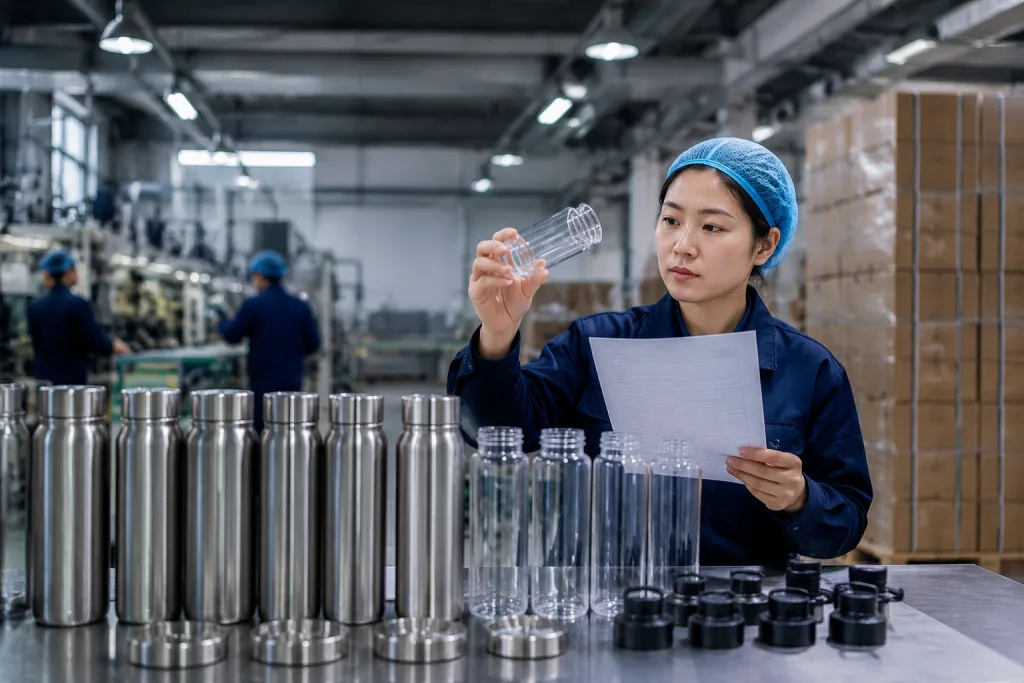
Key Takeaways
- A clean RFQ should state capacity, 304 gauge, Tritan grade, MOQ, logo method, carton limit, and target FOB price
- For new molds or mixed-material lids, approve 2 sample stages before opening bulk production
- Typical MOQ is 1,000-3,000 pcs per SKU, with 25-35 days bulk lead time after deposit and sample approval
- PO line items should separate unit price, tooling, sample fee, packaging, inspection, and freight terms
A 304 stainless steel tritan bottle bulk project looks simple until the quote sheet comes back with 5 prices, 3 lid options, vague material wording, and a carton spec your warehouse cannot stack on a 1,100 × 1,100 mm pallet. We see this before the PO. If you are buying bulk drinkware for a brand launch, retail program, or distributor catalog, the costly mistakes usually happen before the purchase order is signed. Last month QC pulled the sample because the buyer wrote “Tritan” in the email, but the PO line only said “plastic lid.”
Our factory is in Hangzhou, Zhejiang, with stainless assembly, Tritan injection partners, and decoration lines set up for export orders. We run 304 stainless bodies on the line, match them with Tritan copolyester parts, then check logo position with a 0.5 mm film ruler before packing. China can still give you a competitive FOB price, but the math does not work if the RFQ leaves room for guessing. Lock the details early: 304 grade, Tritan copolyester, logo method, AQL, packaging, lead time, and commercial terms.
Start with a controlled RFQ
Do not send a supplier one product photo and ask for the best price. Bad RFQ. That is how a USD 2.10 quote becomes USD 2.50 after the lid gasket, carton strength, and logo process are confirmed. For a 304 stainless steel tritan bottle bulk order, your RFQ should read like a short spec sheet, the same way our merchandiser marks a sample card before it goes to the line.
Start with the product type. Is it a stainless inner bottle with Tritan outer shell, a Tritan bottle with 304 stainless lid, or a hybrid canteen with steel cup and Tritan body? Buyers use the same wording for different structures, and we have seen this go sideways when a PO says “Tritan steel bottle” but the approved sample has only a steel cap. 304 stainless steel, Tritan, silicone, PP, and decoration each carry separate tooling, material, and compliance costs; QC pulled one sample last month where the Tritan sleeve was 1.2 mm instead of the requested 1.5 mm.
A practical RFQ line should include capacity and target weight, then wall thickness for both stainless and Tritan parts, lid structure with gasket material, leakproof test requirement, temperature use, logo size, packaging, MOQ, destination market, and annual forecast. Give numbers. “Strong carton” means nothing; “5-layer export carton under 15 kg” gives our packing team something to quote. If you are sourcing bulk canteen, bulk growler, or alcohol flask bulk lines at the same time, keep them as separate RFQ items with their own drawings or reference samples. Do not bundle 6 products into one loose “drinkware wholesale” request.
RFQ line item example: 750 ml 304 stainless steel Tritan sports canteen, 0.45 mm 304 inner wall, clear Tritan outer sleeve, PP flip lid with silicone seal, 1-color logo 55 x 35 mm, individual kraft box, export carton under 15 kg, MOQ 2,000 pcs, FOB Ningbo, target launch in 90 days. This is quotable. Our costing clerk can check the 0.45 mm coil, logo screen size, and carton CBM without sending 5 follow-up emails.
At BottleForge Industrial in Zhejiang, our standard MOQ for this type of mixed-material bottle is usually 1,000 pcs for existing molds and 3,000 pcs for custom color matching or private lid tooling. Monthly finished capacity is about 420,000 drinkware units across stainless thermos, sports bottle, travel tumbler, canteen wholesale, and growler wholesale programs. We run capacity by mold set and assembly station, not by catalog page; if the buyer flags a launch date of 90 days, the math works better when tooling, lab test, mass production, and final AQL 2.5 inspection are separated from day one.
Lock material and compliance early
“304 stainless steel” is too loose for a bulk PO. Ask the supplier to name the exact part using 304 stainless, show the nominal wall thickness in mm, and match each material to a test standard. We run into this on spec sheets every month: the inner liner says 304, while the lid trim is 201 or plated steel. For food-contact drinkware bulk programs in Europe and North America, request LFGB or FDA food-contact confirmation, REACH for surface coating where relevant, and CPSIA or ASTM review if the bottle is for children.
Tritan is a branded copolyester, not a loose name for any clear plastic. Around Zhejiang, at least 6 factories we know also quote cheaper generic copolyester or PETG when the buyer only writes “clear BPA-free plastic.” Photos hide the difference. The line finds it later in dishwasher cycling, 1.2 m drop testing, or hot-fill checks at 70°C. If you are ordering a premium wholesale drinkware line, write “Tritan copolyester, BPA-free, supplier to provide material declaration” in both the RFQ and PO. Put it in both places. We have seen this go sideways when the RFQ was clean but the PO missed the word “Tritan.”
For stainless parts, specify 304 stainless steel, not “food grade steel.” A common bottle wall is 0.4-0.5 mm before forming, and QC will usually confirm it with a digital caliper after cutting one sample from the pilot run. Thinner walls can pass a visual check, then come back with corner dents after 18 days at sea and 3 warehouse handlings. For lids, state whether the stainless insert is decorative or structural. For silicone seals, request food-grade silicone and add a spare gasket option if your after-sales team needs replacements.
PO line items at this step:
- Material declaration: 304 stainless steel for inner liner or cup component, with part name matching the drawing
- Tritan copolyester certificate or supplier material statement, not just “BPA-free plastic” on the quote
- Food-contact test: FDA 21 CFR or EU 1935/2004, depending on market
- Coating test: adhesion cross-hatch with 3M tape, dishwasher resistance if claimed
- AQL inspection level: General II, AQL 2.5 major / 4.0 minor unless you require stricter
This is where 7 out of 10 “best wholesale drink bottle” claims get weak. A low FOB price does not help if the buyer’s compliance desk blocks the shipment because one PO line says “SS” instead of 304 stainless steel.
Compare quotes without guessing
When quotes land, build a comparison table that splits the base unit price from every add-on. One factory may quote USD 3.25 FOB Ningbo and include the logo, inner box, and 1.2 m drop-test carton; another may quote USD 2.95 for a blank bottle in a thin polybag. The math doesn't work. We had a buyer flag a USD 0.30 “saving” last May, then QC pulled the pre-production sample and found no divider in the master carton.
For a normal 750 ml 304 stainless steel Tritan bottle, an existing mold bulk price often sits around USD 3.10-4.80 FOB China, depending on lid build, Tritan wall thickness in mm, logo method, color count, and packaging. A stainless canteen bulk item with less Tritan usually prices lower. A beer growler bulk or wholesale growler item in 1.9 L capacity prices higher because it uses more steel, needs larger cartons, and eats more CBM on the vessel; on our line, the 1.9 L carton can jump from 0.083 CBM to 0.126 CBM per carton.
Ask for the quote in this structure: unit price and MOQ per color, sample charge and tooling charge, logo cost and packaging cost, test cost, deposit percentage, balance term, lead time, port, HS code, carton size, gross weight, and pieces per carton. No carton data, no landed-cost sheet. We run into this often when a supplier copies an old PI and leaves “G.W. TBD” in the freight field, which usually means nobody has checked the packed carton on the scale yet.
Quote line item example: 2,000 pcs 750 ml bottle, FOB Ningbo USD 3.65/pc, 2-color pad print included, color box USD 0.18/pc, sample USD 120, bulk lead time 30 days after approval, 24 pcs/carton, carton 58 x 42 x 34 cm, G.W. 13.8 kg. One detail I like to see: the supplier should state whether the 30 days starts after artwork approval or after the signed golden sample, because we have seen 30 days become 42 days when the PO had the logo file name typed wrong.
For beer tumbler wholesale and beer tumbler bulk projects, quote them under their own SKUs. Do the same for alcohol flask wholesale or beer growler wholesale bulk work. We've seen this go sideways when mixed categories share one price line: tumblers fail vacuum tests, flasks get cap seal tolerance issues at 0.3 mm, and growlers need thread gauges checked before mass packing.

Approve samples in two passes
One sample is not enough for a mixed-material bottle. We approve these in two passes: engineering sample first, pre-production sample second. The engineering sample checks fit, sealing, drinking comfort, hand feel, and basic appearance; QC usually measures the lid gap with a 0.05 mm feeler gauge and checks whether the Tritan sleeve sits flush against the 304 stainless body. The pre-production sample checks bulk material, color, logo, packaging, and carton setup.
For the first pass, ask for 2-3 pcs in available color. Test them like a customer trying to get a refund. Fill to the rated capacity, invert for 8 hours, shake for 60 seconds, drop from 80-100 cm onto a wood or rubber surface, open the lid 100 times, and check whether the Tritan sleeve scratches too easily; we run a quick rub test with a dry cloth and a fingernail because buyers have flagged sleeve haze after only 3 desk-use days. If the product claims insulation, request a simple heat-retention curve, but the math doesn't work like a double-wall vacuum stainless bottle when the Tritan structure is exposed.
The second pass should match your final PO. That means Pantone color, logo size and position, warning label, barcode, FNSKU if selling through fulfillment channels, inner box, master carton, and any retail hangtag. For Amazon or marketplace programs, carton weight should usually stay below 15 kg and carton length below common fulfillment limits, unless your forwarder accepts oversize handling costs; last month QC pulled a carton sample at 16.8 kg, and the buyer made us split the pack from 24 pcs to 18 pcs per master carton.
Sample approval PO notes:
- Engineering samples: 3 pcs, charge USD 80-150, courier by buyer account
- Pre-production samples: 2 pcs per SKU, made from bulk materials
- Approval method: signed physical sample or high-resolution approval sheet
- No bulk cutting, printing, or packing before written approval
China factories can move fast, but speed without sample discipline is how orders go sideways. A 7-day sample shortcut can create a 2,000-piece inventory problem; we have seen one PO typo on “matte black” versus “gloss black” hold finished goods in Hangzhou for 12 days vs 18 days once rework and carton relabeling were counted.
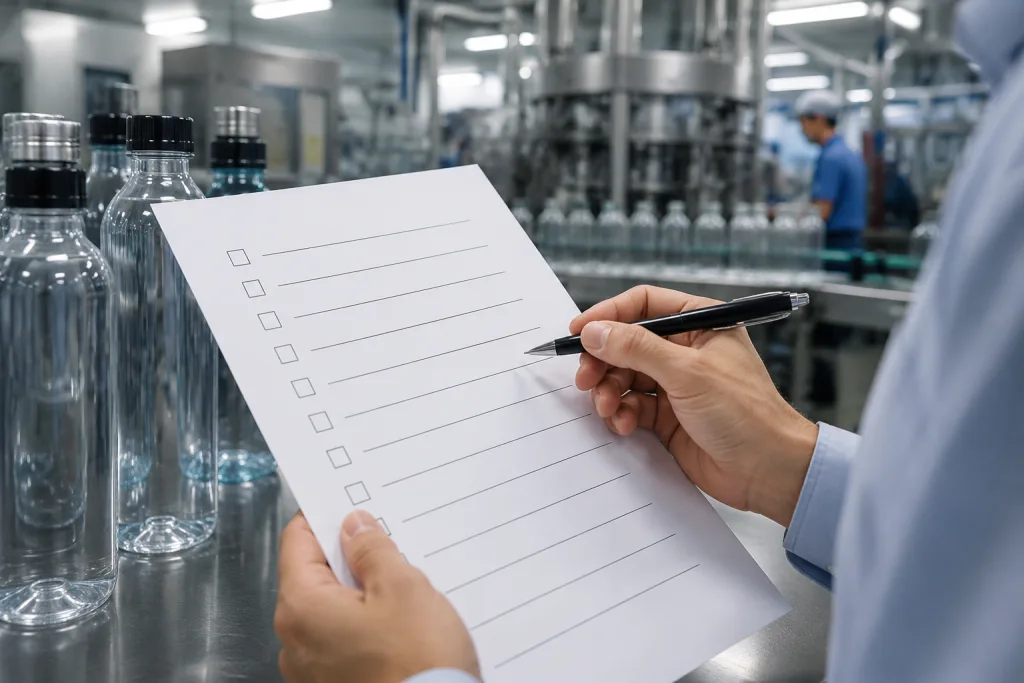
Write the PO like a checklist
Your purchase order should not stop at “304 stainless steel Tritan bottle bulk, 2,000 pcs.” That is the wrong question to ask. The PO needs to work like a bench checklist for the production manager on the line, the silk-screen or laser team with the logo jig, QC with the caliper, the carton supplier checking the shipping mark, and the export clerk booking FOB Ningbo. If one detail is blank, we run the closest standard option. We have seen this go sideways on a 750 ml order where the buyer expected a matte black lid, but the PO only said “black,” so the line used our glossy PP lid.
A clean PO needs SKU code; product description with capacity and material; Pantone or approved color chip; logo method and artwork version; inner box and master carton spec; quantity per SKU; unit price and total amount; payment terms; delivery term; shipping mark; inspection clause; required documents. Add the latest approved sample photos as an appendix, not as a WhatsApp screenshot buried 42 messages back. If you are buying drinkware wholesale across several related lines, keep canteen bulk and wholesale canteen SKUs on separate line items from growler bulk, beer growler in bulk, and alcohol flask in bulk. QC pulled one sample last April where the PO had “GROWER” typed instead of “GROWLER” on the carton mark, and that one-letter typo cost 600 replacement labels.
PO line item example: SKU BF-T750-SS/TR, 750 ml hybrid sports bottle, 304 stainless inner, clear Tritan outer, black PP lid with silicone seal, matte powder-coated steel base, white laser logo 50 x 30 mm checked on the laser positioning jig, 2,000 pcs, FOB Ningbo USD 3.78/pc, 30% deposit, 70% before shipment after passed inspection.
Additional PO charges:
- Private color matching: USD 80 per color if below 3,000 pcs, based on one approved Pantone chip
- New lid insert mold: USD 1,200-3,500 depending on structure and 2D drawing review
- Retail color box: USD 0.12-0.35 per pc, confirmed after paper thickness and flute type
- Third-party inspection: usually USD 280-350 per man-day in Zhejiang, with AQL booking 3 days before packing
- Compliance test: quoted by lab, often 5-10 working days after sealed samples arrive
The PO should state your defect classification before we cut steel, print cartons, or book inspection. Critical defects include leakage, sharp edges, wrong material, odor, or unsafe breakage; QC checks leakage with a 30-minute upside-down test on filled bottles. Major defects include wrong logo size, coating peel, poor lid fit, or carton shortage. Minor defects are small cosmetic marks inside the agreed inspection limit, such as a 1 mm speck on the inner wall that passes under the signed AQL 2.5 standard.
Control bulk production and inspection
After deposit, the factory should send a dated production schedule, not a “we will try” message. For existing tooling, our normal bulk lead time in Hangzhou, Zhejiang is 25-35 days after deposit and pre-production sample approval. Add 7-12 days if the order needs custom Tritan color, new packaging artwork, or lab testing before shipment. For summer and Christmas retail windows, we usually ask buyers to leave 10-14 days of safety stock in the schedule. China export schedules get tight around Lunar New Year and late Q3; last year one PO came in with the wrong SKU suffix, and that typo cost the line 2 working days before cutting the carton labels.
Bulk production needs checkpoints on the line. Stainless forming and polishing should be checked before coating or assembly, because a dent under powder coating is still a dent. Tritan injection should be checked for black dots under a light box, flow marks near the shoulder, shrinkage at the base, and thread tolerance with a go/no-go gauge. Printing or laser engraving should be checked against artwork, not against someone’s memory; we run the first 20 pcs beside the approved PDF and color chip. Final assembly should include leak testing by sampling, not just a quick visual look. QC pulled the sample, filled it to 95% capacity, laid it on white tissue for 30 minutes, then checked the cap seam.
For most wholesale drinkware orders, a final random inspection under ANSI/ASQ Z1.4 with AQL General II is acceptable. Use AQL 0 for critical defects, 2.5 for major, and 4.0 for minor if your retailer has no stricter standard. For a 2,000-piece order, the inspector may check around 125 pcs under common sampling plans. If you are shipping beer growler wholesale, beer growler wholesale bulk, beer tumbler in bulk, or alcohol flask wholesale bulk, add category-specific tests: cap torque with a torque meter, odor check after 24 hours closed, capacity measurement in ml, and vacuum performance where applicable. We have seen this go sideways when a buyer only asked for photos; the math does not work when 125 pcs can catch a sealing issue before 2,000 pcs leave Ningbo port.
Do not skip carton inspection. Carton burst strength and edge crush quality decide whether the outer box survives stacking at 14 kg per carton. Inner dividers should stop stainless bodies from rubbing during truck transfer, while shipping marks and barcode readability need a scan check before sealing. Your distributor may receive 200 cartons in one morning. A beautiful bottle in a weak export carton is still a bad shipment, and the buyer will flag it before they praise the finish.
Plan freight, reorder, and variants
Before you release the balance payment, ask for the final carton size, gross weight, and total CBM from the packed master carton, not from the quote sheet. We measure it with a tape after packing because lids, straw brushes, and color boxes eat space fast. A 2,000-piece 750 ml bottle order may occupy roughly 6-9 CBM depending on packaging. Last month QC pulled a 12-carton sample and found the retail box added 11 mm per unit, which pushed the shipment into one extra pallet position. Air freight kills the math on stainless bottles, so we use it only for launch samples, urgent replenishment, or a 100-300 pcs split shipment.
If you sell through distributors, set the variant plan before the first bulk order. The same platform can cover a sports bottle, wholesale canteen, canteen wholesale set, beer tumbler wholesale bulk program, or a smaller alcohol flask wholesale extension, but this is where we have seen programs go sideways. Start with 2-3 colors, not 9. Keep MOQ discipline: 1,000 pcs per color is manageable; 300 pcs per color usually means higher unit cost, extra powder-coating line setup, and more shade drift under the D65 light box. One buyer flagged this after a matte black reorder looked 1 Pantone step warmer than the launch batch.
For reorder control, keep a golden sample, artwork file, carton drawing, Pantone code, and inspection report in one folder. Reorder POs should reference the previous order number and spell out changes clearly; we once saw a PO typo change “smoke gray Tritan” to “smoky green,” and the line stopped for 2 days while sales confirmed it. If you change from laser logo to silkscreen, from kraft box to color box, or from clear Tritan to smoke gray Tritan, treat it as a new approval. Small changes can move price, lead time, and compliance paperwork.
The best wholesale drink bottle program is not the cheapest first PO. That is the wrong question to ask. Procurement should buy a repeatable supply chain where your supplier in China can make the same acceptable bottle again, with predictable cost, lead time, and defect rate. We ship better reorders when the buyer keeps the sealed sample, confirms carton marks before mass packing, and checks the first 20 pcs off the line against the last approved batch.
Send your bottle RFQ for a practical quote
Share capacity, material, logo, MOQ, packaging, and destination market. We will reply with workable FOB pricing and production assumptions.
Frequently asked questions
What MOQ should I expect for 304 stainless steel Tritan bottle bulk orders?
For existing molds, a realistic MOQ is 1,000 pcs per SKU, but 2,000-3,000 pcs is better if you need custom Pantone color, private packaging, or mixed materials. Below 1,000 pcs, the factory may still produce, but the unit price often rises by USD 0.30-0.80 because coating, printing, and assembly setup costs are spread across fewer units. If you need 4 colors, do not assume 250 pcs per color will keep the same FOB price. For a first launch, we usually suggest 2 colors at 1,000 pcs each rather than 5 weak colors.
Is Tritan better than stainless steel for bulk drinkware?
They solve different problems. Tritan is transparent, impact-resistant, and lighter than glass, which is useful for sports bottles and infuser designs. 304 stainless steel is stronger, more premium in hand feel, and better for hot-fill or insulated structures. A 304 stainless steel Tritan bottle bulk design often uses both: stainless for durability or a premium drinking surface, Tritan for visibility or style. If your product must hold hot coffee for 6 hours, choose vacuum stainless. If you want a clear cold-water bottle with a durable steel detail, Tritan plus 304 makes sense.
How long does sampling and bulk production take from China?
For an existing mold, engineering samples usually take 5-10 working days, plus courier time. A pre-production sample with final logo and packaging may take another 7-12 working days. After approval and 30% deposit, bulk production is commonly 25-35 days for 1,000-5,000 pcs. Add time for lab tests, custom color matching, or new lid tooling. Around Lunar New Year, build in at least 3-5 extra weeks because many China supply chains pause or slow down before and after the holiday.
What should be inspected before shipping wholesale drinkware?
Inspect material appearance, capacity, leakage, odor, lid fit, thread accuracy, logo position, coating adhesion, color consistency, carton strength, barcode readability, and quantity. Use AQL General II as a baseline, with AQL 0 for critical defects, 2.5 for major defects, and 4.0 for minor defects. For 2,000 pcs, the sample size is often around 125 pcs under common plans. For beer growler bulk or alcohol flask wholesale items, add cap seal, torque, and internal cleanliness checks. Inspection should happen after at least 80% packing is complete.
Can one supplier handle bottles, canteens, growlers, and flasks together?
Yes, but you should still treat each as a separate SKU family. A sports bottle, bulk canteen, beer growler in bulk, beer tumbler bulk, and alcohol flask wholesale bulk item use different tooling, tests, and carton designs. A factory with stainless forming, assembly, and decoration capacity can coordinate them, especially in Zhejiang where the supply base is dense. The PO should separate unit price, MOQ, lead time, and inspection criteria for each family. Bundling can reduce communication cost, but it should not blur technical requirements.