Key Takeaways
- Set a 0.4-0.6 mm 304 liner spec and confirm the outer plastic wall separately, or your canteen customized sample will not match mass production.
- Leak testing should be written into the PO at 100% air test or 3-5 psi water test, not left as a verbal promise from the canteen factory.
- For a typical MOQ of 3,000 units, expect FOB China pricing around USD 2.10-4.80 depending on capacity, cap type, and decoration method.
- Ask for AQL 2.5 major / 4.0 minor, REACH docs, and carton drop testing if you are a canteen distributor or distributor drinkware buyer.
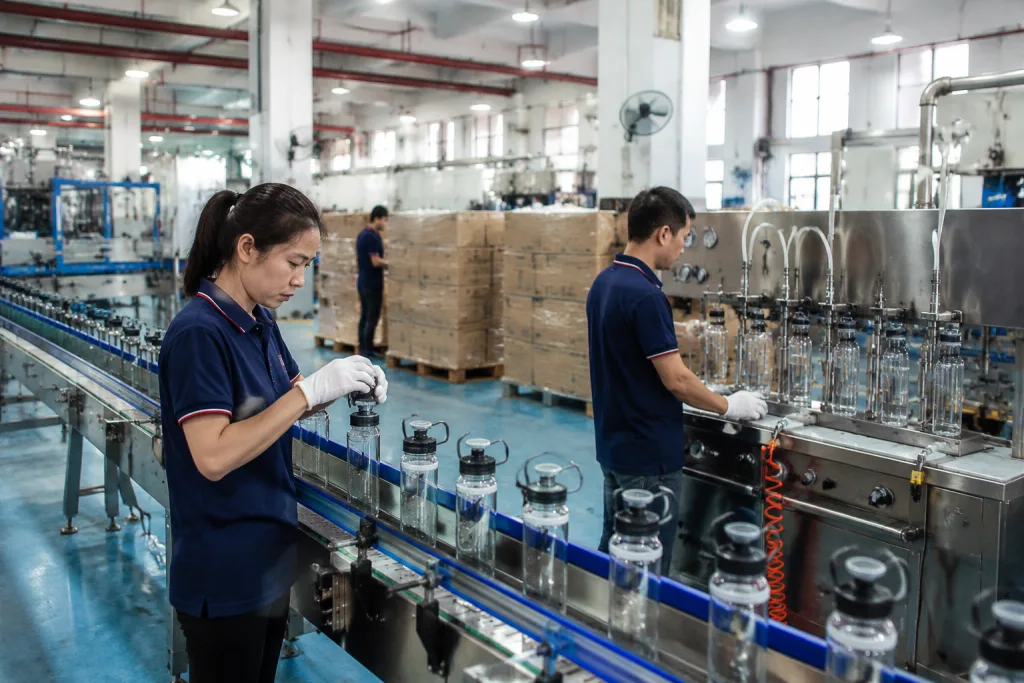
If you are sourcing from a 304 stainless steel plastic water bottle supplier, the real risk is not the quote. It is the gap between a hand-checked sample and what 5,000 units from Zhejiang do on the line. We have seen a bottle pass on day one, then fail after one shipping cycle on odor, seal, drop resistance, or logo wear.
At BottleForge in Zhejiang, QC pulled the sample with a 0.5 mm wall callout missing, then the buyer flagged a PO typo on the cap color code. Same story, week after week. Vague wall-thickness targets, untested cap assemblies, and no agreed leak test or carton compression spec will sink a custom drinkware program. The math does not work. A solid canteen manufacturer talks tolerances, not color chips.
Where these bottles usually fail
The first failure point is usually not the 304 steel. It sits at the joint between the liner, the plastic body, and the cap. We run a 60°C hot-water fill, then a cold cycle, then a 1.2 m drop test, and that is where the weak build shows itself. On one line in Zhejiang, QC pulled the sample and found off-center threads by 0.8 mm, liner shrinkage, cap seal deformation, and logo rub after carton vibration. The buyer flagged it on day 2, which is normal.
Write the failure mode into the spec. No seepage after 24 hours with 60°C water. No cap crack after 5 drops from 1.2 m onto plywood. No odor transfer after 48 hours. That is the right question; “good quality” does not stop a return. If the PO says “custom canteen” but leaves out the test limit, the line will guess, and the math does not work. One typo on a PO, like 600C instead of 60°C, has sent a lot sample to the wrong standard.
- Seal failure: cap liner too soft, or too thin at 1.5 mm
- Thread failure: mold pitch does not match the liner insert
- Odor failure: virgin resin was mixed with recycled regrind, or the packing table picked up smell
- Decoration failure: UV print cracks, laser burn marks, or ink rub-off after a 24-hour carton rub test
Spec the stainless and plastic layers
Buyers often ask for “304 stainless” and stop there. That is not enough. On our line, we ask first whether the inner liner is SUS304 only, whether the outer shell is PP, Tritan, or AS, and whether the colored sleeve is food-contact or just decoration. The buyer flagged this on a 5,000-piece order last month, and the math did not work until we split the structure. Steel handles taste and corrosion. Plastic handles weight, grip, and print quality. They do different jobs.
For a usable spec, ask for 0.4-0.6 mm liner thickness, plastic wall thickness around 1.8-2.5 mm based on the bottle shape, and a heat resistance rating tied to the actual use. A kids bottle, a sports bottle, and a custom growler are not the same item. QC pulled the sample with a caliper at 1.92 mm on one side and 2.18 mm on the other; that kind of spread is acceptable on some shapes, not on all. In Zhejiang, we ship material certificates fast, but you still need to check whether the resin is virgin and whether the steel certificate matches the coil in the rack.
Never approve a sample unless the supplier can show batch traceability. If steel and resin cannot be tracked by lot number, you are buying a look, not control.
If you need canteen customizable options, confirm whether one mold family can run 12 oz, 17 oz, 25 oz, and 32 oz formats. We have seen this go sideways when the neck finish changed by 0.3 mm and the cap no longer seated right. A single mold family can save USD 0.20-0.45 per unit at scale, but only if the structure is set correctly from day one.
Moisture, odor, and taste issues
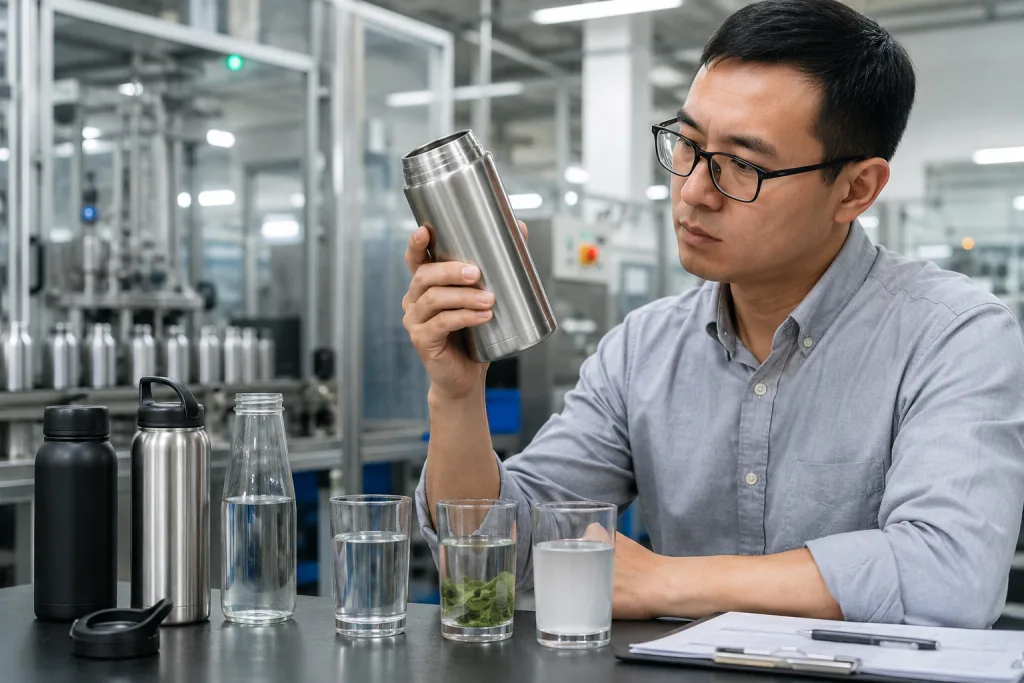
Taste complaints cost money because they are subjective and hard to fix once a distributor batch is already on shelf. We usually see the cause in mold residue, pellets that were not dried to spec, or release agent left on the inner wall. If the bottle comes out smelling like oil, solvent, or stale plastic after one wash, the buyer flags the brand, not the factory.
Set the cleaning requirement before production starts. For custom drinkware programs, ask for pre-production drying control, mold cavity cleaning frequency, and cartons made with low-odor materials. If the bottle has a wide mouth, the mouth ring and gasket need the same check. We had one PO typo where the buyer wrote “ODOR FREE” in the remarks but missed the gasket spec; the sample passed print, then failed on smell. That project died fast.
What works on the line:
- Pre-production odor check on 5 samples after 24-hour ventilation
- Food-grade silicone gasket with documented hardness, usually 50-60 Shore A
- No recycled inner-contact plastic unless your market explicitly allows it
- Separate cartons and polybags with low-odor ink and no heavy fragrance
If you are sourcing from China or from a Zhejiang-based canteen supplier, ask for a water-soak test at room temperature and 60°C. We run this test in a 2 L basin, and QC pulled the sample once after 30 minutes because the lid picked up a faint plastic note. It is a simple check, but it catches more bad batches than a glossy sample photo ever will.
The cap is where warranty starts
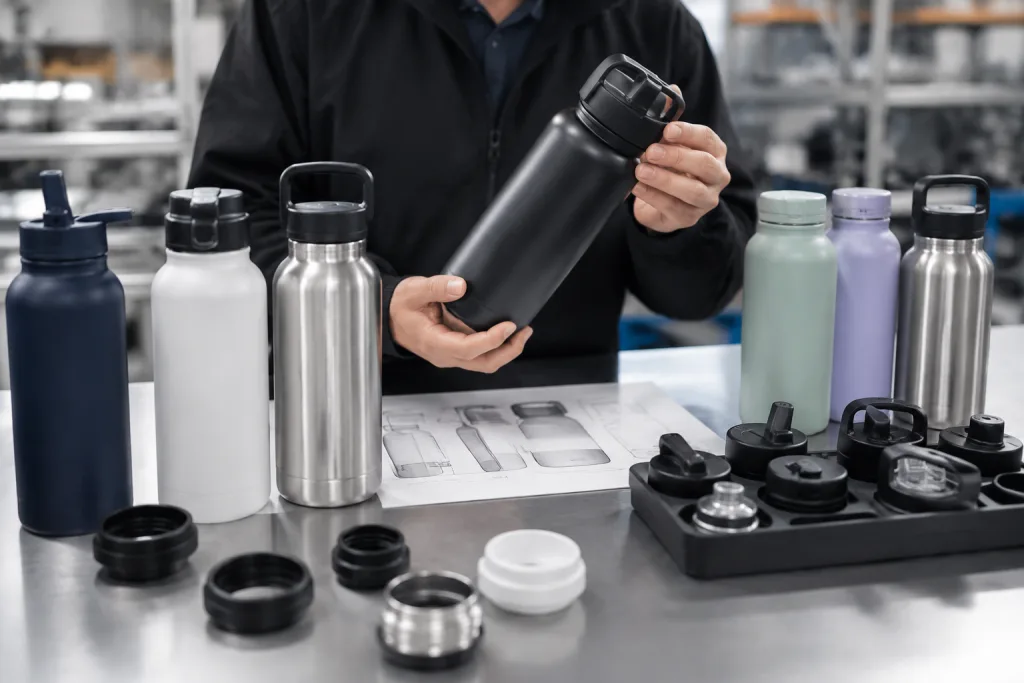
On customized canteens, 7 out of 10 warranty files we see start at the cap. Threads strip. Flip lids crack. Silicone seals take a set after compression, and straws bend after a 70°C wash test. A cap can look good on the sample table, then fail in a Yiwu warehouse after 2,000 vibration cycles or one corner-drop from 1.2 m. For a canteen distributor, this is where the buyer flags chargebacks, not simple returns.
Ask your canteen factory for the cap build sheet: PP body, silicone seal, TPE hinge, or stainless accent. Then ask for torque limits in N·cm. We run a digital torque meter on the line because “opens smoothly” is the wrong spec; the cap must close the same way after 500 open-close cycles, without backing off during carton vibration. For hot-fill or insulated styles, require a pressure-relief test if the design has a sealed internal cavity. For cold-fill sports bottles, put the leak test in the PO: bottle inverted for 30 minutes, then shaken 50 times. Cheap insurance. One buyer once typed “leak proof cap” on the PO with no test method, and the math did not work when QC pulled 13 leaking samples from a 500-piece pre-shipment lot.
For canteen custom programs with logos, the cap decides where decoration can safely sit. Laser engraving on a lid ring often beats printed ink, if the substrate does not warp after the 60°C dishwasher cycle. Your canteen manufacturer should say what can be printed, what can be molded, and what should stay blank with a 1.5 mm clearance from the hinge line. If they say yes to every logo position, we’ve seen this go sideways.
Decoration that survives shipping
Logo failure is a hidden charge we see in custom canteen and customized drinkware orders, often before anyone talks about it. The bottle passes the 24-hour leak test, then QC pulled the sample from a 5-layer export carton and found hairline scratches across the front logo. Misregistered colors, rubbed edges, and dull artwork usually show up after the ocean leg, not on the first sample photo. Glossy plastic shells with black or white prints are the risky ones. Carton friction does the damage. We’ve seen this go sideways.
Pick the decoration method by surface, not by what looks best on a quotation sheet. Screen print suits flat panels and one- or two-color logos; we run it with a fixture gap checked in mm, or the edge starts to ghost. Laser engraving belongs on exposed stainless, especially 304 stainless areas where ink adhesion is the wrong question to ask. Heat transfer and UV print carry full-color artwork, but curing time, lamp strength, and surface cleaning need tighter control. If you are sourcing a custom growler or customizable growler for retail, test abrasion with a 1 kg rub load or equivalent. If the ink lifts in 20 cycles, it will fail in a fulfillment center.
Check color consistency before the cartons close. A canteen distributor usually wants the same Pantone shade across three production runs, and the buyer flagged one case for us where the PO said PMS 186C but the artwork file showed 185C. In Zhejiang, factories with controlled curing and color matching can hold Delta E around 1.5-2.5 on stable surfaces, if the print area is dust-free and the operator knows the line. Ask for an approval panel. Keep one signed master sample in the file. That small habit saves 3 or 4 email chains later.
MOQ, lead times, and factory reality
Procurement teams sometimes treat MOQ as negotiation theater. It is not. MOQ pays for mold setup, first-piece scrap, print fixture adjustment, retail carton cutting, and line time at the canteen factory. For a standard 500-750 ml canteen supplier program, MOQ is often 3,000 units per color when you need custom print and retail cartons. On the line, one pad-print color change can burn 45 minutes and 80-120 trial pieces before the logo sits within 0.2 mm. If you want multiple logos or mixed lid colors, MOQ can rise to 5,000-10,000 units because every changeover adds labor, scrap, and schedule risk.
Lead time is usually 25-35 days after sample approval for a straightforward order, and 40-50 days if you need custom tooling, multi-color decoration, or special packaging. Count from signed sample, not from the first email. A serious Zhejiang canteen manufacturer should be able to quote monthly capacity, then show how much of that capacity is open for your cap mold and printing method. At BottleForge, the practical output is about 400,000 units per month across drinkware lines, but the headline number is the wrong number to buy against. We check the ERP board by SKU, lid type, and decoration process before we promise a ship date.
Pricing matters. For FOB China, a simple customized 304 stainless canteen may land around USD 2.10-3.20 at 3,000 units. Add a more complex cap, a silicone sleeve, or gift packaging, and you can move into USD 3.80-4.80 quickly. The buyer flagged it once: same drawing, USD 0.42 lower, but QC pulled the sample and found a thinner carton, looser seal compression, and lighter steel gauge. If a canteen vendor quotes far below that range, ask what was removed. The math does not work forever.
QC terms you should write down
Put the QC terms on the purchase order, not in a WeChat thread that nobody can find after production starts. For a canteen supplier in China, we usually ask the buyer to sign off on three checkpoints: incoming material check, in-line inspection at about 30% production, and pre-shipment AQL. For consumer drinkware, AQL 2.5 major and 4.0 minor is a workable baseline, but leak defects need a tighter rule because one wet carton can kill a repeat order. We run a 100% leak test on pressure lids for some retail jobs, using a simple air-pressure jig at the line. If the bottle is for retail shelves or Amazon FBA, add barcode scan, carton drop, and master carton weight checks to the PO as separate items.
Ask for these files before the container leaves Ningbo:
- Material certificates showing SUS304, PP, silicone, or Tritan grade and supplier batch number
- REACH or other market-relevant compliance files matched to your destination market
- Drop-test and leak-test records by lot, with date, operator name, and failed-sample count
- Carton count sheets and packing photos, including inner box, master carton, and pallet label
- Signed golden sample and artwork proof, checked against the PO spelling and Pantone callout
For distributor drinkware programs, consistency beats novelty. We have seen this go sideways: a canteen vendors network quoted 6% cheaper, then QC pulled the sample and found the mouth diameter drifting 0.8 mm from the approved bottle. If they cannot hold the same dimensions within ±0.5 mm on the mouth and ±1.0 mm on the body, your retailer will spot the uneven gap when 12 cases are stacked in a display. China has strong drinkware capacity, but “acceptable” is the wrong word unless you define it with numbers, photos, and a signed sample. Zhejiang factories can run commodity and premium builds on the same line, so the spec sheet must tell the line which build you paid for.
Get your bottle spec reviewed before tooling
Send us your target size, lid style, artwork, and market. We will flag the failure points before production starts in Zhejiang.
Frequently asked questions
What should I pay for a custom canteen at 3,000 units?
For a standard 500-750 ml custom canteen from a China or Zhejiang factory, FOB pricing often runs USD 2.10-3.20 at 3,000 units. If you add a complex flip lid, silicone sleeve, gift box, or multicolor print, expect USD 3.80-4.80. Shipping, duties, and inland pickup are separate. If a quote comes in far below that, check the steel gauge, cap seal, and carton quality before you celebrate.
How do I test whether the bottle will leak in transit?
Ask for a defined leak protocol: 100% air test or a 3-5 psi water test, plus an inverted hold for 30 minutes and a shake test. For distributor canteen orders, add a 1.2 m drop test onto plywood or corrugated board. The supplier should record results by lot number. If they only say “tested,” that is not enough. You need a number and a failure limit.
Is 304 stainless always safe for drinkware?
304 stainless is the standard choice for consumer drinkware because it offers good corrosion resistance and taste neutrality, but it is only part of the story. You still need a food-grade gasket, compliant plastic parts, and controlled welding or forming. Ask for material certificates and compliance files such as REACH if you sell into Europe. A poor seal can make a 304 bottle fail even when the steel itself is fine.
Can I order mixed colors and mixed logos in one PO?
Yes, but expect the MOQ and lead time to increase. A canteen customizable order with multiple body colors or logo variants often needs 5,000-10,000 units because the factory must switch molds, inks, or packing lines. If you want mixed SKUs for a distributor drinkware program, keep the structure the same and change only decoration or lid color. That is how you protect pricing.
What documents should a canteen distributor ask for before shipment?
Request the signed golden sample, artwork proof, material certificates, leak-test records, and pre-shipment inspection report with AQL results. If you sell in Europe or North America, ask whether the product files include REACH and any other market-specific compliance documents. For Amazon or retail distribution, also confirm carton count, barcode placement, and case pack dimensions. This avoids chargebacks and receiving disputes.