Key Takeaways
- Set the steel spec first: food-contact 304, usually 0.45-0.55 mm wall thickness for gym bottle bodies
- For custom logo shaker bottle projects, confirm lid tooling, mixing ball, and leak test before artwork approval
- Normal wholesale lead time from Zhejiang, China is 25-35 days after sample and deposit approval
- Use AQL 2.5/4.0 inspection and test at least 80-120 finished units per shipment batch
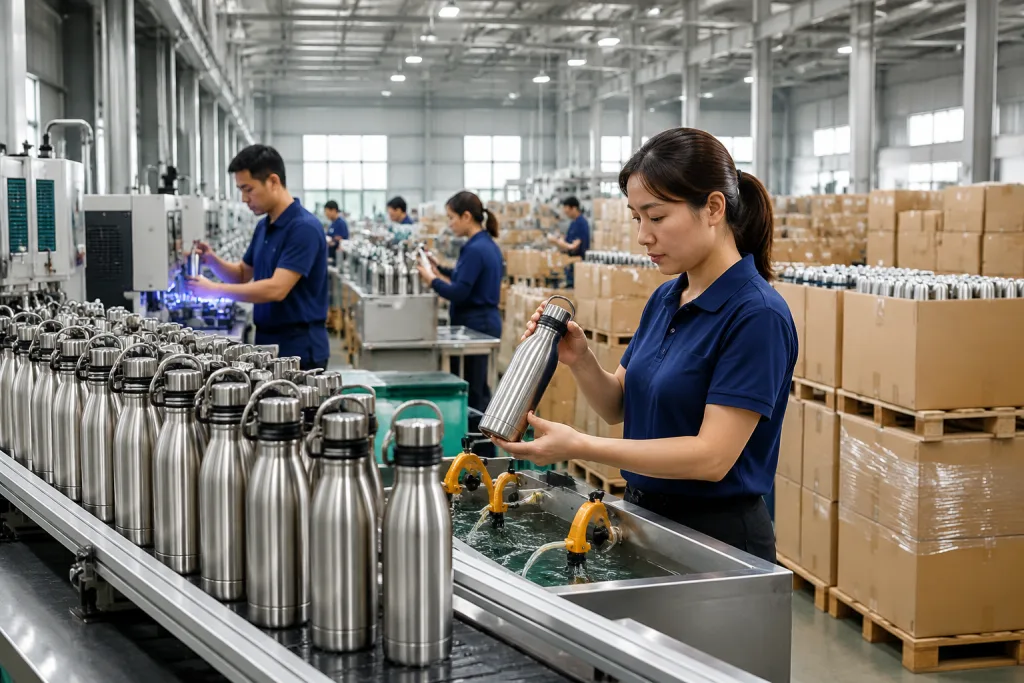
A 304 stainless steel gym water bottle wholesale order looks simple on the PO, then the buyer has to lock capacity, lid design, coating, logo method, carton packing, and FDA or LFGB paperwork before the launch date. We see it every month. For a fitness brand or gym chain, the bottle is not just a giveaway; it gets dropped on rubber flooring, stacked on retail shelves, and packed into member welcome kits. If the cap leaks at 80 kPa or the powder coating chips after a crosshatch tape test, members notice fast.
From our Hangzhou, Zhejiang export desk, the better projects start with four decisions: bottle structure, user scenario, branding method, and quality control level. China can ship cheap bottles or solid 304 stainless bottles; the gap is written in the spec sheet, not the sales photo. Our sports bottle lines run about 450,000 units/month, with typical MOQ at 1,000 units per color for custom gym water bottle orders. The wrong question is “what is your cheapest bottle?” Ask wall thickness, lid gasket material, coating test standard, and AQL 2.5 plan first. That is where QC pulled the sample last quarter when a buyer flagged a 1.5 mm logo position shift.
Start with the bottle job
Before you ask for a 304 stainless steel gym water bottle wholesale price, write down the bottle’s job. Front-desk resale at a 42-location gym chain is not the same as a supplement brand bundling one bottle with 2 kg protein powder. We ask this on the first RFQ because the wrong brief wastes 3 sample rounds. A distributor gym water bottle usually needs a neutral shape, carton stock ready for repeat orders, and no loud branding. A custom sports water bottle for a membership campaign needs stronger shelf impact and a unit cost that still works after logo, packing, and domestic delivery are added. QC pulled one sample last month because the buyer’s PO said “matte black,” but the artwork file called out Pantone 426C gloss. Small mismatch. Big delay.
For most fitness buyers, start with single-wall or vacuum insulated. Single-wall 304 stainless steel sports bottles are lighter, cheaper, and easier to slide into gym lockers with a 70-75 mm cup slot. A 750 ml single-wall bottle often lands around 150-190 g depending on wall thickness and cap style. It works for cold water, BCAA drinks, and daily training use, but it will sweat if filled with ice water. Vacuum insulated bottles cost more and weigh more. They keep cold drinks for 12-24 hours and feel better in the hand, especially with powder coating over a 304 stainless body. The math does not work if the buyer wants vacuum insulation, full-color carton, spare straw, and a 500 pcs MOQ at the same price as single-wall stock.
The second decision is whether you need a shaker function. Don’t guess. A bulk shaker bottle needs a wider mouth, a mixing ball or internal strainer, and a cap thread that survives repeated shaking after the user drops it in a gym bag. A custom made shaker bottle with stainless body and PP lid has more failure points than a simple screw-cap bottle: silicone ring fit, flip-cap snap force, strainer burrs, and lid shrinkage after molding. If your customers mix protein, creatine, or greens powder, ask for a leak test with warm water at 45°C and 30 seconds of hand shaking, not only static water filling on the QC bench. We’ve seen this go sideways when a sample passed upright testing, then leaked from the spout hinge after 20 shakes.
The third decision is retail product or promotional item. Retail needs cleaner finishing, individual color box, barcode or FNSKU label, and stricter cosmetic AQL. On the line, we check dust nibs in powder coating under a 600-800 lux inspection lamp, not under soft office lighting. Promotional bulk sports water bottle orders can use simpler polybag packing and master cartons, but the logo still has to survive abrasion and dishcloth cleaning. The buyer usually flags the logo first. If the artwork is small, laser engraving holds up better than a cheap one-pass print, especially on a bottle that gets thrown into lockers 5 days a week.
Choose the right 304 specification
Buyers write “stainless steel” on a PO and assume everyone reads it as 304. Bad assumption. Put it in black and white: inner and outer body material SUS304 or 18/8 stainless steel for food contact. For single-wall products, the whole body should be 304. For vacuum bottles, we see quotes with 304 inner and 201 outer to shave cost; last month QC pulled a sample with a weak magnet sticking to the outer shell, and the buyer flagged it only after artwork approval. That spec can work for price-sensitive markets, but it must sit clearly in the quotation and on the PI.
For a customized gym water bottle, wall thickness matters more than 7 out of 10 new buyers expect. Too thin, and the bottle dents in a gym bag beside a dumbbell clip. Too thick, and the carton weight jumps. We normally recommend 0.45-0.55 mm for single-wall gym bottles and 0.4-0.5 mm inner/outer walls for vacuum structures, depending on diameter and forming process. Ask for finished bottle weight, not just material grade; when the caliper reads 0.38 mm on a “0.5 mm” sample, the math does not work.
Food-contact compliance is not optional if you sell into Europe or North America. For EU projects, ask for LFGB or EU 1935/2004 migration testing, plus REACH for coatings where relevant. For the US, fitness brands often request FDA food-contact statements and, for kids or youth gym programs, ASTM or CPSIA-related checks if applicable. A distributor sports water bottle program crossing 3 or 4 countries should keep test reports by material: stainless body, PP lid, silicone seal, paint formula, and printed ink batch. We run this file check before mass production because one missing silicone report can hold a 5,000 pcs shipment at the forwarder.
Do not overbuy features your user will not pay for. A customizable sports water bottle with copper-plated vacuum layer, powder coating, carry loop, and retail box may look sharp on a sample table, but it can double the landed cost versus a clean single-wall model. We have seen this go sideways: the buyer loved the sample, then rejected the 2.1 kg master carton increase after freight was recalculated. Match the material grade, wall thickness, surface finish, and packing spec to the selling price your gym or brand can defend.
Lids decide leak complaints
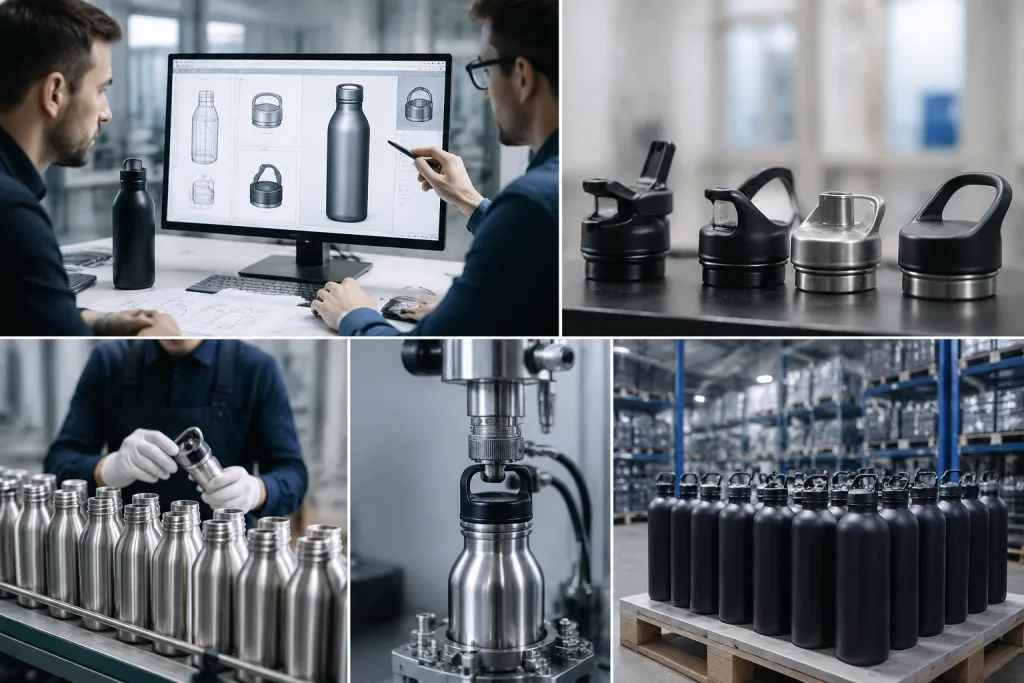
On bulk gym water bottle orders, most quality claims start at the lid, not the 304 stainless body. The body is formed, welded, polished, and passivated on a stable line; our neck ovality gauge usually catches problems above 0.3 mm before assembly. Lids are messier. They carry threads, flip spouts, silicone gaskets, hinge pins, drinking straws, lock buttons, and sometimes springs. One weak part, and the buyer calls the whole item a bad bottle.
For gym use, we run three lid types most often, but each one needs a different control point. A screw cap is the lowest-risk and lowest-cost option, although users dislike opening it mid-set. A flip straw lid sells well for treadmills and group classes; QC pulled one sample last month because the straw brush could not pass through the elbow. A shaker lid with drinking spout suits protein users, but it must survive inversion and shaking, not just a desk leak test. For a custom shaker bottle, ask the factory to test with 40-50°C water, because warm liquid builds pressure faster than cold water.
Check thread fit on pre-production samples. Hard truth: “make it tighter” is the wrong request if the cap already needs force, because members will cross-thread it after two gym sessions. If it feels loose, the gasket is carrying the whole seal, and the math doesn't work. We usually run a 100% water leak check at assembly for sports bottles, then random finished goods testing under AQL. For customized shaker bottle projects, a 30-second inverted shake test is a reasonable factory control, especially when the bottle includes a mixing ball; we mark failures on the inspection sheet by cavity number, not just by carton.
Cleaning matters. Gym users leave bottles in lockers and hot cars for 8 hours, then blame the brand when the lid smells. Narrow grooves, hidden gasket channels, and complicated straw parts trap odor; we have seen this go sideways when a buyer approved a nice-looking cap with a 2 mm blind groove under the seal. If your brand sells a custom fitness water bottle as a durable daily item, request removable silicone seals and spare gasket availability. A small spare-part plan can protect a large distributor shaker bottle program when one lid batch has a defect.
Branding without false economy
Logo method changes the look, but it also changes the reject rate. For a custom logo shaker bottle or customizable gym water bottle, we usually run silk screen, laser engraving, heat transfer, UV printing, water transfer, or full powder-coated color. None of these is “best.” The wrong question is asking which one looks nicest on a PDF. Ask which one survives packing, washing, and a 2.5 mm logo line after QC pulls the sample from the line.
Laser engraving is clean and hard to mess up on stainless steel or powder coating, but it is basically one-color: exposed metal or a tonal mark. Gym chains like it because after-sales complaints stay low. Silk screen works well for one- or two-color logos, with a setup fee of USD 30-60 per color depending on artwork and position. It is fine on flat or gently curved areas, but thin strokes can break on textured coating; last month one buyer flagged a 0.4 mm slogan under the logo, and the mesh screen could not hold it cleanly.
Heat transfer and UV printing give you more colors. They fit retail-style customized sports water bottle designs, but adhesion must be tested before bulk production. We use a 3M tape test, 100-cycle rubbing test, and warm water soak to catch weak ink before the cartons are sealed. For a bulk fitness water bottle promotion, do not approve artwork from a digital mockup only. Get a physical printed sample, even if it costs USD 50-120 and adds 5-7 days; we have seen this go sideways when the mockup blue printed purple under workshop LED lights.
Color choice affects the line too. Standard black, white, navy, and stainless are easier to control because the powder room already has stable recipes. Custom Pantone powder coating is possible, but at 1,000-3,000 units per color it may carry a powder MOQ or mixing charge. If you are ordering for 20 gym locations, one bottle color with different logos or sleeve labels usually beats 20 body colors. The math works better, and Zhejiang lines run faster when we avoid coating changeovers and 30-minute spray-gun cleaning between colors.
Pricing, MOQ, and freight math
A workable FOB China quote for a 304 stainless steel gym bottle comes down to capacity, body structure, coating, cap style, logo method, and packing. For reference, a 600-750 ml single-wall 304 bottle with a one-color logo usually sits around USD 2.20-4.20 FOB Ningbo or Shanghai at 1,000-3,000 units. A vacuum insulated sports bottle often lands at USD 4.80-8.50, while a customizable shaker bottle with a special lid, mixer ball, or extra compartment can move above that. QC pulled one 750 ml sample last month where the buyer asked for powder coating plus laser logo, then compared it against a plain spray-paint quote. That math does not work.
MOQ is not only a factory rule. It comes from coating setup, pad printing screens, packing material, and whether the line can run without stopping every 40 minutes for color change. For BottleForge Industrial in Hangzhou, Zhejiang, our normal MOQ is 1,000 units per model/color for custom sports water bottle production, 500 units for selected stock-color logo orders, and 3,000 units when you need fully custom color coating or new retail packaging. New lid tooling or a custom made shaker bottle mold can require USD 1,500-6,000 tooling cost, depending on part count and complexity. On the shop floor, we check coating thickness with a film thickness gauge; if a buyer wants matte black and neon orange in the same 1,000-piece order, the line loss is real.
Freight can decide which quote is actually cheaper. Stainless bottles are bulky, so carton volume often beats gross weight in the freight calculation. A 750 ml bottle may pack 24 pieces per export carton, with carton size around 48 x 36 x 28 cm depending on packaging. Air shipment for a launch event can cost more than the bottle itself. We have seen this go sideways when a PO said “gift box” but the artwork file showed a color sleeve, and the carton CBM changed after packing approval. For sea freight to Europe or North America, plan port-to-door timing early: production 25-35 days, export handling 3-5 days, ocean transit often 25-40 days, plus customs and inland delivery.
Payment terms are usually 30% deposit and 70% before shipment for first orders. Bigger fitness water bottle distributors can discuss staged production, blanket orders, or split shipments after stable cooperation and clean payment history. Simple rule: cheap is not always low cost. The cheapest quote is rarely the cheapest project if it leads to repacking, missed launch dates, or 5% customer complaints. We once had a buyer flag a PO typo, “304 steal” instead of “304 stainless,” after cartons were printed; catching that before mass packing saved 2,000 retail boxes from the scrap pile.
Inspection before balance payment
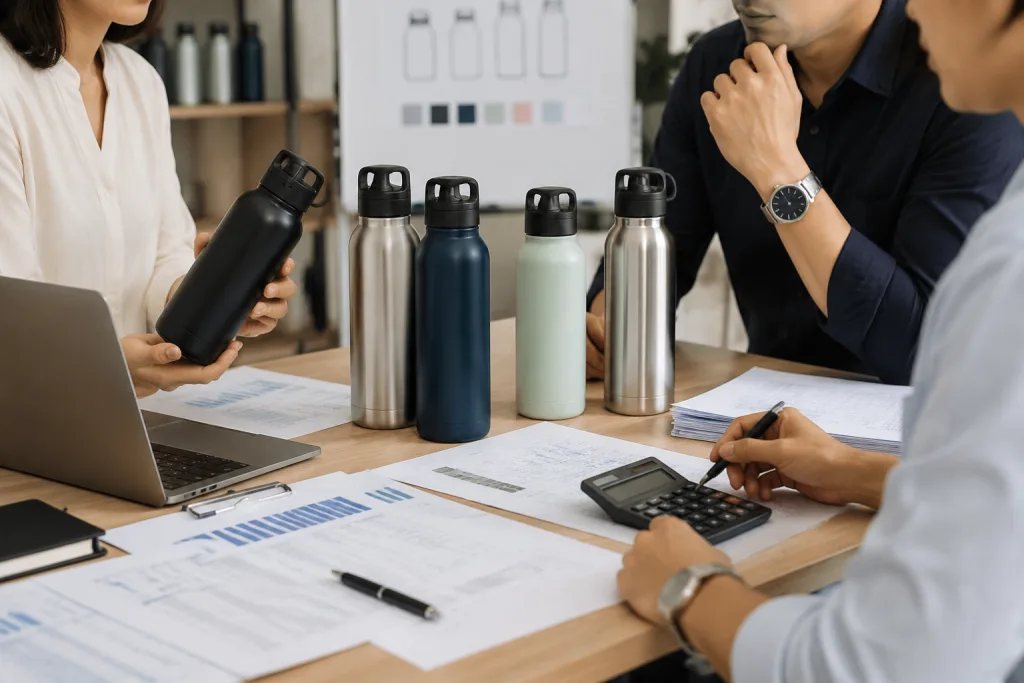
Agree the QC rules before the deposit leaves your account, not after 312 cartons are taped shut. For bulk sports water bottle and distributor fitness water bottle shipments, we run a written QC checklist for material, capacity, coating, logo position, lid fit, leakage, odor, carton marks, barcode, and packing count. Put the logo tolerance in mm. On one 304 stainless gym bottle order, the buyer flagged a 3 mm logo shift only after packing, and the rework cost more than the artwork setup. If you use third-party inspection, book it when production is 80-100% finished and at least 80% packed.
AQL is the common shop-floor language. About 8 buyers in 10 use AQL 2.5 for major defects and 4.0 for minor defects, with critical defects at zero tolerance. Critical defects include sharp edges, contamination inside the bottle, severe leaking, wrong material, moldy packing, and missing compliance labels. Major defects include poor logo alignment, obvious dents, cap thread failure, and coating peel. Minor defects include tiny cosmetic spots within agreed limits. QC pulled the sample once and found black dust inside 14 bottles from a worn polishing wheel. That is not a “minor appearance issue.”
For a customized fitness water bottle, include functional tests. Do the fill test for capacity tolerance, usually ±5%. Run the leak test by inversion for at least 30 minutes, not a quick flip over the sink. Drop test from 80-100 cm onto a standard surface if retail packaging must survive courier handling. Cross-hatch or tape test for coating adhesion with 3M tape, then record peel level on the inspection sheet. For a customized shaker bottle, add shaking tests with water and with a powder mix, because protein powder residue shows sealing problems around the spout faster than clean water.
Ask for production photos, but do not treat photos as inspection. This is the wrong question to ask if you only want “clear pictures.” A camera can hide dents, color shifts, and a lid gasket sitting 1 mm proud. If the order is going to Amazon or a centralized gym-chain warehouse, carton labels and FNSKU accuracy matter as much as the bottle itself. One wrong barcode can create chargebacks even when the product is good; we have seen a PO typo change “matte black” to “mate black” on the carton mark. A disciplined China factory will not be offended by a clear checklist. It makes the line easier to run.
A practical sourcing path
If you are new to 304 stainless steel gym water bottle wholesale, do not start with a full catalog. Start narrow: one capacity, one lid, two colors, and one logo method. We usually run this as a first test order, then hand 20-30 bottles to trainers, front-desk staff, and members for two weeks. Ask about grip, mouth opening, cleaning, rattling in a gym bag, and whether the bottle sits properly in Technogym or Life Fitness cup holders. QC pulled one sample last month where the powder coating looked fine under office light, then showed thin coverage around the bottom radius under the line lamp. That comment beats any showroom photo.
For a gym chain, a 750 ml bottle is the safer middle: enough for a workout, still easy to carry. For supplement brands, 600-700 ml fits better beside shaker positioning and retail shelf height. For distributors gym water bottle ranges, carry one opening-price single-wall model and one premium vacuum model instead of five close-looking SKUs. Five variants sound professional on a deck. On the warehouse floor, the math gets ugly: slower stock turns, mixed cartons, extra barcode checks, and buyers asking why black matte 750 ml sold out while navy 700 ml is still sitting there.
Sampling needs a fixed order. First confirm a stock sample for shape and lid fit. Then confirm a pre-production sample with actual color, logo, and packaging. Stock samples can ship in 3-5 days; custom pre-production samples usually need 7-12 days depending on coating and print. We check the logo with a caliper and 3M tape test before release, because a 1.5 mm logo shift is easy to miss on WeChat photos and painful after mass production. Approve the sample with signed photos and a spec sheet, not only a chat message.
When you request a quote from a Zhejiang or China supplier, send capacity, quantity by color, logo file, target market, required test standards, packing method, delivery term, and launch date. Short RFQs waste time. We have seen POs with “silver” written in one place and Pantone 877C in another, then the buyer flagged color mismatch after cartons were packed. A good custom gym water bottle order is not built from one magic unit price. It comes from clear specs, checked samples, and a factory process that can match the promise you make to your members.
Send your gym bottle spec for factory pricing
Share quantity, logo, capacity, lid type, and target market. We will reply with MOQ, FOB price, sampling time, and compliance options.
Frequently asked questions
What MOQ should we expect for a custom 304 stainless gym bottle?
For most 304 stainless steel gym bottle projects, expect 1,000 units per model and color for normal custom production. If you use stock bottle colors and only add a one-color logo, some factories can accept 500 units. Custom Pantone powder coating, special lids, retail color boxes, or a custom made shaker bottle design often push MOQ to 3,000 units or more. Tooling for a new lid or shaker insert is separate and can cost USD 1,500-6,000. If you are a gym chain testing member demand, start with one 750 ml model, two colors, and laser engraving or silk screen logo to keep MOQ and risk under control.
Is 304 stainless steel better than plastic for gym shaker bottles?
304 stainless steel is more durable, more premium, and better at resisting odor than many plastic bottles, which matters for protein and supplement users. It also supports higher retail pricing for a custom shaker bottle. The trade-off is cost and visibility: you cannot see liquid level unless you add internal markings or a window, and stainless bottles are heavier. A 700 ml stainless shaker may weigh 180-280 g depending on construction, while plastic is often lighter. For gym chains, stainless works well as a paid retail item or member upgrade. For low-cost event giveaways, plastic may still win on budget.
Which logo method lasts longest on a bulk gym water bottle?
Laser engraving is usually the safest long-term option because it removes or marks the surface rather than adding ink. On powder-coated bottles, the logo appears as a clean metal or tonal mark and handles daily gym use well. Silk screen is economical for simple logos, but ink quality and curing matter. UV and heat transfer can create colorful designs, but you should require adhesion testing before mass production. For a bulk gym water bottle order, approve a physical sample and request a tape test plus 100-cycle rubbing test. If the bottle will be washed frequently, avoid very fine printed details near hand-contact areas.
How long does production and shipping take from China?
Typical production for custom sports water bottle orders in China is 25-35 days after deposit and final sample approval. Stock-color logo orders can sometimes finish in 15-20 days if components are available. Add 3-5 days for export handling. Ocean freight to Europe or North America often takes 25-40 days port to port, then additional customs and inland delivery time. Air freight is faster but expensive because bottles are bulky. If you need bottles for a gym opening, allow 8-12 weeks door to door for a normal sea shipment, especially during pre-holiday production peaks in Zhejiang and other China manufacturing areas.
What quality tests should we require before shipment?
Use AQL inspection with 2.5 for major defects and 4.0 for minor defects, with zero tolerance for critical safety defects. Check material declaration for 304 stainless steel, capacity tolerance around ±5%, lid fit, sharp edges, odor, coating adhesion, logo position, and carton labels. Run leak tests by filling and inverting bottles; for a customized shaker bottle, add a 30-second shake test with warm water. For retail or e-commerce, also test packaging drop resistance from about 80-100 cm. If you ship to Amazon or a central gym warehouse, verify barcode, FNSKU, master carton quantity, and country-of-origin marking before paying the balance.