Key Takeaways
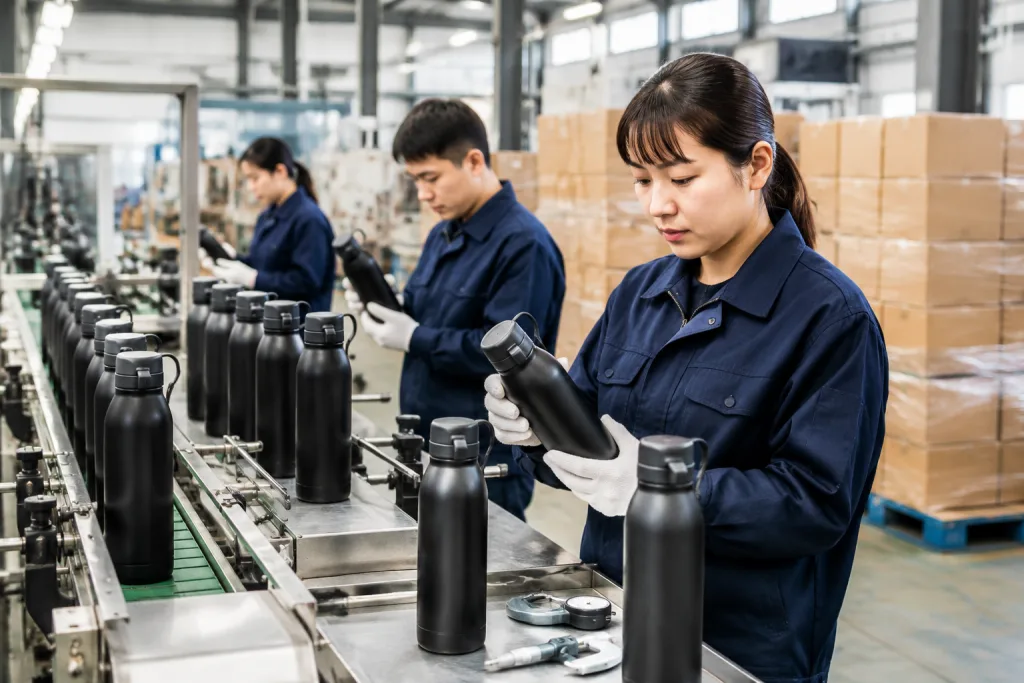
- A realistic MOQ for powder-coated custom sports bottles is 1,000-3,000 pcs per color
- 304 stainless steel should be verified by material certificate and incoming XRF checks
- AQL II, 2.5/4.0 inspection is practical for most gym-chain retail orders
- Normal production lead time is 30-45 days after artwork and pre-production sample approval
You are launching a stainless bottle program for a gym chain, a fitness app, or a supplement brand. On paper it looks easy: 750 ml body, black powder coat, one-side logo, maybe a shaker ball or straw lid. The risk sits in the small lines of the spec. Last month QC pulled 32 samples from a trial run and found 3 lids leaking at the silicone ring because the groove was 0.4 mm too shallow. That is how a clean promo bottle turns into franchise complaints, mixed black shades, thin steel, late cartons, and a buyer asking why the math changed after the PO.
We run 304 stainless steel fitness bottle orders from Zhejiang, China, and we see one bad habit every week: buyers ask for the unit price before the bottle is defined. This is the wrong question to ask first. Price matters, but the order needs engineering before quoting, down to wall thickness, lid torque, logo size in mm, carton drop test, and MOQ. We had one PO arrive with “powder coart” typed in the finish line; the buyer flagged it later because the supplier treated it as matte paint, not powder coating. Here is how we would take one real custom sports water bottle order from RFQ to shipment.
Start With The Gym Use Case
Say the PO is for 5,000 bottles for a 40-location gym chain in North America. Front desk retail gets one SKU; premium members get the same bottle as a welcome gift. It will hit lockers, car cup holders, protein powder sludge, and dishwasher cycles after members ignore the hand-wash card. We see this on returns. QC once pulled a sample with whey residue trapped under a flip spout after a 60°C wash test.
The first decision is the bottle type, not the logo. A bulk fitness water bottle for treadmill users needs one-hand drinking, a lid that passes a 30-minute inverted leak check, and 650 ml to 1,000 ml capacity. A bulk gym water bottle for strength training should have a wider mouth, usually 50 mm or more, so users can drop in ice and supplement scoops. A bulk shaker bottle needs a mixing ball or filter screen, but the math does not work if the buyer wants a narrow neck and easy cleaning at the same time.
For this buyer scenario, we would spec a 750 ml single-wall 304 stainless steel body, 0.5 mm wall thickness, wide-mouth PP lid with silicone seal, powder coating, and laser engraved logo. On the line, we check mouth roundness with a go/no-go gauge before coating, because a 0.3 mm oval mouth can make the lid feel cheap. If you want insulation, the build moves to double-wall vacuum, usually 0.4 mm inner wall and 0.5 mm outer wall, with higher FOB cost and more QC points, including vacuum retention and bottom weld inspection.
Do not let a supplier quote from a reference photo only. Send capacity, lid style, finish, packing, market, test requirements, and whether the order is retail, giveaway, or distributor sports water bottle stock. One buyer once wrote “matte black” on the PO but attached a glossy sample photo; production stopped for 2 days while we confirmed the finish. The same shape can be built in three cost levels, and the cheap one is where complaints usually start.
Lock The Technical Specification
For a 304 stainless steel fitness water bottle supplier, the technical sheet is the control document. If it is vague, our quoting engineer will price the simplest build, while the buyer pictures a heavier bottle with a cleaner finish. We have seen this go sideways. Last month QC pulled a pre-production sample that was 22 g lighter than the approved sample because the PO only said “304 bottle” and missed wall thickness.
For this order, the spec should state: SUS304 food-contact body, LFGB-grade silicone seal if selling into the EU, BPA-free PP lid, 750 ml nominal capacity, +/-5 percent capacity tolerance, 0.5 mm body wall, mouth diameter 55 mm, total height 245 mm, and target empty weight, for example 180-210 g for single-wall construction. Put it on one sheet. Our caliper check at incoming material is in mm, not “close enough,” and the line will follow the drawing before it follows a chat message. If you need REACH compliance for coating, say it before sampling, not after the buyer’s legal team flags it.
For a custom fitness water bottle, surface finish needs the same discipline. Powder coating should include a color reference, such as Pantone plus a physical color chip, because screen colors lie. Matte black is not one color in production; two powder suppliers can shift gloss by 5-10 GU on the gloss meter. For a custom gym water bottle used in clubs, we prefer powder coating over spray paint because scratch resistance holds up better in a 3M tape test and a simple key-rub check. It is still not indestructible, and selling it that way is the wrong promise.
A custom shaker bottle has extra points: shaker ball grade, filter fit, lid thread depth, drinking spout opening, and whether protein powder clogs the spout. A custom made shaker bottle should be tested with 25°C water and a thick powder mix, not only empty lid rotation. We run 20 open-close cycles by hand before sending samples, because a lid that feels fine once can bind after powder sits in the thread. If you are buying a customized shaker bottle for retail shelves, define carton drop requirements and barcode placement at the same time; we have had a PO typo put the EAN on the bottom flap, which made the warehouse reject 1,200 cartons.
Price The Order Without Guesswork
Now the quote has teeth. For a 5,000 pc customized fitness water bottle order, a realistic Zhejiang factory FOB Ningbo or Shanghai range is usually USD 2.10-3.20 per pc for single-wall 304 stainless steel with powder coating and laser logo, depending on lid structure and packing. Double-wall vacuum sports bottles often land at USD 4.20-6.50 per pc. A stainless bulk shaker bottle with a custom internal mixer usually sits between those two. Last month QC pulled a 750 ml powder-coated sample with a 0.6 mm body wall and the buyer flagged the lid gasket, not the bottle body. That changed the price.
MOQ comes from material purchase, coating line setup, and the logo process. Our Hangzhou-area production network in Zhejiang, China can usually run 300,000 stainless drinkware units/month across sports bottles, tumblers, and thermos lines, but a new color still needs a practical MOQ. Standard colors can start at 1,000 pcs. For custom powder color, 3,000 pcs per color is safer because powder loss and line cleaning cost money; the line needs about 35-45 minutes to clean the spray booth and change powder. Small custom-color orders look easy on a spreadsheet. The math doesn't work.
Logo costs move with process and size. Laser engraving often has a setup fee around USD 50-100 and a unit cost of USD 0.08-0.18 depending on logo size. Silk screen can cost less per piece for one color, but it wears faster on gym bottles that get tossed into metal lockers and dishwasher racks. We run a 3M tape test and alcohol rub test before approval. A custom logo shaker bottle with two-side print, retail box, and FNSKU label is not the same quote as a plain distributor gym water bottle in master cartons.
Ask the supplier to separate unit price, mold or tooling, sample fee, packing cost, inland freight, FOB port, and payment terms. Better yet, ask for it in the same order as your PO. We once saw a buyer type “FOB Shanghai” on the PO while the quote said “FOB Ningbo,” and the USD 180 inland freight argument ate two days before deposit. If everything is bundled into one number, you are not comparing suppliers; you are guessing.

Sample Like You Mean It
Sampling is where a customizable sports water bottle stops being a rendering and starts showing its problems. We run one blank structural sample first if the lid is new, then a pre-production sample with final color, logo, seal, barcode label, and retail packing. Skipping the blank sample saves seven days on paper; we have seen it go sideways when QC pulled the logo sample and found a 0.25 mm thread mismatch on the cap.
Typical sample timing is 7-10 days for existing mold bottles and 12-18 days if a new lid insert, color match, or custom shaker component is needed. If a mold is required, expect 25-35 days for simple lid tooling and 40-55 days for a push-button straw lid or locking drinking mechanism. A customizable shaker bottle with a unique agitator is not a two-week development unless the supplier already has a near-ready platform. The math doesn't work.
Approve samples with measurements, not just photos. Check capacity by filling to practical drinking level, not to the absolute brim. Weigh the bottle on a 0.1 g scale. Measure wall thickness with a digital caliper if the design allows. Test the lid with 60°C water, invert for 30 minutes, shake hard for 60 seconds, and leave it on its side overnight. For a customizable gym water bottle, put it in a real cup holder and a gym bag with a towel and keys. Not fancy. It catches dumb design issues, like a carry loop rubbing the powder coating after 200 swings.
For branded programs, keep one approved golden sample at your office and one sealed at the China factory. Both should have date, version number, Pantone reference, signed approval, and the same SKU wording as the PO; we once had a buyer flag “matte sand” on the carton while the PO said “sand beige.” When production starts, QC compares against that sample under a D65 light box, not against someone’s memory.
Build QC Into Production
QC should not start after the cartons are sealed. For 304 stainless steel, incoming material control is the first gate. We ask the steel supplier for the material certificate, then we run XRF spot checks on coils or cut sheets when the batch arrives; last month QC pulled 3 sheets from a 2,000 kg lot before deep drawing. 201 stainless can look similar after polishing. It is not the same product. If you sell a customized sports water bottle as premium, gambling on steel grade is the wrong place to save USD 0.12.
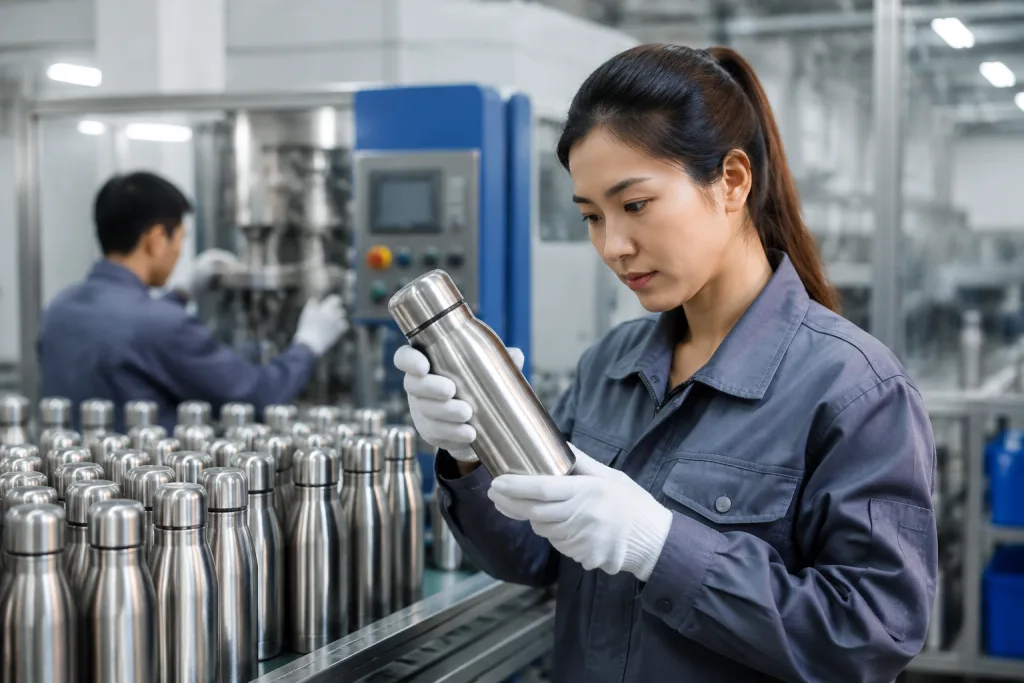
During production, we check body forming, welding or seamless forming quality, polishing marks, coating adhesion, logo position, lid fit, odor, leakage, and packing. On the line, powder coating adhesion gets a cross-hatch test with 3M tape, and color is checked in a light box at D65, not under a yellow warehouse lamp near the loading door. For laser logos, tolerance must be written on the spec sheet: for example +/-1.5 mm position and no visible burn halo beyond the artwork edge. The buyer flagged this once on a matte black bottle because the logo sat 3 mm low. Fair complaint.
For final inspection, about 8 out of 10 buyers we ship for use AQL General Inspection Level II with critical 0, major 2.5, minor 4.0. Critical defects include unsafe sharp edges, wrong material, serious leakage, and contamination. Major defects include lid failure, wrong logo, obvious coating chips, and carton quantity errors; one inspection found 47 pcs in a carton marked 48 pcs because the PO line had a packing typo. Minor defects include tiny specks within an agreed viewing distance, usually 30-40 cm. Small marks need a standard, or the math does not work.
If you are a distributor fitness water bottle buyer or distributor shaker bottle buyer, ask for inspection photos by defect category, not only clean production photos. A carton stack tells you nothing. A proper report should include sample size, defect list, measurements, function tests, barcode scans, and packing checks. We run barcode scans with a handheld scanner, check lid torque by hand plus fixture fit, and record leakage after 5 minutes upside down. Pretty photos do not catch a leaking cap.
Ship For Retail Reality
Packing is
Scale The Next Reorder
The first order teaches what the spreadsheet missed. QC pulled 12 returned samples last month, and 7 had the same comment: matte black looked good, but the 42 mm mouth would not take standard ice cubes from the gym bar. Another buyer flagged mixed cartons by location because their PO had “NYC-02” typed as “NYS-02,” and the warehouse split 18 cartons wrong. Fix these notes before the reorder, or the same complaint comes back with a bigger bill.
For reorder planning, keep the bottle body stable and change only the parts that lift sell-through or cut complaints. We run the same 304 stainless body and lid mold, then refresh with a new Pantone color, a seasonal logo, or a bundle sleeve packed 24 pcs per carton. A customized shaker bottle can add ounce markings or swap the mixing insert, but changing the lid rib, silicone ring, or thread depth means leak testing and 1.2 m drop testing again. Skipping that step is the wrong place to save 3 days.
Forecasting matters once volume jumps. If you move from 5,000 pcs to 30,000 pcs per quarter, we can reserve 304 stainless coil, lids, powder, silicone rings, and K=K cartons before the line is full. In Zhejiang, the 4-6 weeks before Chinese New Year get tight fast; powder coating slots that took 12 days in September can stretch to 18 days in January. A serious distributor fitness water bottle program should send rolling forecasts 60-90 days ahead, even if the formal PO comes later.
The best supplier relationship is not built on the lowest first quote. It comes from locked specs, honest daily capacity, clean AQL 2.5 records, and fast correction when a batch goes sideways. We ship better reorders when the buyer gives us complaint photos, carton drop results, and sell-through by SKU, not just “repeat last order.” That is how to scale a customizable fitness water bottle program members keep using after week 3.
Send Your Bottle Spec For A Practical Quote
Share capacity, lid style, logo method, MOQ target, and destination market. We will flag cost risks before sampling starts.
Frequently asked questions
What MOQ should we expect for a custom stainless gym bottle?
For an existing mold, the usual MOQ is 1,000 pcs per logo and color. If you need a custom powder-coated color, 3,000 pcs per color is more realistic because coating line setup and powder waste must be covered. For a custom gym water bottle with new lid tooling, the first order may need 5,000 pcs to make the tooling economics sensible. Smaller trial orders are possible when using stock colors and laser engraving, but the unit price can rise by 10-25 percent.
Is 304 stainless steel necessary for a fitness bottle?
For food-contact stainless drinkware, 304 is the practical standard we recommend. It has better corrosion resistance than cheaper 201 steel, especially when users add electrolyte drinks, lemon water, or protein mixes. A 304 stainless steel fitness water bottle supplier should provide a material certificate and allow spot checks by XRF or a third-party lab. For EU programs, also check LFGB or relevant food-contact requirements for the full product, including lid plastic, silicone seal, coating, and printing ink.
Should we choose laser engraving or silk screen for the logo?
For gym bottles that get heavy handling, laser engraving is usually safer because it removes coating and will not peel like ink. It works well for stainless bodies with powder coating and normally costs about USD 0.08-0.18 per pc after a small setup fee. Silk screen is useful for large, colorful logos, but abrasion resistance depends on ink quality and curing. For a custom logo shaker bottle sold at retail, ask for rub testing and approve the logo on a curved production sample, not a flat artwork proof.
How long does a custom sports bottle order take?
For an existing bottle mold, plan 7-10 days for sample preparation, 3-5 days for sample review after delivery, and 30-45 days for mass production after deposit and approval. Add freight time separately. Sea freight from China to North America or Europe can add 25-45 days door to door depending on port, season, and customs. If you require new tooling for a customizable shaker bottle lid, add roughly 25-35 days before final sampling.
What QC standard should a fitness brand request?
Use AQL General Inspection Level II with critical 0, major 2.5, minor 4.0 as a practical baseline. Critical defects should include wrong steel grade, unsafe sharp edges, contamination, and serious leakage. Major defects should include wrong logo, poor coating adhesion, broken lids, barcode failure, and incorrect carton quantity. For a bulk gym water bottle order, also request function checks: leak test, lid torque, coating appearance, capacity check, carton drop check, and random barcode scans if selling through retail or FBA-style channels.