Key Takeaways
- 304 stainless steel double walled bottles usually start at MOQ 1,000 pcs per size and finish
- Expect FOB China pricing around USD 2.80 to 6.40 depending on lid, coating, and capacity
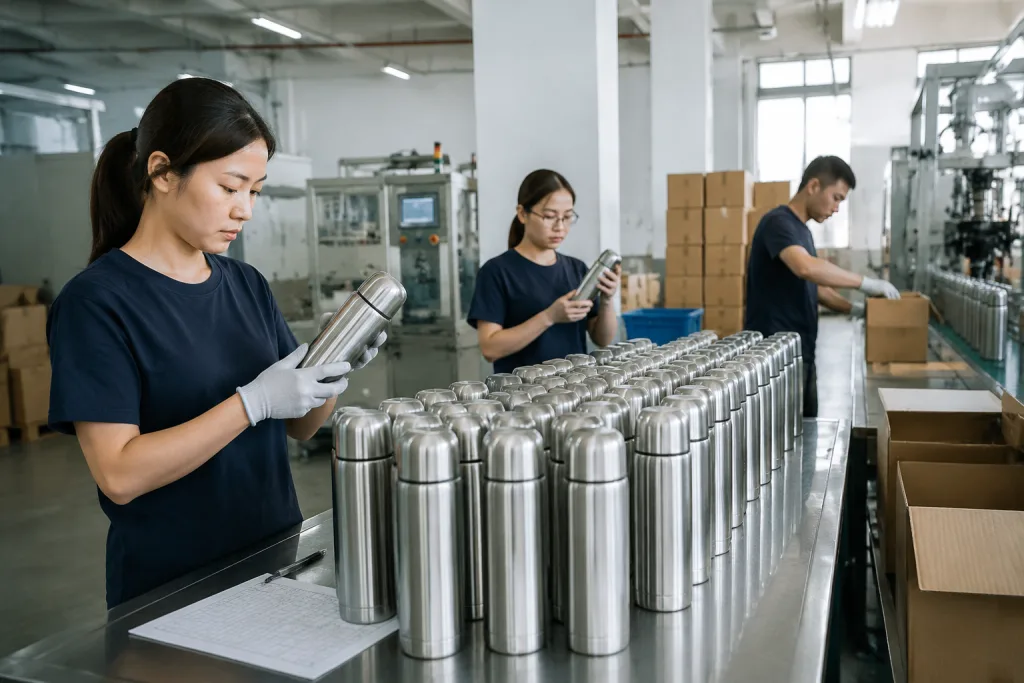
- A typical Zhejiang canteen manufacturer can produce 80,000 to 120,000 units per month
- For export, ask for AQL 2.5/4.0, REACH, and food-contact documentation before you pay deposit
If you are sourcing from a 304 stainless steel double walled bottle supplier, the question is not “can they make it?” The real question is “can they hold the spec, hit the finish, and keep the margin alive?” We have seen a 0.3 mm wall-thickness miss turn into a refund claim before the first reorder. That is why this is a spec call, not a catalog pick.
At BottleForge in Zhejiang, buyers will sometimes put canteen custom projects, custom growler lines, and standard customizable drinkware in one RFQ, then ask why the quotes come back 18% to 35% apart. The math does not lie. One buyer flagged a PO typo on the lid code last month, and QC pulled the sample back to check the insulation gap before we ran the line. A serious canteen factory quotes by structure, not just by volume, and buyers who compare that way usually avoid expensive surprises.
Compare the spec, not the brochure
I’ll rewrite just the prose, keep the HTML structure intact, and tighten it so it reads like a buyer-facing factory note.Buyers usually start with shape and color. Wrong order. For a 304 stainless steel double walled bottle supplier, the spec table decides landed cost, return rate, and whether the claim lands on your desk later. We’ve seen two bottles look identical on the shelf, then the caliper shows 0.35 mm inner wall on one and 0.40 mm on the other; the thin one dents easier and loses heat faster. QC pulled that sample from the line last month.
Use this check when you compare samples from any canteen supplier, canteen vendor, or custom drinkware factory:
- Steel grade: 304 inside and outside is the normal food-contact spec for bottle bodies.
- Wall thickness: 0.35-0.45 mm shows up often; 0.40 mm is the safer export call.
- Capacity: 350 ml, 500 ml, 600 ml, and 750 ml cover most retail and promo orders.
- Thermal performance: 6 to 12 hours hot and 12 to 24 hours cold is the range we ship when the vacuum is clean.
- Finish: powder coat, spray paint, brushed steel, or UV print all change cost, scratch resistance, and MOQ math.
If a canteen manufacturer will not show the drawing, weld line, and thickness points, that is not a small omission. It is a supplier problem. A buyer once sent a PO with the lid gasket called out as “silcon”; the typo looked minor, but the wrong gasket spec would have failed the fit check. Ask for dimensional tolerance, gasket material, and carton count before you open tooling.
Pick the use case first
Pick by use case, not by trend. Trend is the wrong question to ask. A canteen promotional bottle for a 2-day trade show is not the same product as a distributor drinkware line going into outdoor retail. If your customer wants gifting, the bottle should print cleanly, survive a 1.2 m carton drop test, and be priced to absorb a 5% to 8% promo overrun. If your customer wants shelf appeal, we push for a cleaner powder coat, tighter logo position control within 1 mm, and cartons that do not look crushed when the buyer opens the first master case.
Here is the practical fit map about 70 canteen distributors use when they brief us:
- Promo programs: single-wall is cheaper, but double-walled 304 wins when the buyer needs the bottle to feel heavier in hand, around 260 g to 330 g for common 500 ml sizes.
- Outdoor and sports: 500 ml to 750 ml with a loop lid or sports lid is easier to carry, especially when the line packs each bottle in a PE bag plus white box.
- Corporate gifting: matte powder coat with laser logo gives a cleaner premium look; QC usually checks logo burn depth and wipe marks under a 6000K inspection lamp.
- Retail bundles: pair the bottle with spare lids or a gift box to lift margin, but check the carton CBM first because one buyer flagged the freight jump from 42 cartons to 58 cartons per 1,000 pcs.
For custom canteen orders, the wrong lid causes more trouble than the wrong color. We have seen this go sideways. A wide mouth helps ice and cleaning; a narrow mouth cuts spill complaints in office gifting. If you are building a customizable canteen line for Amazon or wholesale, lock the lid before artwork, because the logo position often shifts 3 mm to 5 mm after the lid diameter changes. China factories in Zhejiang can make more than 20 common lid styles, but each lid changes leak risk, tooling cost, and lead time; our standard screw lid sample run is often 12 days vs 18 days for a new flip lid with silicone parts. QC pulled the sample for one PO after a 30-minute inverted leak test because the buyer typed “sports lid” in the email but “loop lid” on the PO.
Use this comparison table
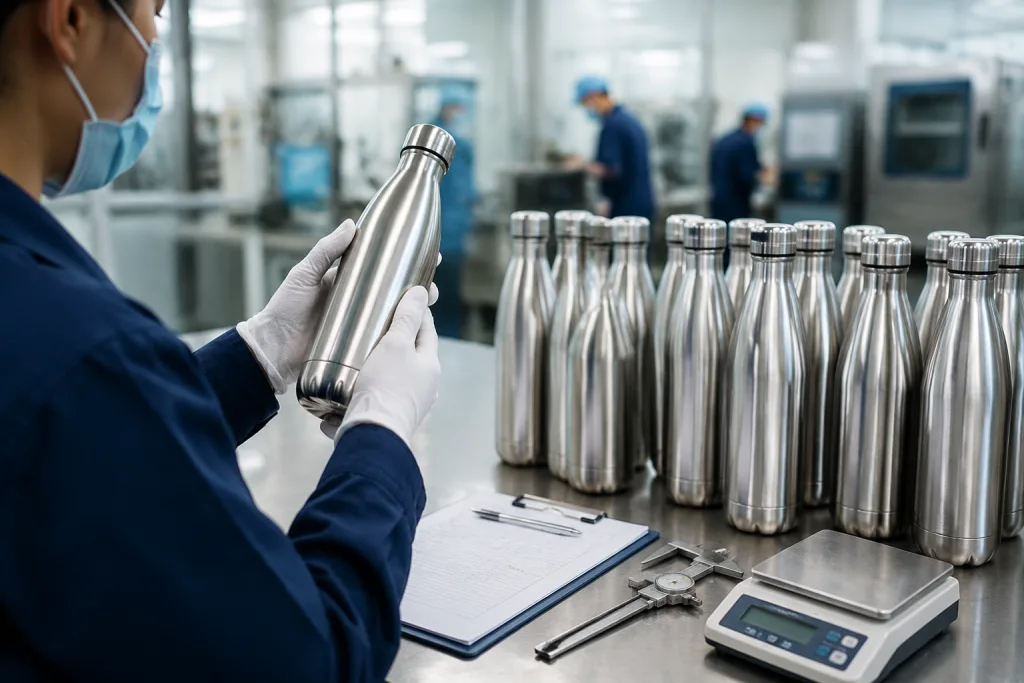
Put every quote into the same sheet before you talk price. We run this check at the sample bench with a 0.01 mm caliper and a carton drop-test record, because canteen suppliers, canteen vendors, and canteen manufacturers often hide the gap in lid spec, coating, or packing words.
| Option | Best for | Typical FOB China | MOQ | Lead time | Notes |
|---|---|---|---|---|---|
| 304 double wall bottle, basic lid | Promotional and volume wholesale | USD 2.80-3.60 | 1,000 pcs | 25-30 days | Works for custom logo, white box or simple master carton pack |
| 304 double wall bottle, powder coat | Retail and premium corporate orders | USD 3.40-4.80 | 1,000 pcs | 30-35 days | Better scratch resistance; QC should rub-test the coating before mass production |
| 304 double wall bottle, vacuum cap or special lid | Gift sets and higher-margin lines | USD 4.60-6.40 | 2,000 pcs | 35-45 days | Extra tooling may apply for canteen customized lid designs; confirm gasket size before mold opening |
One warning: if the quotation looks too cheap, ask what was removed. The math doesn't work if inner 304 steel is quoted but the lid switches to cheap plastic, or if food-grade silicone and export carton packing are added after PI. We have seen this go sideways over a PO typo like “304 outside” instead of “304 stainless inner and outer.” A clean quote from a serious canteen factory in Zhejiang should state steel grade, wall thickness in mm, coating type, logo method, and pcs per carton with gross weight.

Decide between logo methods
Your logo method changes the bottle more than most buyers expect. Laser engraving is clean and durable, but it will not give the shelf pop of a 1-color screen print. On powder coat, the laser cuts through the coating and shows the steel base, which suits premium orders when the coating is even. We run this check with a 3M tape test and a 500 g rub weight before bulk. If you sell customized drinkware to a channel buyer, the wrong question is “does the logo look good today?” The buyer will ask what it looks like after 200 washes.
Use the following rough guide:
- Silkscreen: lowest setup cost for simple 1-color branding; we usually suggest it for event bottles, not rough daily-use retail programs.
- Laser engraving: strong choice for premium custom drinkware with high abrasion resistance; color is usually the base steel tone, so artwork with tiny filled areas needs checking.
- Heat transfer: handles complex art better than screen print; we have seen edge lifting on tight curved shoulders if the film and bake time are not matched.
- UV print: gives sharp graphics on straight walls; QC should pull the sample for adhesion testing on curved steel before you approve bulk.
For a canteen customizable program, ask for a rub test result and dishwasher guidance before you confirm the PO. We have had buyers flag a logo that passed the PDF proof but sat 3 mm too close to the bottom radius on the real bottle. If the bottle will be resold as customized canteen or customizable growler, insist on a logo proof with placement tolerance. A 2 mm shift may not matter on a mockup, but it matters on a pallet of 5,000 units.
Check compliance before tooling
Compliance is not a paperwork afterthought. For Europe, ask for REACH-related declarations and food-contact support documents before any mold charge is paid. For North America, buyers often request ASTM-related material references, California Proposition 65 screening where relevant, and traceability by lot. We run this check against the steel coil lot number and the inner-wall material spec, usually 304 stainless, before the line opens a trial order. If the supplier exports from China every month, they should know this routine. If they look surprised, move on.
A competent 304 stainless steel double walled bottle supplier will talk about AQL without being pushed. For production inspection, AQL 2.5 for major defects and 4.0 for minor defects is a common starting point for drinkware. Ask how the supplier handles vacuum leakage testing, drop testing, and carton compression, with the fixture name and test frequency written down. QC pulled the sample last month after 3 bottles lost vacuum in a 24-hour hot-water hold; that finding saved the buyer from a full container claim. These are not luxury checks. They are the cost of not losing money later.
Ask for the test plan before you approve the first run. A Zhejiang canteen manufacturer that ships 80,000 to 120,000 units per month should be able to show in-process QC, final inspection records, and batch traceability without drama.
If a canteen distributor or canteen manufacturer cannot show this, the project is not export-ready. Strong factories in Zhejiang compete on process control as much as on price, and we have seen this go sideways when a buyer only chased a USD 0.08 lower quote. The buyer flagged one PO typo, “304” changed to “201” in a material line, and that stopped the order before tooling. That is the difference between a repeatable canteen promotional program and a one-off headache.
Match MOQ to your channel
MOQ should follow your channel, not your ego. For a new retail design test, 1,000 pcs per SKU is a sensible floor for most double-walled 304 bottles; below that, the line changeover and color setup charges eat the margin. If you are buying for a distributor canteen program or distributor growler assortment, 2,000 to 5,000 pcs fits better because you need stock for color and lid variants. For a custom growler with special lid tooling, expect MOQ to move upward. We had one buyer push for 500 pcs with three powder-coat colors, and the math did not work after the spray line quoted the masking and cleaning time.
Here is how smart buyers think about channel fit:
- E-commerce: run one bottle body with two proven colors, one lid style, and one carton spec so the warehouse does not mix 76 mm and 82 mm carton inserts.
- Corporate gifting: put the budget into logo impact and gift box quality instead of extra SKUs; QC pulled one sample last month because the gold foil logo was 1.5 mm off-center.
- Wholesale/distributor: keep the same bottle body across different decoration options, so spare lids, cartons, and barcode labels stay consistent.
- Promotional campaigns: lock the price early and ask for 30-45 day production windows; rush orders often get stuck waiting for color approval plaques.
A custom canteen order that starts with five colors and three lids usually ends with messy inventory. We have seen this go sideways. A better launch is one bottle first, then a canteen customized variant after the first PO sells through. That is how canteen distributors cut dead stock and keep cash moving. On our floor, we run the first trial with a caliper check on the lid thread and a 24-hour leak test before we tell the buyer to add more variants.
Send your spec, get a quote that matches reality
We quote by steel grade, wall thickness, finish, and use case so you do not overpay or under-spec your next China order.
Frequently asked questions
What is a normal MOQ for a 304 stainless steel double walled bottle supplier?
For standard bottle bodies with existing tooling, 1,000 pcs per color or finish is common. If you need a new lid, special coating, or custom packaging, MOQ often rises to 2,000 pcs. For a custom growler or customized canteen with unique tooling, some factories in Zhejiang will ask for 3,000 pcs to make the unit economics work. The right answer depends on your channel and whether you need mixed SKUs or one focused launch.
How much should I budget per bottle FOB China?
For a 500 ml 304 double walled bottle, FOB China usually lands around USD 2.80 to 3.60 for a basic lid and simple logo. Powder coating, laser engraving, or premium lids often move the price to USD 3.40 to 4.80. Special lids, gift boxes, and more complex canteen custom requests can push it to USD 4.60 to 6.40. If a quote is much lower, check what steel grade, gasket, and packing are excluded.
Can I order canteen customizable samples before mass production?
Yes, and you should. A serious canteen supplier can usually provide 1 to 3 samples within 7 to 12 days if the tooling already exists. For canteen customized items that need a new lid or new artwork, sample lead time can stretch to 15 to 20 days. Ask for sample approval based on leak test, coating adhesion, and logo placement, not just appearance. That saves time later.
What certifications do buyers usually ask for?
For export drinkware, buyers commonly ask for food-contact declarations, REACH support for Europe, and traceability documents. Many also ask for AQL 2.5/4.0 inspection standards, and some North American buyers want ASTM-related references or retailer-specific compliance forms. If you are selling on Amazon, you may also need carton labels, barcodes, and FNSKU placement guidance. The supplier should already know how to prepare those documents.
How do I choose between laser engraving and color printing?
Choose laser engraving when you want durability and a clean premium look. Choose color printing when branding and shelf impact matter more than scratch resistance. On a 304 stainless steel double walled bottle, laser usually survives handling better, while screen or UV printing can carry stronger brand graphics. For canteen promotional projects, many buyers use one-color print to keep cost down. For retail, engraving often supports a higher perceived value and fewer wear complaints.