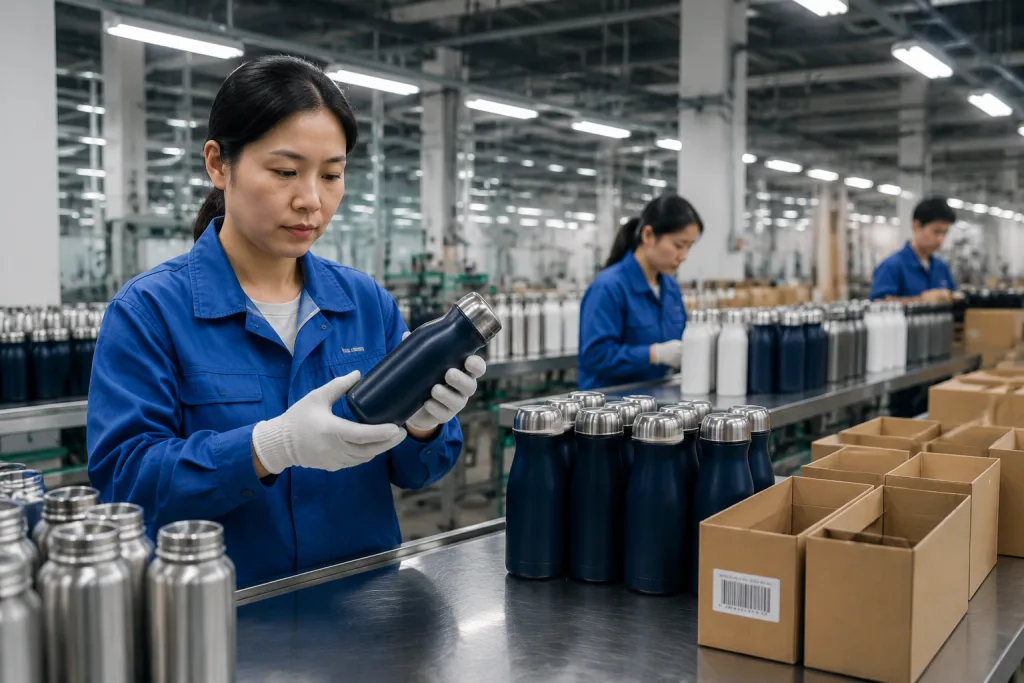
Key Takeaways
- A practical 20,000-unit order usually needs 35-45 days after sample approval
- 304 inner steel should be confirmed by material certificate and random XRF checks
- Logo method can change cost by USD 0.18-0.65 per unit
- Use AQL 2.5 major and 4.0 minor for standard drinkware inspections
Your buyer sends a short brief: 20,000 vacuum bottles, 304 stainless steel, logo printed, retail box, delivery before the summer campaign. Looks simple. Then the quotation sheet starts hiding the problems we check on the line: 0.4 mm inner wall or 0.5 mm, PP cap gasket fit, 8 kg carton burst test, AQL level, and whether the FOB price covers the powder coating or just plain stainless.
As a 304 stainless steel double wall bottle supplier in Hangzhou, Zhejiang, we see this pattern 6 to 8 times a month from Europe and North America. Asking for “best price” first is the wrong question to ask. Specify the bottle, confirm the factory process, approve the pre-production sample, lock QC criteria, then release mass production. China moves fast when the PO is tight; we have seen orders go sideways because one buyer wrote “matte black” while the artwork file said “soft touch black.”
Start with the actual use case
Use a real buyer scenario first. You are sourcing a 750 ml double wall stainless bottle for an outdoor retail chain. The target retail price is USD 24.99, so your landed cost must stay under roughly USD 6.80 after freight, duty, warehousing, and distributor margin. You want a powder coated matte finish, a one-color logo, individual kraft box, and barcode on each unit. On our side, we run that through a cost sheet before quoting: bottle body, cap set, coating loss, logo film, 5-layer export carton, then the CBM calculation.
Write the commercial use case in plain words before asking a canteen supplier for a quote. Retail shelves need barcode placement, cleaner coating, and cartons that survive store distribution. Corporate gifting needs logo approval and a gift-box face that does not look cheap in a conference room. Amazon FBA needs scanable labels and packaging that passes the drop test. Event merchandise, school programs, and canteen promotional campaigns each have their own weak point. This is where buyers get the first wrong quote. The buyer asks, “What is your best price?” That is the wrong question to ask until the sales channel is clear.
For a custom canteen or customized drinkware program, define how the end user will treat the bottle. Will it be used with ice? Will the base fit a car cup holder, usually around 70-76 mm at the lower diameter? Will someone put it in a dishwasher even if the care label says hand wash only? Will the cap be opened 20 times per day? Small details change the engineering. QC pulled a sample last month where the silicone gasket looked fine, but the cap failed our inverted leak test after repeated opening. That problem is cheaper to fix on the drawing than after 8,000 pieces are packed.
At BottleForge Industrial in Zhejiang, our normal MOQ for a new color plus custom logo is 1,000 pieces per SKU, but a serious distributor drinkware order normally starts at 5,000-20,000 pieces. Our monthly stainless bottle output is about 450,000 units across standard shapes. That factory metric matters because a canteen distributor needs repeat supply, not a one-time lucky shipment from a trading desk. We ship repeat SKUs off the same line with the same powder code and cap mold, so the second order does not turn into a color-matching argument. We have seen that go sideways when a PO says “mat black” instead of “matte black”; one typo, two rounds of samples, and 12 days lost before production even starts.
Specify steel, walls, and capacity
I’ll rewrite the section in place, keeping the HTML and list structure unchanged while tightening the sales-engineer tone and adding a few concrete factory-floor details.The phrase “304 stainless steel double wall bottle” still leaves too much room for interpretation. Spell out the inner steel, outer steel, wall thickness, vacuum target, and usable capacity. For food-contact markets in Europe and North America, the inner wall should be SUS304 or equivalent 18/8 stainless steel. The outer wall can also be 304, though some low-cost orders switch to 201 outside. That is where trouble starts: 201 cuts cost, but after a few scratch marks and a humid warehouse, corrosion shows up fast.
For a 750 ml bottle, a practical wall thickness is often 0.4 mm-0.5 mm before drawing, depending on the shape. On our line, the deep-draw die and shoulder radius change how far we can go before the body starts oil-canning. Too thin and the bottle dents in transit. Too thick and FOB cost climbs fast. A typical 750 ml powder coated bottle with stainless cap weighs 360-430 g. If a supplier quotes far below that, ask where the steel went. The math usually does not work.
Capacity needs to be checked by actual fill volume, not just the catalog name. A “750 ml” bottle may take 720 ml to the fill line, or 780 ml to the brim. QC pulled the sample and filled it to the neck once because the buyer flagged a 25 oz listing typo on the PO. If your packaging or retail copy says 25 oz, confirm the conversion and tolerance before artwork approval.
- Inner material: SUS304, food contact grade, passivation controlled after welding.
- Outer material: SUS304 preferred for premium retail; SUS201 only if clearly agreed.
- Vacuum test: 95°C hot water, 6-hour temperature drop recorded by batch.
- Leak test: inverted bottle for 30 minutes plus air pressure sampling.
A good 304 stainless steel double wall bottle supplier in China should be willing to put these items into the proforma invoice or technical sheet. We ship against that sheet. If the canteen factory will not state the steel grade, do not compare the price at all.
Build the quote line by line
I’ll rewrite just the prose, keep the HTML tags and structure intact, and make the pricing copy sound like a real factory quote desk note.Once the spec is locked, ask for a line-by-line FOB quote. “USD 3.20 including logo” is a lazy answer. We need the split: what is fixed, what is optional, and what changes the price. On a 20,000-piece order of 750 ml 304 inner and outer steel bottles, FOB Ningbo or Shanghai usually lands around USD 4.10-5.40 per unit, depending on cap type, finish, decoration, packaging, and inspection. We ship a lot out of Ningbo; the paperwork clears fast, and the line likes it.
Decoration moves the number fast. One-color silk screen usually adds USD 0.12-0.22 per unit. Laser engraving adds USD 0.18-0.35. Full wrap heat transfer or water transfer can add USD 0.45-0.90, and scrap risk goes up if the artwork sits too close to the seam. If your brand needs exact Pantone control on powder coating, put the tolerance in writing and ask for pre-production sample signoff. We’ve seen buyers flag a “close enough” color after the PO was already released.
Packaging hides cost in plain sight. A white box may run USD 0.12-0.18. A printed retail box may run USD 0.28-0.55, depending on paperboard gauge, coating, and order size. If you sell through e-commerce, ask for a 5-ply export carton, drop test to ISTA-style handling, FNSKU label, suffocation warning on polybags, and carton marks with SKU, PO number, and country of origin. QC pulled a carton at 1.2 m once and the corner crushed; that’s the kind of detail that changes the quote.
For canteen distributors and growler buyers, make the supplier separate tooling, samples, unit price, packaging, and test fees. A custom growler lid or custom body can need tooling from USD 800-3,500. A standard customizable growler with logo decoration may need no tooling at all. That is the difference between a 12-day sample path and an 18-day development delay. The math does not work if the quote bundles everything into one vague number.
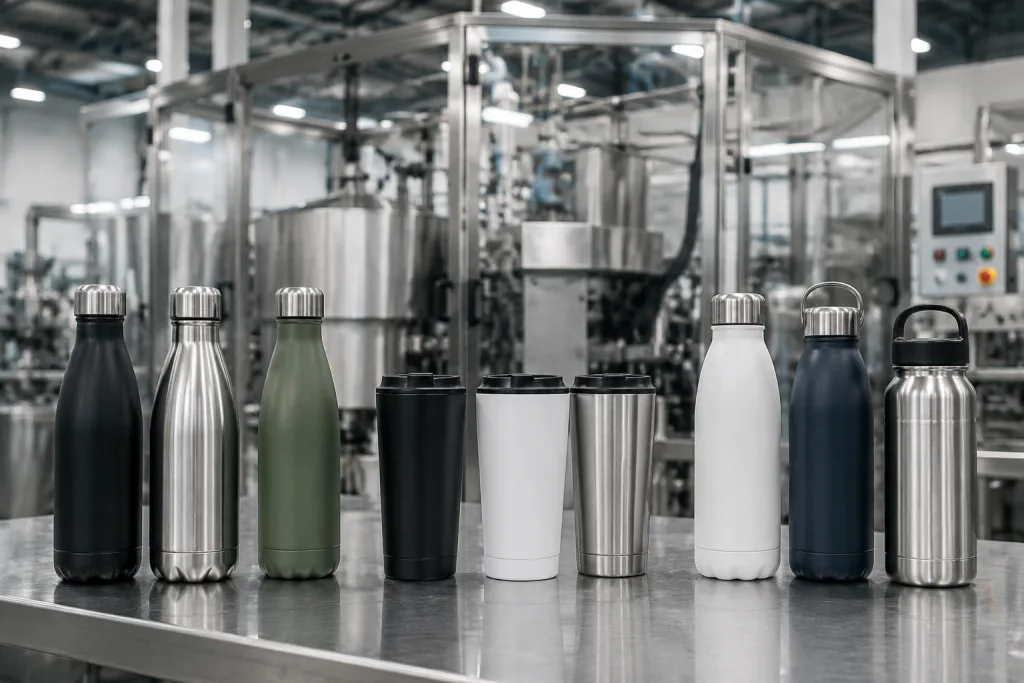
Approve samples without rushing
Sample approval is where 6 out of 10 messy orders start. A buyer receives one nice sample, sends a deposit, and expects bulk goods to match. That is the wrong question to ask. We run three separate checks: blank bottle construction to confirm vacuum, weld, weight, and thread fit; decorated sample to lock logo size, coating, and print position; final pre-production sample packed exactly as the line will ship it. For a canteen customizable order, the final sample should include the exact logo size, placement, coating color, cap, gasket, box, insert, barcode, and carton label format. QC pulled one sample last month where the PO said “matte black” but the artwork file said Pantone Black 6C; that mismatch stops production.
Normal sample lead time for standard bottle shapes is 7-10 days for blank samples and 10-15 days for decorated samples. If a new mold or new cap is involved, allow 20-30 days. Do not squeeze this stage unless your launch date matters more than defect risk. Simple math. A delayed sample costs a few days; a rejected container can tie up 1,200 cartons at the port. On our line, a new cap still needs thread gauge checking, gasket compression testing, and a 24-hour leak test before we let sales promise shipment.
Check the sample like a QC inspector, not like a marketing manager. Fill it with hot water, leave it overnight, shake it, turn it upside down, scratch the coating lightly with a fingernail and a coin edge, and compare the logo against your artwork file. Measure the bottle height and diameter with calipers. Use the calipers. For travel retail, confirm cup holder fit; 72-76 mm diameter is safer for many cars, while wide growler styles need different positioning. We have seen this go sideways when a buyer approved a 90 mm body from photos, then flagged it after it failed their store display rack.
Approval should be written: “Approved for mass production against sample BF-2407-750BK, with Pantone Black 6C powder coat, 55 mm logo height, kraft retail box, and silicone gasket.” Verbal approval is not a control system.
If you are a canteen vendor or distributor canteen buyer handling 8 SKUs across 3 colors, create one approval sheet per SKU. Canteen manufacturers in China can handle that complexity, but production staff need data they can tape beside the packing table and follow without guessing. We ship fewer problems when the sheet lists SKU code, approved sample number, carton mark, barcode, MOQ, and the buyer’s signed date.
Lock QC before production starts
Agree QC before the deposit lands, not after cartons show defects. For stainless double wall bottles, we usually set AQL 2.5 for major defects and AQL 4.0 for minor defects under ANSI/ASQ Z1.4 or ISO 2859-1 sampling. Critical defects get zero tolerance. A leaking bottle is not minor. A sharp burr on the drinking edge is not minor. Wrong steel grade is not a negotiation point. QC pulled a sample last month with a 0.3 mm lip burr; the buyer asked if we could “polish and pass it.” No. That bottle goes into the reject bin.
For a 20,000-piece order, we run inspection in three stages: incoming material check, during production inspection at 20-30% completion, and final random inspection when at least 80% is packed. If you inspect only at the end, coating trouble may show up after 8,000 bottles are already in export cartons. Rework then means cutting tape, reopening boxes, wiping each piece, and repacking with new carton marks. Slow work. We have seen one powder-coating batch lose 3 days because the curing oven ran 12°C low and nobody checked the cross-cut result in time.
Your QC checklist should cover vacuum retention, leak test, coating adhesion, logo position, color difference, odor, cap threading, gasket fit, capacity, barcode scan, carton drop condition, and packaging count. Spell out the method, not just the item. We use 3M tape for cross-cut adhesion, a torque feel check on cap threads, and a 24-hour room-temperature leak test for some sport lids. For REACH or LFGB-related Europe programs, confirm food-contact testing on the relevant components: stainless body, plastic lid, silicone gasket, coating if applicable. For North America, buyers often request FDA food-contact compliance and sometimes ASTM-related performance checks for kids or sport products.
As a canteen manufacturer in Zhejiang, we prefer buyers to define acceptable tolerances early: logo position ±2 mm, color difference within approved limit sample, capacity tolerance ±3%, carton gross weight tolerance ±5%. This protects both sides. Without numbers, every defect discussion becomes emotional. The math doesn't work if a buyer approves a Pantone chip, then rejects bulk goods by phone photos taken under yellow warehouse light. Put the limit sample beside the line, label it with the PO number, and make QC sign it.
For canteen suppliers handling repeat distributor drinkware programs, keep a golden sample and defect board at the factory. It is basic, but it works. The line leader should know what “acceptable small dust under coating” means and what “reject” means before 20,000 units are finished. On our line, the defect board sits near the packing table with 6 marked samples: pinhole, logo drift, orange peel, dent, gasket gap, and dirty thread. New workers understand that faster than a 9-page QC manual.
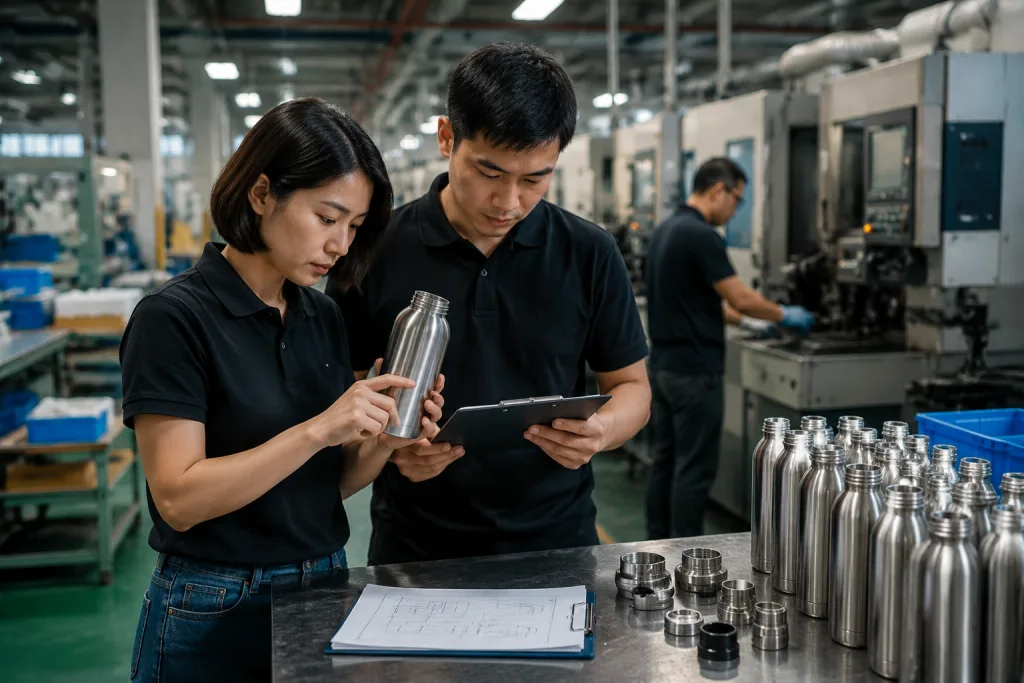
Plan cartons, labels, and shipping
A strong bottle can still lose money if the carton plan is loose. For a 750 ml bottle in a retail box, we often run 24 pieces per master carton. Carton size usually sits near 54 x 36 x 32 cm, with gross weight around 12-14 kg depending on bottle body weight and box board thickness. If your warehouse has a 15 kg manual handling limit, put that on the packing request before our carton engineer cuts the K=K sample. Say it early. Changing carton count after the drop test wastes about 2 days.
For Amazon-style or marketplace shipments, labels are production items, not office paperwork. FNSKU, suffocation warning, carton content label, “Made in China,” SKU barcode, and PO reference must be checked during final inspection. QC pulled one sample last month where the PO number had one wrong digit; the buyer flagged it before shipment, and the whole pallet needed relabeling. If the label is wrong, the bottle is not ready to sell. If you are a canteen distributor shipping to 4 retailers, ask for carton marks by customer or destination. Mixed cartons save 20 minutes on the line in China, then cost hours in your warehouse if nobody controls the split.
FOB terms are common for B2B drinkware exports. For a full container, your forwarder handles ocean freight after goods are delivered to Ningbo or Shanghai port. For smaller trial orders, LCL works, but carton strength matters more because each carton may be moved 6-8 extra times before it reaches your door. We use 5-ply export cartons for most LCL jobs and check corner crush after packing. Air freight only makes sense for urgent samples, small promotional events, or high-margin launches; stainless bottles are too bulky for routine air shipments. The math doesn't work.
Lead time depends on season and decoration. For a repeat order using existing materials, 30-35 days after deposit and artwork approval is realistic. For new color, new packaging, and compliance testing, plan 40-55 days. Around Chinese New Year, add at least 20-30 days buffer. China production capacity is strong, but the calendar still bites. We have seen coating lines stop for 5 days because one approved PMS color chip arrived late from the buyer.
If you need a canteen customized program across 3 colors and 2 lids, ask the canteen factory to provide a production schedule by SKU. That schedule should show material purchase, body forming, welding, polishing, vacuuming, coating, decoration, assembly, packing, inspection, and ETD. One line saying “delivery in 35 days” is not enough for a serious launch. Ask for dates. We ship better when the schedule shows which lid mold, which spray booth, and which carton mark belong to each SKU.
Choose the supplier you can audit
The final decision is bigger than price. You are choosing the canteen vendor that has to protect your launch date, compliance file, and customer relationship. A USD 0.08 lower quote from an unknown canteen supplier looks nice on the comparison sheet, but the math does not work if the factory cannot trace its 304 stainless steel coil, explain powder coating thickness in μm, show patrol inspection records, or write a corrective action after QC pulled a leaking sample from the line.
Ask whether the supplier is a factory, trading company, or hybrid exporter. A trading company is not automatically a problem; the problem is not knowing who controls welding, polishing, coating, assembly, and final packing. A real canteen manufacturer should show production photos, a machine list, worker count by department, daily output, BSCI or similar social audit status if available, and past inspection reports with sensitive client names removed. For larger canteen distributors, an on-site or video audit is reasonable before placing a 50,000-piece program, and we would ask to see the vacuum testing station, the carton drop-test corner, and at least 3 finished cartons from the current order.
For custom canteen, customizable drinkware, and customized growler projects, communication quality is also a supplier test. Do they answer with numbers or adjectives? “Logo looks okay” is not good enough. We expect artwork position in mm, Pantone code confirmation, carton burst strength, and a clear note if the buyer’s requested print sits too close to a curved shoulder. Good canteen manufacturers do not just say yes; they push back when the carton is too weak, the lid color on the PO says “black” but the artwork file says “charcoal,” or the requested lead time leaves no room for AQL 2.5 reinspection.
At BottleForge Industrial in Hangzhou, Zhejiang, we handle standard stainless thermos bottles, sports bottles, travel tumblers, custom growler formats, and distributor canteen programs from sample through export packing. Our practical advice is simple: buy from the supplier that documents the order well. A clean specification sheet, approved sample file, AQL checklist, and shipping label plan cut more risk than a USD 0.05 discount. We have seen this go sideways: one missing barcode size on an outer carton can hold a 12-pallet shipment longer than a full day in the warehouse.
Send your bottle spec before you ask for price
We will review capacity, steel grade, decoration, MOQ, packaging, QC points, and FOB options before your custom drinkware order moves forward.
Frequently asked questions
What MOQ should I expect from a 304 stainless steel double wall bottle supplier?
For standard shapes with your logo, 1,000 pieces per SKU is a normal starting MOQ. For a custom powder coating color, 3,000 pieces is more realistic because coating setup and color powder waste must be covered. For a custom canteen body or unique lid tooling, plan for 5,000-10,000 pieces per production run. If you need 3 colors, ask whether MOQ applies per color or total order. A canteen factory may accept 1,000 black, 1,000 white, and 1,000 navy if the body is the same, but pricing will be higher than one 3,000-piece color run.
How do I verify the bottle is really 304 stainless steel?
Ask for a material certificate from the stainless coil supplier, then add random XRF testing during inspection. For a 20,000-piece order, testing 5-8 randomly selected inner bodies is a practical control. The inner wall is the priority because it contacts beverages. If the outer wall is quoted as 304, test that too. You can also request a third-party lab report for food-contact compliance, but lab testing should not replace batch-level checks. Put “SUS304 inner wall required” in the purchase order, not just in email discussion.
What is the normal lead time for customized drinkware from China?
For an existing bottle shape with standard color and one-color logo, expect 30-35 days after deposit and sample approval. If you need a new powder coating color, printed retail box, barcode labels, and third-party inspection, 40-45 days is safer. For a customized growler or new lid tooling, 55-75 days is common because tooling, first samples, revisions, and testing take time. Before Chinese New Year, do not cut the schedule tight; add 20-30 days or ship before the factory rush begins.
Which logo method is best for a promotional canteen order?
For canteen promotional orders under tight budget, one-color silk screen is usually the best value at about USD 0.12-0.22 per unit. Laser engraving costs more, often USD 0.18-0.35, but it looks cleaner and does not rub off like ink can. Heat transfer works for full-color artwork but may add USD 0.45-0.90 and needs stricter QC. For outdoor retail, laser or high-quality screen print is safer. For event giveaways, silk screen is usually enough if the logo size and surface curve are controlled.
What inspection standard should canteen distributors use before shipment?
Use ANSI/ASQ Z1.4 or ISO 2859-1 sampling with AQL 2.5 for major defects and 4.0 for minor defects. Set critical defects at zero acceptance: leakage, sharp edges, wrong material, unsafe odor, broken cap, or contaminated interior. For a 20,000-piece order, inspect when at least 80% is packed, and add during-production inspection at 20-30% completion if the finish is new. Test vacuum retention, logo position, coating adhesion, barcode scan, carton drop condition, and packing count. The inspection checklist should be approved before production starts.