Key Takeaways
- MOQ for a stainless thermos order often starts at 1,000 units per SKU, with lead time around 25-35 days after sample approval
- A 304 stainless body with 0.4-0.5 mm wall thickness is a practical baseline for retail-grade vacuum bottles
- For UK buyers, insist on AQL 2.5 major / 4.0 minor, REACH documentation, and carton drop tests before FOB booking
- A custom logo on a factory thermos can add only USD 0.12-0.45 per unit if artwork is simple and setup is clean
You are not buying “a thermos.” You are buying a container that has to survive a carton drop, a 48-hour transit chain, a logo print, and a customer who will blame you if the tea goes cold by lunch. That is why wholesale vacuum bottle Britain orders need tighter specs than most buyers expect. The wrong wall thickness, a weak lid seal, or sloppy packing turns a good price into a costly return rate.
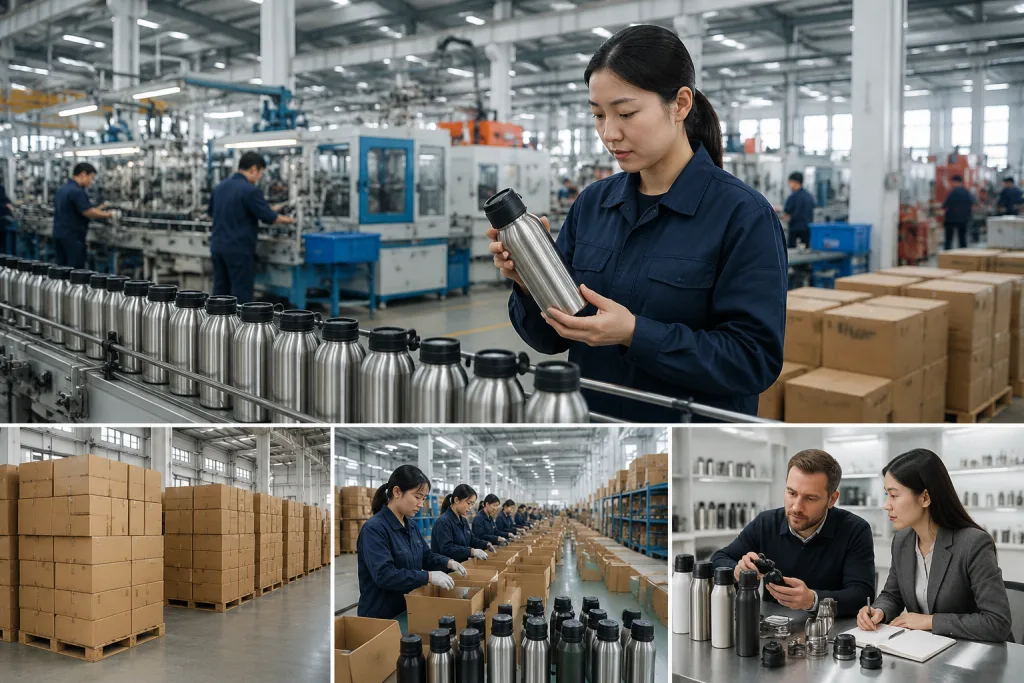
We run these jobs every week from our Hangzhou line, and the process is plain: confirm 350 ml, 500 ml, or 750 ml, lock the stainless grade, test heat retention, approve artwork, then check AQL 2.5 before shipment. QC pulled the sample at 6 a.m. this morning on a lid torque gauge, and the buyer flagged one PO typo on the cap color code. If you are an outdoor retailer or promo brand, the right custom thermos is the one that ships the same on carton 1 and carton 1,000. Cheap quotes look fine on paper. The math does not work when returns start.
The order starts with one use case
I’ll tighten the prose, keep the HTML exactly as-is, and make it sound like a factory-side sales engineer wrote it. Then I’ll return only the rewritten markup.The buyer we see most often is not buying the bottle first. They are buying the use case: a 500 ml flask for hill walkers, a 750 ml gift item for a promo run, or a matte black custom thermos with a clean shoulder and no gimmicks for retail. Start there. A wholesale vacuum bottle britain order goes off the rails fast when the spec sheet is built around a stock shape that does not fit the customer.
For outdoor retail, 500 ml and 750 ml stainless thermos models move best. For corporate gifting, 350 ml and 500 ml are easier to land under target cost. We run this from the line side: one capacity, one lid, one finish. The last time a buyer added a second cap option, QC pulled the sample and found the carton map was already wrong. In Zhejiang, we treat that as order structure before production.
A sensible buyer brief includes:
- Capacity: 350 ml, 500 ml, or 750 ml
- Material: 304 stainless inside and outside, optional 316 inside for premium lines
- Finish: powder coat, brushed steel, or painted gloss
- Lid type: screw cap, push-button, or tea-filter lid
- Packaging: single box, gift box, or mailer-ready carton
If the brief is vague, the quote will be vague. That is not a sales line; that is how manufacturer thermos pricing works. We have seen POs arrive with a 500ml/750 ml typo, and the math does not work after that.
Lock the stainless and wall spec
I’ll keep the HTML exactly as-is and rewrite only the prose, tightening the engineering language and adding a few concrete factory-floor details without changing the structure.Once the use case is fixed, we lock the body spec. For a proper custom thermos, the usual start is 304 stainless steel with a vacuum gap that holds 12-24 hours of heat, depending on capacity and lid build. If the buyer wants a premium line, 316 on the inner wall is a fair upgrade, but for most wholesale vacuum bottle britain orders, 304 gives better margin and fewer headaches on the line.
Wall thickness is where a lot of importers get caught. A workable outer shell sits at 0.4-0.5 mm, with the inner liner around 0.35-0.45 mm, depending on the forming method and neck shape. Go too thin and the bottle picks up dents in carton transit; go too thick and the unit cost climbs for no real shelf gain. We usually push a finished weight target instead of only a drawing callout, because the scale tells the truth. Last month QC pulled a 500 ml sample at 268 g against the PO typo of 286 g, and the buyer flagged it before we packed the cartons.
Useful QC checkpoints:
- Vacuum integrity after 24 hours at ambient temperature
- Lid torque consistency across 20 sample units
- Leak test at 45 degrees and inverted position
- Salt spray or corrosion confirmation for coated finishes
- BPA-free lid components with food-contact declarations
In China, a low quote that ignores steel thickness is not cheap. It is unfinished.
That is why we ask buyers from Britain and Europe to lock drawing tolerances early. A good thermos factory sends a spec sheet with real numbers, not sales copy; on a recent run we held the shoulder tolerance to ±0.3 mm because the buyer said the cap felt loose at first open.
Price depends on decoration, not just steel
I’ll rewrite this section in place, keep the HTML structure unchanged, and tighten the pricing language so it reads like a factory-side sales note.Most buyers compare quotes as if the bottle is the only variable. It is not. A plain brushed steel bulk thermos with one-color laser engraving can land around USD 3.20-4.60 FOB China at 1,000 units, while a powder-coated promotional thermos with full-color print, gift box, and insert card can move into the USD 4.80-6.80 range. Add a clip lid or double packaging and the number climbs again.
For a thermos custom order, decoration drives a bigger share of cost than the steel grade. Laser engraving looks cleaner and holds up better in use, but screen print stays cheaper on large flat logos. A wrap print on a curved body means more setup and more scrap on the line. We saw one buyer flag a 1.5 mm logo shift on a PO, and the math did not work if we changed the print method mid-season. If you are a distributor thermos buyer serving multiple retailers, keep the decoration method fixed across runs so repeat orders do not turn into fresh tooling every quarter.
Ask your supplier thermos team to separate pricing into these lines:
- Base bottle
- Logo method and setup fee
- Packaging
- Testing and compliance documents
- Carton and palletization
That split tells you whether the quote is real. If a thermos supplier rolls everything into one number and will not itemize, you will have trouble when you come back for a second quote with a new logo or carton spec. QC pulled the sample and found the insert card was 3 mm short once, and that kind of miss shows up only when the cost buckets are clear. For custom thermos programs in Zhejiang, clean pricing cuts rework and speeds approval.
Sampling should feel boring
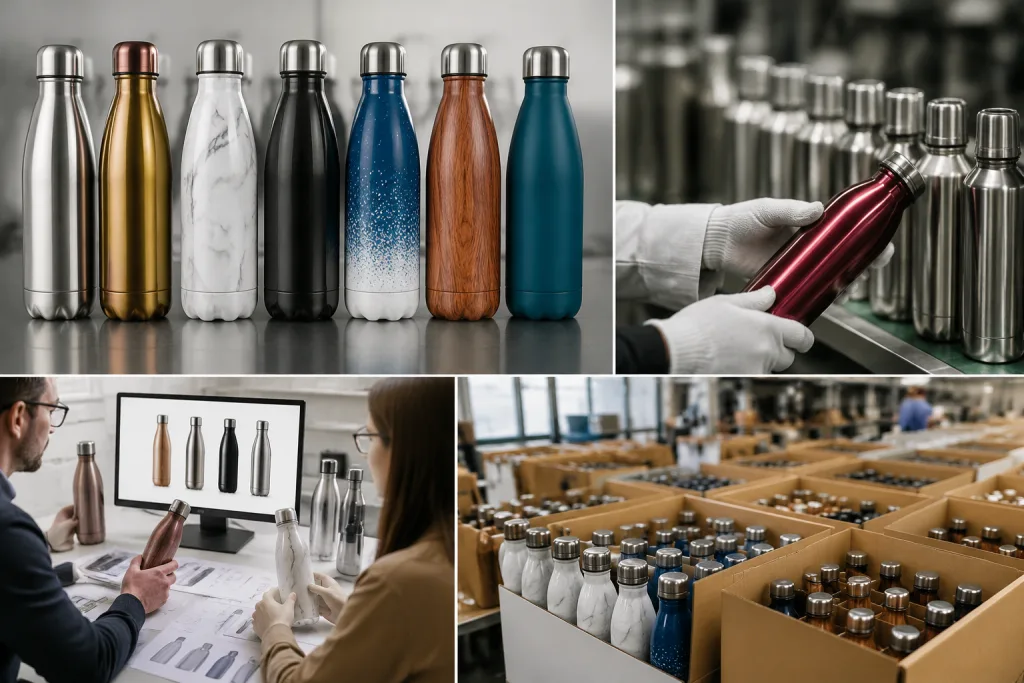
I’ll keep the tag structure exactly as-is and rewrite the prose to sound like a factory-side sales engineer. Next I’m shaping each paragraph with concrete sample-cycle details, one line-item pushback, and a few shop-floor specifics.Sampling is where buyers lose three weeks for no reason. Keep it tight. First sample checks shape, finish, logo position, and lid fit. Second sample checks thermal retention and packing. If you are buying wholesale vacuum bottle britain stock for retail, do not approve from photos. We want the bottle in hand, filled, inverted, shaken, and dropped into a carton test.
A normal sample run from a solid China factory is 7-12 days for basic decoration and 12-18 days if you need a new color or custom lid. Sample cost usually lands at USD 30-80 per design, plus courier. The math still beats a 5,000-unit mistake. We ship the exact format you plan to sell: custom thermos in retail box, promotional thermos in mailer, or customized thermos with accessories. Packaging changes the result more than people expect.
Sample sign-off should include:
- Artwork approval with Pantone reference if color matters
- Dimension check against drawing
- Leak and retention test
- Drop test from 80-100 cm in packed condition
- Label and barcode placement review
If you serve outdoor retailers, ask for a sample that has already passed one full packing cycle. A factory thermos can look perfect bare on the line and still fail once the insert presses the lid and leaves a mark on the coating. QC pulled a sample like that last month. It only showed up after packed inspection, not on the loose bottle.
QC is where orders are won
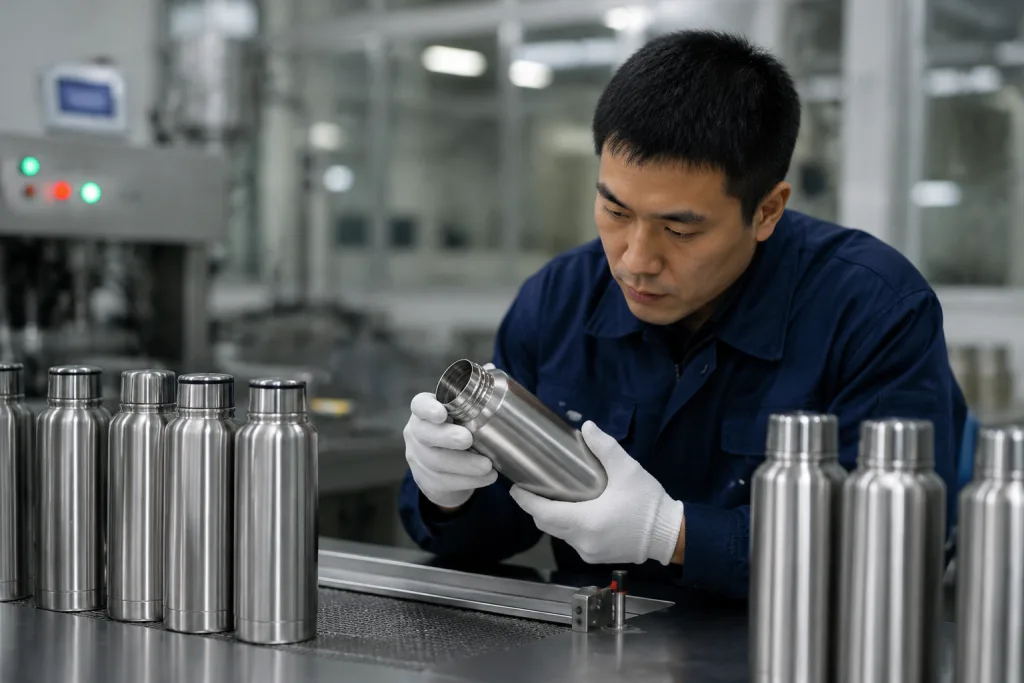
I’ll keep the HTML structure exactly as-is and rewrite the prose to sound like a real sales engineer, with tighter QC detail and fewer generic phrases.Quality control belongs in the purchase order, not in a polite promise. For a thermos maker, that means the lot size, inspection level, and defect calls go on paper before the line starts. We normally use AQL 2.5 for major defects and AQL 4.0 for minor defects on retail programs, with zero tolerance for leakage, loose lids, or print that drifts outside the approved sample.
On a 10,000-unit custom thermos order, we pull random cartons at three points: pre-production materials, in-line assembly, and pre-shipment finished goods. That catches a 2.0 mm gasket mismatch or a coating pinhole before the whole batch is boxed. If you run distributors thermos channels, this is not optional; mixed cartons and random logo direction get flagged fast, and then the buyer starts asking for chargebacks.
Our Zhejiang line runs about 200,000 units a month across stainless drinkware, so output is not the issue. Consistency is. The buyer usually asks the right questions:
- Which lid factory supplied the gasket?
- What was the 24-hour vacuum retention result?
- How many cartons failed the drop test?
- Does the carton print hold up to moisture and scuffing?
- Are REACH and food-contact records current?
If you are buying from suppliers thermos options in China, ask for the inspection report, not just the shipment notice. QC pulled the sample, the caliper checked the wall thickness, and a serious thermos factory already has the numbers on hand.
UK logistics reward simple packaging
I’ll rewrite the section in place, keep the HTML structure intact, and tighten the prose so it sounds like a real export-sales note from the floor.For Britain, packaging is not decoration; it is damage control. A bottle that ships safely from Zhejiang to Felixstowe usually has an inner box, corrugated master carton, divider or sleeve support, and pallet stacking that avoids crush risk. We run a drop test at 80 cm on the line before a bulk pack leaves. If your wholesale vacuum bottle britain order is going to Amazon or a distributor warehouse, the barcode has to scan on receipt, not just look fine on the proof.
Pick the carton structure by channel. Retail-ready cartons carry one bottle per box with a barcode and product description. Promo orders often use a simpler gift box to cut unit cost. If the shipment needs FNSKU labels, lock that into the pack spec before production starts. The buyer flagged a label typo on a PO once, and that one line burned two days in QC and a full relabeling run.
Shipping terms matter too. FOB China is the cleanest start for most experienced buyers because it keeps factory responsibility separate from freight responsibility. If you want more control, ask for carton dimensions, gross weight, and pallet count before we print the master carton artwork. That is how you check landed cost properly and avoid surprise charges at the UK end. For a bulk thermos program, even a 2 mm carton change can move the cube enough to change the freight math.
For outdoor retail, we also recommend moisture-resistant outer cartons and corner protection. Britain gets rain. Warehouses do too. We have seen a plain 5-layer carton soften after 12 days in a damp transit shed, and the math does not work when the buyer has to write off cartons at arrival. A thermos supplier that ignores that is not thinking like an exporter.
Send your thermos spec for a factory quote
We’ll price the bottle, logo, packaging, and QC so you can compare landed cost before you place a bulk order.
Frequently asked questions
What MOQ should I expect for wholesale vacuum bottle Britain orders?
A realistic MOQ for a standard stainless thermos is often 1,000 units per SKU, sometimes 500 for a stock shape with simple logo work. If you want a new mold, custom lid, or special color, expect 3,000 units or more. In Zhejiang, we can usually turn samples in 7-12 days and production in 25-35 days after approval, depending on coating and packing. The lower the MOQ, the less room you have for custom packaging, so the unit cost moves up fast.
Can I get a custom thermos with my logo and still keep cost low?
Yes, if you keep the spec disciplined. A one-color laser logo on a stock stainless body is usually the cheapest durable option, often adding only USD 0.12-0.30 per unit. Screen print can be slightly cheaper on large flat areas, but it is less abrasion-resistant. For a promotional thermos, the best savings usually come from reusing an existing mold, limiting to one finish, and keeping packaging simple. The more you combine logo colors, gift boxes, and inserts, the more the quote climbs.
What tests should a thermos manufacturer show before shipment?
At minimum, ask for leak tests, vacuum retention tests, visual inspection records, and packing checks. For retail programs, insist on AQL 2.5 major and 4.0 minor. If the bottle has a coating, request adhesion or abrasion evidence and carton drop test results. For UK buyers, REACH-related documentation and food-contact declarations should be ready before booking. A serious thermos factory will provide photo records and a pre-shipment report, not just a promise that the batch is fine.
What is a fair FOB China price for a bulk thermos?
For a plain 304 stainless 500 ml vacuum bottle, FOB China often sits around USD 3.20-4.60 at 1,000 units, depending on finish and lid. A more premium customized thermos with powder coating, gift box, and printed logo can be USD 4.80-6.80 or higher. Price moves mostly with decoration, packaging, and lid design. If one supplier quotes far below that, check whether they cut steel thickness, skip testing, or use a cheaper lid assembly.
How do I choose between supplier thermos options in China?
Compare them on evidence, not sales language. Ask for factory audit documents, recent QC reports, sample photos, and a real production lead time. A dependable thermos supplier in China should be able to tell you monthly output, actual MOQ, and standard inspection criteria. If you are serving Britain or North America, make sure they understand carton labeling, barcode placement, and channel-specific packaging. Zhejiang has many thermos suppliers, but the useful difference is who can hold tolerance and repeat quality over multiple runs.