
Key Takeaways
- For wholesale tritan bottle us projects, 600-750 ml Tritan bottles usually hit the best cost-to-retail ratio, with FOB China pricing around USD 1.35-2.80 depending on lid and print.
- A 2.0-2.5 mm wall thickness is a safer target for retail-ready bulk drinkware than thin promotional bottles that dent, warp, or feel cheap.
- For US buyers, ask for REACH, FDA food-contact declarations, and drop-test data; do not rely on photos or a generic COA alone.
- If your SKU needs faster turnaround, a 3,000 pcs MOQ and 25-35 day production window is more realistic than chasing a low quote with hidden tooling delays.
If you are buying wholesale tritan bottle us inventory, the real question is not “which bottle looks good?” It is which spec holds up in your channel, protects your margin, and keeps complaint emails off your desk. Tritan sells because it is light, BPA-free, and easier to brand than glass, but we see the same thing every week on the line: two bottles can look identical online and fail in different ways after 200 drops or one hot wash cycle.
At BottleForge Industrial in Zhejiang, China, we build and export bulk drinkware for procurement teams that want numbers, not brochure talk. Our factory runs about 420,000 units per month, with typical MOQ 3,000 pcs for custom Tritan bottles and 25-35 days lead time after sample approval. QC pulled the sample, checked the 2.0 mm wall thickness, and sent back the same note we hear from buyers again and again: if the spec is loose, the math does not work. If you are comparing wholesale drinkware for gyms, retail, or Amazon FBA, the spec sheet beats the photo every time.
What Tritan actually wins on
I’ll rewrite the section in-place, keep the HTML exactly intact, and tune the copy to sound like a factory-side sales engineer.Tritan wins in wholesale drinkware for three plain reasons: it stays clear like glass, weighs less than metal, and holds up better than cheap SAN or acrylic. For buyers comparing bulk drinkware options, that is the whole game. We ship more units per carton, cut breakage claims, and still land a bottle that looks good on retail shelves. On the US side, that mix usually beats a basic PET bottle once the shelf price passes USD 12. We’ve seen the math on the packing line.
Where Tritan does not win is every job. If the end customer wants hot-fill, carbonation pressure, or long-term odor control for coffee or tea, the lid, seal, and temperature limit need to be set up right. Standard Tritan handles cold and warm drinks, but it is not magic. QC pulled a sample with a loose cap at 60°C, and the buyer flagged it. Compare it against stainless, glass, or low-cost promo stock by use case, not by habit. That is the wrong question to ask.
Use-case fit:
- Gyms and sports retail: strong fit for 500-750 ml hydration bottles.
- Corporate gifting: good if you need laser engraving or full-wrap print.
- Outdoor and travel: good, but demand leak testing and a secure cap.
- Beer or beverage sampling: only if the lid system and compliance are specified clearly.
Spec table that changes the decision
I’ll keep the HTML structure intact and rewrite the prose to sound like a factory-side sales engineer, with sharper numbers and one concrete shop-floor detail per paragraph.Most sourcing mistakes start when buyers judge samples by hand feel instead of the spec sheet. For wholesale tritan bottle us orders, this table clears out weak SKUs fast. If a supplier says “high quality,” ask for these numbers. On our line in Zhejiang, the teams that ship 20,000 pcs without drama can quote them from memory.
| Spec | Recommended range | Why it matters |
|---|---|---|
| Capacity | 500-750 ml | Sells well for retail, gym, and commute use |
| Wall thickness | 2.0-2.5 mm | Gives better hand feel and cuts warp risk |
| Weight | 120-180 g | Keeps the cost and durability in balance |
| Lid seal | Food-grade silicone, 2-3 mm section | Helps cut leak claims |
| Drop standard | 1.2 m / 3 sides | Gives a practical QC benchmark for retail |
| Decoration | 1-3 color screen print or laser mark | Holds down unit cost and lead time |
If you are buying wholesale drinkware at volume, carton pack-out matters just as much. A 24-piece master carton with internal dividers beats loose packing for e-commerce, and we’ve seen that go sideways when the buyer skipped the divider spec. For US fulfillment centers, one dented bottle can trigger a reject; QC pulled a carton sample last week and found 3 mm headspace was the difference between clean inbound and a claim. On Amazon or retail routes, this is the wrong question to ask: “Can it ship?” The math works only when the pack spec is locked before the PO, not after the first carton lands.
Tritan versus other bulk formats
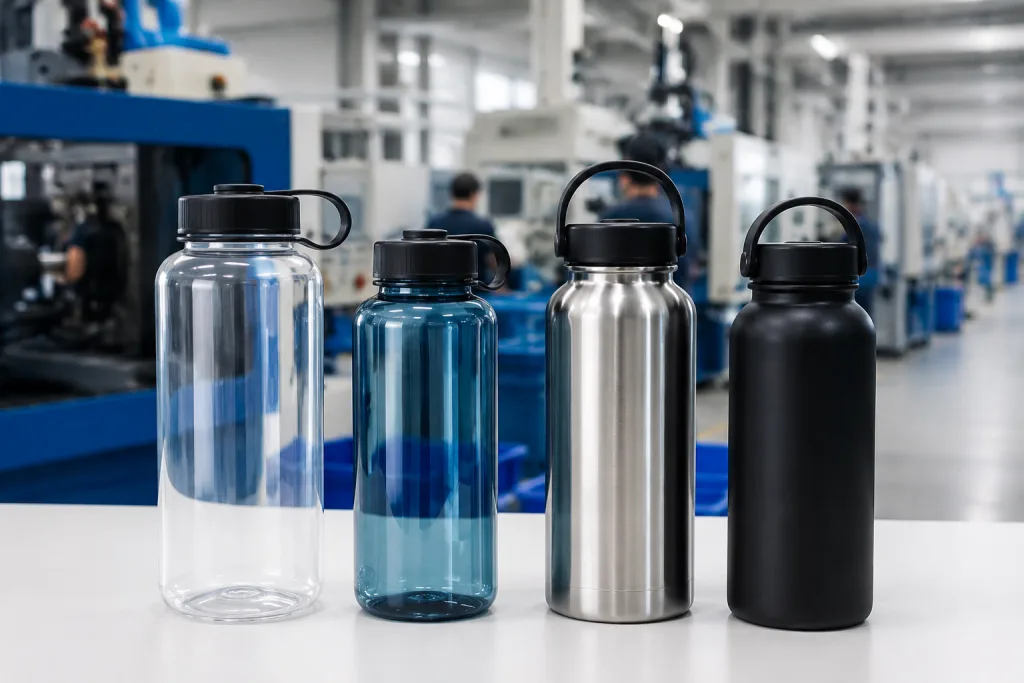
I’ll rewrite just the prose inside the existing HTML, keep every tag and the heading structure intact, and tune the copy to sound like a factory-side sales engineer.The right bottle depends on the SKU you are actually moving. If the goal is a clean hydration item, Tritan is usually the better wholesale drink bottle. If the buyer wants heat hold, stainless is the right call. If the program is for bars or beverage promos, glass or metal fits better. We see buyers throw all three into one RFQ, then the quote sheet looks “random” because the specs are not the same.
Short version: a bulk canteen or canteen wholesale order works for outdoor, camping, or school channels. A bulk growler or beer growler wholesale order is a different animal because neck size, sealing, and pressure resistance decide the cost. A beer tumbler wholesale or alcohol flask wholesale request is usually for gifting or on-premise resale, not daily hydration. Last month QC pulled a 38 mm cap sample that passed appearance but failed torque, so the buyer flagged it and the math stopped there.
For buyers sourcing bulk drinkware, I’d split the categories like this:
- Wholesale canteen: rugged use, simple look, usually sold on price and pack-out.
- Wholesale growler: beverage transport, heavier body, tighter sealing requirements.
- Alcohol flask bulk: gifting and event use, lower capacity, straightforward packaging.
- Beer tumbler bulk: barware and promo, decoration and print area matter more than insulation.
If your line needs the best wholesale drink bottle for general retail, Tritan is usually the balanced pick. If the channel needs stronger hot or cold performance, switch materials instead of asking Tritan to do a stainless job. We’ve seen that go sideways on PO revisions more than once, especially when the buyer typed “304” on a bottle that was meant to be clear.
Pricing moves with decoration
I’ll keep the HTML intact and rewrite only the prose, making the pricing points sound like a factory-side sales engineer wrote them.For imported drinkware, the bottle body is rarely the whole cost. Decoration, lid complexity, and packaging move the landed price faster than first-time buyers expect. We run 600 ml Tritan jobs here in 3,000 pcs lots, and a plain bottle may land around USD 1.35-1.85 FOB; add a custom molded lid, silicone sleeve, and printed retail box, and it climbs to USD 2.40-3.20. That is still workable if the shelf price is USD 16-24, but the margin math changes on day one.
Screen printing is still the lowest-cost brand hit for most drinkware wholesale programs. Laser engraving looks sharp on stainless, but on Tritan the line usually runs print, in-mold labeling, or a sleeve. If you are ordering bulk drinkware for private label, keep the logo to one or two colors unless the retailer pays for the extra setup. QC pulled a sample last week because the buyer flagged a four-color wrap on a low-margin SKU; that kind of spec usually means the math does not work.
Useful price logic:
- Plain stock shape: lowest MOQ, fastest lead time, easiest re-order.
- Custom color lid: small tool cost, cleaner shelf impact.
- Custom mold: higher startup cost, stronger differentiation.
- Retail box + barcode + FNSKU: required for Amazon-heavy programs, not optional.
If you are comparing bulk growler wholesale, beer growler wholesale bulk, or alcohol flask wholesale bulk quotes, ask straight away whether tooling, inner packaging, and compliance testing are in the number. We have seen POs with a missing barcode line and a wrong carton count; the unit price looked good, then the buyer had to pay for rework. A low quote without those items is not a deal; it is an incomplete quote.
How to qualify a supplier fast
I’ll rewrite the section in-place, keep the HTML structure intact, and tighten the language so it reads like a factory-side sales engineer.The quickest way to tell a real factory from a trading-layer quote is to ask for the documents that matter. A proper Tritan supplier should show food-contact material declarations, REACH support, and a recent QC report with AQL inspection points. For US-bound shipments, ask how they handle carton labeling, pallet height, and Amazon compliance marks such as FNSKU when needed. If they stall on those three items, you are looking at a broker, not a line owner.
At BottleForge Industrial in Zhejiang, China, we usually send sample photos, test data, and production capability in the first round because procurement teams do not have time to chase basics. We run a 7-10 day sample cycle and 25-35 days after approval for bulk production. The math does not work if a supplier claims 10 days for custom tooling and decorated bottles at scale.
Buyers in the US and Europe do not pay for enthusiasm. They pay for repeatable spec, clean QC, and freight-ready cartons.
Private-label work gets hit hardest. One wrong carton label can hold a shipment, and one weak cap seal can turn into returns. We’ve seen a PO typo on the FNSKU stop a load at the warehouse gate, so a Zhejiang supplier with export experience should catch both before you ask.

Use-case fit by channel
I’ll rewrite the section in-place, keep the HTML structure untouched, and tune the prose to sound like a sourcing manager on the factory floor.Channel fit clears up a lot of sourcing noise. We run wholesale Tritan bottle programs that move in retail, but one SKU will not cover every buyer. For gym chains, 600-750 ml with a flip lid usually wins. For outdoor or school accounts, a carry loop and a cap that passes a 1.2 m drop test matter more than a fancy body shape. For lifestyle retail, the shelf story comes from matte finish, print area, and box presentation.
If your channel mixes product families, keep them separate. A canteen bulk order should not be priced like a hydration bottle run. A growler bulk or beer growler in bulk job needs tighter closure control and pressure checks at the line. A beer tumbler in bulk or alcohol flask in bulk piece is about gift appeal and carton compliance, not daily abuse. We’ve seen buyers blur these and then push back on a lid they never asked for, or a carton spec that misses the mark.
Practical channel guidance:
- Retail: focus on shape, logo placement, and a shelf-ready box.
- Amazon: focus on breakage rate, FNSKU labeling, and carton density.
- Corporate promo: focus on price, print speed, and MOQ flexibility.
- Distributor programs: focus on reorder stability and color match across batches.
If you want one SKU for the widest market, Tritan is usually the safest start. If you want a sharper sales story for specialty channels, split the line by category. That is the better math. We’ve seen one bottle try to do everything, and QC pulled the sample for a different reason every time.
Request a Tritan spec and FOB quote
Send your capacity, lid style, and target market. We’ll reply with MOQ, lead time, and a practical China export quote.
Frequently asked questions
What MOQ should I expect for wholesale tritan bottle us orders?
For custom Tritan bottles, a normal MOQ is 3,000 pcs per design or per color set. Plain stock shapes can sometimes drop to 1,000-2,000 pcs, but your unit price usually rises by 12-20%. If you need custom packaging, expect that to affect MOQ as well. For US buyers, this is the point where you should decide whether the order is a test run or a long-term replenishment program. A factory in Zhejiang with stable molding capacity can usually keep the reorder MOQ lower than the opening order, which helps when you are validating the SKU.
What is a realistic FOB China price for a Tritan bottle?
For a 500-750 ml Tritan bottle, a realistic FOB China range is about USD 1.35-2.80 depending on body thickness, lid type, decoration, and packaging. A simple stock bottle with one-color print sits at the low end. Add a custom lid, silicone grip, or premium retail box and the quote moves fast. If a supplier gives you a very low price, check whether the price includes tooling, test reports, and carton packing. That is usually where the hidden cost shows up.
Do I need REACH or FDA documents for US wholesale drinkware?
Yes, you should ask for food-contact declarations and supporting test records. For US-bound wholesale drinkware, buyers commonly request FDA food-contact support, while European importers often ask for REACH. Some channels also require ASTM or internal drop tests, especially if the bottle is sold through retail or e-commerce. A good supplier should be able to provide current reports, not just old PDFs. If they cannot explain which material is in contact with the beverage, treat that as a warning sign.
Is Tritan better than stainless for bulk drinkware?
It depends on the use case. Tritan is lighter, clearer, and usually cheaper to decorate, so it works well for lifestyle bottles, gyms, and corporate gifts. Stainless is better for thermal retention and a more premium insulated feel. For drinkware wholesale programs, Tritan often wins on weight and shipping cost, while stainless wins on functional performance. If you are selling cold-water hydration, Tritan is usually the smarter SKU. If your buyer expects hot or cold insulation, use stainless instead.
How do I reduce freight damage for wholesale drinkware shipments?
Use internal dividers, a carton drop-tested pack-out, and palletized export cartons. For most Tritan bottle shipments, a 24-piece carton with proper inserts performs better than loose packing. Ask for 1.2 m drop testing on three sides and verify carton compression strength before mass production. For Amazon or distributor fulfillment, add clear outer labels and FNSKU if needed. Good packing can cut damage claims by 30-50% compared with a weak pack-out, which matters when your margin is only a few dollars per unit.