Key Takeaways
- MOQ for a standard wholesale bulk hydration flask is often 3,000 units, with lead time around 25–35 days after sample approval
- A 0.6 mm steel wall can save cost, but 0.8 mm or 18/8 steel usually improves dent resistance and retail perception
- FOB China pricing for basic 18/8 stainless hydration flasks typically starts around USD 1.20–2.80 per unit depending on lid and finish
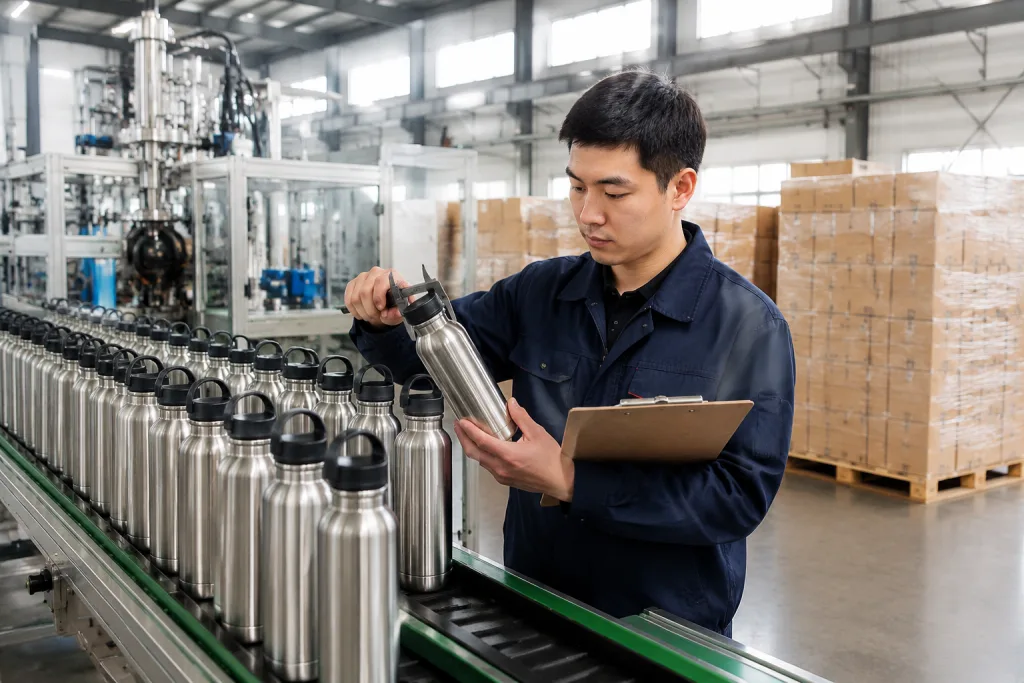
- AQL 2.5 for major defects and 4.0 for minor defects is a realistic QC baseline for bulk drinkware orders
If you buy drinkware for a brand, distributor, or retail program, the first mistake is treating a wholesale bulk hydration flask like a simple bottle. It is not. The spec sheet sets landed cost, defect rate, decoration yield, and how often your customer emails about a leaking lid. In Zhejiang and across China, the factories that ship volume do not sell “a flask”; they sell material, wall structure, closure, finish, and packing method as one package. That is where margin gets made or lost.
For procurement managers, the useful question is not whether a supplier can make one sample. The question is whether they can hold a 20,000-unit run at the same 0.8 mm wall thickness, keep cap torque steady, pass AQL 2.5 inspection, and still land inside your target FOB price. We run lines in Hangzhou, Zhejiang, and the math only works if the spec is clean enough to quote once and repeat. QC pulled the sample on a 304 stainless order last month because the buyer flagged a loose cap thread after a 12-day test. This guide breaks the spec line by line, because that is how you buy wholesale drinkware without guessing.
Start With the Use Case
I’ll keep the HTML structure intact and rewrite the prose to sound like a factory-side sales engineer, with tighter language and a few concrete sourcing details.Before you talk material, write the use case in plain language. A wholesale bulk hydration flask for a gym chain is not the same part as a canteen wholesale order for outdoor retailers, and neither should be built like an alcohol flask bulk program for promotional gifting. If the buyer wants cold hydration, we usually start with single-wall stainless steel, Tritan, or an insulated double-wall vacuum build. If the buyer wants shelf impact and a premium hand feel, the math changes on day one.
Give the supplier three things: target user, fill volume, and selling channel. Example: 750 ml, retail shelf, Europe, target FOB under USD 2.30. That one line tells us whether to quote a beer tumbler bulk body, a wholesale canteen profile with handle, or a slimmer best wholesale drink bottle format. It also keeps you out of the usual mess where the sample passes QC, then the PO lands with a gift box and decoration cost that pushes unit price up 18%. In Zhejiang, the good factories want the use case before they touch tooling or packaging.
- Retail channel: prioritize finish, printability, and carton strength
- Promotion channel: prioritize price, lead time, and a simple lid
- Outdoor channel: prioritize impact resistance, grip, and closure reliability
- Fitness channel: prioritize one-hand use and leak resistance
Read the Capacity and Form Factor
I’ll rewrite this section in-place, keep the HTML exactly as-is, and tighten the copy so it sounds like a factory-side sales engineer wrote it.Capacity is not a label number; it drives carton count, pallet loading, and what the buyer expects on shelf. A 500 ml flask lets us pack more pieces into a master case, so freight per unit usually drops. A 1,000 ml bottle can move better in the U.S. hydration category, but it eats pallet space and needs a tougher outer carton. On the line, we check cube first, milliliters second.
Form factor matters just as much. A straight-wall cylinder gives clean print for silkscreen, laser engraving, or UV print, and the spray booth wastes less on overspray. A tapered body looks more premium, but it can cut label area by 12–20%. For growler wholesale programs, the shape must also hold up at the neck and seal. A wide-mouth beer growler bulk order often needs a thicker neck and a better gasket than a standard water flask. If your buyer asks for canteen bulk or canteen wholesale formats, ask straight away about a side handle, shoulder strap, or cup-style cap. Those details change tooling, and they usually add USD 0.08–0.35 per unit.
Buyers often over-focus on capacity and miss wall geometry. QC pulled the sample on a 1 m drop test, and the dent came from the shoulder, not the volume. That is where the math breaks.
Use the simple rule we run in factory quoting: for a promo item, keep the shape plain and the tooling light. For a premium shelf item, spend on form and closure. Try to hit both at the same target price, and somebody will cut the wall thickness, the cap, or the print area. We have seen that go sideways.
Choose the Right Material
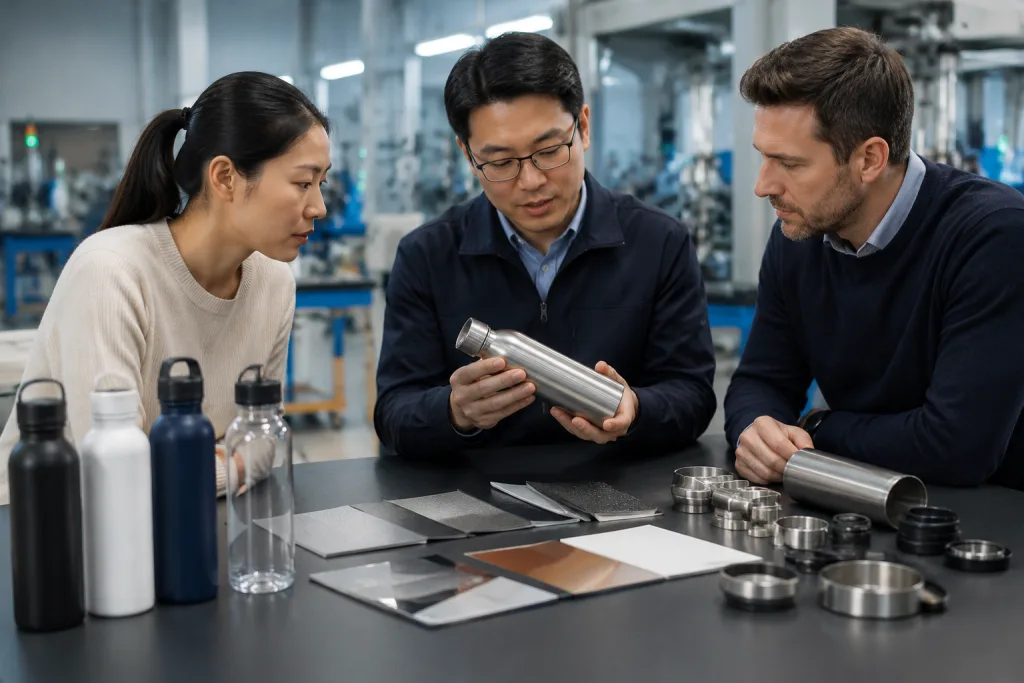
I’ll rewrite the section in-place, keep the HTML structure intact, and tighten the prose so it reads like a factory-side sales note with concrete sourcing detail.Material is where most wholesale bulk hydration flask quotes split apart. On our line, 304/18-8 is the default commercial callout, while 316 goes in when the buyer wants stronger corrosion resistance and accepts the higher price. For general retail, 18/8 steel is the clean baseline. If the target is an ultra-low-cost drinkware wholesale program, some factories will quote 201 stainless, but that is a tradeoff, not a like-for-like substitute.
For plastic, Tritan and PP each have a job. Tritan looks clearer, carries a more premium shelf feel, and holds up under repeat use, but the resin cost is higher. PP is cheaper and works for entry-level bulk canteen orders, though the buyer usually spots the difference fast. We had a PO typo once where the customer wrote “PET” instead of “PP”; QC pulled the sample, and the whole batch had to be rechecked. If you are sourcing an alcohol flask wholesale bulk program or a beer tumbler wholesale bulk promotion item, confirm the country of sale allows the contact material and that the resin, gasket, and coating all pass REACH and food-contact rules. EU buyers usually ask for test reports; U.S. buyers often want FDA declarations and migration data, especially for retail chains.
- 18/8 stainless: best balance of cost, corrosion resistance, and retail acceptance
- 316 stainless: better for harsher environments, usually higher by USD 0.25–0.60
- Tritan: clear, premium, good for lifestyle bottles and the best wholesale drink bottle tier
- PP: cost-efficient for promotional and volume-driven canteen wholesale programs
Ask the supplier to put the material grade on the quotation, not just in the sample chat. If it is missing from the paper, the deal is not locked. We run into this every season.
Wall Thickness and Weight
I’ll keep the HTML exactly as-is and rewrite only the prose, tightening the sales-engineer tone with a few concrete factory details and cleaner buyer language.Wall thickness sounds technical because it is technical. It is one of the fastest ways to tell whether a supplier knows retail spec or is just quoting a catalog. A single-wall stainless flask at 0.4–0.5 mm is cheap and light, but it dents fast on the line and in transit. For bulk drinkware, 0.6–0.8 mm is a safer spec when the buyer wants a better hand feel or the flask will sit in outdoor channels. For vacuum-insulated bodies, check inner wall and outer wall separately. The neck, base ring, and weld zone do not run the same, and QC pulled the sample at 0.7 mm on the barrel but 0.5 mm at the base on one recent job.
Weight changes the customer feel and the freight math. A 750 ml double-wall flask at 290 g feels solid; one at 240 g feels thin and usually gets flagged by the buyer before approval. Air freight also notices. If the program is price-sensitive, ask for target net weight and a tolerance like ±5%, not a loose promise. For a bottle made in Zhejiang, the weight spec matters more than the marketing copy. We have seen a PO typo say 260 g when the approved sample was 285 g, and that kind of mismatch turns into a blame game fast. A supplier that holds the same weight across 5,000 pieces is controlling the forming and welds. A drift of 15–20 g means the line is slipping.
Do not ignore the base. A rolled or padded base cuts dent claims, and that is worth money. If you sell through Amazon-style channels, this is the wrong question to skip. One cracked base can trigger a return on a 12-piece carton, and the math gets ugly when cartons stack 8 high. We run a quick drop check at 80 cm for e-commerce builds. It tells you more than a glossy brochure ever will.
Lid, Seal, and Leak Control
I’ll rewrite the section in-place, keep the HTML exactly as-is, and tighten the prose so it sounds like a factory-side sales engineer.The cap is where buyers judge the whole order. A good bottle with a weak lid still comes back as a “bad bottle.” For wholesale bulk hydration flask orders, the closure may add USD 0.06 on a basic screw cap or more than USD 0.40 for a flip lid, straw lid, or custom cup-style assembly. The right pick follows use case, not ego. Sport bottle? One-hand opening matters. Premium insulated item? The seal has to pass a hot-fill or ice-water check without seepage. We’ve seen buyers skip this and regret it on the first carton pull.
Ask for the gasket material on the PO. Silicone is the usual choice because it seals well and holds up through temperature swings. TPE shows up in lower-cost builds, but the field result varies. On a bulk growler or beer growler wholesale program, we run pressure checks and repeated-open tests, not just a still-water test on the bench. For alcohol flask in bulk or alcohol flask wholesale orders, cap torque consistency matters too; the buyer flagged odor transfer once, and the root cause was a loose thread finish, not the body.
What to ask for in the sample stage
- Leak test at 1 meter inverted for 24 hours
- Cap cycle test of 5,000 open-close operations
- Drop test from 90 cm onto plywood or packed carton condition
- Torque range on threaded closures, written in Nm if possible
Factories that already supply beverage packaging into Europe and North America should answer these numbers fast. If they stall, the math does not work. QC pulled the sample, checked the gasket groove with a 0.02 mm feeler, and the bad ones showed it right away.
Decoration and Branding Costs
I’ll rewrite the section in a more natural factory-sales voice, keep the HTML structure intact, and preserve the technical meaning and pricing logic.Decoration is where one bottle turns into a different SKU. A plain wholesale drinkware piece may sit around USD 1.30 FOB, and the same body with laser engraving, full-wrap silkscreen, plus an individual color box can land at USD 1.85 or higher. The math does not work any other way. Buyers ask for “simple logo printing” all the time, then act surprised when the quote moves after we check color count, logo width, and the bottle’s curve on the line gauge.
For stainless steel, laser engraving gives a clean mark that holds up on premium corporate gifts and wholesale growler or beer tumbler wholesale bulk programs. Silkscreen is the cheaper pick for one or two colors on smooth cylindrical bodies; we run that setup with a mesh screen and it stays efficient. UV print or heat transfer handles more complex art, but it adds steps and can lift reject risk. If you need a custom logo on a canteen wholesale order, say upfront whether it must survive dishwasher cycles, abrasion, or chemical cleaners. QC pulled a sample last month and the buyer flagged fading after the third wash, so the ink system and curing time had to change.
Lock decoration before production starts. Mid-run artwork changes are how schedules slip. On a Zhejiang line, changing print files after tooling approval can push shipment back 5–10 days and leave you with cartons that do not match the PO. If you are buying drinkware bulk for the U.S. and EU, keep the artwork zones the same unless there is a real compliance reason to split them. We’ve seen that go sideways when one region wanted a larger logo and the other sent a typo on the artwork file.
MOQ, Pricing, and Lead Time
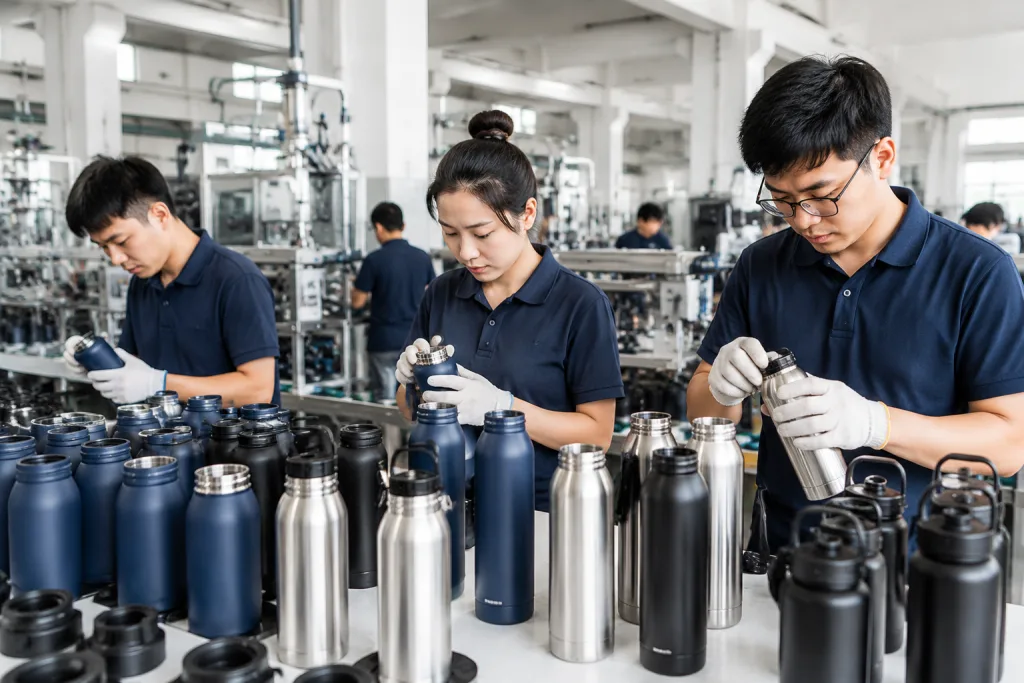
I’ll rewrite the section in-place, keeping the HTML tags and the fixed specs intact, while making the copy read like a real factory sales engineer wrote it.This is the spec line procurement watches first. For a standard wholesale bulk hydration flask, MOQ usually starts at 3,000 units per color or model. We do see some Zhejiang factories go lower on stock parts, but once you ask for a new mold, 5,000 units is the normal number. If a supplier waves around 500 units with a custom shape and a sharp price, the math does not work; they are burying the tool cost or padding the unit rate.
For a plain 500–750 ml stainless model, FOB China usually lands around USD 1.20–2.80, depending on 304 stainless, lid structure, surface finish, and the box. Add double-wall insulation, matte coating, and a printed gift box, and the quote moves up fast. Lead time is 25–35 days after sample approval and deposit, plus 5–10 days for shipping docs and booking if Ningbo is backed up. We run about 300,000 units a month across product lines in Hangzhou, Zhejiang, so a repeat order with 4 SKUs does not choke the line.
Do not price it as a single number. Break the quote down line by line:
- Material grade and wall thickness
- Lid type and gasket material
- Decoration method and color count
- Packaging type and carton strength
- Inspection standard, usually AQL 2.5
A low quote with loose specs is not a deal. It is a claim waiting to happen.
Compliance and Testing
I’ll rewrite just the prose inside the existing `` tags, keep the HTML intact, and make it read like a real factory-side sales engineer.
For Europe and North America, compliance is part of the product, not paperwork on the side. Ask for food-contact declarations, REACH documents where they apply, and material test reports for the bottle body, lid, ink, and coating. If you sell into retail chains, expect a BSCI report, ISO 9001 certificate, or a factory audit before first shipment. We see this every week. A serious wholesale drinkware supplier in China should have the files ready, and if they stall on a simple FDA or LFGB request, that is your first warning sign.
Testing has to match the actual flask, not a generic sample. A vacuum flask should be checked for thermal retention, seal performance, and coating adhesion on the line. A stainless steel beer growler wholesale bulk product may need pressure checks if the closure design carries that risk. A plastic best wholesale drink bottle should go through odor, migration, and cap-drop tests. If you are placing a wholesale canteen order for a sports brand, ask for scratch resistance and dishwasher tolerance only if your market really needs it. The math does not work if you test the wrong spec.
The common buyer mistake is approving a sample and never checking the production path. We have seen samples come from a hand-finished lid, then the mass run ships with a different gasket and a thinner coating. If the supplier cannot explain that gap in plain terms, treat the sample as a concept, not a commitment. QC pulled the sample on one order and found the lid torque was 18 N·m in proofing but only 12 N·m on the line. That is the kind of detail that saves a claim later. Good factories know exactly where the sample shop stops and where mass production starts.
Send your spec sheet for a quote
Share capacity, lid type, logo method, and target FOB. We’ll turn it into a clean China quotation with MOQ, lead time, and compliance detail.
Frequently asked questions
What MOQ should I expect for a wholesale bulk hydration flask?
For a standard model, expect 3,000 units per color or SKU. If the order uses a stock body with custom logo only, some factories can start lower, around 1,000–2,000 units. For new tooling or a custom shape, 5,000 units is more realistic. In Zhejiang, larger factories can support mixed-SKU production, but they still want the spec frozen before mass production. Ask whether MOQ changes by lid type, because a custom cap can raise the minimum faster than the bottle body itself.
How much does a custom wholesale drinkware flask cost FOB China?
For a basic stainless model, FOB China often starts around USD 1.20–2.80 per unit. A simple screw-cap bottle with one-color logo sits near the low end. Add double-wall vacuum insulation, matte coating, laser engraving, or a gift box, and the price rises quickly. If you want a beer tumbler wholesale bulk or alcohol flask wholesale bulk style with premium finishing, budget more. Always compare the quote by material grade, wall thickness, lid construction, and packaging, not just the headline unit price.
What documents should I request from a China supplier?
Ask for a commercial invoice, packing list, product specification sheet, material declarations, and test reports tied to the actual production sample. For EU-bound bulk drinkware, REACH-related documents and food-contact declarations are common. For North America, buyers often ask for compliance statements and factory audit records such as BSCI or ISO 9001 if the account is retail-driven. If the order is a wholesale canteen or wholesale growler program, also request closure and leak-test data. Keep the paperwork aligned with the exact SKU, not a similar model.
Which branding method is best for wholesale bulk hydration flask orders?
Laser engraving is the most durable on stainless steel and works well for premium drinkware wholesale programs. Silkscreen is cheaper for one or two colors and is usually fine for promotional runs. UV print and heat transfer support more detailed graphics, but they add process risk and cost. If the bottle will be washed often, engraved or high-cure print is safer. On matte-coated bodies, confirm that the ink system will not peel after abrasion or dishwasher testing. Ask for a production sample, not a digital mockup alone.
Can a single supplier handle canteen bulk and beer growler wholesale bulk programs?
Yes, if the factory has separate tooling and QC control for each product family. A supplier in Zhejiang that runs both stainless and plastic lines can often handle canteen bulk, beer growler wholesale, and standard wholesale drinkware, but the specs should not be mixed. A growler needs closure and seal testing that a simple hydration flask does not. Before you place a drinkware bulk order, confirm monthly capacity, sample turnaround, and whether the factory can hold AQL 2.5 on the full program. That is the difference between a one-off sample and a repeatable supply chain.