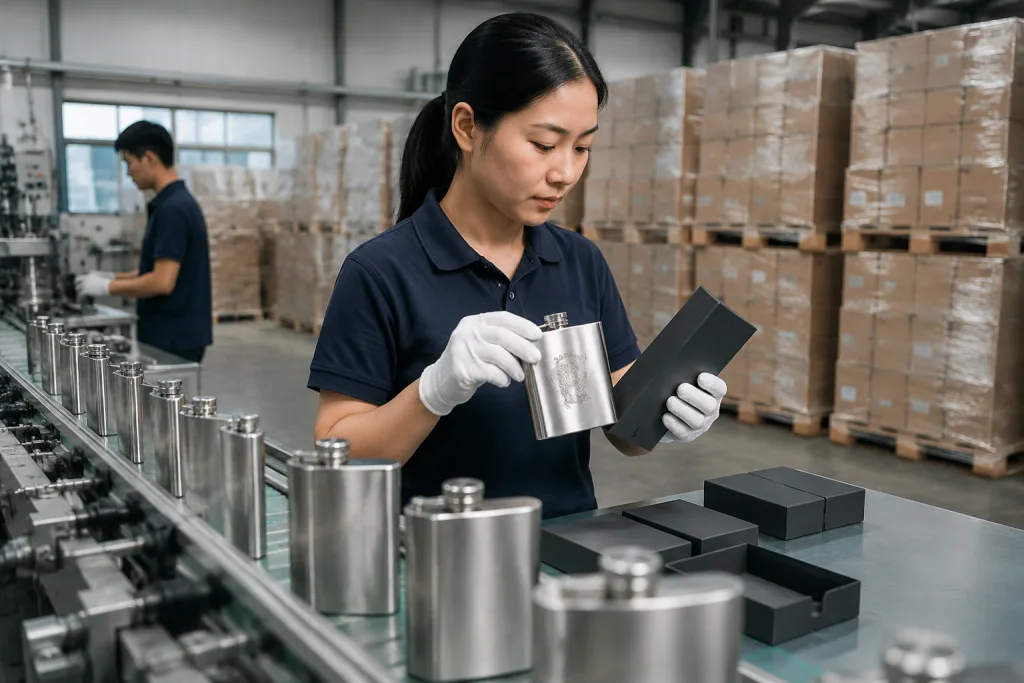
Key Takeaways
- A basic wholesale bulk hip flask often lands at USD 1.20-4.80 per unit, with MOQ starting around 500-1,000 pcs.
- Lead time is usually 25-35 days for repeat orders and 35-50 days for new artwork or custom packaging.
- 304 stainless steel, laser engraving, and matte powder coat push cost more than plain polished steel by 15-40%.
- AQL 2.5 inspection, REACH-ready materials, and carton drop testing matter more than a cheap unit price.
A wholesale bulk hip flask order looks straightforward until the quote comes back. Then the spread jumps out: the same 8 oz stainless flask can land at USD 1.20 or USD 4.80, and that gap comes from steel grade, brushed or mirror finish, logo method, packaging, and whether the factory in Zhejiang actually runs export jobs or just talks a good game. We see this on the line all the time. For a brand, distributor, or retail chain, that price gap is where margin is won or lost.
In China, especially Zhejiang, the factories that handle alcohol flask wholesale bulk work well are the ones that can talk tooling, polishing, and inspection without hand-waving. A supplier should quote cleanly, hold the MOQ line items steady, and ship in 25-35 days for repeat orders. First orders usually run 35-50 days, and that is fine if you want compliant packaging, export cartons, and a sample approval loop that does not get stuck because QC pulled the sample and found a 0.3 mm seam issue.
What Drives Flask Cost
I’ll rewrite the section in a more field-tested supplier voice, keep the HTML exactly as-is, and preserve the list structure and existing spec numbers.The price of a wholesale bulk hip flask is not driven by the metal shell alone. We run the line, and the cost moves with material grade, wall thickness, finish quality, logo method, and packing. A 304 stainless flask at 0.5 mm with a brushed finish is the base quote. Go to 0.6 mm stainless, add a matte powder coat, and the unit price usually jumps 10-20%. Add a full-color printed box, and USD 0.20-0.45 can vanish from your margin fast.
For alcohol flask bulk orders, logo choice changes the math. Laser engraving is clean and permanent, but it needs setup time and costs more on small runs. Silkscreen is cheaper for one-color art, but it wears faster and we’ve seen it fail rub tests after a few dozen cycles. If you need alcohol flask wholesale bulk for retail, packaging is not a side issue. A polybag works for B2B replenishment; a rigid gift box fits shelf-ready programs, but it adds labor and carton volume. One buyer once sent a PO with “gift bok” on it, and QC pulled the sample before we shipped. In Zhejiang, we usually quote three tiers: plain export, branded retail, and gift-boxed promo. Ask for all three. The gap tells you where the margin is hiding.
- 304 stainless steel: standard for export drinkware wholesale
- 0.5-0.6 mm thickness: common range for weight and dent resistance
- Laser logo: durable, mid-cost, good for premium use
- Gift box: higher carton volume, higher packing labor
MOQ Tiers That Actually Matter
I’ll rewrite just the prose inside the existing HTML, keep every tag as-is, and make it read like a factory-side sales note with tighter numbers and more concrete detail.MOQ is where a lot of buyers get hooked by a clean unit price. A factory may quote USD 1.35 at 10,000 pcs, but if your first order is 800 pcs, the landed cost can climb to USD 2.10 or more after setup, PE bagging, and carton packing. We see this on the line all the time. For wholesale canteen or wholesale drinkware programs, that math is normal: small orders pay for changeovers, large orders pay for line speed.
A workable MOQ ladder for a wholesale bulk hip flask is usually 500 pcs for stock-like plain units, 1,000 pcs for a custom logo, and 3,000-5,000 pcs for full custom packaging or special finishes. If a supplier offers 100 pcs with full customization, they are either quoting a sample run or waiting to add a surcharge later. The buyer flagged this more than once. For canteen wholesale and canteen bulk buyers, the same rule holds across stainless products: lower MOQ means more handwork per unit. In Zhejiang, a factory running 300,000 units per month can keep MOQ tight on standard SKUs, but a custom mold or special lid still needs volume behind it.
Ask for the quote in four lines: product cost, decoration cost, packaging cost, and carton cost ready for export. If the supplier cannot split those out, the PO math will not hold.
If your product mix also includes bulk canteen, bulk growler, or beer tumbler bulk, push for one carton standard across the range. We shipped a mixed container last season with 12 mm carton changes, and the handling cost jumped fast. Shared carton sizes across drinkware bulk lines usually save 5-8% on export handling, and that is the right place to cut.
Lead Times From Sample To Shipment
I’ll rewrite the section in place, keep the HTML exactly as-is, and tighten the sales-engineer tone with concrete factory details and cleaner lead-time language.Lead time on wholesale drinkware is easier to control than most buyers think, if artwork and cap specs are locked early. A sample for a wholesale bulk hip flask takes 5-7 days for a stock body and 7-10 days for a branded sample. If you ask for a new finish, custom embossing, or a special cap assembly, add 3-5 days. We run this every week, and QC pulled one sample last month with a 0.3 mm logo shift that would have caused trouble later. Once the sample is approved, repeat production usually runs 25-35 days. First orders with new artwork or gift packaging often need 35-50 days.
Freight is part of the schedule, and this is where buyers get burned. Sea freight from Zhejiang to the US West Coast usually takes 18-25 days port to port, and Europe takes 28-40 days depending on routing. If you sell on Amazon or into retail chains, add 2-5 extra days for FNSKU labels, carton marks, and pallet specs. We once saw a PO typo on carton height add a full day at the packing table, so this is the wrong question to ask if you only look at factory days. A supplier that already handles beer growler wholesale bulk or wholesale growler programs usually knows export carton discipline better than a domestic-only seller. That matters when you need 2,000 units on time and not 1,850 good pieces plus 150 excuses.
- Sample lead time: 5-10 days
- Production lead time: 25-50 days
- Sea freight: 18-40 days depending on lane
- Labeling and prep: 2-5 extra days
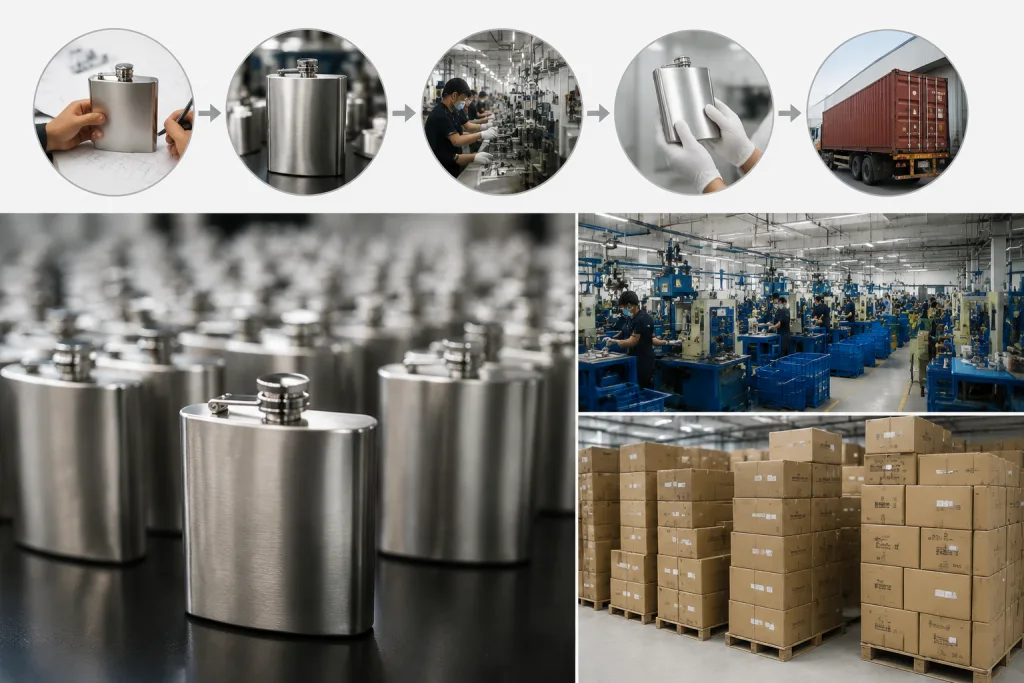
Materials And Compliance
I’ll rewrite the prose in-place, keep the HTML tags intact, and make it read like a real export sales engineer wrote it.For Europe and North America, material compliance is not optional. A real alcohol flask wholesale supplier should hand over REACH-aware material declarations, food-contact documents where they apply, and internal QC records without stalling. If the flask uses a leather wrap, plastic cap insert, or silicone gasket, ask for the exact polymer grade and test status. The metal should be 304 stainless for most retail orders; 201 stainless is cheaper, and we have seen that choice turn into corrosion complaints after a few months on the shelf.
Wall thickness is a quiet cost driver and a failure point. A 0.4 mm flask looks fine on a spec sheet, then comes back dented from transit. We run 0.5 mm to 0.6 mm bodies for a better cost-to-durability balance, and 0.6 mm is the safer call for gift sets or premium alcohol flask in bulk programs. If your line also covers beverage items like beer growler in bulk or beer tumbler wholesale, the same QC has to cover weld seams, surface finish, and closure fit. A Zhejiang supplier running ISO-style process control with AQL 2.5 inspection usually ships cleaner lots than a factory doing eyeball checks at the packing table.
Ask for the actual inspection points: surface scratches, leak test, cap torque, and drop resistance on packed cartons. QC pulled the sample on our line with a torque wrench set to 0.35 N·m, and that caught a loose cap before the buyer flagged it. If a supplier cannot tell you their acceptance rate or inspection method, they are not ready for export work.
Pricing Scenarios You Can Use
I’ll rewrite the prose to sound like a real sales engineer, keep the HTML intact, and preserve the table structure and all numbers already in play.For wholesale bulk hip flask orders, the market usually trades in three lanes. A plain 8 oz 304 stainless unit with brushed finish, polybag, and one-color carton sits around USD 1.20-1.80 at 3,000 pcs. Add laser engraving and a better box, and that same item moves to USD 1.85-2.70. Go to matte coating, custom insert, and premium retail packaging, and USD 3.20-4.80 is where the math lands.
That spread helps when you compare alcohol flask bulk quotes. Do not get fixated on a one-cent body price. We had a buyer flag a quote that was USD 0.18 cheaper, then the carton spec came back wrong and the line would have slipped 45 days. That is the wrong question to ask. The same logic holds for beer growler wholesale, beer growler wholesale bulk, and beer tumbler wholesale bulk orders: unit price is only one line on the PO, while pack count, AQL 2.5 defect rate, and vessel booking date decide landed cost. For wholesale canteen and wholesale growler programs, a stable China supplier should hold pricing across 2-3 reorder cycles if the artwork stays unchanged. QC pulled the sample on a 0.6 mm logo shift, and that kind of miss is what turns a cheap quote into a headache.
| Order Type | Typical MOQ | Unit Price Range | Lead Time |
|---|---|---|---|
| Plain stock flask | 500-1,000 pcs | USD 1.20-1.80 | 25-35 days |
| Logo flask with box | 1,000-3,000 pcs | USD 1.85-2.70 | 30-40 days |
| Premium retail set | 3,000+ pcs | USD 3.20-4.80 | 35-50 days |
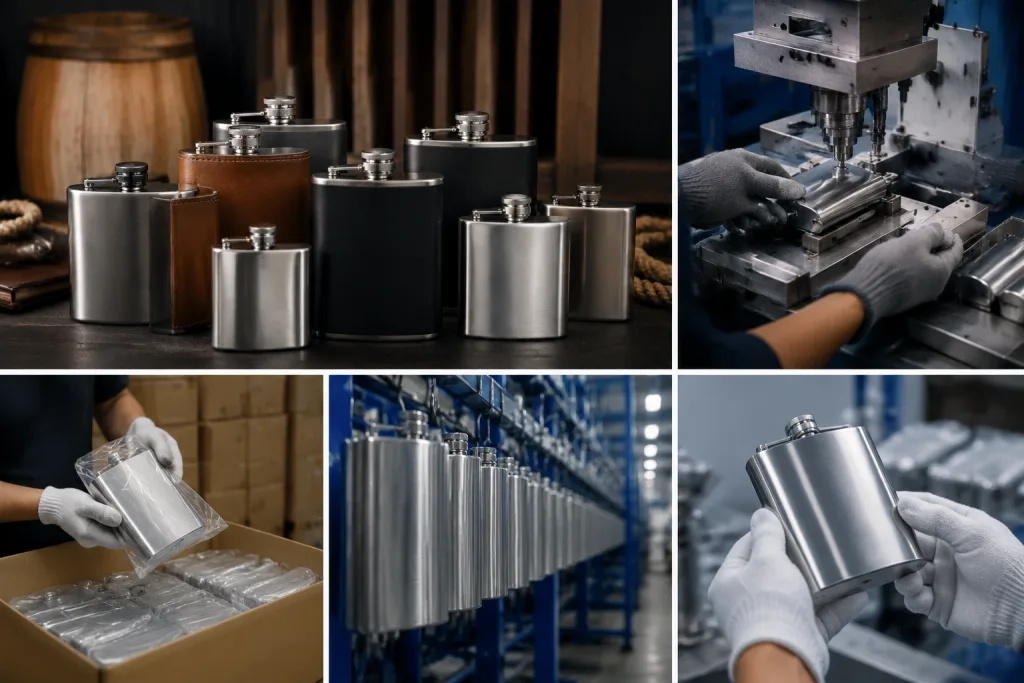
How To Screen Suppliers Fast
I’ll rewrite just the prose inside the existing `` tags, keep the HTML intact, and make it sound like a factory-side sales engineer wrote it.
If you are sourcing from China, especially Zhejiang, speed matters. Screening matters more. A solid factory should answer with exact material specs, sample timing, packing details, and monthly capacity, not fuzzy promises. On a real line, output for stainless drinkware often sits at 200,000-300,000 units a month, with 500-1,000 pcs MOQ for standard SKU orders. That scale can take repeat business without choking the schedule.
When you compare factories, ask for four items: material certificate or declaration, recent inspection report, production photos from the actual line, and export carton data. If you need custom branding, ask straight whether laser engraving, silkscreen, or stamping runs in-house. In-house decoration usually cuts 3-7 days off lead time; we see that on the packing bench all the time. If a supplier can quote a bulk drinkware job, a bulk canteen, and a bulk growler in the same carton standard, they understand pallet math, not just one-off samples.
One practical filter: ask what causes delays most often. Good suppliers will say artwork approvals, packaging changes, and peak-season freight bookings. The weak ones blame everything else. We’ve seen a buyer flag a PO typo on carton size, and QC pulled the sample before it hit mass production, which saved a 12-day rerun. That’s the wrong question to dodge if you want a supplier that ships on time.
Request a real flask quote, not a guess
Send your target MOQ, logo method, and packaging spec. We’ll price the unit, lead time, and export carton setup cleanly.
Frequently asked questions
What is a realistic MOQ for wholesale bulk hip flask orders?
For a standard wholesale bulk hip flask, expect 500 pcs for plain stock-like units, 1,000 pcs for custom logo work, and 3,000 pcs or more for retail packaging or special finishes. If a supplier offers 100 pcs with full customization, that is usually sample pricing, not true production economics. For alcohol flask wholesale bulk programs, MOQ rises fast when you add embossing, multiple colors, or gift boxes. In Zhejiang, a factory with a 200,000-300,000 unit monthly capacity can keep standard MOQ lower, but the moment you change packaging or decoration, the economics move back up.
How much should I budget per unit?
A practical budget for wholesale bulk hip flask sourcing is USD 1.20-1.80 for basic 304 stainless stock units, USD 1.85-2.70 for logo and retail-box versions, and USD 3.20-4.80 for premium sets. The main cost drivers are steel grade, wall thickness, finish, logo method, and packaging. If you need canteen wholesale or drinkware wholesale pricing in the same shipment, use the same cost logic. The cheapest quote is rarely the best landed cost once carton count, damage rate, and freight volume are included.
How long does production usually take?
For repeat orders, production usually takes 25-35 days after sample approval and deposit. First orders with new artwork, new packaging, or custom accessories often take 35-50 days. Sample lead time is typically 5-10 days. Then add freight: sea shipping from Zhejiang to the US can take 18-25 days, and Europe often needs 28-40 days depending on routing. If you need FNSKU labels or pallet prep, build in another 2-5 days. For buyers handling beer growler wholesale bulk or beer tumbler bulk shipments, the same timeline discipline applies.
What compliance documents should I ask for?
At minimum, ask for material declarations, REACH-aware paperwork for Europe, internal QC records, and a clear leak or drop test process. If your flask includes a gasket, cap insert, or wrapped exterior, request the exact material spec for those parts too. For wholesale drinkware supplied into North America, many buyers also ask for food-contact support documents and carton-drop performance data. A supplier that follows AQL 2.5 inspection and can show current production photos is usually much easier to work with than one that only sends a polished sample photo.
Can I combine flasks with other drinkware in one order?
Yes, and you often should. If your supplier also makes bulk canteen, bulk drinkware, bulk growler, or beer tumbler wholesale lines, you can reduce freight waste by standardizing carton sizes and packing methods. That can save 5-8% on handling and sometimes more on pallet efficiency. Just be careful not to force one packaging spec across very different products. A hip flask, a canteen bulk order, and a beer growler wholesale order have different protection needs. The right move is shared export discipline, not identical packaging.