Key Takeaways
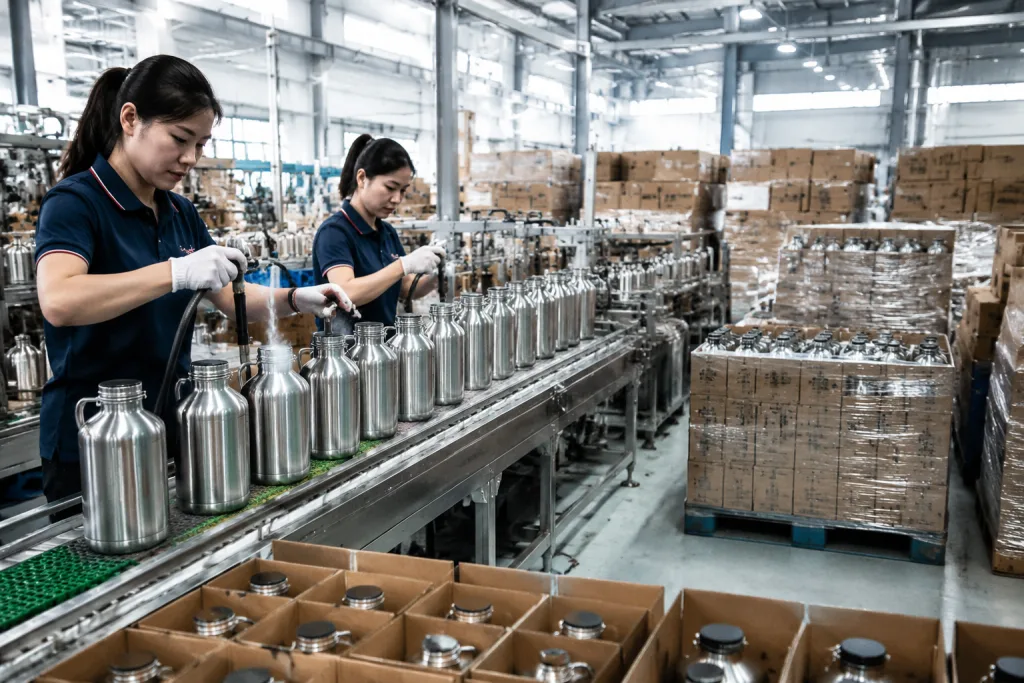
- Typical MOQ for custom wholesale bulk growler orders starts at 500-1,000 pcs, with 35-45 day lead time after sample approval
- A 64 oz double-wall stainless growler usually prices around USD 4.20-7.80 FOB China depending on 304 grade, finish, and lid
- Ask for AQL 2.5 major / 4.0 minor, plus a 3-layer carton drop test and 1-minute leak check on 100% of lids
- For retail channels, 0.5-0.6 mm wall thickness and vacuum insulation are safer than thin single-wall beer growler bulk stock
If you are sourcing a wholesale bulk growler program, the real risk is not the stainless steel or the lid. It is ordering the wrong spec for the channel, then finding out after tooling, cartons, and freight are already paid. A growler for a brewery taproom is not the same part as a retail gift SKU, and a 64 oz beer growler wholesale order needs different tests than a 32 oz canteen wholesale promotion. We have seen buyers miss this on the PO by one line.
The first calls are plain: what capacity sells, which closure your buyer will accept, and what decoration method holds up after repeated wash cycles. Then we check MOQ, sample lead time, AQL 2.5, and landed cost. At BottleForge in Zhejiang, QC pulled a sample with a 1.2 mm wall and the buyer flagged the leak test, not the price. That is the wrong question to ask if the cap fails at 12 days and your carton crushes at 18. China can price this well, but only when the spec is tight.
Start with the channel, not the SKU
I’ll rewrite the prose in place, keep the HTML exactly as-is, and tune the copy to sound like a factory-side sales engineer.Most sourcing mistakes happen before you ask for a quote. A growler for a craft brewery, an outdoor retail chain, or a private-label e-commerce store is not one product with three buyers. It is three jobs. If the customer wants beer growler wholesale packaging for taproom refills, seal integrity and wash cycles decide the deal. If they want a gift line, decoration, gloss level, and carton print carry more weight. If they want a value item, the lowest spec that still passes inspection wins.
We start with channel because the channel sets the spec. A wholesale growler for the brewery trade usually lands at 32 oz or 64 oz with a wide mouth and a handle that does not flex on the line. For outdoor programs, a bulk growler with powder coat or matte paint sells better than polished stainless because it hides rub marks after 3 or 4 truck touches. For a mixed catalog, you may want to bundle bulk drinkware with bulk canteen items, but the channel logic still has to match. The buyer flagged this on a PO once: the item looked fine, the carton was wrong, and the margin died in transit. A buyer asking for drinkware wholesale wants repeatable packing and low damage rates, not a cheap factory quote.
At BottleForge, our Zhejiang line runs about 180,000 units per month across stainless drinkware and insulated bottles, so we see this every season. QC pulled the sample with a 0.3 mm lid gap and the order still passed only after we tightened the gasket spec. The math does not work the other way around: a stronger spec beats a cheaper one when the product gets handled in bulk, resold by distributors, and returns start showing up. If you are buying wholesale drinkware for North America or Europe, define the channel first, then the size, then the price ceiling.
Pick the right construction
I’ll rewrite the section in-place, keeping the HTML structure and the exact heading tag, while stripping the AI-ish phrasing and adding more buyer-floor detail.The construction choice drives margin and complaint rate. For growler bulk programs, the split is single-wall stainless versus double-wall vacuum insulated. Single-wall runs cheaper, ships lighter, and works for short-use brewery programs. Double-wall keeps temperature better and sells better at retail, but it adds cost and more line checks. On a 64 oz unit in 304 stainless, double-wall usually lands 15-25% above a comparable single-wall spec.
If you are sourcing a beer growler in bulk order for a taproom or sports retailer, wall thickness is where buyers get picky. We usually run 0.5 mm on the outer shell for dent resistance, and 0.4-0.5 mm on the inner wall depending on capacity and lid design. QC pulled a sample at 0.42 mm once, and the buyer flagged it after carton drop testing. For a premium beer tumbler bulk program, 18/8 stainless and powder coat are table stakes. Go thinner and you may save 0.20-0.35 USD per piece, but the math breaks when cartons get crushed in transit.
h3Material and finish checklist
- 304 or 18/8 stainless for beverage contact
- 0.5 mm body gauge for retail-grade durability
- Powder coat, matte paint, or polished finish based on channel
- Silicone base or wrap if the buyer wants quieter handling
When a buyer compares canteen bulk and wholesale canteen specs to a growler, the wrong question is whether they look similar. A canteen is built for water and outdoor carry; a growler gets judged on seal, pour, and odor control. We’ve seen that go sideways on lid geometry alone. That is why the lid matters as much as the body.
Lock the lid and seal spec
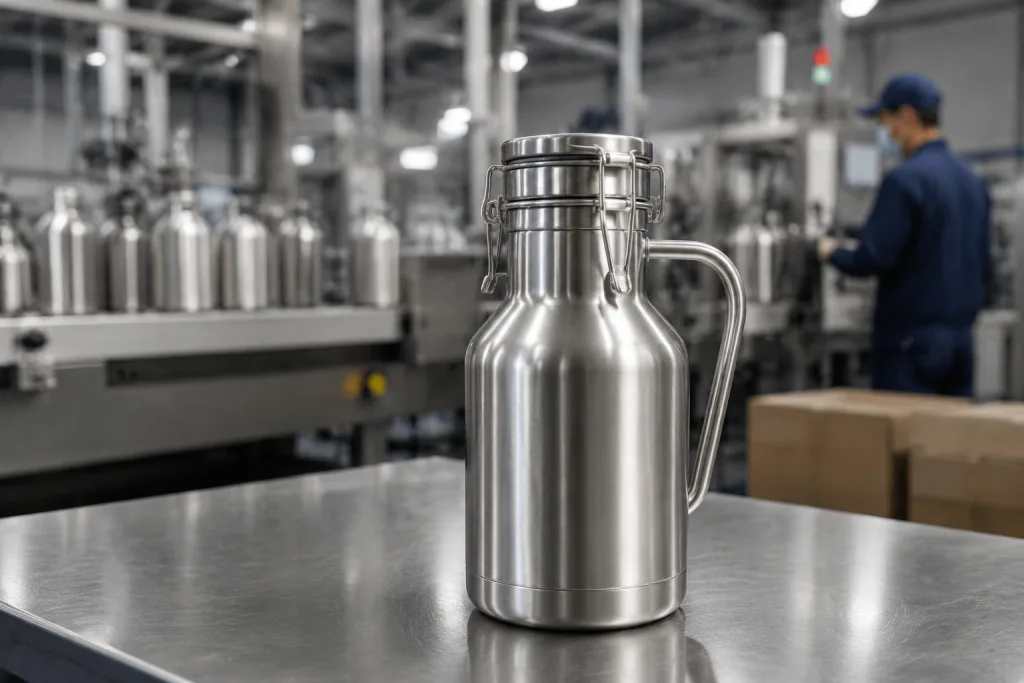
I’ll rewrite the prose in-place, keep the HTML exactly as-is, and tighten the copy so it sounds like a factory-side sales engineer wrote it.Most leak complaints start with the lid. If you are buying wholesale bulk growler inventory, the closure must be written into the spec sheet, not left to chance. Swing-top glass units sell well with some craft beer buyers, but we see the freight math turn ugly fast: heavier cartons, more breakage, higher landed cost. Stainless screw lids with silicone gaskets ship cleaner. On the line, a replaceable gasket saves the buyer from a full replacement when QC pulls a bad seal.
We ask for three checks: torque on the cap, a hot-water leak test, and a tilt test after carton simulation. That is the real job. If the growler is for carbonated drinks, ask the supplier how the lid behaves under pressure, because a jar that passes water can still fail on beer at 2.5 bar. We had one buyer flag a PO typo on gasket material, and the sample failed after 12 turns of open-close testing. That sort of miss costs time.
If you are building a broader wholesale drinkware line, the same rule holds for a beer tumbler wholesale or alcohol flask wholesale bulk order: do not sign off on photos. Ask for a dimensional drawing, the lid BOM, and a production sample with the same gasket compound that will run on the final order. For alcohol flask bulk or alcohol flask in bulk programs, we care about vibration in transit; for growlers, the weak point is repeated opening, washing, and the 1.0 mm seal lip after shipping.
One practical rule: if the lid cannot survive a 1-meter drop test without loosening, do not order it for retail resale.
Know your price drivers
I’m rewriting the section in place, keeping the HTML tags and links intact while tightening the sales-engineer tone and adding concrete factory-floor detail.Pricing in China is not mysterious, but it is easy to misread. We run the line every day, and the same wholesale growler can move by more than 1.50 USD per piece once you change material, coating, logo method, or carton spec. A plain 64 oz single-wall unit usually starts around USD 2.60-3.40 FOB. Add vacuum insulation, powder coating, and a custom box, and you land closer to USD 4.20-7.80 FOB. For a branded growler wholesale retail line, that spread is normal.
The main cost drivers are stainless grade, labor steps, and decoration. QC pulled the sample on a 0.3 mm weld seam once, and that kind of detail is why laser engraving holds up better for premium programs, while silkscreen keeps the unit cost down on larger runs. If you are comparing options, our guide on silkscreen vs laser engraving is useful because print method changes both appearance and reject rate. A simple one-color logo on a polished surface may add only USD 0.08-0.18 per piece, while a full-wrap multi-step design can add much more.
Freight matters too. A carton that looks cheap at the factory can turn into a bad deal if it cracks in transit or wastes cube space. We had a buyer flag a PO typo once: 12 pcs per carton instead of 24, and the math did not work after loading. For distributors buying from Zhejiang or elsewhere in China, the better question is landed cost per sellable unit, not ex-factory price. If your drinkware bulk purchase saves 0.30 USD per piece but loses 3% in transit damage, you did not save anything.
Sample fast, then test hard
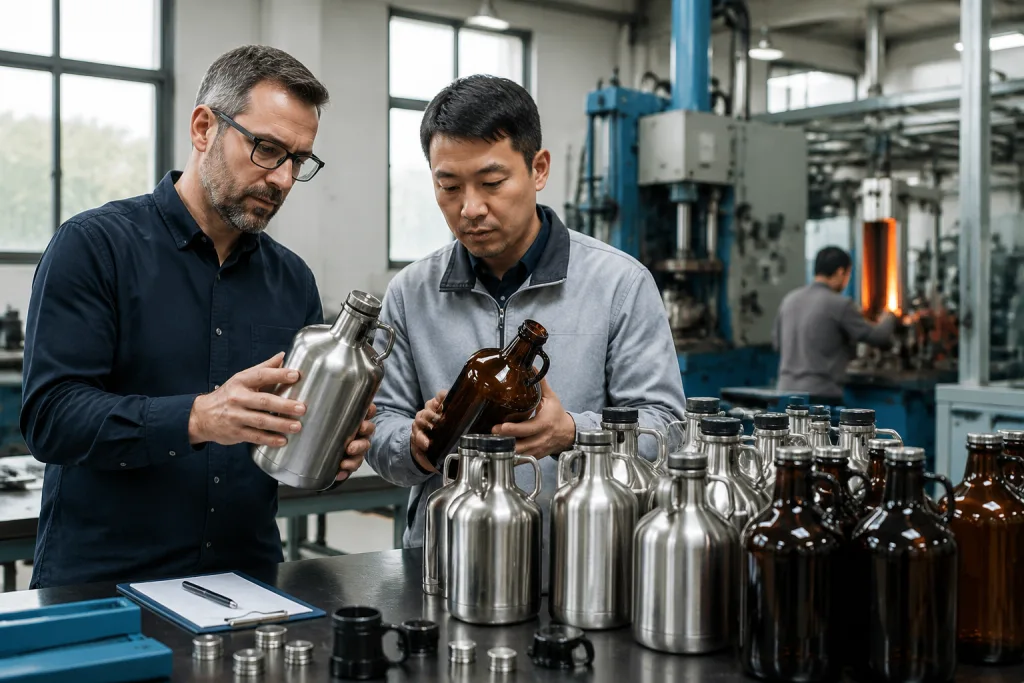
I’ll rewrite the section in-place, keep the HTML exactly as-is, and strip the AI-ish phrasing while adding a few factory-floor details and tighter buyer language.Sampling is where real buyers separate themselves from the ones just browsing. For drinkware wholesale, the sample set should show the exact body thickness, lid build, coating, and logo position you want on the line. A 500 pcs MOQ does not make this less important. We have seen buyers approve a hand-finished sample, then the first mass run comes in with a 0.3 mm wall shift and the whole order gets messy.
Once the samples land, test them like a buyer, not a designer. Check fit, odor, surface feel, and how they hold up after one hot wash and one cold wash. Then ask for the real controls: 100% incoming material check, leak test on the line, and final packing under AQL. For export orders, we run AQL 2.5 for major defects and 4.0 for minor defects, with extra attention on dented rims, print drift, and gasket cuts. That is the standard we use for Zhejiang shipments going to the US and Europe. QC pulled a lid sample last month and found a 1.2 mm gap; that sort of miss is exactly why the test has to be hard.
If you also source beer tumbler in bulk or beer tumbler wholesale bulk items, the same rule applies. The sample needs to match carton count, divider layout, and finish level for the real order. We’ve seen this go sideways when a buyer accepted a polished sample and the PO later said “same as sample” without carton details. That is the wrong question to ask. China factories can hold consistency, but only when the PO is tight enough to run from.
Buy for compliance and packaging
I’ll rewrite the three paragraphs in a more grounded factory-sales voice, keep the HTML exactly as-is, and make sure the compliance and packaging details sound like we’ve actually shipped these orders.Compliance is not a paper exercise. For European and North American buyers, we run REACH checks, food-contact review, and packaging drop standards before the PO lands. If you sell on retail shelves or Amazon, the unit has to fit your label system, barcode method, and carton plan. We have seen buyers lose a week because FNSKU was placed 8 mm off center, so we check that early. A supplier who knows FNSKU placement, master carton marks, and drop-test packaging saves real time.
For a best wholesale drink bottle program, packaging can win or kill shelf appeal. For a growler, transport safety matters more, especially on glass or a premium coating. Ask for inner boxes, protectors, or molded pulp; that is the right call. One buyer pushed back on 5-ply cartons for a 1.2 kg unit, then the first trial pallet came back crushed at the corner. If the order goes into mixed wholesale distribution, the outer carton needs to survive a rough warehouse cycle, not just a truck ride. In practice, that means 5-ply cartons for heavier units and clear marks for quantity, net weight, and up/down.
When a buyer asks for canteen wholesale or wholesale canteen pricing alongside growlers, the answer should not be a catalog dump. The supplier should tell you which pack format fits which product class. Bulk drinkware is not one logistics problem. A growler, canteen, flask, and tumbler each put different pressure on the carton, and the breakage risk is not the same. QC pulled the sample and found a 2 mm gap on the insert for one flask set, so we split the quote. Good factories in Zhejiang price packaging separately because the math does not work any other way.
Work the factory like a project
I’ll keep the HTML structure intact and rewrite the prose to sound like an experienced factory-side sales engineer, with tighter pacing and concrete shop-floor detail.If you want a steady wholesale bulk growler program, run the supplier like a project with gates. That is how good China factories work. A normal schedule is 7-10 days for sampling, 3-5 days for sample sign-off, 25-35 days for production, and 5-10 days for export packing and booking, depending on season. So you are looking at about 35-45 days after approval on most standard runs.
Ask for a real production calendar, not a sales promise. A serious Zhejiang supplier will tell you monthly output, line allocation, and which parts sit with outside vendors. On our side, the laser welding line runs one category at a time, so a bulk canteen order does not block a wholesale growler shipment. That is basic factory math, and it is where delays usually start.
For buyers comparing alcohol flask wholesale or alcohol flask wholesale bulk items with growlers, the sequence stays the same: freeze the spec, sign off the sample, approve the pack, do pre-shipment inspection, then release balance payment. We once caught a PO typo on bottle height—280 mm wrote as 208 mm—and QC pulled the sample before the line made 5,000 wrong pieces. If you buy from Zhejiang or another part of China, that order keeps the brewer, distributor, or retailer from finding surprises after the carton lands.
Quote your growler spec today
Send your capacity, lid type, logo method, and target price. We will turn it into a factory-ready plan with MOQ and lead time.
Frequently asked questions
What MOQ should I expect for wholesale bulk growler orders?
For a custom wholesale bulk growler program, the usual MOQ is 500-1,000 pcs per style or per color. If you want custom packaging, laser logo, or a special lid, the effective MOQ may rise to 1,500 pcs because the setup cost has to be spread out. For stock colors with simple branding, some Zhejiang factories can work lower, but unit price usually moves up by 8-15%. Always ask whether the MOQ is per design, per size, or per total order. That detail changes your cash flow more than the headline number.
How much does a beer growler wholesale bulk order cost?
A basic beer growler wholesale bulk order can start around USD 2.60-3.40 FOB for single-wall stainless with simple print. A better retail spec with vacuum insulation, powder coating, and a custom box often lands in the USD 4.20-7.80 range FOB China. Glass and swing-top versions can cost more once breakage packaging is included. The exact price depends on capacity, lid type, logo method, and carton spec. If a quote looks much lower than that, check wall thickness, steel grade, or whether the sample matches the production standard.
Is 304 stainless enough for wholesale growler production?
Yes, 304 or 18/8 stainless is the standard choice for most wholesale growler and wholesale drinkware programs. It is acceptable for beverage contact and is widely used in China and Zhejiang factories that export to Europe and North America. If you are buying for premium positioning, confirm the grade with a material certificate and ask whether the interior is electropolished. For lower-cost promotions, 304 is still the safer choice than unknown stainless. Just remember that the lid, gasket, and coating quality matter as much as the steel itself.
What QC checks should I require before shipping?
For a wholesale bulk growler order, require incoming material inspection, in-line leak testing, and final AQL inspection. A practical standard is AQL 2.5 for major defects and 4.0 for minor defects. Also ask for a carton drop test, especially if the order includes powder coat or custom print. For retail shipping, request photo evidence of carton marks, inner box count, and pallet arrangement. If your supplier cannot show a repeatable QC process, do not rely on a low price to protect your margins.
Can I mix growler bulk and canteen bulk items in one order?
Yes, but only if the construction, packaging, and production schedule are compatible. Many buyers combine growler bulk, canteen bulk, or even beer tumbler bulk items to reach a better container load or annual spend target. The catch is that each product may need a different lid, carton insert, and inspection method. It is smarter to bundle them with one factory that already handles bulk drinkware and drinkware wholesale programs, because that keeps color control, carton standards, and lead time easier to manage.