Key Takeaways
- For wholesale bulk drinkware, compare unit price only after checking MOQ, lead time, and carton efficiency; a common MOQ is 1,000 pcs per SKU.
- A 0.5 mm 304 stainless body is usually a safer buy than a thinner 0.35 mm wall for premium retail positioning and dent resistance.
- FOB China pricing for simple beer tumbler bulk orders can start around USD 1.20-2.40, while decorated insulated tumbler orders often land at USD 3.20-6.80.
- Ask for REACH, LFGB, ASTM, or food-contact documentation before you approve wholesale drinkware for Europe and North America.
If you are buying wholesale bulk drinkware, the first mistake is treating it like a simple price quote. It is not. The real question is whether the product, decoration method, compliance file, and freight plan fit your market and margin. A $0.18 unit price can turn ugly fast if the MOQ is off, the coating fails REACH checks, or the carton count pushes up your freight bill.
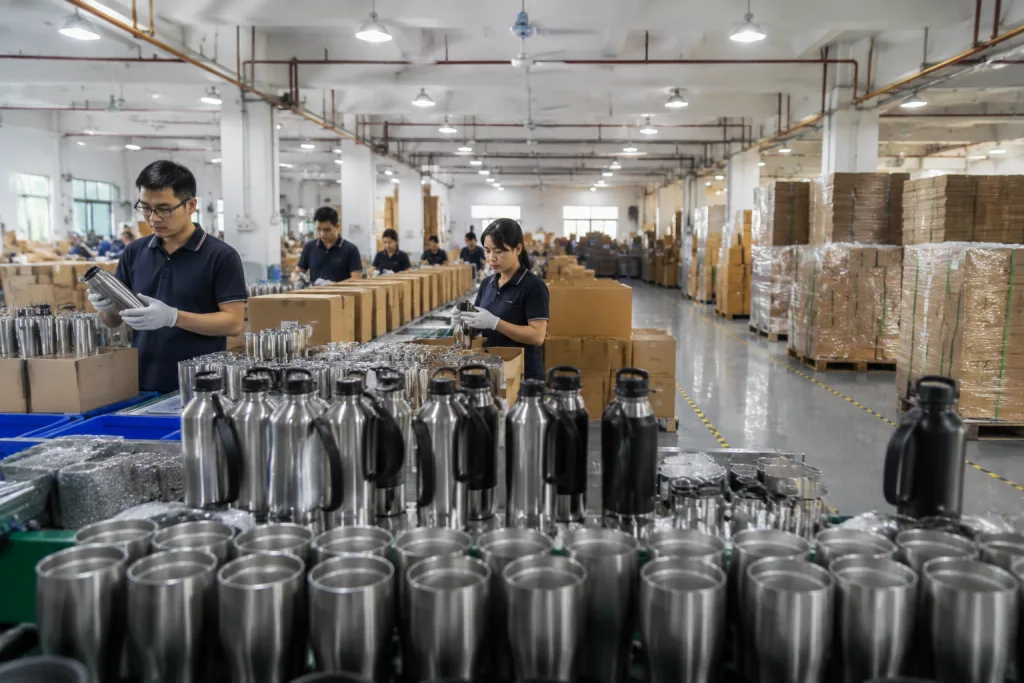
For procurement managers and brand owners, the clean way is to make four decisions in order: product format, material and capacity, decoration method, and factory capability. That is how you compare bulk drinkware, drinkware wholesale, and wholesale drinkware offers without getting buried in sample photos. At our Zhejiang factory in Hangzhou, we run 600,000 units per month across stainless steel, glass, and insulated lines, and QC pulled a 24 oz sample last week because the lid torque missed spec by 0.3 N·m. China has plenty of factories. The wrong one will cost you time.
Start with the sales channel
I’ll rewrite the section in-place, keep the HTML untouched, and tighten the copy so it sounds like a buyer-facing sales engineer.Your first decision is not bottle shape. It is where the product will sell. A gym brand, an Amazon seller, a gift distributor, and a brewery all buy different wholesale bulk drinkware. Pick the wrong channel assumption, and your pack-out, decoration, and freight math are off from day one. We’ve seen a PO call for 500 ml bottles, then the buyer flagged a 24 oz carton spec on page 2. That kind of mismatch burns a week.
For retail and e-commerce, we usually push for one stable SKU with repeatable reorders, because FNSKU labeling, carton dimensions, and image consistency all have to line up. For distributor programs, the better fit is mixed-SKU flexibility and faster canteen wholesale replenishment. If you are building a brand, the container still has to leave margin after print, packaging, and returns. QC pulled a sample last month with a 2 mm lid gap, and that sort of detail is why we ask buyers to state the end use up front: shelf retail, promotional gifts, or foodservice. This is the wrong question to ask after sampling.
Here is the practical split:
- Retail and Amazon: tighter visual control, tested finishes, barcode-ready cartons.
- Promotional programs: lower decoration cost, simpler structures, larger canteen bulk quantities.
- Foodservice and breweries: durable formats such as beer tumbler bulk and growler wholesale programs.
If you sell alcohol-related products, check local rules early. An alcohol flask bulk order can need different labeling, import review, and age-market positioning than a standard hydration bottle. We ship these with different carton marks when the market asks for it. The math doesn’t work if you wait until after artwork is approved, especially for alcohol flask wholesale bulk packaging in gift sets. Decide the channel first, then the product.
Choose the right material
I’ll rewrite the section in-place, keep the HTML exactly as-is, and tighten the sales-engineering tone with a few concrete factory details.Material choice sets the scrap rate. Stainless steel, glass, and plastics each solve a different problem. Most brand owners who ask for the best wholesale drink bottle are really asking for the best mix of durability, margin, and shelf appeal. We run this every week on the line: match wall structure, finish, and closure to the use case, or the order gets noisy fast.
For insulated drinkware bulk programs, 304 stainless steel is still the default. It is easier to certify and easier to sell. We usually quote 0.5 mm inner and outer walls for mid-tier SKUs, and 0.35 mm only when the buyer pushes hard on price and accepts lower dent resistance. For a bulk canteen or wholesale canteen order, a single-wall stainless body cuts cost, but it gives you no thermal performance. For a growler bulk program, thicker steel and a tighter cap are worth the extra cents; QC pulled the sample on a 72-hour leak test once and found the cap failed before the steel did.
Glass works on a different math. Glass bottle orders often land lower on material cost but higher on breakage risk, so carton design matters more than the bottle spec. If the buyer wants a premium giveaway, glass fits. If the buyer wants fewer claims, stainless is the safer call. Plastic still has a place when weight and budget matter. The wrong question is “which material is best?” A PO typo on a 300 g PET bottle can cost less than a broken pallet of glass, and the factories in Zhejiang that handle multiple substrates well usually show it in mold upkeep and fewer mixed-lot defects.
Do not buy by material name alone. Buy by wall thickness, surface finish, lid structure, and the test standard behind it.
Set the decoration plan early
I’ll rewrite the section to sound like a factory-side sales engineer, keep the HTML exactly as-is, and avoid the AI-style phrasing.Decoration cost moves faster than almost anything else on the quote sheet. The same wholesale bulk drinkware body can land as a cheap promo item or a retail-grade branded product just by changing the logo method, finish, and pack-in. We run this every week. Choose the decoration method before final pricing, not after sample approval.
For a simple logo, silkscreen is still the lowest-cost call. Laser engraving costs more, but on 304 stainless it holds up better after dishwashing and rubbing. If the spec calls for a painted or powder-coated finish, ask for adhesion testing and scratch tolerance up front. QC pulled the sample on a 1.5 mm grid cross-hatch before we signed off. A decent export factory in China should show the result and tell you how many print colors work at your MOQ. On small runs, a 1-color logo usually saves 8-15% versus multi-color print.
Brand owners often ask for a beer growler wholesale bulk order with full-wrap graphics. It can be done, but the buyer flagged the curve wrap for a reason: the reject rate goes up when artwork crosses a shoulder or taper. For alcohol flask wholesale projects, the print area is smaller and easier to control, but the cap and seal matter more than the logo. This is the wrong question to ask if you start with decoration only. If you need custom logos at volume, review custom logo drinkware options before you lock the structure. We’ve seen a PO typo on finish code turn a clean order into a 12-day delay, and that hurts when you are comparing drinkware wholesale offers from multiple factories in Zhejiang and other parts of China.
Check factory capability, not claims
I’ll rewrite the section in-place, keep the HTML exactly as-is, and tighten the sales-engineer tone with concrete shop-floor details and fewer stock phrases.Buyers often fixate on catalog size and miss the real issue: can the factory hold the line on one SKU, day after day. A supplier can list 20 categories and still wobble on finish, lid fit, or carton count. For wholesale bulk drinkware, you want output records, process control, and compliance papers on the desk, not promises.
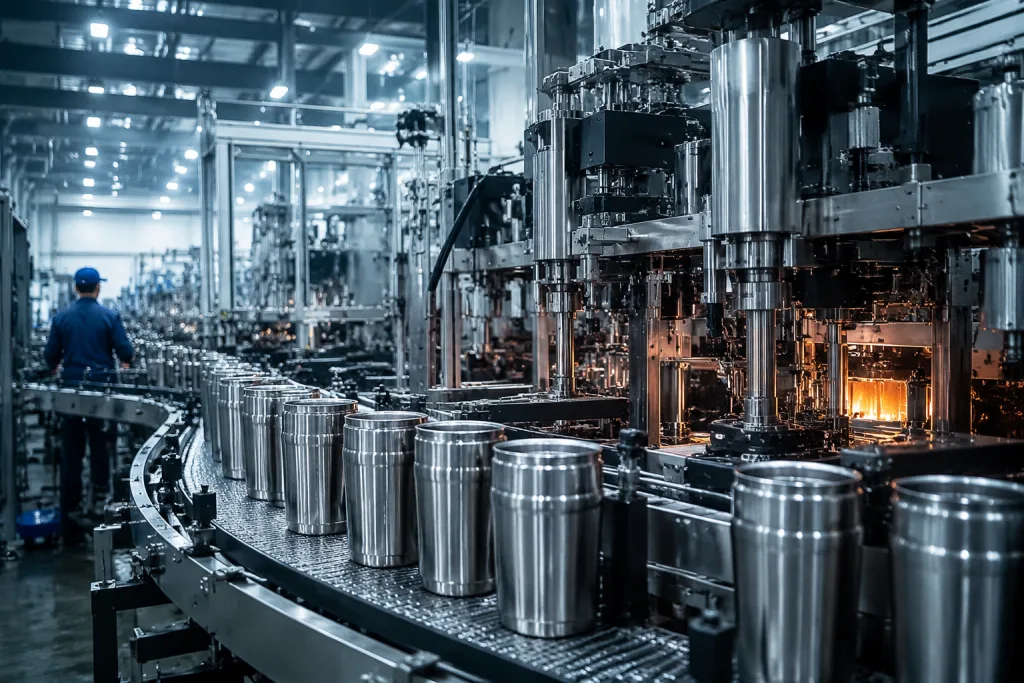
Ask for monthly capacity, line layout, and the in-process check points. A serious export supplier should tell you whether the plant runs 300,000 stainless units per month, 100,000 glass units per month, or a mixed output under one roof. At our Hangzhou site in Zhejiang, we schedule by line type because a growler wholesale order and a canteen wholesale order do not use the same press, the same foam tray, or the same packing rhythm. QC pulled the sample on a 0.3 mm lid gap before it left the line. That is the kind of detail that matters.
Then check the commercial terms. FOB China is standard for North America and Europe, but only when the packing list, HS code, and carton marks are clean. We’ve seen a buyer flag a PO typo on carton marks and the whole booking slipped 4 days. If you are comparing canteen bulk or drinkware bulk programs, ask for sample lead time and production lead time separately. A 7-day sample and a 25-35 day production cycle is normal for standard SKUs; custom molds or special closures can stretch that to 45-60 days. If someone offers everything in 10 days, the math does not work.
Read the compliance file first
I’ll rewrite the section in place, keep the HTML tags intact, and tighten the sales-engineering tone without changing the structure.If your compliance file is thin, your price is made up. That is the blunt truth for wholesale drinkware going into Europe and North America. The exact paperwork changes by material, coating, and destination, but the rule stays the same: get evidence before you green-light mass production.
For Europe, ask for food-contact declarations, REACH material statements, and LFGB test support when the product needs it. For North America, ask for the right ASTM or FDA food-contact references based on the item. If the product has a silicone ring, printed logo, or color coating, QC needs to check those parts too, not just the steel or glass body. We see this on bulk growler and beer growler in bulk orders all the time; the closure is where leaks and compliance failures show up on the line.
Buyers sourcing alcohol flask in bulk should look at market sensitivity too. A stainless flask looks simple, but packaging and labeling can change the regulatory load and the shelf risk. Same story for beer tumbler wholesale or beer tumbler wholesale bulk programs sold as barware. Good factories in China split out material certificates, test reports, and lot-trace labels. If they cannot show batch traceability, the math does not work, even with a lower unit price.
Use MOQ and pricing as a filter
I’ll rewrite the section in-place, keeping the HTML tags and the existing structure intact, while making the prose sound like a factory-side sales engineer wrote it.MOQ is not just a number; it tells you how the line runs. A factory asking for 3,000 units usually has steadier changeovers and less drama on repeat export orders than one that says 200 pieces but tweaks the spec every week. For wholesale bulk drinkware, a practical MOQ often sits at 1,000 pcs per SKU for standard stainless products, 2,000-3,000 pcs for custom printed glass, and higher for specialty lids or molded parts. QC pulled a sample once and found a lid tolerance off by 0.8 mm; that kind of miss is exactly why the MOQ question matters.
Price tiers matter too. A simple unbranded canteen bulk item might land around USD 0.90-1.80 FOB depending on steel grade, capacity, and finish. A decorated insulated wholesale growler can move to USD 4.80-9.50 FOB once you add vacuum processing, packaging, and print. Beer growler wholesale pricing goes up fast when the cap system is more complex or when the buyer wants matte coating and gift cartons. The buyer flagged a PO typo on carton count before; that quote was missing the pack spec, so the math did not work.
If you buy drinkware wholesale for multiple channels, ask the factory to quote three levels: economy, core, premium. That makes it easier to line up a bulk canteen, a wholesale canteen, and a retail-positioned insulated tumbler on one sheet. It also keeps a low unit price from hiding a weak carton, a soft lid, or a coating that fails after 48 hours in the salt-spray cabinet. We’ve seen that go sideways on a 5,000-piece order.
Quote your next bulk drinkware order
Send your target capacity, logo method, and destination market. We will match the right SKU, MOQ, and test file for China and export.
Frequently asked questions
What is a realistic MOQ for wholesale bulk drinkware?
For standard wholesale bulk drinkware, 1,000 pcs per SKU is common for stainless steel, especially if you are choosing one logo method and one carton spec. Glass items may need 2,000 pcs or more because breakage control and packaging setup take longer. If you want custom lids, special coatings, or multi-color print, expect the MOQ to rise by 20-50%. For a new brand, I usually suggest starting with 1,000-1,500 pcs so you can test sell-through without locking too much cash.
How do I compare wholesale drinkware quotes fairly?
Compare them on the same basis: material grade, wall thickness, lid type, print method, packaging, and Incoterm. A quote for a 0.35 mm body is not equal to a 0.5 mm body. FOB Ningbo, FOB Shanghai, and FOB Shenzhen may look close, but freight and internal trucking can differ. Ask each supplier to show unit price, MOQ, sample lead time, production lead time, and test support. That is the only way to compare drinkware wholesale offers without being misled by a low headline number.
What lead time should I expect from China?
For standard wholesale bulk drinkware, sample lead time is often 5-10 days and production lead time is 25-35 days after deposit and artwork approval. If you need a new mold, special closure, or complex finish, 45-60 days is more realistic. China factories in Zhejiang are often strong on stainless and vacuum products, but the real variable is whether the factory has in-house coating and packing. Always separate sample timing from mass production timing so your launch date is not based on wishful thinking.
What tests matter for Europe and North America?
For Europe, ask for food-contact support, REACH-related material statements, and where relevant LFGB testing. For North America, ask for food-contact compliance references and any state-specific concerns if your channel requires them. For alcohol flask wholesale or beer growler wholesale bulk orders, also check seal integrity, leakage testing, and coating adhesion. If the product includes silicone or plastic parts, those components need testing too. A good supplier should be able to provide lot-based documents rather than one generic certificate.
Which product types are easiest to source in bulk?
The easiest products are usually standard stainless water bottles, simple tumblers, and basic canteen wholesale items with one-color branding. More complex items such as bulk growler, beer growler in bulk, and alcohol flask wholesale bulk runs can still be efficient, but they need tighter lid control and more careful packaging. If you want the best wholesale drink bottle for a first order, I would start with a straightforward 304 stainless model, one logo method, and a carton spec that survives export handling.