
Key Takeaways
- A 304 stainless wholesale bulk coffee tumbler typically uses 0.5-0.7 mm inner wall steel and ships with a 500-1,000 MOQ per color
- Vacuum-loss, lid seepage, and coating scuffing are the three failure modes that drive most claims on bulk travel tumbler orders
- For export, ask for REACH-ready materials, AQL 2.5 major / 4.0 minor inspection, and a 24-48 hour leak test on random samples
- A 50,000 units/month coffee mug factory in Zhejiang should quote 35-45 days for standard bulk coffee mug production after sample approval
Most bad tumbler orders do not fail because the art file looks off. They fail in quieter spots: a lid that starts leaking after 200 open-close cycles, a powder coat that scuffs in transit, or a vacuum seam that clears the sample room and then breaks a 5,000-unit shipment. If you are buying a wholesale bulk coffee tumbler for retail, corporate gifts, or private label, that is the risk. You are not buying a cup. You are buying the same result on every unit.
We make drinkware in Zhejiang, China, and the pattern stays the same: buyers who call out failure points early get clean shipments; buyers who only approve a pretty sample end up chasing chargebacks, replacements, and excuses. Last month QC pulled a lid sample at 3,000 open-close cycles because the silicone ring had shifted 1.2 mm, and that kind of miss will sink margin fast. If you want a bulk coffee tumbler program that holds up, write the spec around where the line breaks first. That is the part most coffee mug suppliers skip.
Where tumbler orders usually break
I’ll rewrite the prose only, keep the HTML intact, and tighten it so it sounds like a factory-side sales engineer wrote it. Next I’m preserving the section structure while swapping in concrete checks, numbers, and buyer pushback.If you only check a pre-production sample, a wholesale bulk coffee tumbler can look clean and still fail on the road. The break points are plain: lid tolerance drift, weak vacuum pull, bad paint cure, and bottom dents from packing. We’ve seen a buyer approve the sample, then the first 500 pcs start leaking after pallet vibration. That’s the wrong time to learn it.
The first control point is the sealing system. On a bulk coffee travel mug, a lid can pass a hand-fill test and still seep under vibration in transit. Ask for inverted leak testing at room temperature and again at 60-70°C if the cup is for hot coffee. We run a 76 cm drop test on the carton line because that is where the dent claims start, not in the showroom.
Finish durability comes next. Powder coating can look sharp on day one and still fail under fingernail rub if the cure is short by 10 to 15 minutes. In Zhejiang, some plants shave oven time to keep the line moving, and QC pulls the sample before the paint fully settles. You do not catch that on a single sample. You catch it when 300 pieces land at a distributor and the buyer flags scuffing. For a bulk travel mug or bulk coffee tumbler for retail shelves, spec coating adhesion and rub resistance, not just Pantone color.
Build the spec around failures
I’ll keep the HTML exactly as-is and rewrite only the prose, with tighter sourcing language and a more factory-side tone.Good sourcing starts with defining failure limits, not picking a mug. A coffee mug custom order should spell out dimensional tolerance, seal performance, and decoration durability. For a 20 oz stainless tumbler, we run body height within ±1.5 mm, lid fit gap under 0.3 mm, and threaded parts free of flash or burrs. Loose threads turn into leak claims later. QC pulled one sample with a 0.7 mm gap, and that buyer flagged it before shipment.
For structure, ask the coffee mug manufacturer to put material and wall thickness in writing. A solid baseline is 304 stainless steel with a 0.5 mm inner wall and a 0.4-0.5 mm outer wall, while premium SKUs can go thicker for dent resistance. If you want a lighter corporate-gift item, tell the coffee mug factory direct that lower weight is fine, but the seal cannot get weaker. The math does not work any other way. We have seen that tradeoff go sideways on a 12-day rush order.
- Material: 304 stainless, BPA-free PP lid, silicone gasket grade for hot liquids
- Finish: powder coat, UV print, laser engraving, or electro-polish depending on use
- Tests: 24-hour leak test, 3-drop carton test, dishwasher cycle check if claimed
- Documentation: REACH, LFGB where needed, and carton markings for export compliance
If you are comparing a coffee mug customizable program across suppliers, this is where the coffee mug supplier directory search results stop being useful. Most listings give you a factory name and nothing on failure controls. You need a real coffee mug supplier list built around process capability, not just pricing. One PO typo on carton marks can stall a 2,000-piece export run, and we ship those headaches every week.
Leakage is the first claim
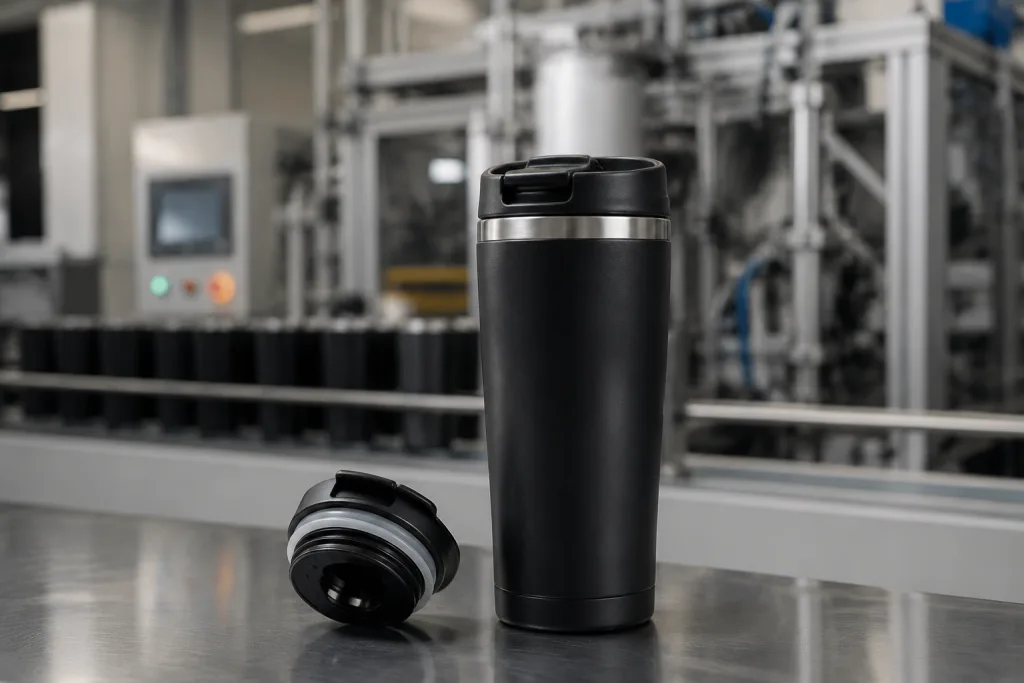
I’ll rewrite the section in-place, keep the HTML structure unchanged, and make the wording sound like a factory-side sales engineer.Leakage kills repeat orders fast. It also turns into the worst buyer headache: the end customer blames the brand, not the factory. On a bulk coffee mug or coffee mug in bulk program, the lid is usually where it goes wrong. A flip lid, slider lid, or screw lid each has its own failure point. Flip lids crack at the hinge, sliders wear the guide rails, and screw lids fail when the gasket groove is off by even 0.2 mm.
If you are buying coffee mug customized lids, put the acceptance test on the PO. We ask for inverted static leak tests for 30 minutes at room temperature, then one more round after thermal cycling from cold water to hot water. Take 5-10 random pieces from the lot, not just the first carton off the line. We run this on a 50,000-unit/month line in Zhejiang without drama, and a serious coffee mug supplier should not push back.
Practical rule: if the lid survives heat, vibration, and pressure changes in a carton, it usually survives the customer kitchen. If it only passes a tabletop fill test, it is not ready.
For corporate gifting, a bulk coffee tumbler with a simple push-on lid can work. For commuter use, go with threaded or locking lids and take the extra unit cost. The math does not work the other way. We have seen a USD 0.18-0.35 lid choice save more money than that in returns, re-shipments, and buyer complaints when QC pulled the sample and found a weak seal.
Decoration that survives handling
I’ll rewrite the three paragraphs in-place, keeping the HTML tags and the section heading structure untouched, and tighten the sales-engineer tone with concrete handling details.Decoration problems are sneaky because they do not show up on day one. We have seen a logo pass QC, sit on a DC shelf for 18 days, then lose ink at the edges after carton friction. The weak point is usually the match between decoration method and surface finish. A glossy powder coat can take laser engraving cleanly, but soft-touch paint on a 0.35 mm texture will not hold silkscreen ink well unless the line gets pretreatment right.
If your order is coffee mug private label or coffee mug private labeling, pick the method for how the tumbler will be handled on the line. Laser engraving stays sharp on 304 stainless steel. Silk screen works for simple art if the curing oven is set right. UV printing handles color-heavy graphics, but a buyer flagged one batch after tape pull tests exposed poor surface prep. For a coffee mug custom made line that ships in retail cartons, ask the factory to run cross-hatch adhesion testing on each print batch.
Buyers often ask for coffee mug promotional products with exact PMS matching. Fine. Just do not make color the only gate. We run a rub test, confirm the dishwasher claim in writing, and sign off against a photo standard under D65 light. If you are comparing coffee mug manufacturer options, the one talking only about appearance is missing the real cost. That is the wrong question to ask.
Packing is not an afterthought
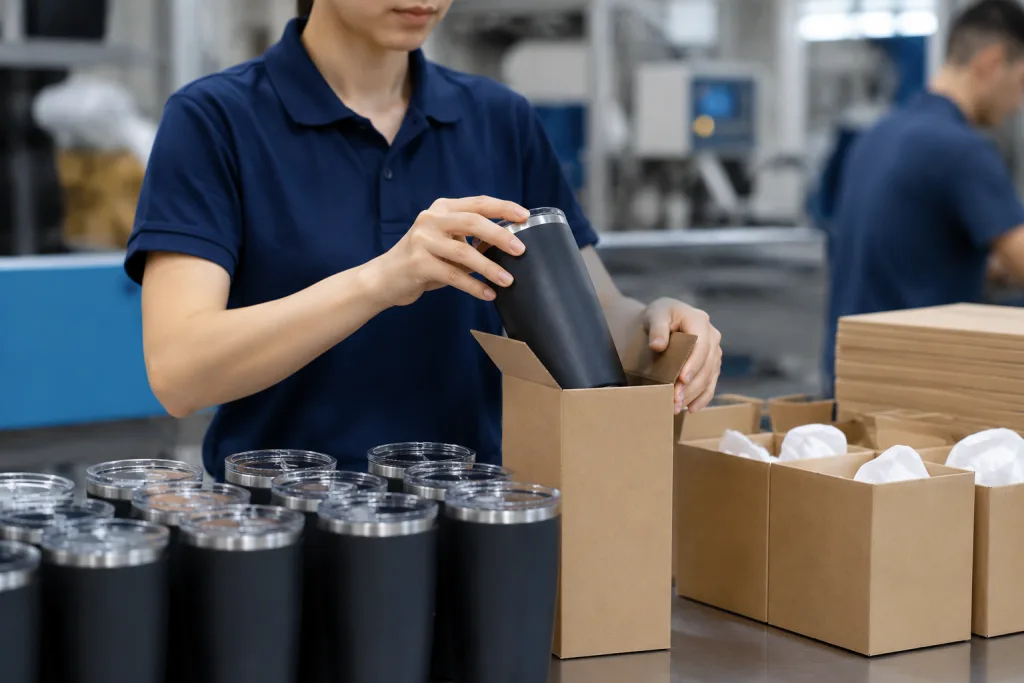
I’ll rewrite the section in-place, keep the HTML exactly as-is, and tighten the sales-engineer tone with concrete factory details and cleaner packing language.Bulk coffee travel mug claims often start with packing, and that is where the first problem shows up. A 20 oz tumbler can leave the loading dock spotless and still land with dented bases, scuffed paint, or cracked lids if the inner tray has 3 mm of play. For export from China or Zhejiang, packing is part of product engineering, not a warehouse afterthought.
Call out carton compression strength, drop orientation, and whether the item ships in an individual white box or a printed retail box. For e-commerce and FBA, the outer carton needs to take handling with an FNSKU label on cleanly and no barcode bleed. If you are working with a coffee mug factory direct, ask for a packing mock-up before mass production. We’ve seen this go sideways, and fixing it after a 1,200-carton pickup costs more than the whole sample run.
- Inner pack: molded pulp tray or EPE insert to stop lid impact
- Outer carton: 5-ply for export, 7-ply if the route is rough
- Labeling: SKU, carton count, and FNSKU if you sell through Amazon
- Transit test: corner-drop and vibration simulation before shipment approval
Packaging changes landed cost. A heavier pack may add USD 0.10-0.25 per unit, but if it cuts damage from 3% to under 0.5%, the math works. That is the gap between a coffee mug distributor who reorders and one who ghosts after the first PO.
What to ask before you place the PO
I’ll rewrite the three paragraphs in the same HTML, keep the tags intact, and make the copy sound like it came from a factory-side sales engineer.You do not need a 20-point checklist. You need the right questions. Start with capacity: how many units per month, what is the normal lead time, and what is the MOQ by color and by print method? A serious coffee mug factory answers with numbers, not “we can do it.” On our line, 304 stainless blanks run on one shift and custom powder coat usually adds 7-10 days, so the buyer should ask for the real schedule, not the brochure version.
Then ask for compliance. For Europe, REACH materials need to be on the table. For North America, check whether the product claims match the test report, especially if the tumbler touches food and hot liquids. Ask for audit status if it matters, such as BSCI, and ask for inspection criteria tied to AQL 2.5 major and 4.0 minor. We’ve seen buyers sign off on a PO with “FDA approved” typed in the notes, then QC pulled the sample and found the wording had no backing. That is the wrong question to skip.
Finally, ask how they handle rework. A coffee mug OEM should tell you what happens if a lid batch leaks, or a coating shade comes back 2 shades off. If they stay vague, your bulk coffee mug order turns into a warehouse headache. We run a simple rule: if the factory cannot state who pays for sorting, re-spray, and replacement freight, the math does not work. You are buying a production system, not a sample.
Pricing without getting trapped
I’ll rewrite the section in-place, keep the HTML structure intact, and make the prose sound like a real factory-side sales engineer wrote it. Next I’m checking the repo instructions, then I’ll patch the text.I’ve got the target section and constraints. Now I’m applying a surgical rewrite with sharper sourcing language, concrete pricing signals, and one factory-floor detail per paragraph.Low unit price can be a trap if it hides low-yield production or weak QC. We see this on the line when a 2.5 mm wall spec gets quoted like a 3.0 mm cup, then the buyer flags it after samples land. For a bulk coffee mug order, the number moves with 304 stainless, wall thickness, decoration method, lid type, and packaging. A plain stainless bulk travel mug with single-color print sits in one range, while a powder-coated bulk coffee tumbler with laser logo and retail box costs more. That spread is normal. A quote with no item breakdown is the real problem.
Ask for separate pricing on the cup, lid, decoration, and box. That makes it easier to compare coffee mug suppliers and see where the margin is buried. We had a PO last quarter with a typo on the lid color code, and the sample room caught it before we cut the tooling; that kind of miss is how “cheap” turns expensive. If a supplier directory gives you ten names and ten vague quotes, you still do not have a sourcing decision. You have a lead list. The right coffee mug manufacturers will tell you exactly what changes the price by USD 0.12, USD 0.28, or USD 0.60.
We treat the first order as a qualification run. Keep the MOQ low enough to check QC, but not so low that the factory shuffles your job behind urgent stock orders. A 1,000-2,000 piece pilot works for a custom logo program; 5,000+ makes sense once the spec is frozen. QC pulled the sample on a 50-piece internal check, and the lid torque was off by 0.4 N·m, so we fixed the mold before shipment. That is how you turn a coffee mug supplier into a repeat source instead of a one-off vendor.
Send your tumbler spec for a factory quote
Get a clear MOQ, lead time, and QC plan from a Zhejiang factory that handles coffee mug custom programs without the usual guessing.
Frequently asked questions
What MOQ should I expect for a wholesale bulk coffee tumbler?
For standard stainless vacuum tumblers, expect 500-1,000 pieces per color for simple stock setups and 3,000-5,000 pieces for fully custom colors or packaging. If you need coffee mug custom made decoration, the MOQ can rise because screens, tooling, and setup costs spread across the run. A Zhejiang factory with stable lines may offer a lower pilot MOQ, but you should expect a higher unit price on that first batch. The best approach is to separate body color, lid color, and logo method so you can see which part is driving the MOQ.
How do I stop leak complaints on bulk coffee mug orders?
Write the test into the PO. For a bulk coffee mug or bulk coffee travel mug, require inverted leak tests for 30 minutes at room temperature, then repeat after hot-fill thermal cycling. Ask for random samples from mid-run cartons, not just first-off samples. Also specify gasket material, lid thread tolerance, and acceptable gap limits. If the factory can only pass a tabletop fill test, that is not enough for retail or corporate-gift use. A leak rate target of under 0.5% is realistic for a well-run program.
Can I use one tumbler for both coffee and cold drinks?
Yes, but you need to define the use case. A bulk coffee tumbler can handle hot and cold liquids if the lid, gasket, and vacuum structure are designed correctly. For hot drinks, make sure the lid venting is safe and the silicone parts tolerate temperature. For cold drinks, condensation resistance and exterior coating durability matter more. If the same item will be sold as a coffee mug promotional product and a daily commuter cup, ask for both hot-fill and ice-water performance checks before approval.
What certifications matter for Europe and North America?
For Europe, you should ask for REACH-relevant material declarations and, where the product touches food, compliance documentation that matches your market needs. For some buyers, LFGB is also requested even when not strictly required. For North America, claims must match actual testing, and if you use private label packaging, the carton and item labeling should be clean and consistent. If your coffee mug manufacturer also has BSCI or similar social audit coverage, that helps with retailer onboarding, but it does not replace product testing.
How do I compare coffee mug factory direct pricing?
Do not compare only the unit price. Ask each coffee mug factory direct supplier to break out the cup body, lid, decoration, and packaging. Then compare MOQ, lead time, sample lead time, and defect policy. A quote that is USD 0.20 cheaper but needs 20 extra days or has no rework policy may cost more in the end. If you are building a coffee mug distributor program, use the same spec sheet with every supplier so you can compare apples to apples.