Key Takeaways
- A 0.2-0.3 mm thread mismatch can create leak complaints on 2-5% of units
- For a 28 oz wholesale blender bottle, aim for 1.5-2.0 mm wall thickness in Tritan or 0.4-0.6 mm in 304 stainless
- A practical MOQ in Zhejiang factories is often 1,000-3,000 units per SKU, with 25-35 day lead time
- Ask for AQL 2.5 on critical defects, FDA/LFGB or REACH support, and torque/drop test data before you approve mass production
A wholesale blender bottle looks easy until the first carton lands with leaking lids, bent threads, or a logo that starts peeling after one wash. We have seen this at the line: the order looks fine on paper, then QC pulls three samples and one loose cap torque setting ruins 5,000 units. The real job is buying repeatable output, not a plastic bottle.
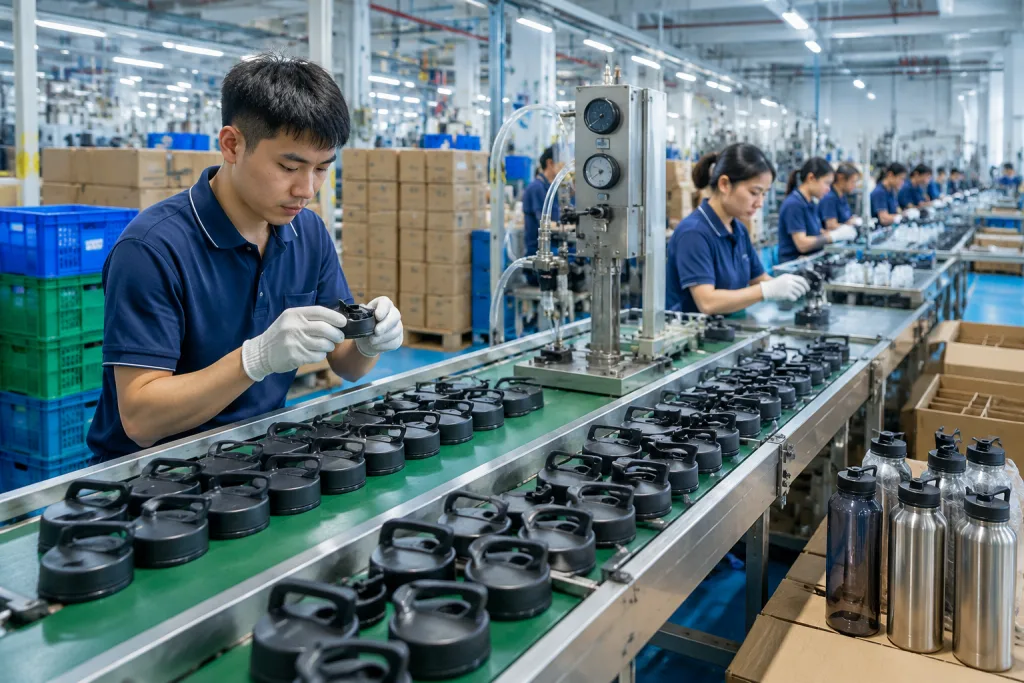
From our Hangzhou, Zhejiang factory, the same pattern shows up on wholesale drinkware orders every week. Buyers chase unit price, then the buyer flags assembly gaps, 1.8 mm wall thickness, odor in the cup, or a cap that misses the spec by 2 N·m. That is the wrong question to ask. Build the spec around the failure points before the PO goes out, and you protect margin, claims, and the next reorder.
Where Blender Bottles Usually Fail
The first failure is usually the closure, not the body. A cap can feel fine on sample day and still leak on the line if the gasket channel is shallow, the thread start is rough, or the hinge pin is under-sized. We’ve seen that show up as weeping around the lid after filling, especially with protein shakes, carbonated drinks, or warm liquids.
The second failure is the base and wall geometry. If the mold is set for speed instead of stability, the bottle rocks on a flat table, the seam line shows, or wall thickness drifts by 0.3 mm. On a wholesale blender bottle, that is enough to bring cooling-line stress, sink marks, or a cloudy look after repeated washing. One buyer flagged a “small” 0.2 mm gap on a PO; that batch came back with lid rattle. This is the wrong question to ask if you approve from one glossy sample and hope the lot behaves.
Spec around the failure:
- Thread pitch tolerance: keep critical thread variation within ±0.15 mm
- Gasket material: food-grade silicone, Shore A 45-55
- Cap torque target: 0.8-1.2 N·m for hand-tight close
- Drop test: 1.0 m, 6 sides, no crack or leak
That is the difference between a bottle that moves once and a bottle that gets reordered by retailers and gyms. QC pulled the sample, and the first thing they checked was the seal line, not the logo. If you are also sourcing canteen wholesale or wholesale canteen items, run the same play: define the seal, the drop behavior, and the assembly standard before you talk price.
Lid Geometry and Leak Control
Leakage is usually a lid issue that looks like a molding issue. Buyers ask for a “better seal,” but the real job is lid geometry that leaves no guesswork. On a shaker bottle, the flip cap, spout cover, and mixer insert all share the load, and one sloppy interface can sink the whole unit. We’ve seen a 0.3 mm mismatch at the hinge turn into a flood on the line.
For a best wholesale drink bottle program, ask for a gasket cross-section drawing and a cap assembly tolerance stack. You want a silicone ring that seats flat, not one that twists during closing. If the lid uses a PP shell with an overmolded seal, require pull-force data and 500 open-close cycles at minimum. On a cold-chain or gym product, a small leak at the hinge is enough to trigger returns and one-star reviews. The buyer flagged it on the first carton, and QC pulled the sample straight off the table.
We usually tell buyers in China and Europe the same thing: if the lid is not tested, the bottle is not finished.
For validation, request:
- Vacuum or inverted leak test for 30 seconds
- Hot fill test at 80°C only if the material supports it
- Torque retention after 24 hours
- Cycle test on the cap hinge and gasket compression
This is not a boutique problem. The same check list applies if you are buying drinkware wholesale, growler wholesale, or beer tumbler wholesale bulk assortments. The shape changes; the sealing math does not. A PO typo on the gasket spec can cost a week, and we’ve seen that go sideways fast.
Material Choices That Save Margin
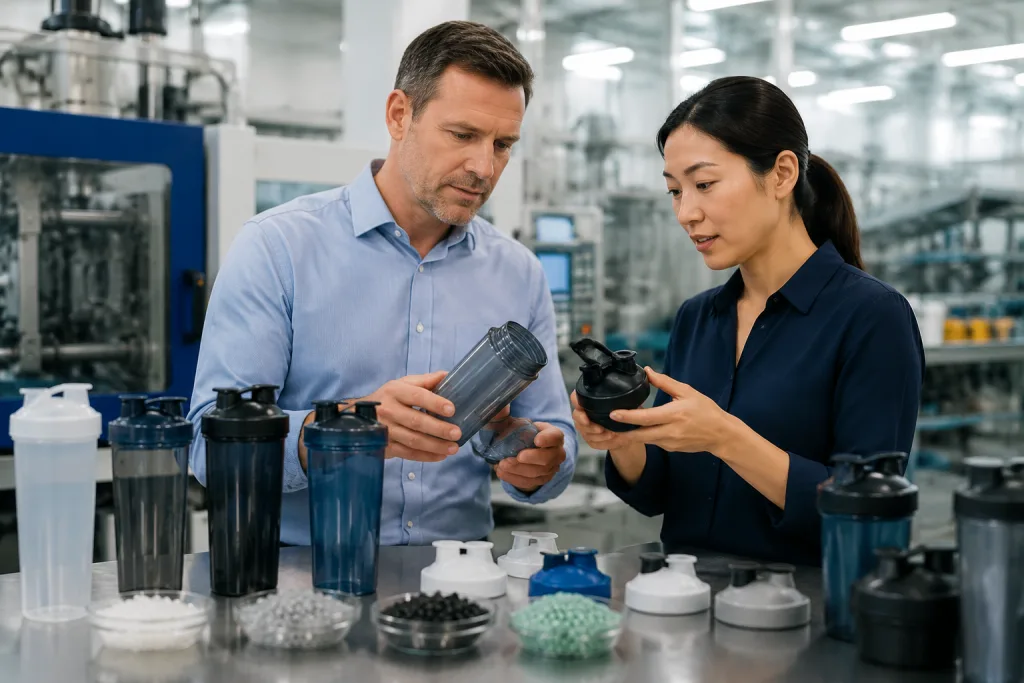
I’ll rewrite this section in-place, keeping the HTML structure and the listed specs intact, while making the prose sound like a seasoned factory-side sales engineer.Material mistakes burn margin because you usually catch them after the first hot load, not on the sample table. A PP shaker body can pass a quick visual check and still warp in a 55°C truck. Cheap PETG or low-grade copolyester often looks fine on day one, then the customer flags haze after two dishwasher cycles. We’ve seen that story go sideways plenty of times in Zhejiang.
If you want a plastic wholesale blender bottle, Tritan-style copolyester is the safer call for premium retail. PP still works for budget sports accounts if the wall structure is generous and the mold gate is clean. For stainless versions, 304 is the floor for most wholesale drinkware programs; 201 only fits customers who accept weaker corrosion resistance and a lower landed cost. For insulated models, specify 18/8 stainless inner and outer walls, a 0.4-0.5 mm shell, and a vacuum hold that QC can verify on the line.
A real supplier in China should send certificates, not promises over WeChat. Ask for REACH, LFGB if the EU is in the plan, and FDA support for the US. We had one PO where the buyer typed the alloy as “3041” by mistake; the sample still failed our incoming check because the spec sheet and the label did not match. For bulk canteen or bulk growler orders, the same rule applies: alloy, liner, and coating have to match the market and the wash cycle, or the math does not work.
- Tritan/copolyester wall thickness: 1.5-2.0 mm
- PP shaker body wall thickness: 2.0-2.5 mm
- 304 stainless wall thickness: 0.4-0.6 mm
- Powder coat adhesion: cross-hatch rating target 4B or better
That is how we protect margin without shipping a complaint magnet.
Prints That Don’t Survive Washing
I’ll keep the HTML exactly as-is and rewrite only the prose to sound like a factory-side sales engineer, with tighter sourcing language and a few concrete floor details.Artwork failure is one of the easiest sourcing misses to wave off because the sample looks clean under showroom light. QC pulled the same logo after one dishwasher run with detergent, heat, and friction, and the edge lifted. That is where the brand starts looking cheap. For wholesale blender bottle programs, decoration needs the same spec discipline as the lid gasket.
Silkscreen stays the low-cost call for one or two spot colors, but the ink system decides whether it ships or gets blamed later. On our line, UV printing holds finer text on complex art, while laser engraving gives the strongest life on stainless surfaces. If you are buying for beer growler wholesale or alcohol flask wholesale bulk orders, engraving usually beats coatings because there is no ink layer to peel. The math does not work any other way.
Ask your supplier to confirm:
- Adhesion test after 50 dishwasher cycles
- Alcohol rub resistance for logo ink
- Color tolerance within Delta E 2.0-3.0 for repeat runs
- Registration tolerance of ±0.5 mm on multi-color prints
If you are comparing custom decoration options, see our guide on silkscreen vs laser engraving. We ship enough repeat orders to know this: do not pick a print process by unit price alone. Pick it by how the buyer will wash, handle, and resell the bottle.
MOQ, Lead Time, and Factory Reality
I’ll rewrite the section in-place, keep the HTML exactly as-is, and tune the prose to sound like a factory-side sales engineer.Buyers often ask for a “small trial” and then try to lock us into a fully customized packaging spec. That does not work on the floor. In a Zhejiang factory, MOQ and lead time move together because mold allocation, pad printing setup, and carton packing all take labor. For a standard wholesale blender bottle with custom logo, 1,000 to 3,000 units is the practical range, depending on color, tooling, and lid complexity.
Our Hangzhou line runs about 120,000 units a month across several drinkware programs, but no factory can switch 15 colors and 4 lid types without paying for it. QC pulled one sample last month with a lid-thread mismatch after a rushed change order, and that is the kind of thing buyers do not want. If you need a true pilot, cut the variables: one bottle body color, one logo position, one carton spec. That gets you to 25-35 days after sample approval, not a messy schedule with rework and extra approvals.
Use this decision logic:
- Stock body + custom print: lower MOQ, faster lead time
- Custom color + custom lid: higher MOQ, 35-45 days
- New mold: tooling cost first, then production at scale
- Mixed SKU orders: combine canteen bulk, wholesale canteen, or wholesale drinkware to optimize container load
If you are still estimating quantity tiers, review MOQ explained for custom drinkware. The math does not work if you force a target price that ignores setup cost, and we have seen that go sideways on PO wording more than once.
Quality Checks You Should Insist On
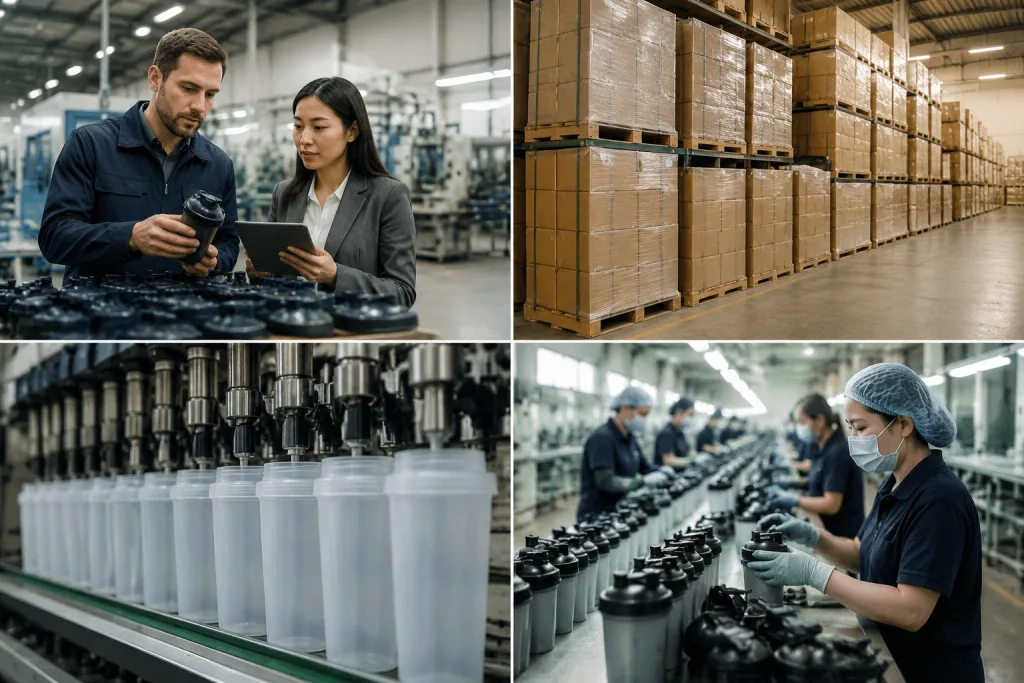
I’ll rewrite the section in-place, keep the HTML structure intact, and tune the language to sound like a factory-side sales engineer with tighter QC detail.Good suppliers in China do not hide behind “sample approved.” They document the batch. For wholesale blender bottle sourcing, that means the PO needs inspection language and a clear AQL target. For critical defects like leaks, cracked lids, or missing parts, use AQL 2.5 or tighter. For cosmetic defects, AQL 4.0 is common, but if your brand sits above entry level, tighten it. We run into this on the line all the time.
Insist on pre-production confirmation, in-process checks, and final inspection photos. For an 8,000-piece order, third-party inspection in Zhejiang or at the port is still worth the fee. A $250-400 inspection can save a $12,000 claim. The math does not work any other way. QC pulled the sample once and found a lid gasket 1.2 mm short; that stopped a bad run before loading.
Ask for these checkpoints:
- First article approval on material, color, and print
- Leak test on 100% of sample set from each batch
- Carton drop test for export packaging
- Barcode and FNSKU accuracy if you sell on Amazon
If your program includes wholesale drinkware, stainless thermos, or sports bottle lines, keep one QC checklist and change only the product-specific tests. We’ve seen buyers split the process into three checklists and miss a typo on a carton mark. One sheet keeps the supplier honest and keeps your sourcing team moving.
Send your spec sheet for a factory review
We’ll check your leak points, material callouts, MOQ, and packaging before you place the PO. Based in Zhejiang, built for export buyers.
Frequently asked questions
What is a normal MOQ for a wholesale blender bottle?
For a standard wholesale blender bottle, many China factories work at 1,000-3,000 units per SKU. If you need a custom color, printed logo, and special carton, 3,000 units is more realistic. Simple stock-body orders can sometimes start lower, but once you ask for custom mold parts or multi-color printing, the setup cost dominates. In Zhejiang, lead time is typically 25-35 days after sample approval for standard specs, and 35-45 days if you add custom color matching or a new lid. Always confirm whether MOQ is per color, per print, or per total order.
How do I reduce leak risk on shaker bottles?
Specify the lid, gasket, and torque, not just the bottle shape. Ask for food-grade silicone at Shore A 45-55, a gasket compression fit, and a hand-tight torque target around 0.8-1.2 N·m. Request inverted leak testing, hinge cycle testing, and a 1 m drop test on six faces. If the bottle has a flip cap, the hinge pin and lock tab should be part of the inspection. A supplier in China should be able to document these tests in the QC report before shipment.
What materials are best for bulk drinkware orders?
For plastic shaker-style products, Tritan-style copolyester is a strong premium option because it stays clear and handles repeated washing better than low-grade plastics. For lower-cost drinkware bulk programs, PP can work if the wall design is robust. For metal products, 304 stainless is the safe baseline for most wholesale drinkware, wholesale growler, and wholesale canteen orders. If the market demands EU compliance, ask for REACH and LFGB support; for US retail, confirm FDA-related material support. Always tie the material to the end use, not just the target unit price.
Can I mix drinkware wholesale and growler bulk in one order?
Yes, but only if the factory has compatible production lines and you keep the specs clean. It is common to combine drinkware wholesale with growler bulk, beer growler bulk, or canteen bulk to improve container utilization and spread freight cost. The risk is too many colors, lid systems, and pack formats. Keep each SKU simple: one decoration method, one carton spec, one test plan. If you bundle too many variations, your MOQ per item effectively rises even if the total order value looks large.
How do I choose between silkscreen and laser engraving?
Choose silkscreen when you need a low-cost logo on a simple body and the bottle will not be washed aggressively every day. Choose laser engraving when durability matters, especially on stainless steel alcohol flask wholesale or beer tumbler wholesale bulk products. Laser is usually more durable because there is no ink layer to wear off. If you expect dishwasher use, rubbing, or outdoor handling, engraving wins on longevity even if the unit price is a little higher. For plastic bodies, silkscreen and UV print are still the common options.