Key Takeaways
- A 0.3 mm wall thickness miss can shift weight, dent resistance, and coating yield across a 20,000-unit run
- Leak checks should be defined at 100% for assembly and AQL 2.5 for appearance, not left to the factory's default
- Good canteen vendors quote lead time in days, not “after sample approval”; a typical custom run needs 25-35 days after deposit
- For logo durability, specify 200+ rub cycles or a laser etch depth target instead of asking for “strong printing”
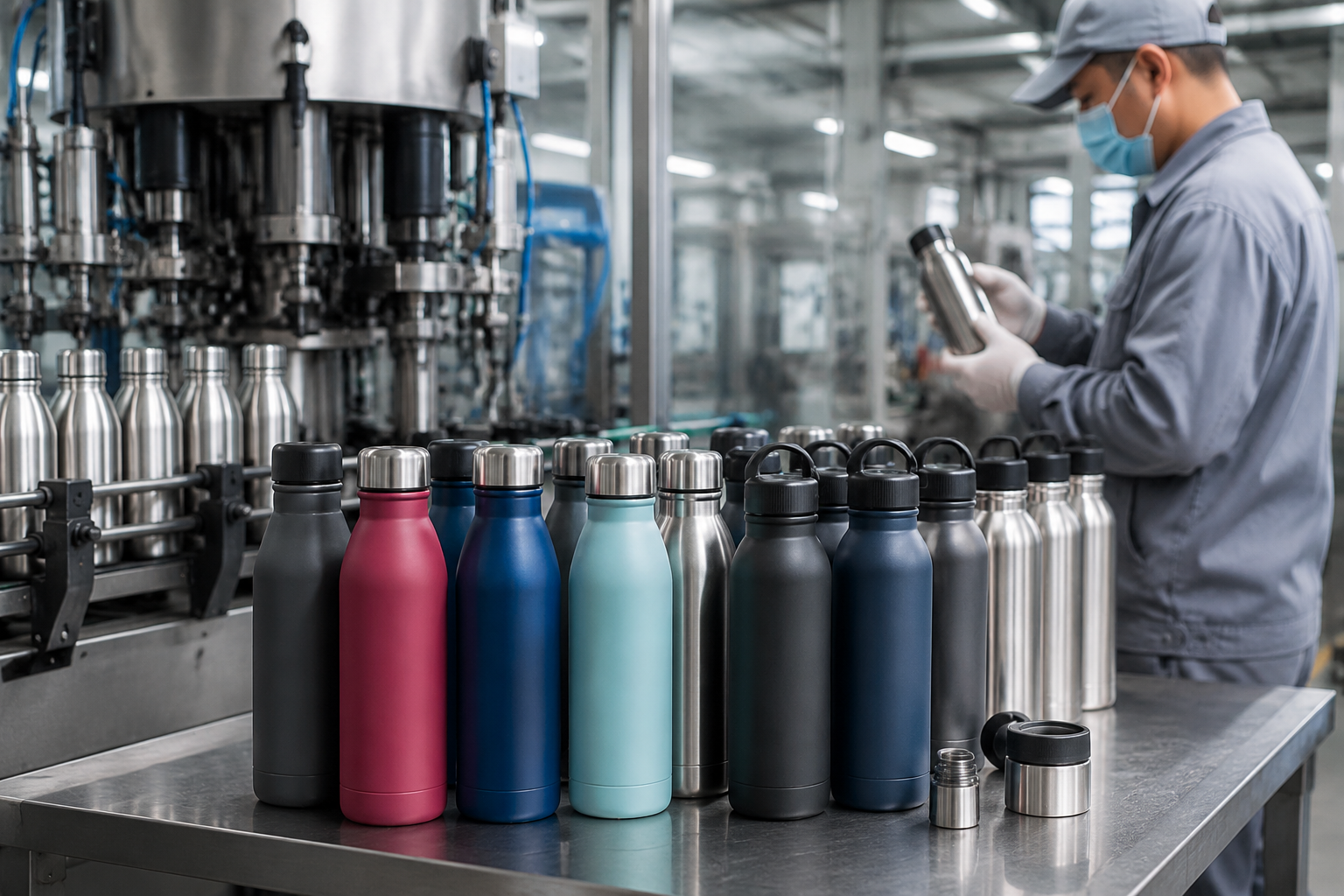
Most bad custom drinkware orders do not blow up in the pitch. They fail on the line, in packing, or in the first week the buyer starts using them. If you are comparing water bottles vendors, price that risk in from day one. We have seen a 5,000-unit run pass sample approval, then show up with 3 mm logo drift, loose caps, or coating that scuffs after one carton move. That is not normal variance. That is a spec problem.
We build in Zhejiang, China, and the pattern stays the same: the buyer pushes for a lower unit price, then the math breaks when rework, freight, and returns land on the PO. A serious canteen manufacturer or canteen supplier should tell you where leaks start, how they check torque, what AQL they run, and which decoration method holds up after abrasion tests with a tape puller. QC pulled a sample last week and found one lid failing at 1.8 N·m; that kind of detail matters. If they cannot answer that cleanly, you are not buying custom drinkware. You are buying a headache.
Where Custom Orders Actually Fail
I’ll rewrite the section in-place, keeping the HTML tags and list structure unchanged while making the prose sound like a factory-side sales engineer wrote it.The first failure mode is plain: the sample passed, then the line quietly changed a part. We see this when the approved sample is treated as shape-only, while material, finish, and decoration specs drift off the page. A canteen factory can swap a resin lot, drop powder-coat thickness from 60 μm to 40 μm, or fit a different cap gasket, and the carton still leaves the dock. Then the buyer flags it on arrival.
Ask water bottles vendors for the top three defects by percentage. If they cannot give numbers, the math does not work. The usual suspects are lid mismatch, logo misregistration, and coating damage from the packing line. On a 10,000-unit order, a 2% defect rate is 200 units dead on arrival, and that will wipe out a distributor's margin fast.
- Spec drift: wall thickness, coating, or gasket material changes after sample sign-off
- Assembly drift: caps cross-thread, rotate too loose, or lose seal compression
- Packing drift: nested bottles rub, scuff, and arrive with visible scratch marks
Good canteen manufacturers keep the golden sample, the BOM, and the QC checklist tied together. QC pulled the sample on our line at 3 pcs per carton, and if one item changes, the other two get updated the same day.
Leaks Start With Cap Geometry
I’ll rewrite the prose only, keep the HTML structure intact, and tighten the language so it reads like a factory-side sales engineer.Most buyers blame the bottle body, but the cap stack-up is usually where the leak starts. Thread pitch, gasket compression, vent path, and closure torque all have a job to do. If the lid uses a 1.8 mm silicone ring and the groove is molded 0.4 mm shallow, it can pass a hand shake test and still leak in transit. We’ve seen that go sideways on the line. A canteen distributor should ask for the leak test method, not just a leak claim.
For steel bottles and custom growler programs, write the closure spec in numbers. We usually run a 24-hour inverted leak test at room temperature, plus a hot-fill check if the bottle will see 80°C liquids. If the product is carbonated or sold as a customized growler, ask for pressure tolerance in psi; a standard sports cap does not carry that load. A buyer flagged a pretty cap photo once, then QC pulled the sample and found seepage after a gym-bag drop test.
Practical spec: demand 100% assembly leak testing on lids, then final sampling under AQL 2.5 for packed goods. If a canteen supplier refuses to separate those two steps, they are hiding process weakness.
Ask one more thing: is torque recorded in N·cm, or is it just “tight enough”? We run a torque driver on the bench, and that answer tells you fast whether the factory has control or guesswork.
Logo Problems Are Usually Process Problems
I’ll rewrite the prose to sound like a factory-side sales engineer, keep the HTML unchanged, and make the language sharper with concrete shop-floor details.Print failure is one of the quickest ways to turn a clean launch into a buyer complaint. The problem is not always the artwork. Most of the time, the canteen customized run had the wrong jig, too much heat, or ink that was never matched to the substrate. Stainless steel, powder coat, anodized aluminum, and glass all need different process control. A canteen promotional item for a trade show can live with a lighter spec than a retail bottle that has to hold up for months. We have seen the line reject a whole batch because the pad print shifted 1.5 mm after the fixture was changed.
If you are sourcing customizable drinkware, ask for the decoration method in writing: silk screen, pad print, UV print, laser engraving, or heat transfer. For abrasion-heavy use, laser engraving is usually the safest choice if the material allows it. For coated bottles, spell out ink adhesion and a rub test. We often quote 200 to 300 dry rub cycles for logo durability on a standard custom canteen, because “it looks good on the sample” is not a QC standard. QC pulled the sample after a 50-cycle rub test and the buyer flagged it before we shipped.
Multiple logo colors drive waste up fast. A two-color print on 15,000 units can slow line speed by 10% to 20% versus a single-color mark. Water bottles vendors who know the process will say that early. If they do not, the math does not work. One PO typo can make it worse; we once caught “Pantone 286C” typed as “280C” before the screens went to the press.
Material Mistakes Cost More Than Design
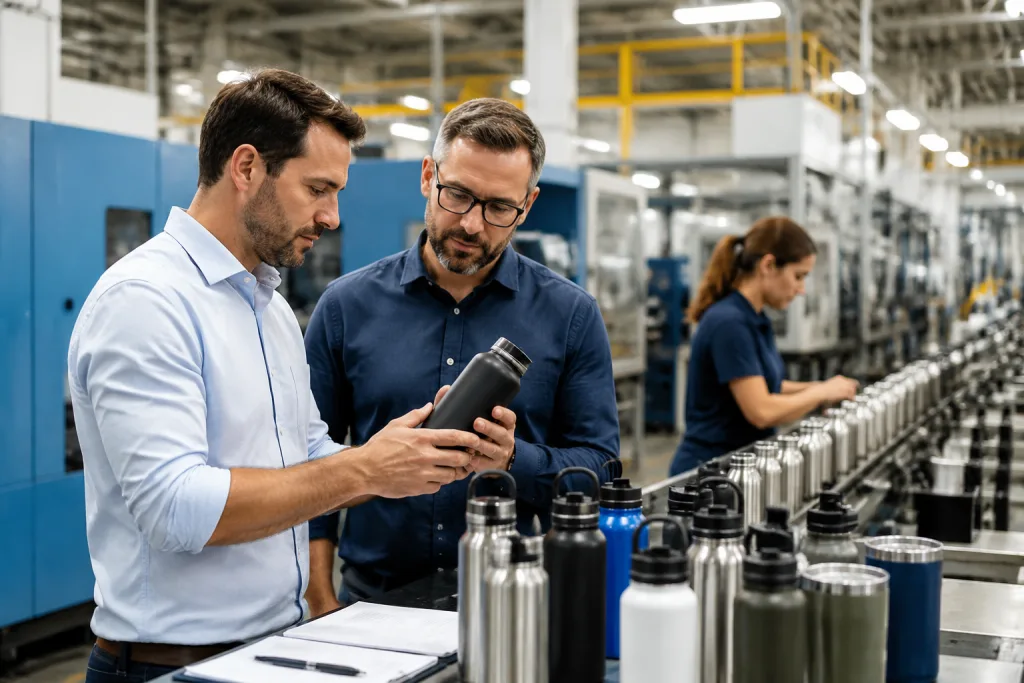
I’ll rewrite the prose in place, keep the HTML structure intact, and tighten the language so it sounds like a factory-side sales engineer.The wrong material choice costs more than a bad shape. A bottle that looks premium on the shelf can dent in the carton lane, and a thick wall can save freight damage while blowing the target price. We run this call early in sampling, because once the line is set and the PO says 0.5 mm, the math does not forgive you. If you need a reusable bottle for school programs, 304 stainless with 0.5 mm to 0.6 mm wall thickness is a common spec. For lower-cost campaigns, aluminum or single-wall stainless can work, but the buyer needs to accept weaker heat retention and more dent risk.
Buyers often ask for a customizable canteen that is “more eco-friendly” and stop there. That is not a spec, and QC will flag it fast. You need the resin grade, coating system, and recyclability claim in writing, plus REACH, food-contact declarations, and lot-level material traceability if the channel is audited. We’ve seen this go sideways on a retail program when the buyer flagged a coating typo on the PO and the supplier had no batch record to back it up. Europe needs that paperwork. North America does too, especially when a chain store or marketplace asks for it during review.
- 304 stainless: stable for most custom drinkware runs, with good corrosion control
- 316 stainless: stronger against salt and cleaner chemicals, but the unit cost climbs
- Aluminum: lighter on freight, while coating adhesion and liner control matter more
- Glass: clean taste, but the carton spec and breakage rate need tighter control
Pick the material around your failure tolerance. Not the catalog photo.
Packing Failures Show Up At Arrival
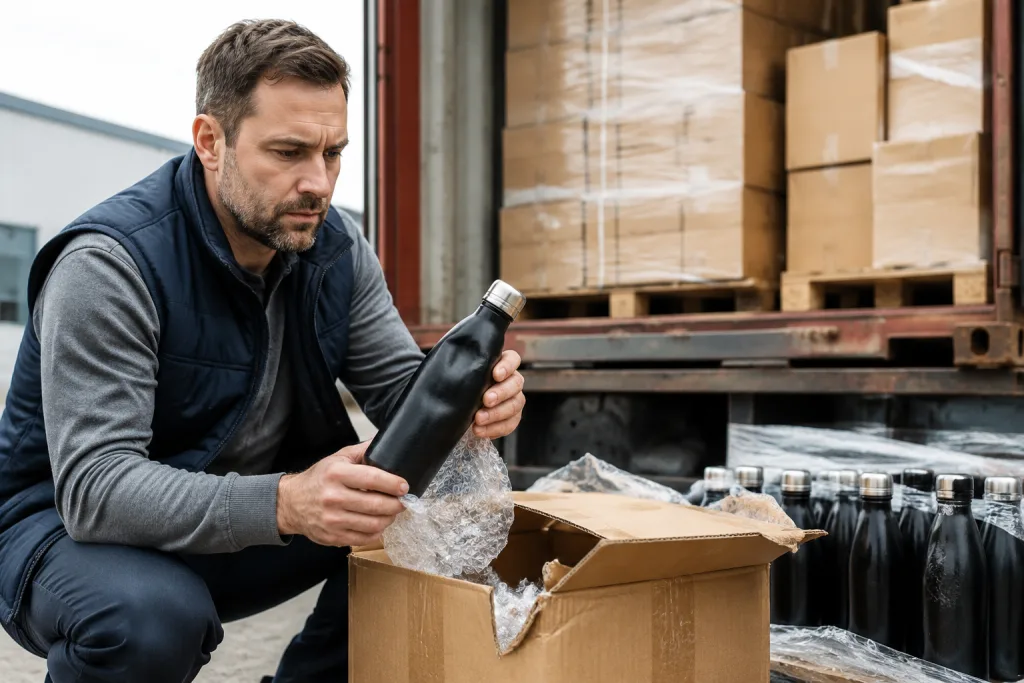
I’ll rewrite the prose only, keep the HTML structure intact, and make it read like a factory-side sales engineer wrote it.Factories love to quote unit price; distributors live with landed condition. Scratches, crushed closures, and blown-out cartons usually start at packing, not on the truck. If your order is 8,000 to 20,000 units, ask the bottle supplier how many bottles sit in each inner carton, what divider they use, and whether the cap goes on before or after cleaning. We had a buyer flag a PO typo on “24 pcs/ctn” versus “24 pcs/carton” and the line packed it wrong for one run. That kind of slip costs time.
For custom canteen and customizable growler programs, inner protection matters because heavier bottles move more in transit. A 375 g bottle with a matte powder coat needs more spacing than a polished 220 g bottle. We usually run one bottle per PE bag, then a divider or molded tray, then a master carton tested to at least 5 layers for export lanes. QC pulled the sample and found the tray thickness was 2.5 mm short on one side, which is exactly where the scuff showed up. If the buyer wants retail-ready packing, the vendor should show drop-test data, not a carton photo.
Ask for carton burst strength, drop height, and pallet pattern. A 1.2 m drop test on corners is a fair screen for export drinkware. If a factory only says “standard export packing,” that tells you nothing. We’ve seen that go sideways fast. In Zhejiang, solid factories know the pack-out by SKU and keep the pallet map on file; weak ones make it up order by order.
QC You Can Put In The PO
I’ll rewrite the section in a more natural export-sales voice, keep the HTML exactly as-is, and preserve the heading and structure.If you want a clean order from water bottles vendors, put the control points in the purchase order. Email promises do not hold on the line. Spell out raw material grade, wall-thickness tolerance, decoration method, leak test standard, and inspection level. A canteen factory that ships at export scale should take that without drama. If they push back, they are telling you they do not control the process.
Use concrete checkpoints: pre-production sample approval, first-article inspection, in-process checks every 2 hours, and final AQL sampling before loading. For appearance, AQL 2.5 is a normal starting point. For critical defects like leakage, thread failure, or broken handles, the acceptance line is zero. If you are buying 5,000 units of customized drinkware, a 1% critical defect allowance is not “industry standard”; the math does not work.
Useful PO language: “Golden sample retained by both parties,” “REACH and food-contact documents required before shipment,” and “final QC report with photos, lot numbers, and carton count.” Those three lines cut down most disputes. QC pulled the sample, the buyer flagged a carton count typo, and the whole issue was solved before loading. In Zhejiang, the factories that welcome this level of detail are usually the ones that already know how to export.
Send your spec, get a real factory answer
We quote from drawings, target price, and compliance needs. Bring your bottle specs, and we’ll tell you where the risk is before production starts.
Frequently asked questions
How do I compare water bottles vendors without wasting time?
Ask for three numbers first: MOQ, lead time, and defect rate. A serious canteen vendor in China should quote a MOQ of 500 to 3,000 pcs depending on decoration, a normal production lead time of 25 to 35 days after deposit, and a clear QC method. Then request material grade, wall thickness, and leak test method. If a supplier cannot state those in one email, they are not ready for export work. For custom drinkware, the fastest filters are sample turnaround, AQL standard, and whether they can provide REACH or food-contact documents before shipment.
What MOQ should I expect for a canteen custom order?
For a basic canteen custom project, MOQ is often 500 pcs for stock shapes with one-color logo, and 1,000 to 3,000 pcs for new molds or multi-color decoration. A canteen factory in Zhejiang may go lower on repeat items, but new tooling usually changes the economics. If you need a customized canteen with special lid parts, expect the MOQ to rise because of separate cap and gasket sourcing. The right question is not only MOQ; it is whether that MOQ includes the same material lot, same decoration method, and the same packaging spec as your approved sample.
What documents should a canteen supplier provide for Europe or North America?
At minimum, ask for food-contact material declarations, REACH-related compliance where applicable, and traceability by production lot. If the item uses stainless steel, ask for the steel grade and a material certificate. For printed products, request ink or coating compliance details. A strong canteen supplier should also give a final inspection report, carton count, and photos of packed goods. For distributor drinkware programs, many buyers also want barcode labels, FNSKU if the goods go to Amazon, and shipping marks that match the PO exactly.
Is laser engraving better than printing for custom growler orders?
For durability, yes, laser engraving is usually stronger because it removes material instead of relying on ink adhesion. On a custom growler or customizable growler, that matters if the bottle sees repeated washing, abrasion, or cold-chain handling. Printing can still work if you need color or a lower upfront cost, but you should specify rub resistance and adhesion. We often see laser marks survive 300+ rub cycles, while a weak print can fade far sooner. If the surface is coated, confirm the engraving depth does not breach the protective layer or affect corrosion resistance.
What should I put in the QC section of my PO?
List the golden sample reference, material grade, wall thickness tolerance, logo location, leak test requirement, and AQL level. For example: 0.5 mm stainless wall, 24-hour inverted leak test, AQL 2.5 for appearance, zero critical defects for leaks or broken parts. Add packing rules such as one bottle per bag, divider type, and carton burst strength if relevant. A canteen manufacturers team that works with export buyers will understand this immediately. If they ask you to keep it vague, that is usually because they prefer room to maneuver after production starts.