Key Takeaways
- A decent canteen MOQ is often 1,000–3,000 pcs, with 35–55 day lead times from a Zhejiang canteen supplier.
- Leakage, print peel, and denting account for most distributor returns; specify cap torque, coating adhesion, and packaging drop tests.
- For custom growler or custom canteen projects, ask for ISO 9001, REACH, and AQL 2.5/4.0 inspection references.
- A factory that ships 300,000+ units/month can still miss your order if you do not lock drawing tolerances and carton tests.
If you buy as a water bottles distributor, the sample price is a trap. The real cost shows up on a 3,000-unit batch that leaks, a logo that peels after one dishwasher cycle, or a cap that passed in the sample room and failed on the line. We have seen that turn into chargebacks, rework, and lost shelf space fast.
The clean way to source custom drinkware is to work backward from failure modes. A canteen factory in Zhejiang, or anywhere in China, should tell you where the part can fail, the test limit, and the spec that blocks the failure. If they cannot speak in wall thickness, torque, AQL, and coating cure, you are not talking to a serious canteen manufacturer. You are buying hope.
Leak paths start in the cap
I’ll rewrite the prose in-place, keep the HTML exactly as-is, and make the section sound like a factory-side sales engineer wrote it.Most returns start at the cap, not the bottle body. If you are sourcing a water bottles distributor program, pin down how the closure seals in hot fill, cold fill, repeated opening, and truck vibration. A weak liner or sloppy thread pitch can look fine in a photo sample and start leaking after 10–20 cycles; we’ve seen that go sideways on a PO with one typo on gasket size.
For stainless and aluminum canteen programs, ask for three items on the spec sheet: thread engagement depth, gasket material, and target torque. A workable torque window for screw caps sits around 0.8–1.5 N·m, but repeatability matters more than the headline number. Our Hangzhou line keeps a torque tester on the bench, and QC pulled a sample last month that failed at 0.6 N·m because the thread was off by 0.2 mm. That is a distributor headache, not a minor detail.
- Require 100% leak testing for vacuum bottles and AQL 2.5 for standard canteen distributor orders.
- State liner material as silicone, TPE, or PP; “food grade” is not enough for a spec.
- For custom canteen launches, request a 24-hour inversion test at 40°C and a 1.2 m drop test.
If you sell customized drinkware into retail or Amazon, the cap is where weak engineering shows up first. The closure has to survive packing, handling, and customer abuse, not a 20-second demo on the sample table. That is the wrong question to ask if a buyer says the lid “feels tight.”
Print and coating failures cost margin
I’ll keep the HTML intact and rewrite only the prose for a more grounded sales-engineer tone, with concrete factory details and cleaner buyer language.Logo failure is one of the easiest problems to prevent, and one of the easiest to miss at quotation stage. We’ve seen a canteen printed by silkscreen on powder coat pass QC, then chip at the rim after 12 days in transit. Laser engraving avoids ink peel, but if the file prep is off by 0.2 mm, the mark lands weak on a coated body and the buyer flags it.
Be exact about decoration. Ask whether the artwork is silkscreen, heat transfer, pad print, UV print, laser, or emboss. Then ask for adhesion testing. A supplier worth using should show ASTM cross-hatch results or an internal tape-peel sheet, and should tell you the powder-coat cure temperature without checking the line leader. If they cannot, the math doesn’t work for branded retail.
One common mistake: buyers approve a Pantone match on a matte sample, then order 5,000 pcs on a glossy line and wonder why the logo reads darker. Finish changes color perception.
For canteen promotional orders, lock one substrate, one finish, one decoration method, and one packaging style before you scale. That sounds dull. It saves margin. On our Hangzhou line, a 1 mm logo shift or a 5% gloss swing has been enough to trigger rejection from distributors and brand owners, and we’ve seen that go sideways fast.
- Ask for one pre-production sample on the exact finish, not a “reference sample.”
- Specify minimum logo stroke width: 0.3 mm for laser, 0.4–0.5 mm for print.
- Require rub testing: 50–100 double rubs minimum for mainstream retail orders.
Dents and wall thickness matter
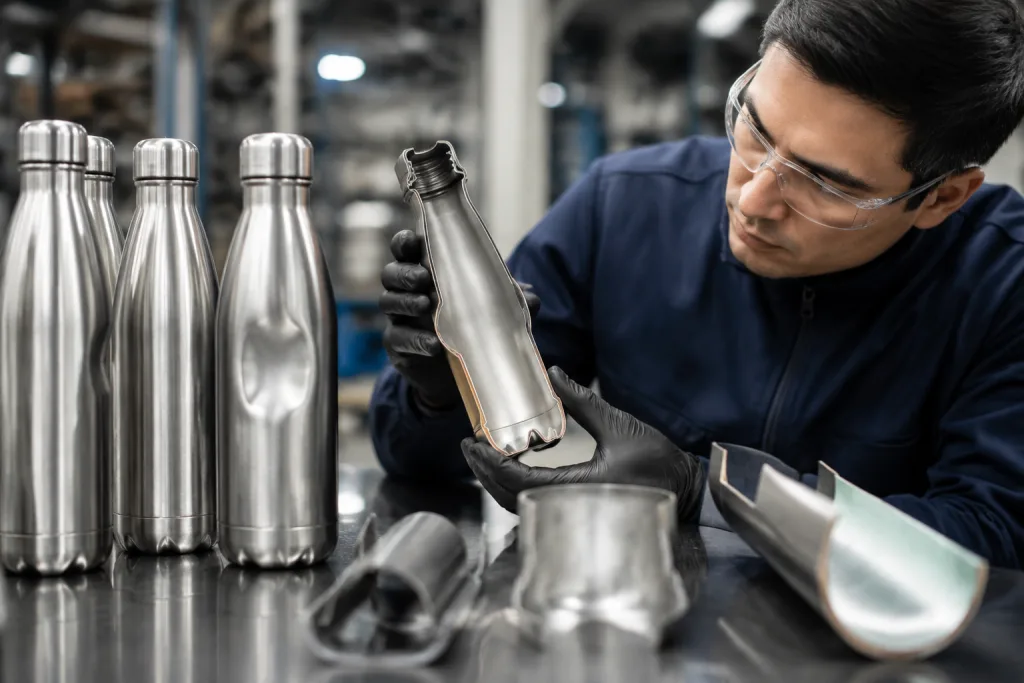
Body damage is the next failure mode. We see buyers fixate on capacity and skip wall gauge. That usually comes back in QC. On stainless steel bottles, a wall at 0.35 mm dents in transit; push it too thick and weight, cost, and cycle time all creep up. For a typical insulated canteen or travel tumbler, 0.35–0.5 mm on the outer wall is common, but the right call still depends on diameter, height, and whether you run 18/8 stainless or another grade.
A serious canteen factory will point out the weak spot: shoulder radius, base seam, or neck transition. We had a buyer flag a PO typo once — the neck spec was off by 1.5 mm, and the line caught it before tooling started. If the bottle rattles in the carton, you are already paying for damage later. Build the spec around pack-out, not just the product. A distributor program should include dividers, molded pulp, or air-column protection when the shape is tall or narrow.
Shipping pressure matters too. A 500 ml bottle can pass a shelf check and still fail when you pack 24 pcs per carton for export. Ask for compression test data, carton burst rating, and a drop test from 76 cm to 1.2 m, depending on route. We ship Zhejiang to Europe every week, and sea freight vibration changes the failure point fast. The math does not work if the carton is doing all the protection.
- Specify minimum base thickness and shoulder reinforcement for tall bottles.
- Require carton drop testing with filled and empty product.
- For custom growler projects, add a dent-resistance check at the handle or shoulder.
Temperature claims need proof
I’ll rewrite the section in-place, keep the HTML structure unchanged, and tighten the sales-engineer tone with concrete test details and fewer fluffy phrases.Insulation misses usually do not show up as a dead failure. The bottle still “works,” just not long enough to match the promise on the product page. If you sell customizable canteen or customizable drinkware into outdoor, sports, or corporate channels, you need hold-time proof, not brochure language. Say the target plainly: 6 hours hot, 12 hours hot, 24 hours cold, or another number your buyer can defend.
We test vacuum bottles with a fixed fill temperature, room temperature, and measured humidity. Same stainless shell, different result. Lid geometry and vacuum pull change the curve, and we have seen a 2 mm gasket miss drag the top line down faster than the body. A canteen manufacturer should hand over test conditions, not a headline only. If they write “about 12 hours” and skip the setup, the buyer flagged it for a reason.
For custom growler or insulated canteen projects, ask for internal temperature retention data at 1, 4, 8, and 24 hours. If you are building a distributor canteen line for North America, the claim has to match the market and the ad rules there. The math does not work any other way. Define fill volume, start temperature, ambient temperature, and pass/fail threshold; then the argument gets much shorter. On our line, QC pulled the sample after a 60°C fill and checked the probe at 4 hours.
- Request thermal test reports with charts, not a single-line claim.
- Set pass criteria at a specific drop, such as 60°C to 45°C after 6 hours.
- For canteen manufacturers, verify whether the lid or body is the weak point.
Packaging fails before the pallet does
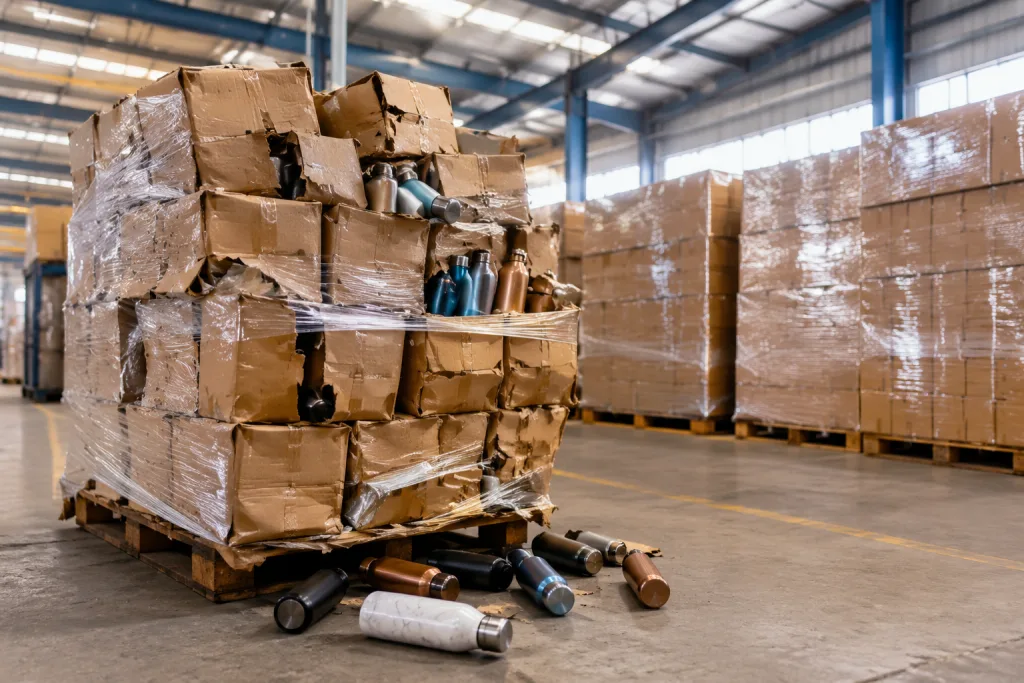
I’ll rewrite the section in-place, keep the HTML exactly as-is, and tune the prose to sound like a working export-sales engineer. Then I’ll return only the rewritten HTML.Packaging is where a lot of importers bleed money and never spot it on the first report. A canteen distributor order can pass factory inspection and still land scratched, dented, or mixed by SKU because the inner pack was too weak. The product may be fine. The pack-out is not. That is a sourcing miss, not a freight surprise.
Lock the pack architecture early. Specify inner polybag thickness, divider style, carton corrugation, and master carton count. For customized canteen or customized growler programs, we print carton artwork so the warehouse can scan and sort without guessing. One buyer once sent a PO with the carton mark typo “12PCS/CTN” turned into “21PCS/CTN” and QC caught it before release. In China, a solid export factory will offer 5-ply or 7-ply export cartons based on bottle weight and route. Don’t call that an upgrade. If the bottle is heavy or has a painted finish, it is the baseline.
At distributor level, the number that matters is damage rate at destination, not carton cost. If you hold transit damage under 0.5% and mixed-SKU errors under 0.2%, the margin still works. We’ve seen this go sideways when a buyer tried to save 0.18 yuan per carton and the line started using thinner inserts. That math doesn’t work. A Zhejiang supplier that builds for ocean freight, with a carton drop test and a tape gun in hand, keeps the program stable.
- Ask for carton burst strength and edge crush values before approval.
- Require barcode labeling and FNSKU if you sell through Amazon channels.
- Use master carton photos from the factory floor before release.
Supplier qualification beats apology
I’ll rewrite the four paragraphs with a sharper factory-side voice, keep the HTML exactly as-is, and fold in concrete floor details without adding extra tags.What separates a usable canteen supplier from a risky one is not the sample room. It is the system behind it. If you are buying from canteen suppliers in China, check whether they can support ISO 9001, BSCI, REACH, and food-contact paperwork without drama. We had a buyer flag a missing LFGB file on a Friday PO, and the line stopped for half a day. No paperwork discipline, no repeat production.
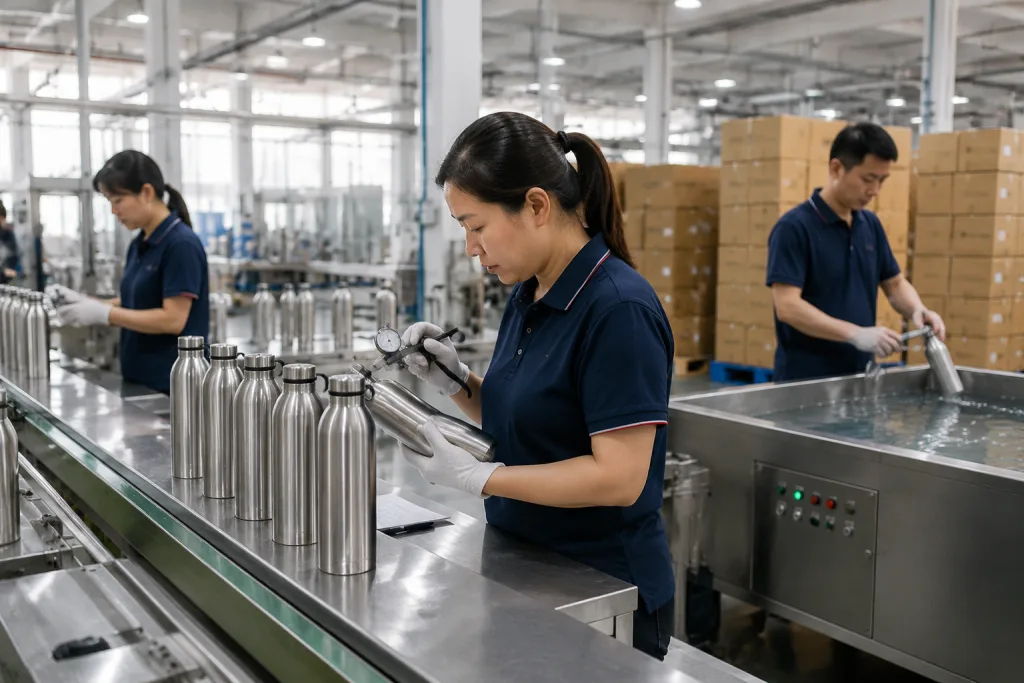
A proper qualification audit should cover incoming material control, in-process checks, final AQL, and lot traceability. If a canteen vendor says every order is “fully inspected,” ask for the actual checkpoint list. We run 3 stations on the line: raw-tube check, welding seam check, and packing check. A real factory will tell you where they inspect 100% and where they sample. Vague talk and blank records are the wrong answer.
For a water bottles distributor, scale matters, but capacity alone does not close the deal. A factory in Zhejiang with 300,000 to 500,000 units/month output can still be the wrong partner if they cannot reserve line time, keep a 45-day lead time, or repeat the same finish six months later. QC pulled the sample on a 0.3 mm dent once, and that saved us from a carton of complaints. The math does not work if the supplier treats every reorder like a fresh experiment.
Use the first order to test the system, not just the bottle. If the supplier keeps lot traceability, passes your drop test, and ships a clean PO without relabeling mistakes, you have something worth scaling. If the carton mark says 500 ml and the spec says 550 ml, the buyer will notice fast. Move on before the defects become your brand’s problem.
Spec your next order with fewer surprises
Send your target capacity, logo method, and tolerance limits. We’ll help you turn a rough brief into a production-ready custom drinkware spec.
Frequently asked questions
What MOQ should I expect for custom drinkware orders?
For a typical custom drinkware order, many Zhejiang factories set MOQ at 1,000 to 3,000 pcs per SKU and color. Simple laser logos may start at 500 pcs, while molded or multi-color canteen customized runs usually need 3,000+ pcs. If you want mixed colors, packed retail sets, or a custom canteen with special caps, expect the MOQ to rise. A serious canteen factory will tell you the true MOQ up front instead of hiding it in the sample stage.
How do I check if a water bottles distributor can handle quality control?
Ask for the QC flow, not just the inspection certificate. A reliable water bottles distributor should explain incoming material checks, in-process inspections, final AQL, and how they handle leaks, print defects, and carton damage. For export orders, request AQL 2.5 for major defects and 4.0 for minor defects as a starting point. If they can share a test report for REACH, food-contact compliance, or drop testing, that is a good sign they are more than a trading desk.
What is a realistic lead time from a canteen manufacturer in China?
For standard canteen manufacturer programs, lead time is often 35 to 55 days after sample approval and deposit. If the order uses new tooling, special coating, or a custom growler shape, add 10 to 20 days. A canteen supplier in Zhejiang with stable line scheduling may move faster, but rush orders usually create hidden defects. Ask for a production calendar with raw material, decoration, assembly, inspection, and packing dates before you confirm the PO.
Should I choose silkscreen or laser engraving for logo decoration?
Use silkscreen when you need color and larger logo coverage, and laser engraving when you want a durable mark with no ink wear. On matte stainless, laser is usually safer for long-term wear, while silkscreen is stronger for canteen promotional orders with brand color requirements. Ask the canteen vendor for adhesion tests, rub resistance, and finish-specific samples. A logo that looks perfect on a flat photo can still fail on a curved bottle if the file or coating is wrong.
Can I order a customized growler or customized canteen for retail?
Yes, but you need to lock the technical spec early. For a customized growler or customized canteen, define capacity, wall thickness, finish, cap type, and carton count before sampling. Retail buyers should also confirm barcode placement, packaging artwork, and whether the supplier can label to FNSKU or local retail standards. A capable canteen distributor or canteen manufacturers team will give you a pre-production sample, a packing mockup, and a production schedule that matches your launch date.